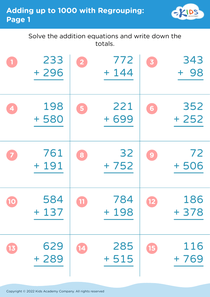
Fine Motor Skills Adding up to 1000 Without Regrouping Worksheets for Ages 6-8
3 filtered results
-
From - To
Enhance your child's fine motor skills while mastering addition with our "Fine Motor Skills Adding up to 1000 Without Regrouping Worksheets" tailored for ages 6-8. These engaging worksheets combine essential math practice with activities designed to improve hand-eye coordination and dexterity. As children work through addition problems without regrouping, they'll strengthen their understanding of numbers up to 1000. Designed to promote independent learning, these worksheets encourage focus and precision, all while making math enjoyable. Perfect for enhancing classroom or home learning environments, they lay the foundation for future math success. Download today and empower your child's learning adventure!
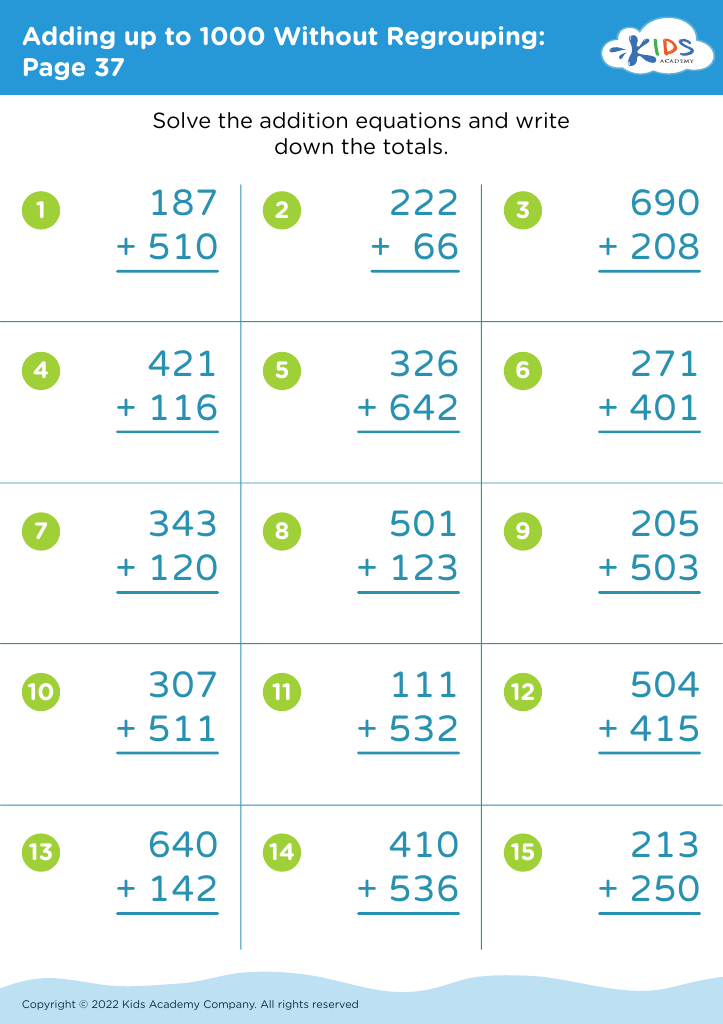
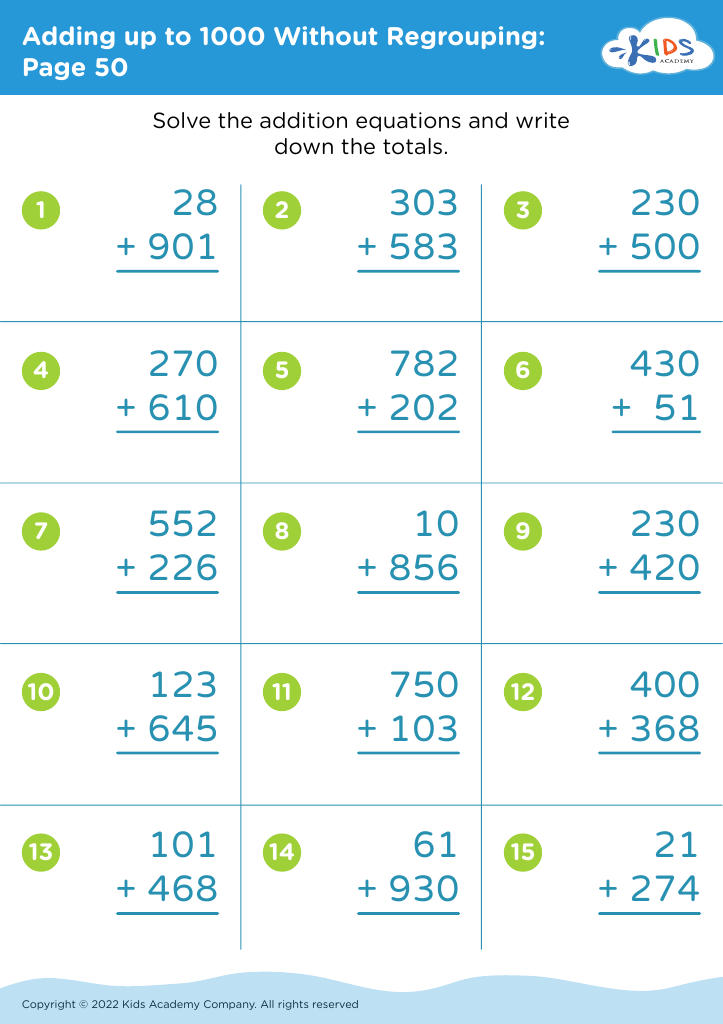
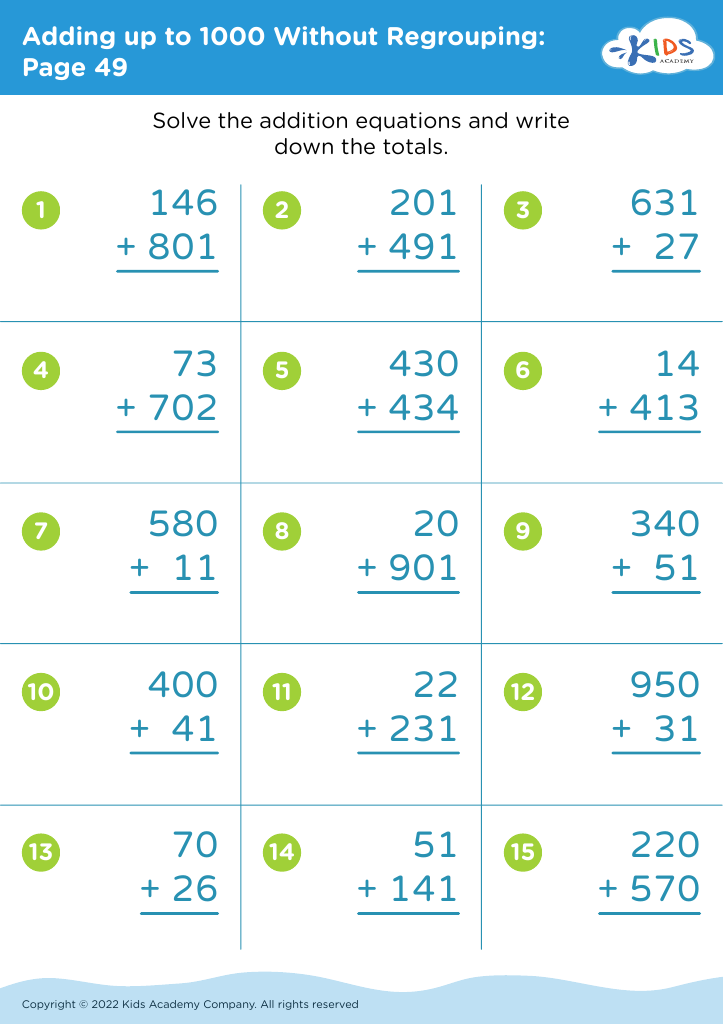


Fine motor skills are crucial for children aged 6-8, as they directly influence academic success, particularly in tasks like addition without regrouping. When students master fine motor skills, such as holding a pencil, cutting with scissors, or manipulating small objects, they gain confidence in their overall abilities. Strong fine motor skills contribute to a child's manual dexterity, enabling smoother and more efficient writing, which is essential for completing math problems accurately and legibly.
In mathematics, particularly with addition that doesn't require regrouping, children exercise their fine motor skills when aligning numbers, using number lines, or adding counters. Engaging in these activities builds their spatial awareness, enhancing their ability to visualize numbers and calculations. When parents and teachers prioritize fine motor development, they provide students with essential tools to approach math challenges with ease.
Moreover, developing fine motor skills helps reduce frustration in learning, fostering a positive attitude towards math and promoting a love for learning. Celebrating small achievements can also motivate children, reinforcing persistence in their academic journey. By investing time in cultivating these skills, parents and educators are setting a solid foundation for children’s future learning experiences and overall development.