Alphabet Recognition Adding up to 1000 Worksheets for Ages 6-8
4 filtered results
-
From - To
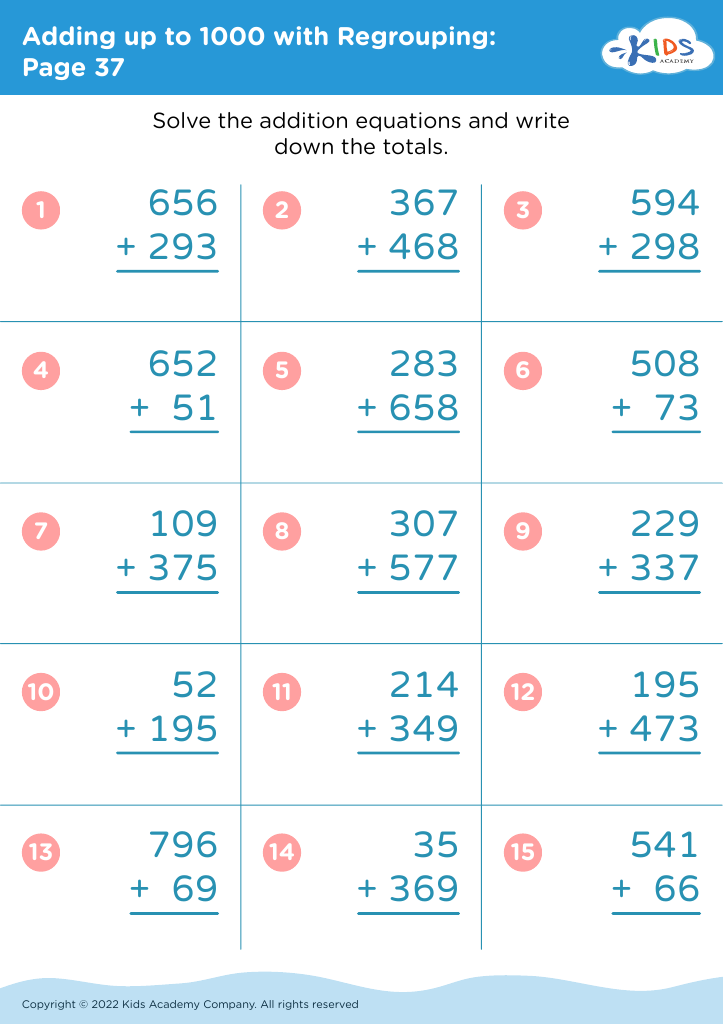
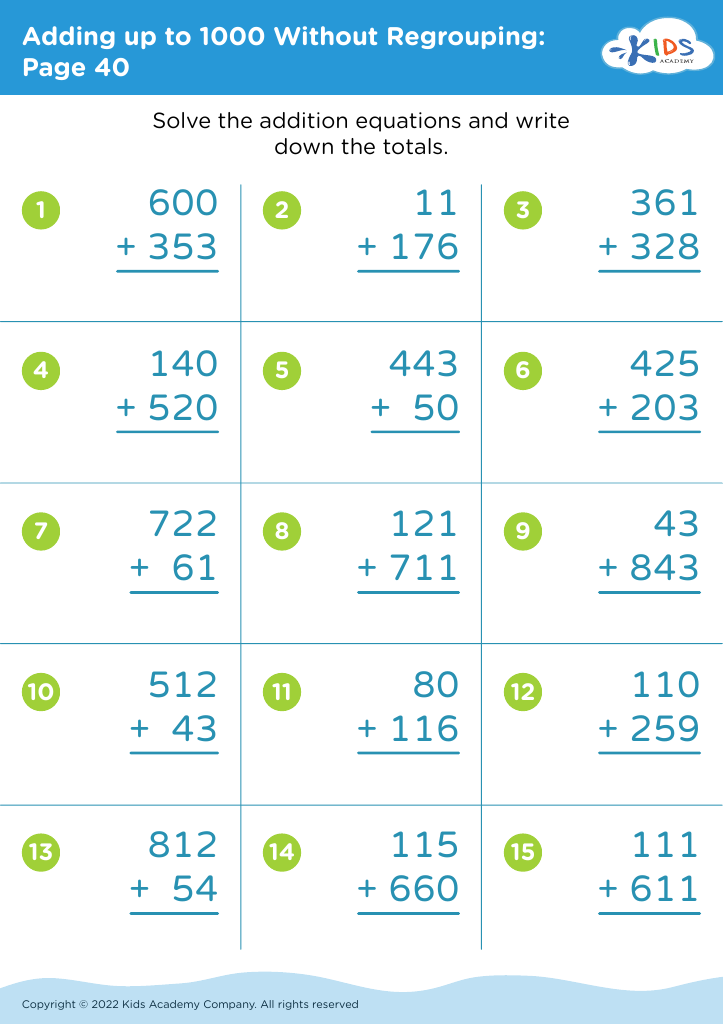
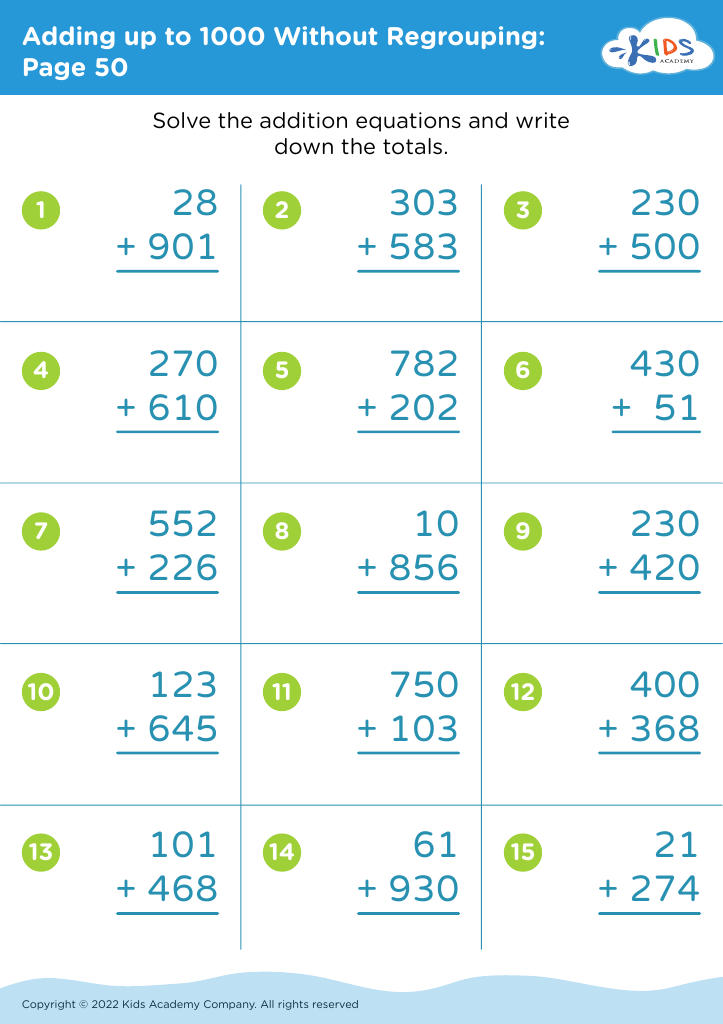
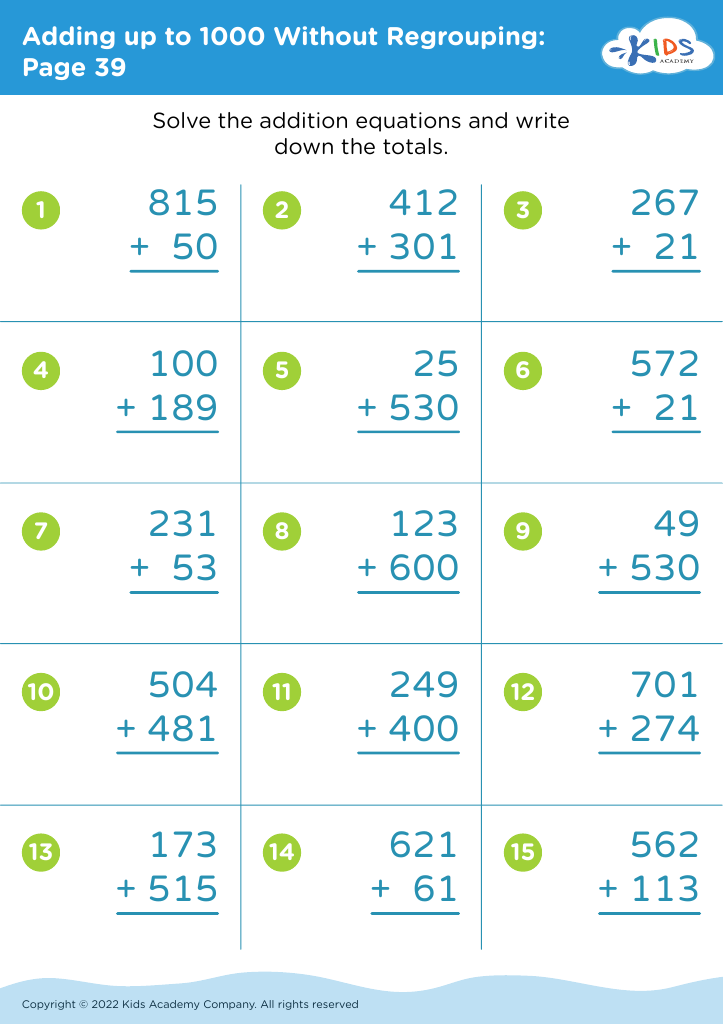
Explore our engaging "Alphabet Recognition Adding up to 1000 Worksheets" designed for children ages 6-8! These worksheets beautifully merge learning fundamental letters with the skills needed for addition up to 1000. Each activity incorporates fun illustrations and interactive tasks, making learning enjoyable and effective. As students practice their alphabet recognition, they'll simultaneously enhance their math skills, fostering a strong foundation for future academic success. Perfect for teachers and parents alike, these worksheets promote independent learning and help nurture a love for learning in young minds. Discover the joy of education with our vibrant and thoughtfully crafted resources today!



Alphabet recognition is a foundational skill for children ages 6-8 that sets the stage for their learning journey. At this age, children are not only mastering letter identification but also beginning to blend sounds and learn to read. A strong grasp of the alphabet enables them to decode words, which is critical for reading fluency and comprehension. Parents and teachers should care about this skill, as it directly impacts academic success across subjects, including science and social studies, where literacy is essential.
Moreover, alphabet recognition plays a crucial role in cognitive development. It fosters curiosity and engagement, encouraging children to explore written language and its meanings. As they become more proficient readers, their confidence grows, which can lead to greater participation in classroom activities and discussions. Early mastery of this skill also lays the groundwork for writing, helping children express their thoughts clearly.
Contexts such as reading aloud, interactive games, and phonics activities provide pathways for practice and reinforcement. Investing time and resources in supporting alphabet recognition not only enriches children's literature but also contributes to their overall cognitive and social-emotional development, preparing them for lifelong learning. Thus, ensuring children can recognize and understand the alphabet is critical for their educational success.








