Basic Addition Skills Adding up to 1000 Worksheets for Ages 6-8
3 filtered results
-
From - To
Explore our engaging "Basic Addition Skills Adding up to 1000" worksheets, specially designed for children aged 6-8. These worksheets provide a fun and interactive way for young learners to develop their addition skills through a series of imaginative exercises. With a variety of formats, including step-by-step problems and visual aids, students will gain confidence in adding single and multi-digit numbers. Perfect for home or classroom use, this resource helps strengthen foundational math skills, fostering a love for learning math. Download these worksheets today and watch your child's addition abilities grow as they master the art of adding up to 1000!
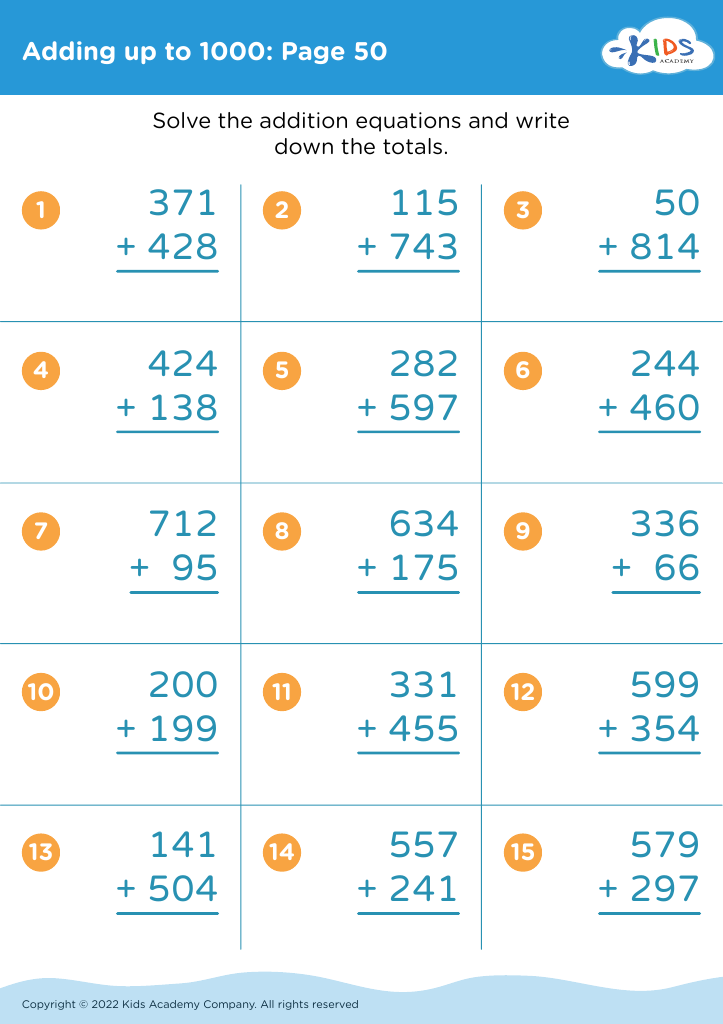
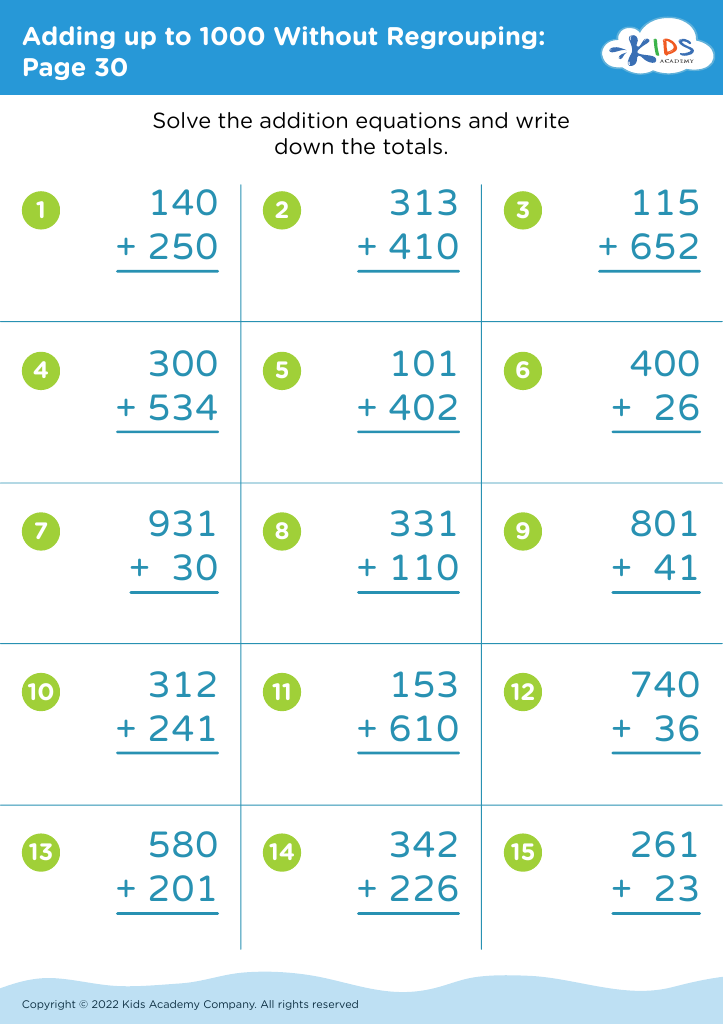
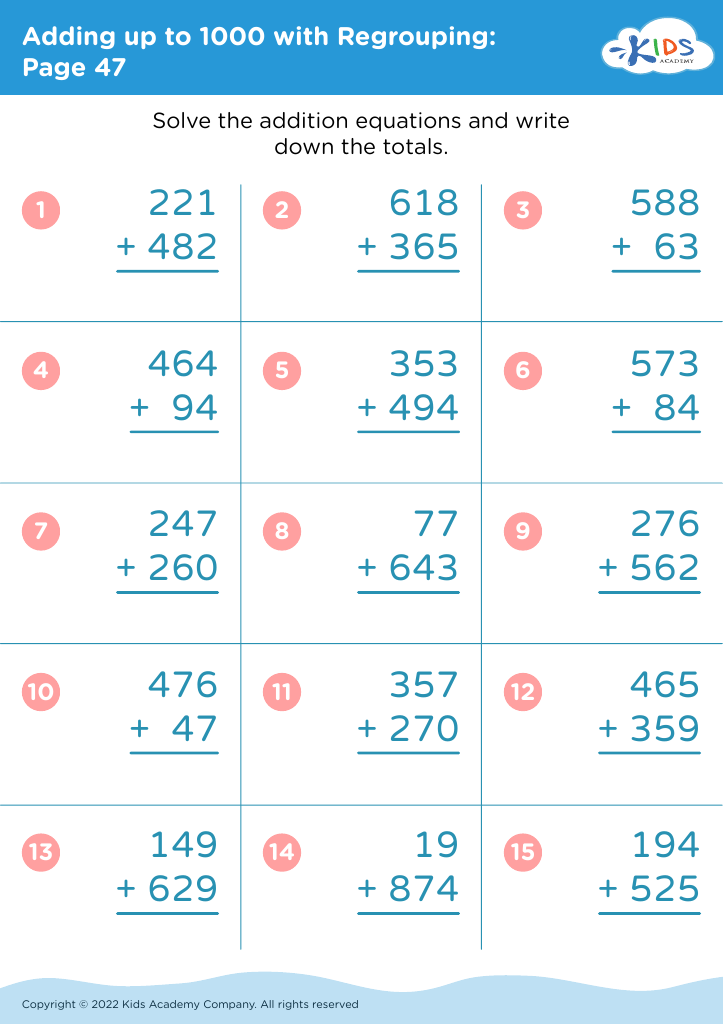



Basic addition skills are crucial for children aged 6-8 as they form the foundation of their overall mathematical understanding. Mastering addition up to 1000 empowers students to confidently tackle more complex mathematical concepts in the future, such as subtraction, multiplication, and division. This skill helps children develop critical thinking and problem-solving abilities, which are essential not just in school, but also in everyday life.
Additionally, proficiency in basic addition enhances cognitive development, improving memory retention and concentration. As children practice adding numbers, they learn to recognize patterns and relationships between quantities, fostering logical thinking. This age group often encounters addition in word problems, helping them to apply their skills in real-world contexts.
From a parent's or teacher's perspective, ensuring that children can add numbers effectively leads to greater academic success and builds self-esteem. When children experience mastery in addition, they are more likely to engage positively with math, making them enthusiastic learners. Finally, strong foundational addition skills can also alleviate anxiety surrounding math subjects as they progress in their education, creating a more positive attitude towards math challenges in later years.








