Color Identification Adding up to 1000 Worksheets for Ages 6-8
6 filtered results
-
From - To
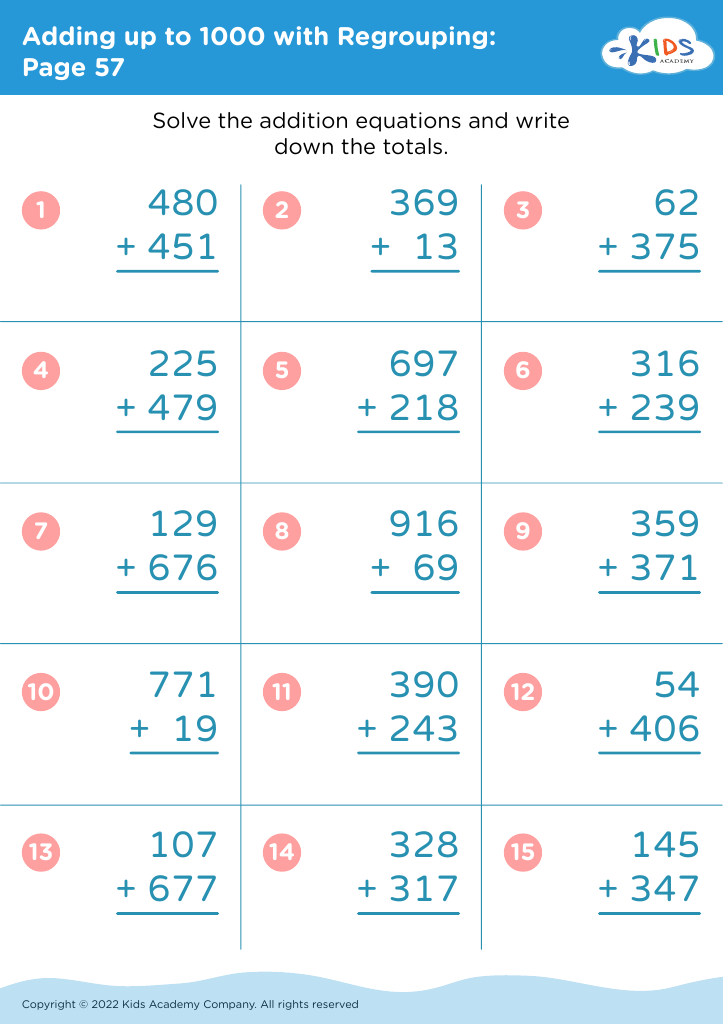
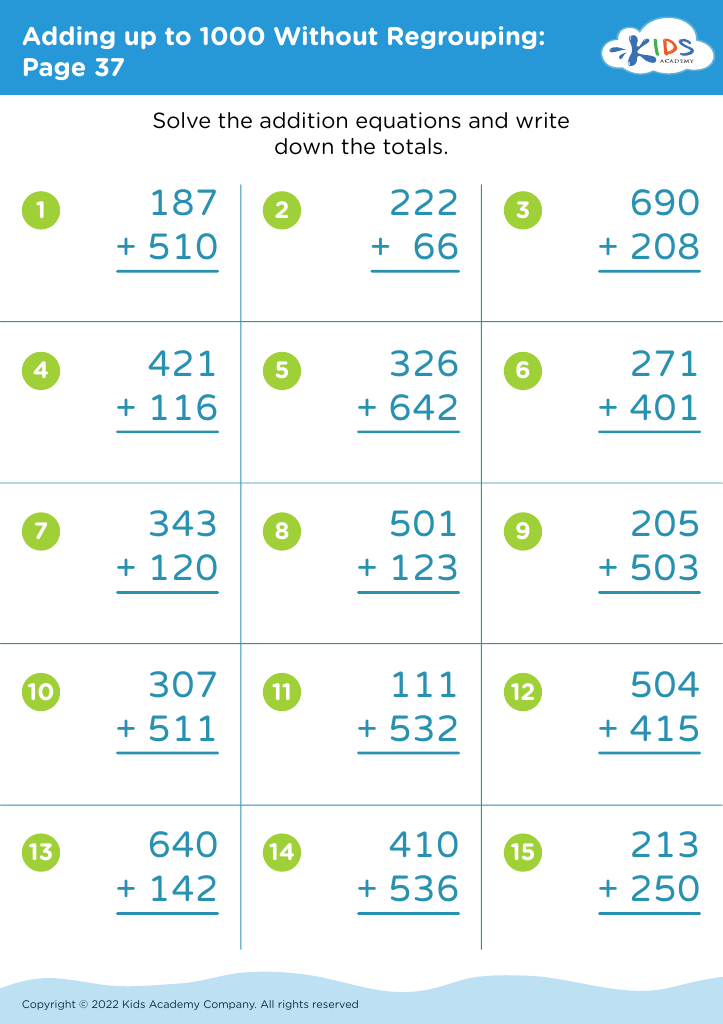
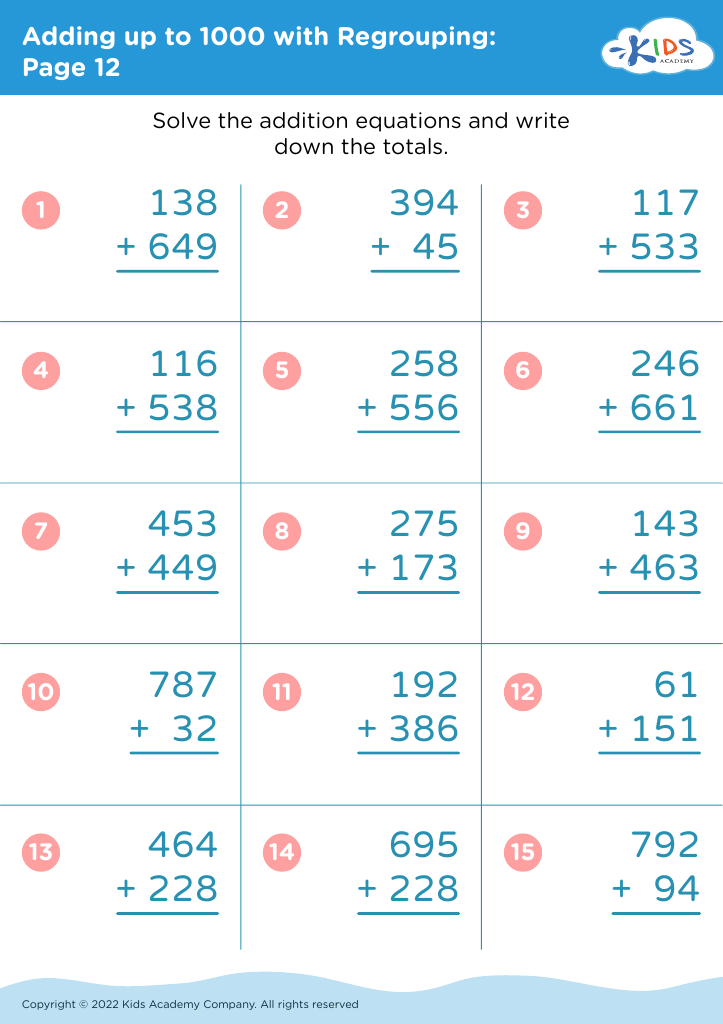
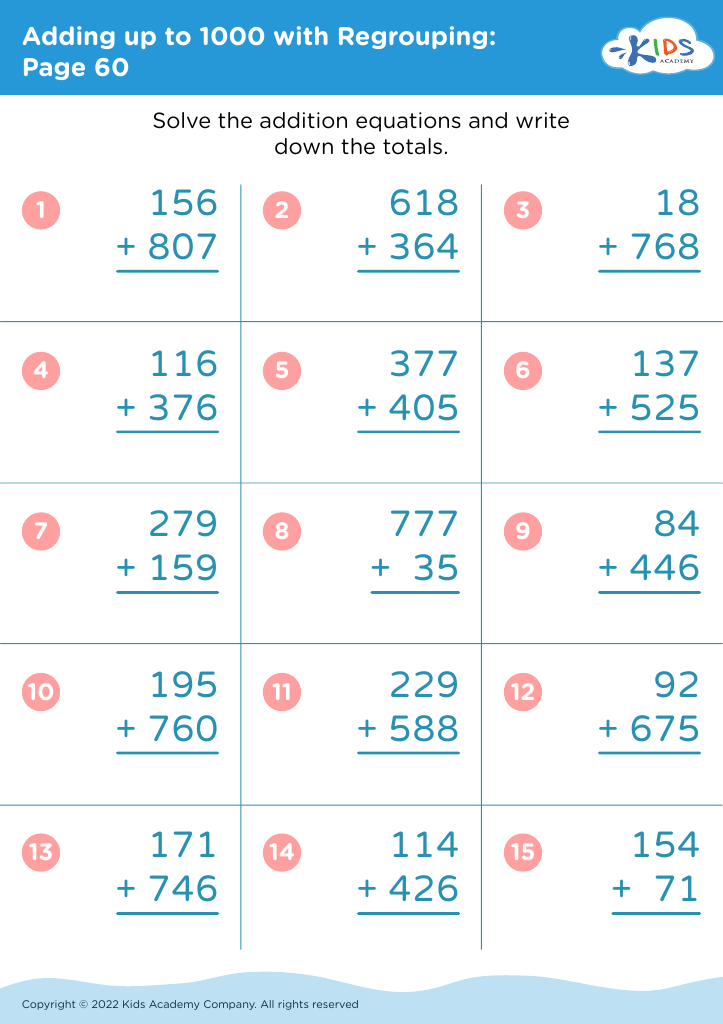
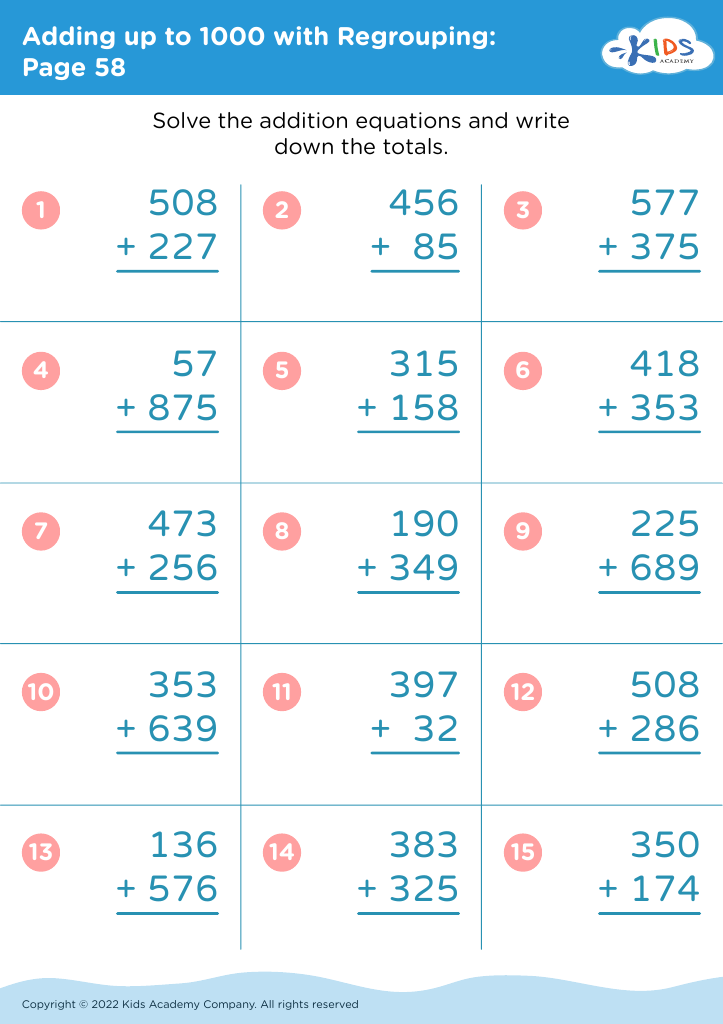
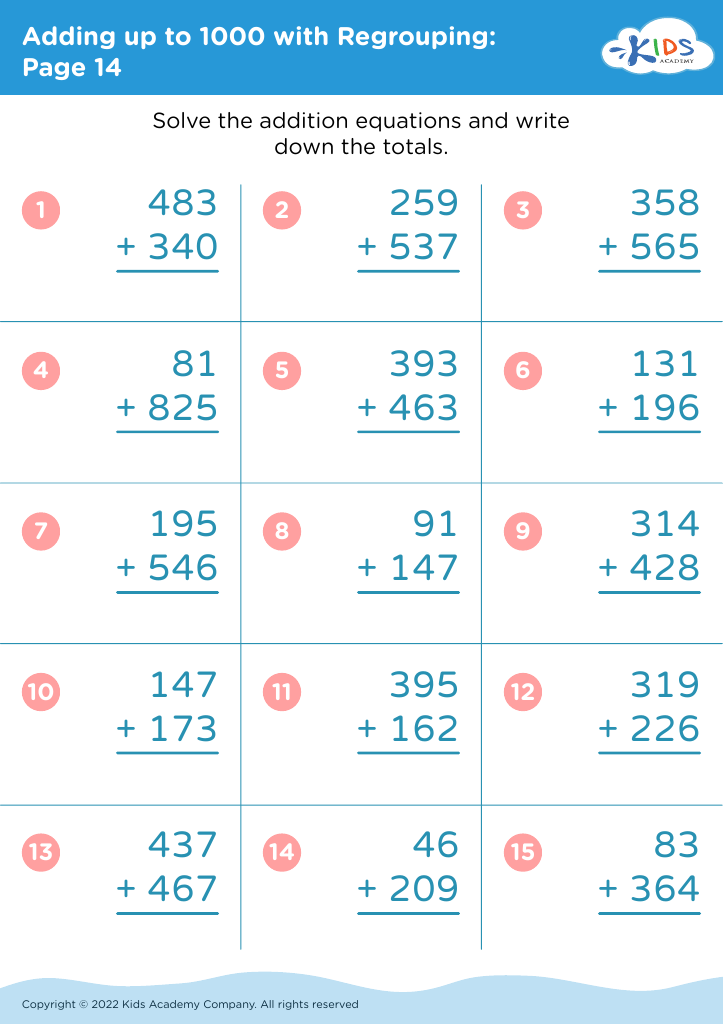
Enhance your child's math and color identification skills with our "Color Identification Adding up to 1000 Worksheets" designed for ages 6-8. These engaging worksheets make learning fun as young minds tackle addition problems and practice identifying vibrant colors. Perfect for classroom teaching or at-home practice, each worksheet focuses on building strong foundations in math while sharpening color recognition. Watch as your child delights in solving puzzles that combine numeracy with creative coloring activities. Tailored for early learners, our expertly crafted worksheets promote critical thinking and a love for math. Discover a fun, educational resource to support your child’s learning journey today!



Color identification is foundational for children aged 6-8 because it enhances their cognitive and perceptual abilities. Understanding colors helps in the development of neural pathways in the brain, paving the way for spatial awareness, pattern recognition, and memory improvement.
Incorporating tasks that tie in color identification with numerical concepts, such as adding up to 1000, bridges the gap between abstract and concrete thinking. It aids children in better grasping and visualizing complex ideas, thereby facilitating deeper understanding. For instance, using colored objects to add up to 1000 allows children to make visible links between quantities and figures, which promotes numerical literacy and strengthens their counting skills.
Moreover, engaging in color-based activities keeps learning fun and engaging. It stimulates a child's interest, which is crucial for sustained attention and effective learning at such a young age. By associating learning with enjoyable, hands-on activities, educators and parents can foster a positive educational experience.
Additionally, proficiency in color and number recognition is often a part of the school curriculum and is critical for children's success in subsequent grades. Together, these skills form a robust foundation, setting them up for academic success in more advanced subjects like math and science.








