
Critical Thinking Adding up to 1000 Worksheets for Ages 6-8
5 filtered results
Difficulty Level
Grade
Age
-
From - To
Subject
Activity
Standards
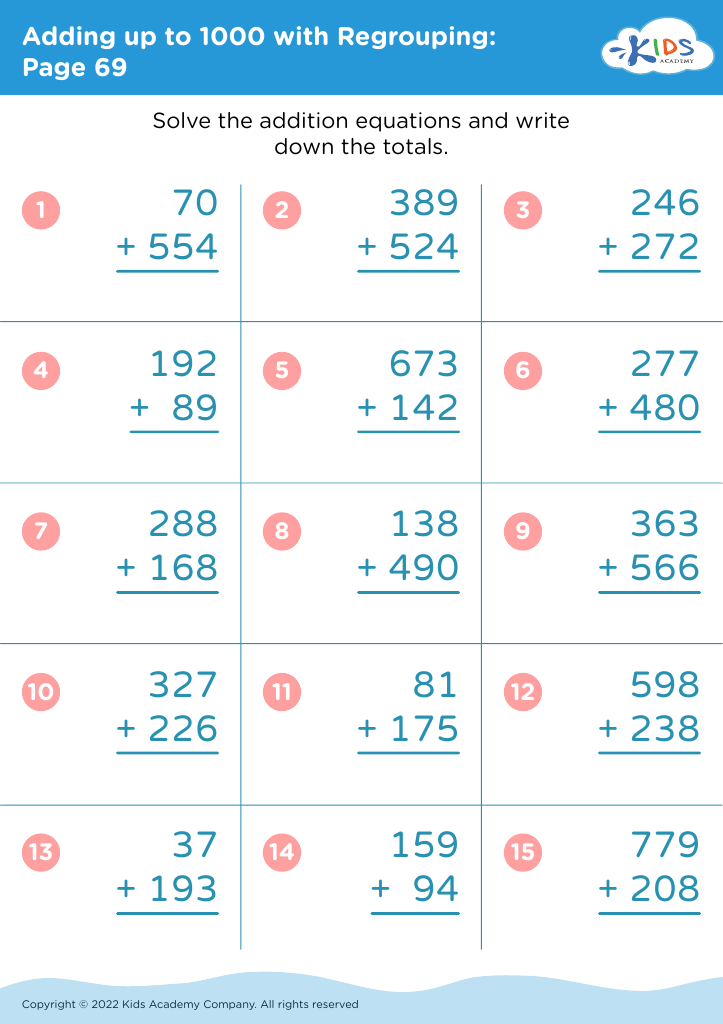
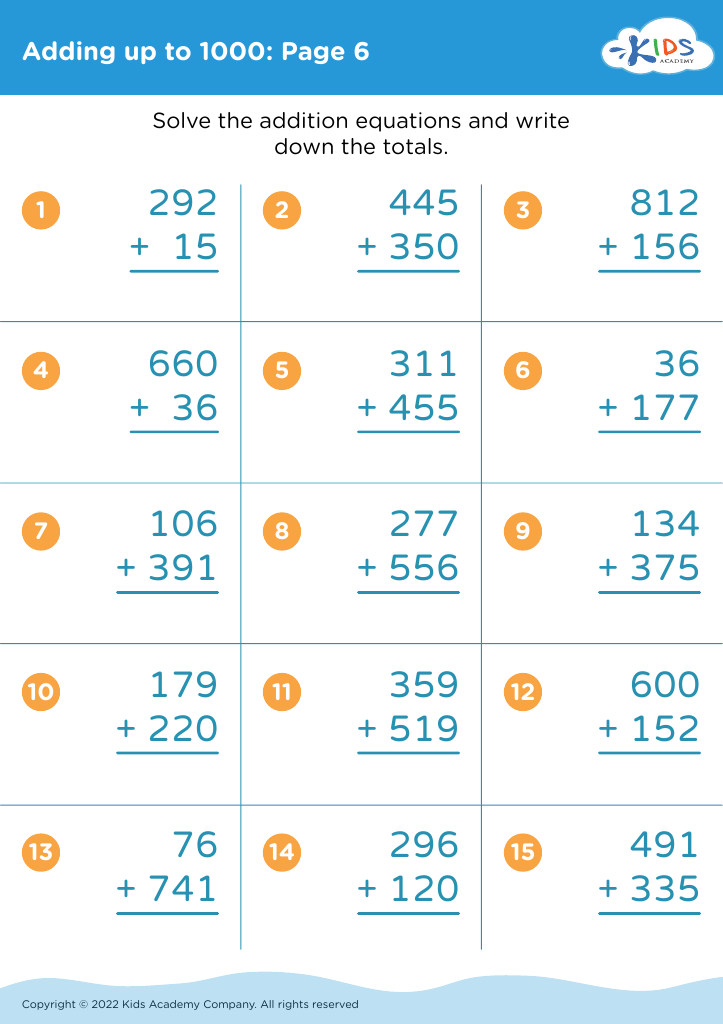
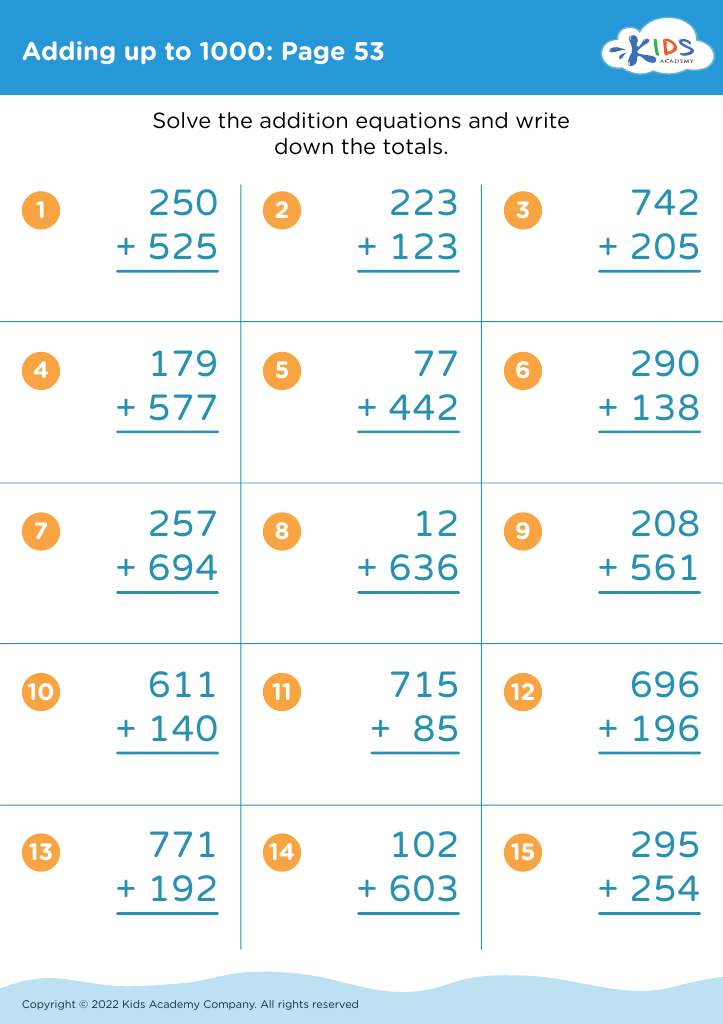
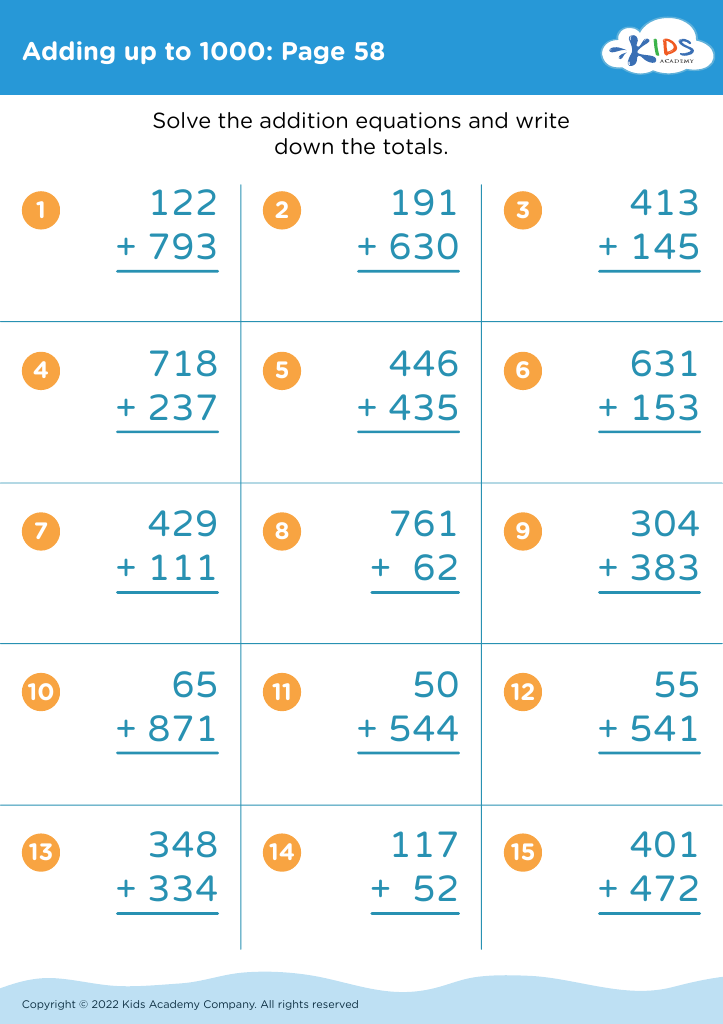
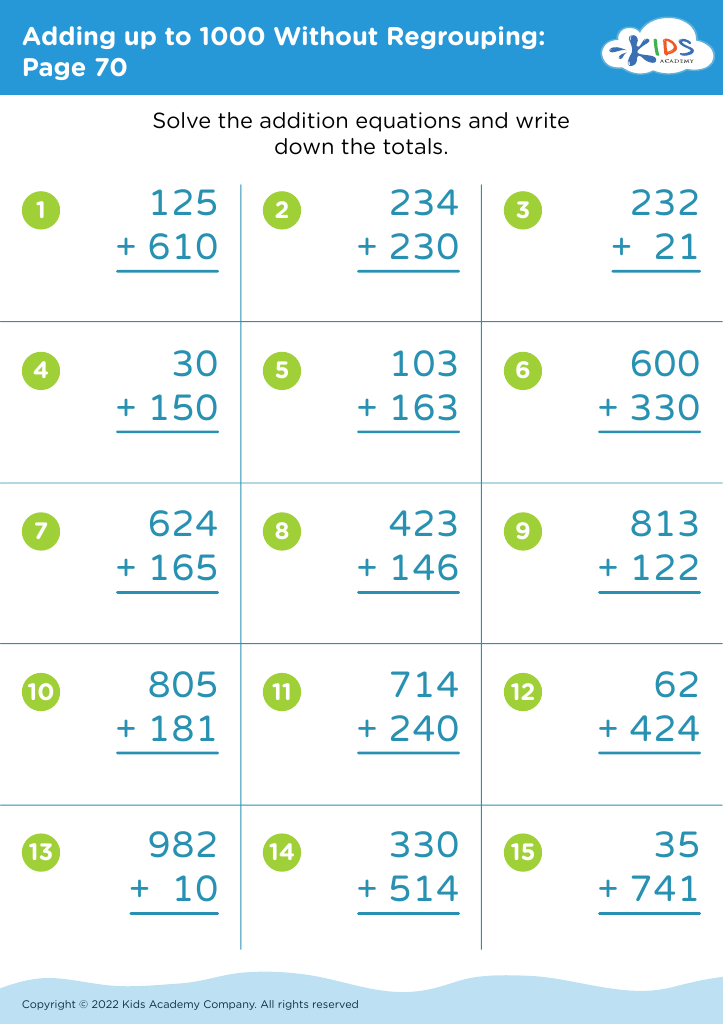
Enhance your child's critical thinking skills with our "Critical Thinking Adding up to 1000 Worksheets" designed for ages 6-8. These engaging worksheets challenge young learners to develop mathematical reasoning and problem-solving abilities while they practice addition up to 1000. Combining fun with educational rigor, our worksheets incorporate a variety of strategies, such as visual aids and relatable scenarios, making math concepts easier to grasp. Children will not only improve their arithmetic skills but also learn to think logically and creatively, setting a solid foundation for future learning. Explore our diverse collection to inspire a love for math and critical thinking today!
Favorites
With answer key
Interactive
Join Kids Academy for Free
Who is primarily going to use this learning content?



Critical thinking is essential for children aged 6-8 as it lays the groundwork for academic success and lifelong learning. When parents and teachers prioritize critical thinking, they empower children to analyze, evaluate, and synthesize information rather than merely memorizing facts. This skill encourages curiosity, enabling young learners to ask questions and explore different perspectives.
Critical thinking fosters problem-solving abilities, equipping children with the tools they need to handle challenges in school and beyond. For instance, when children engage in collaborative group activities, they learn to articulate their thoughts, listen to others, and negotiate solutions, which enhances social skills and emotional intelligence.
In a world saturated with information, critical thinking helps children discern credible sources, develop healthy skepticism, and make informed decisions. It nurtures creativity, allowing them to think outside the box and approach problems innovatively. Additionally, cultivating critical thinking from a young age can boost children's confidence as they learn to trust their reasoning abilities.
Ultimately, fostering critical thinking in children enriches their education and prepares them for future academic and life experiences. Parents and teachers play a crucial role in guiding this development, ensuring that children become thoughtful, analytical, and engaged individuals equipped for the challenges and opportunities ahead.








