Develop critical thinking Adding up to 1000 Worksheets for Ages 6-8
3 filtered results
-
From - To
Unlock your child’s potential with our "Adding up to 1000 Worksheets" specifically designed for ages 6-8. These engaging activities not only improve math skills but also foster critical thinking, problem-solving, and logical reasoning. Each worksheet is crafted to make learning fun and interactive, helping young minds to seamlessly catch on to complex concepts. Perfect for both classroom use and home practice, our materials are the ideal resource to strengthen your child's math foundation and build confidence in their abilities. Download today and watch your child thrive academically while enjoying the journey of learning!
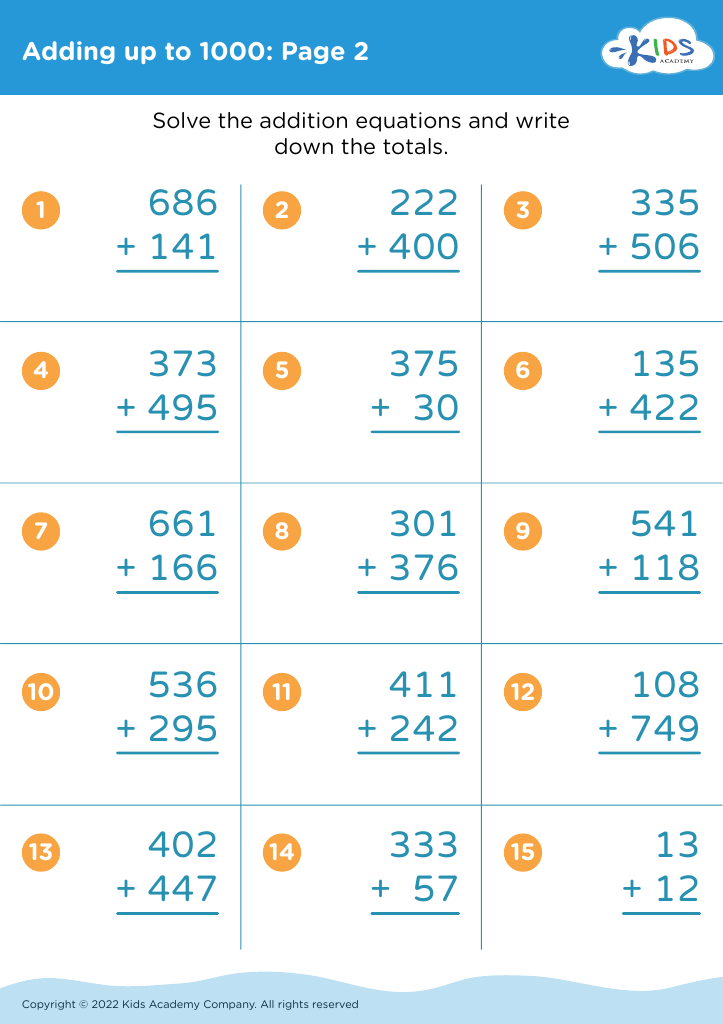
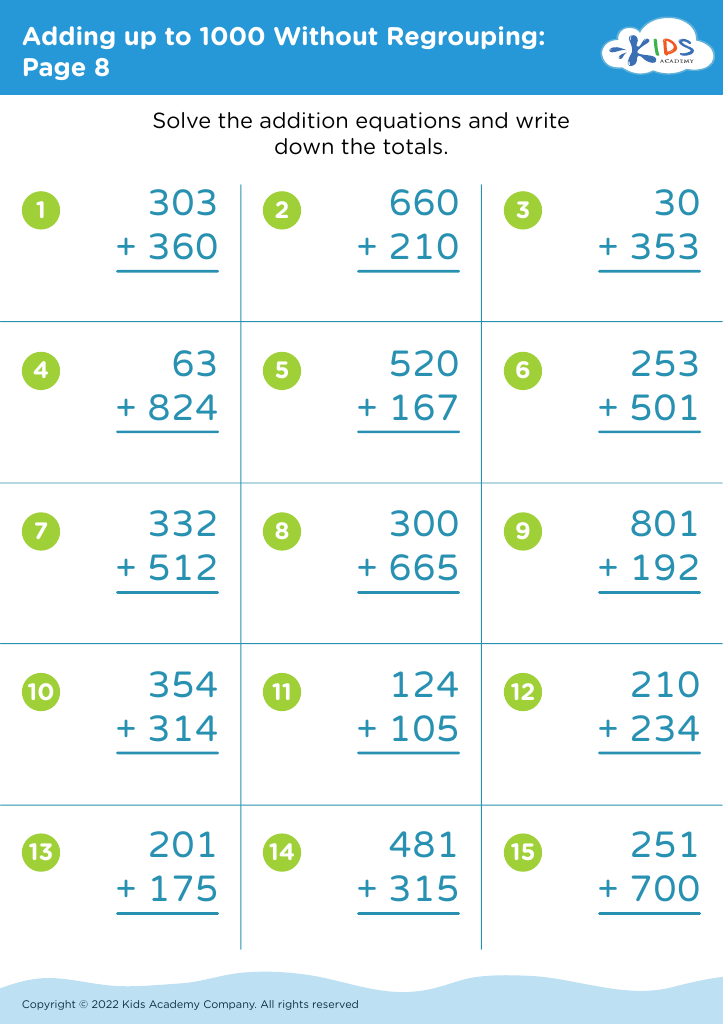
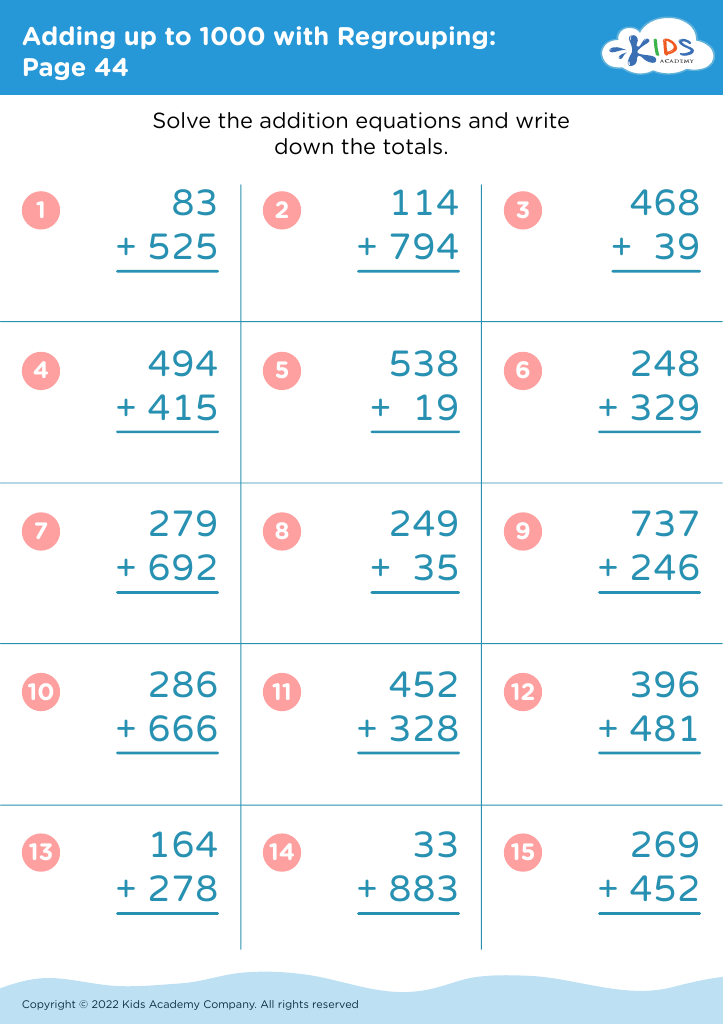



Ensuring that children ages 6-8 develop critical thinking skills alongside their ability to add up to 1000 is vital for their overall cognitive development. At this stage, children are not only learning basic arithmetic but also beginning to understand more complex concepts that require analytical and problem-solving abilities. By incorporating critical thinking exercises into math lessons, children learn to approach problems systematically, ask questions, and explore multiple solutions, which strengthens their reasoning skills.
When children practice adding up to 1000, they develop numerical fluency and the confidence to manipulate larger numbers. Integrating critical thinking into this process means they are not just following procedures but understanding why those procedures work. This foundational knowledge will benefit them in more advanced math and real-world scenarios, where logical thinking and problem-solving are crucial.
Moreover, critical thinking fosters independence and resilience. Children learn to tackle challenges methodically, reducing anxiety over complex tasks. This prepares them for future academic pursuits and everyday decision-making, ensuring they are more adaptable and resourceful.
In summary, caring about the development of critical thinking along with numerical skills provides children with a well-rounded intellectual toolkit. This ensures their academic journey is comprehensive and equips them with indispensable life skills.








