Fraction simplification Adding up to 1000 Worksheets for Ages 6-8
7 filtered results
-
From - To
Introducing our engaging "Fraction Simplification Adding Up to 1000 Worksheets" designed specifically for kids aged 6 to 8! These carefully crafted resources help young learners explore the basics of fraction simplification while mastering addition techniques to combine numbers up to 1000. Each worksheet fosters key math skills through fun exercises that encourage critical thinking and problem-solving. Perfect for use at home or in the classroom, these worksheets ensure children build a solid foundation in mathematics. Enrich your child's learning journey and boost their confidence in math with our colorful and interactive worksheets tailored for early learners!
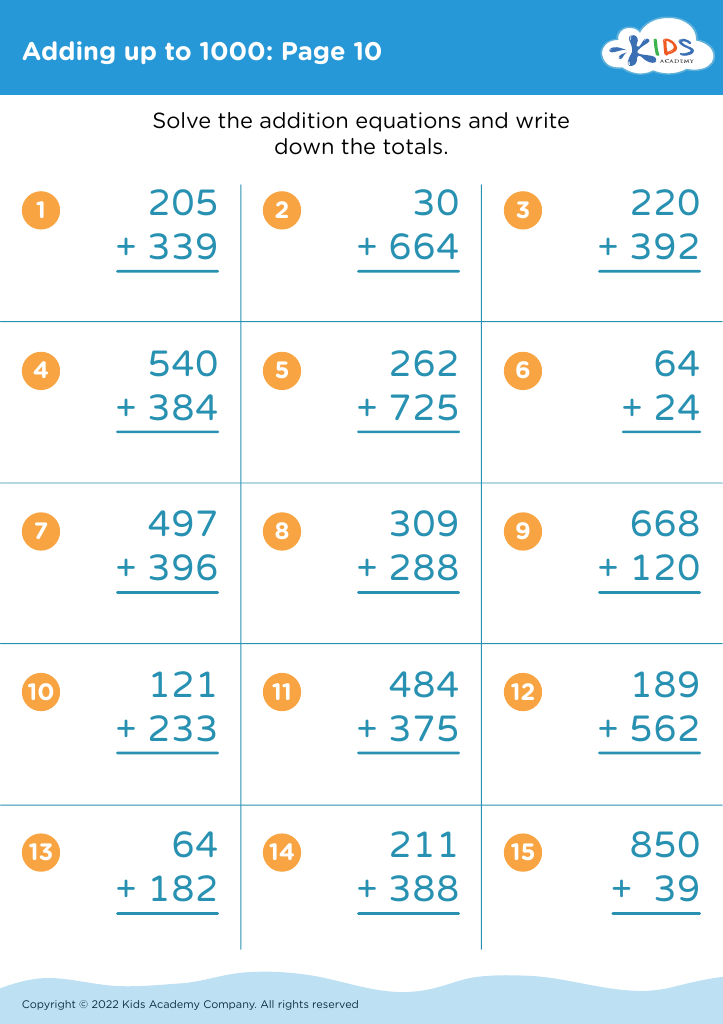
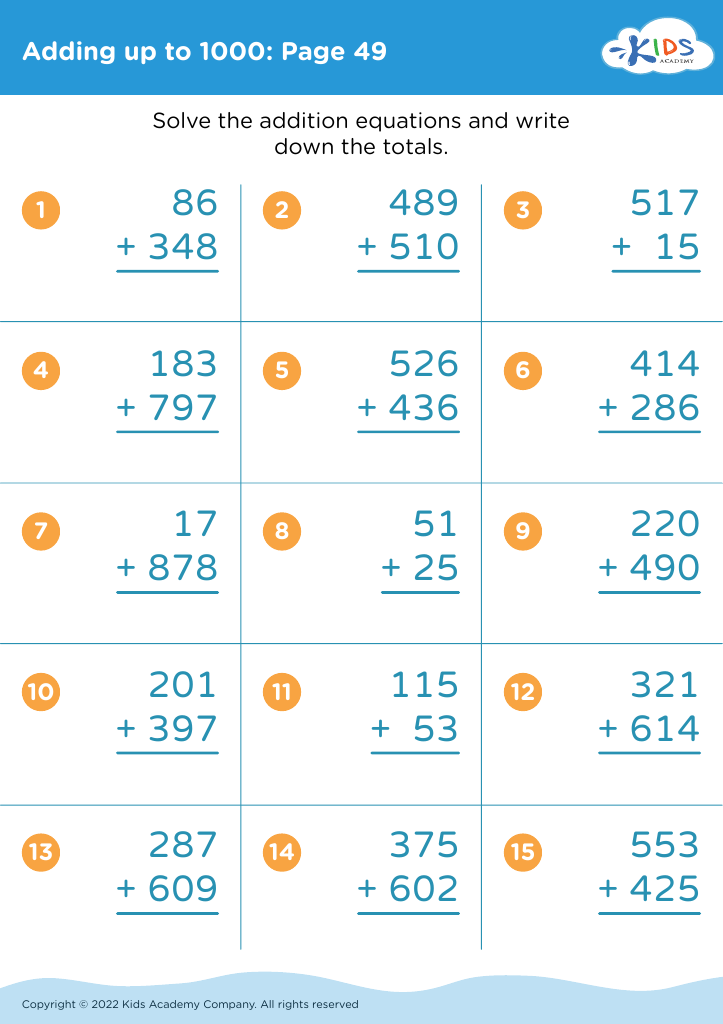
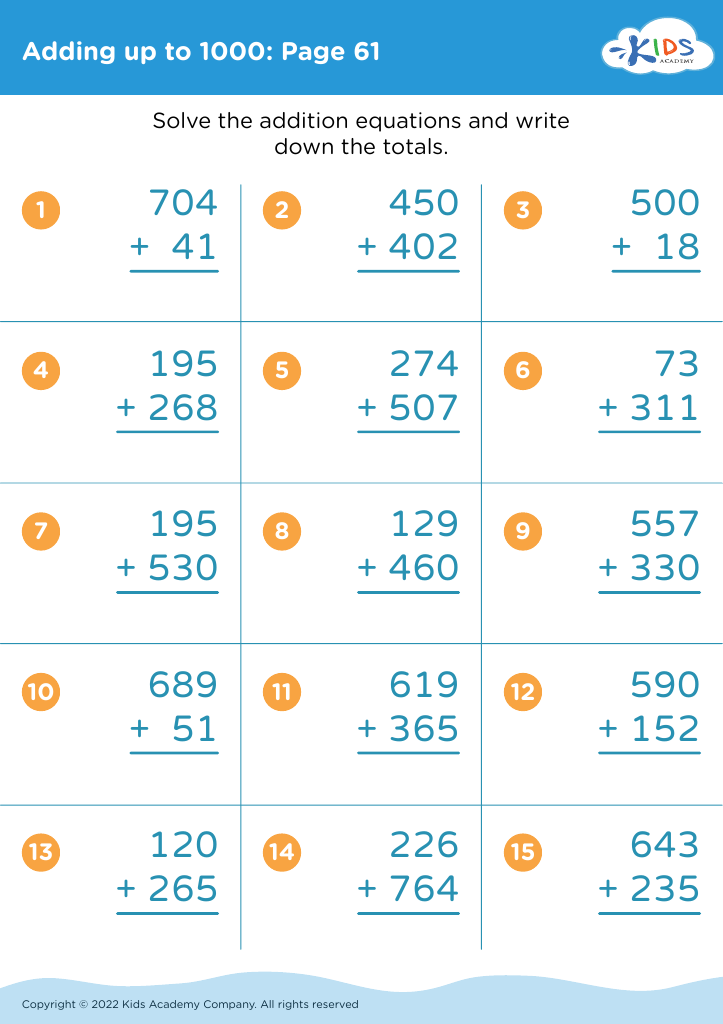
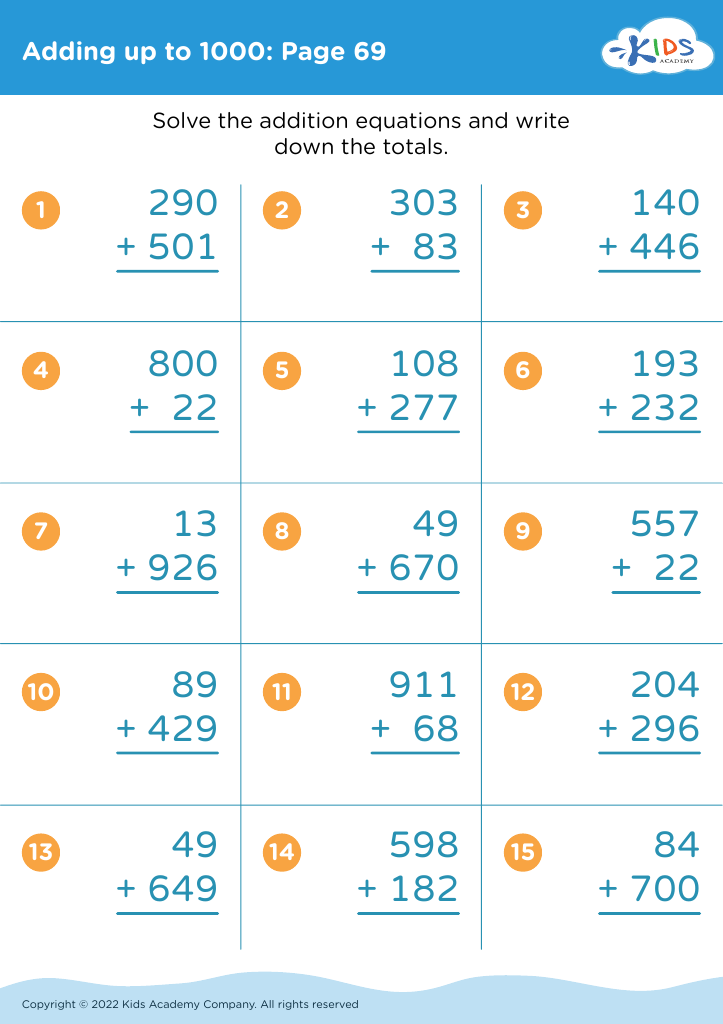
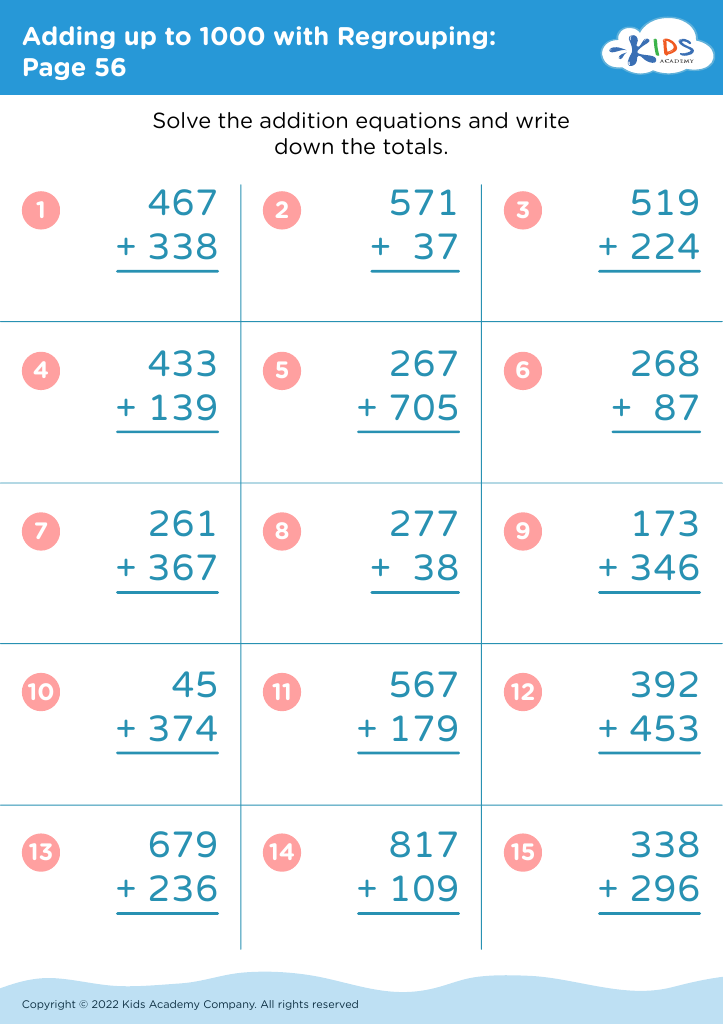
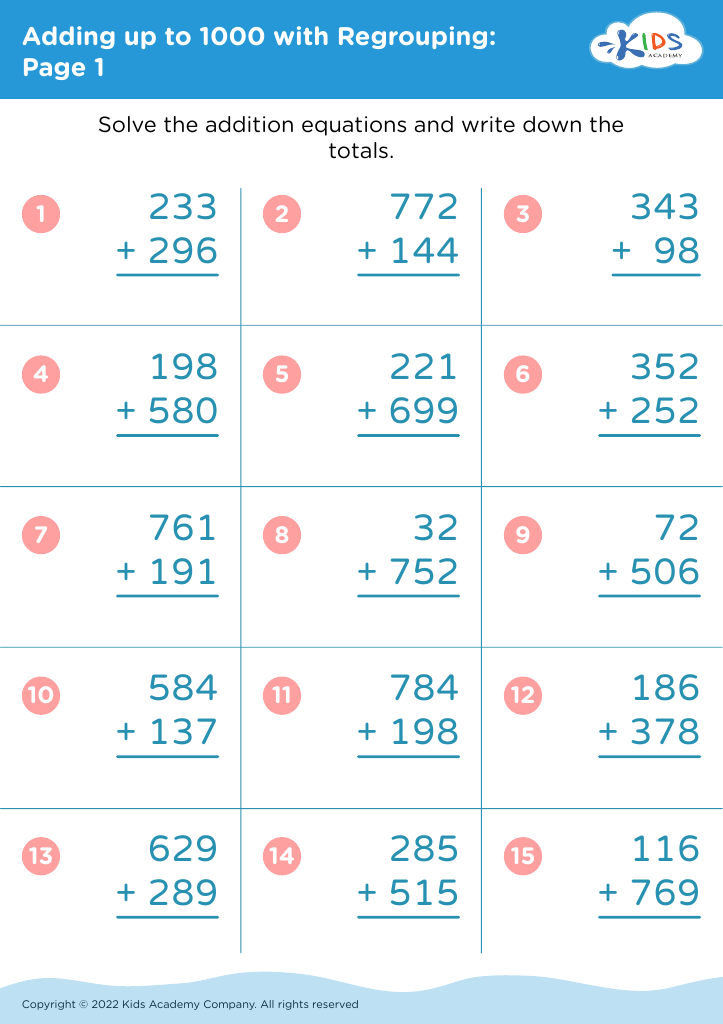
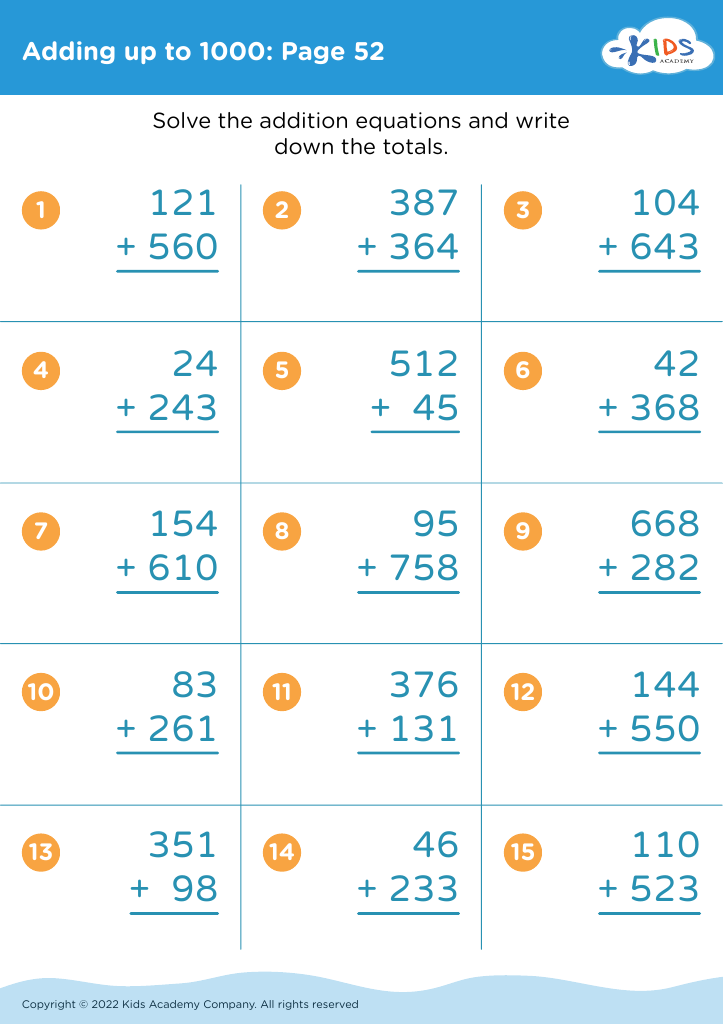



Fraction simplification and adding numbers up to 1000 are essential skills for children aged 6-8 that foster critical thinking and arithmetic abilities. For parents and teachers, understanding these concepts is crucial for nurturing a child's mathematical development and boosting their confidence in problem-solving.
Simplifying fractions allows children to grasp the idea of equivalent values, enabling them to recognize patterns and relationships between numbers. This foundational understanding aids in future math skills, as fractions are a precursor to more complex concepts like ratios and proportions. It promotes analytical thinking as children learn how to reduce fractions to their simplest form.
Meanwhile, mastering addition up to 1000 equips young learners with the ability to handle larger numbers confidently. It lays the groundwork for complex calculations they will encounter later in school. Proficiency in addition enhances a child's overall numerical fluency, enabling them to tackle word problems and real-world situations with ease.
By emphasizing these skills, parents and teachers can help children embrace math as a tool for understanding the world around them, enhancing their academic performance and ensuring they are well-prepared for future mathematical challenges. Fostering a positive relationship with math early on cultivates lifelong learners who view challenges with curiosity and perseverance.








