Improve math skills Adding up to 1000 Worksheets for Ages 6-8
6 filtered results
-
From - To
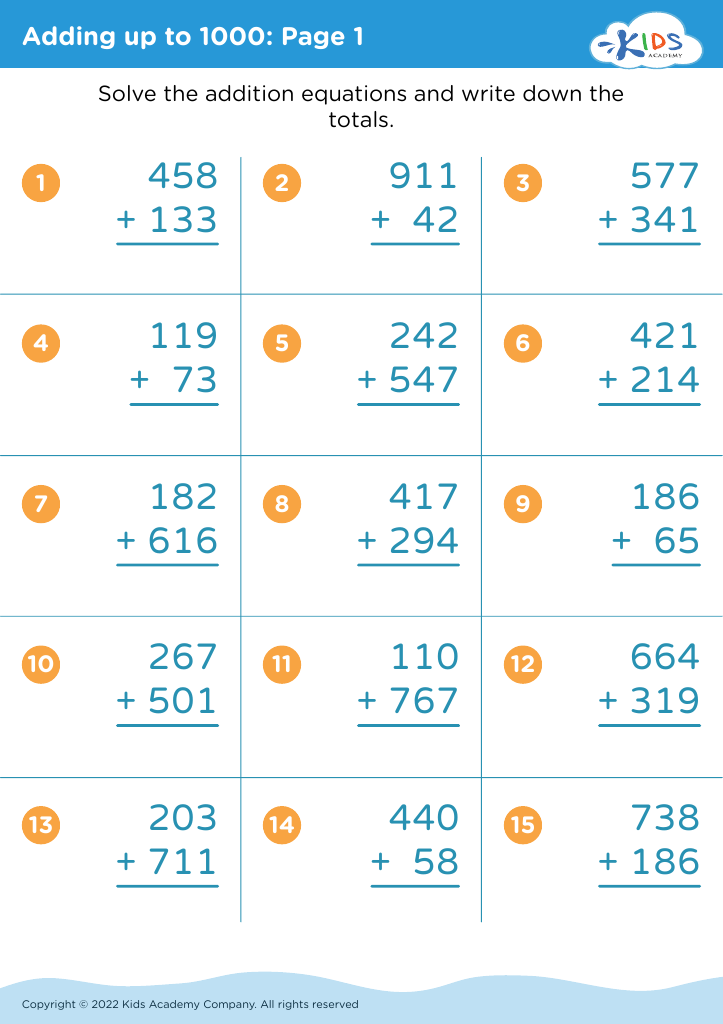
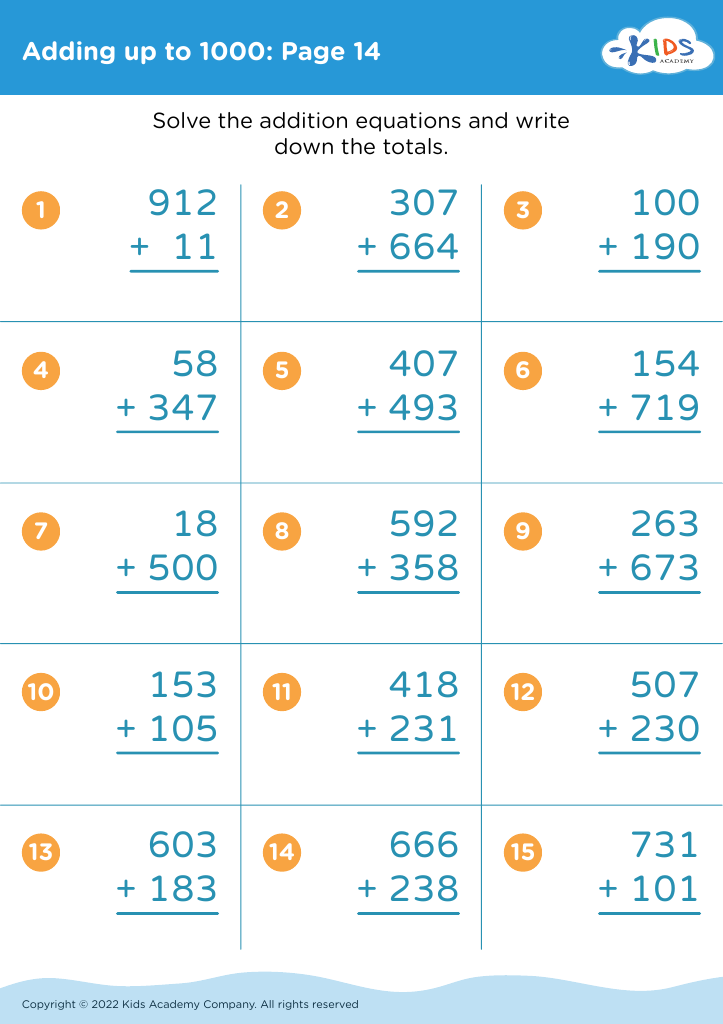
Boost your child's arithmetic abilities with our "Improve Math Skills Adding up to 1000 Worksheets for Ages 6-8." Designed to strengthen foundational math, these engaging worksheets gradually introduce kids to adding larger numbers with ease. Each sheet offers fun, interactive problems that encourage critical thinking and problem-solving, making learning enjoyable and effective. Ideal for classroom use or at-home practice, our resources aid in building confidence and proficiency in math. Explore Kids Academy's expertly crafted worksheets and watch your young learner's skills grow as they master the art of addition, setting a solid mathematical foundation for their future.
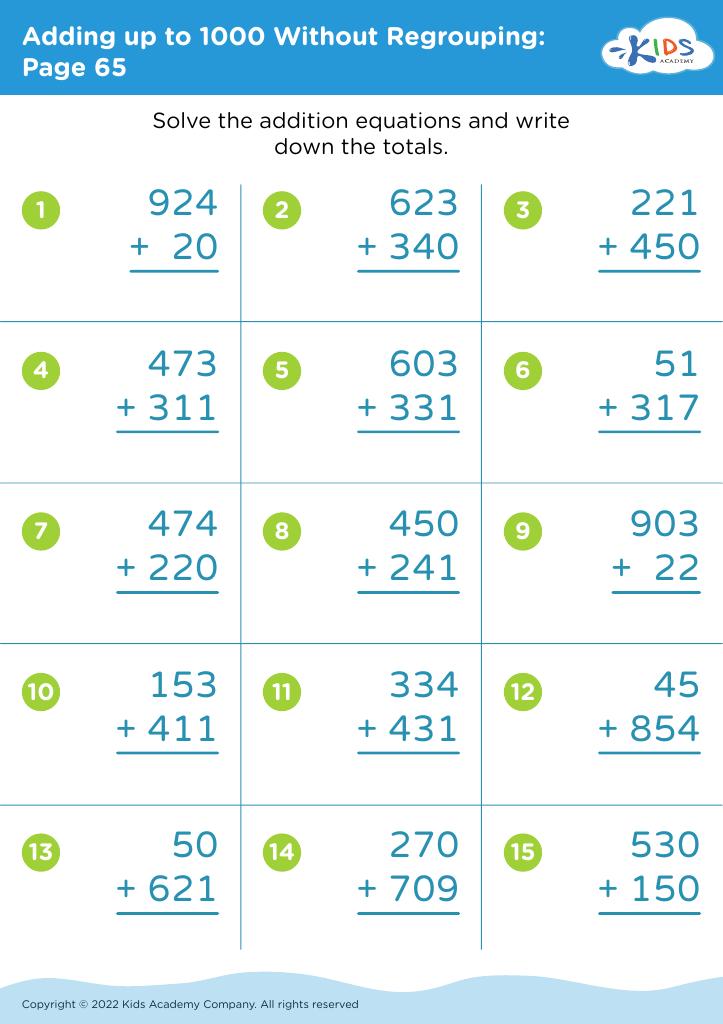
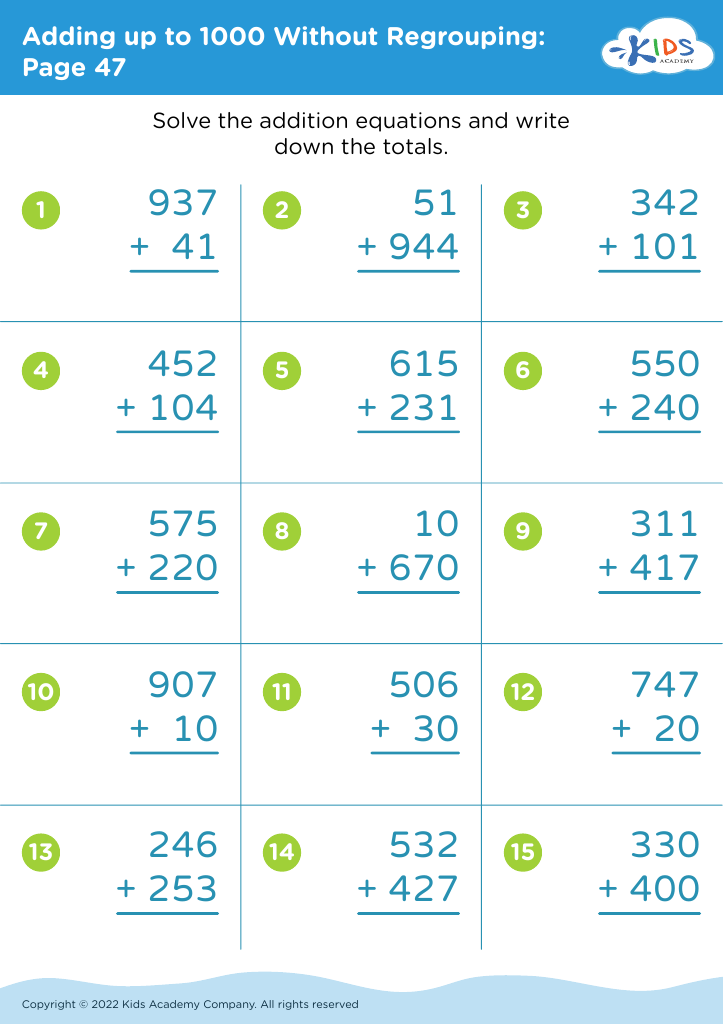
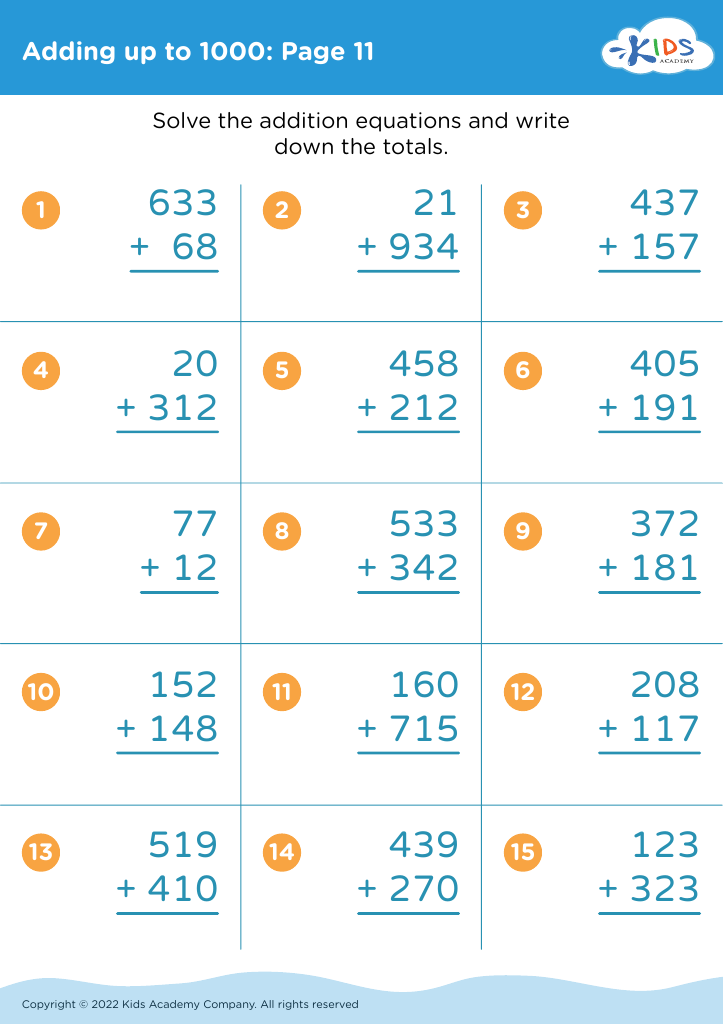
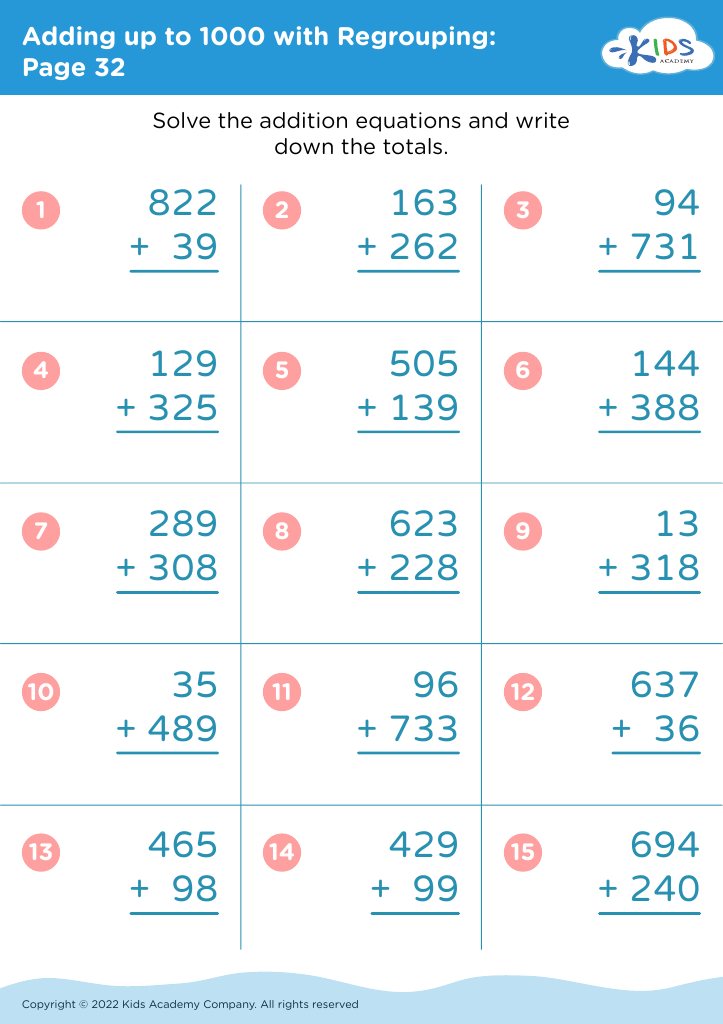



Fostering strong math skills, such as addition up to 1000, in children aged 6-8 is vitally important for several reasons. At this critical stage in their development, children are laying the groundwork for future learning and cognitive skills. First, mastering addition up to 1000 improves numerical fluency, making more advanced math concepts easier to grasp later on. It’s much like learning to read properly before delving into more complex texts.
Improving math skills also boosts critical thinking and problem-solving abilities. When children learn addition, they are not just learning to calculate sums; they are also increasing their ability to approach and solve broader, real-world problems logically. This is especially relevant today as these skills are crucial in a technology-driven world.
Moreover, early success in math can build confidence. Children who feel competent in their ability to handle math often have higher self-esteem and are more likely to approach challenges with a positive attitude. This can lead to a more positive academic experience overall.
Parents and teachers sharing in the learning process can also make this a bonding experience, fostering a supportive environment that values education. Moreover, early parental involvement has been shown to correlate with better long-term educational success. Encouraging children to develop strong math skills early sets the stage for lifelong academic and personal achievements.








