Number identification Adding up to 1000 Worksheets for Ages 6-8
3 filtered results
-
From - To
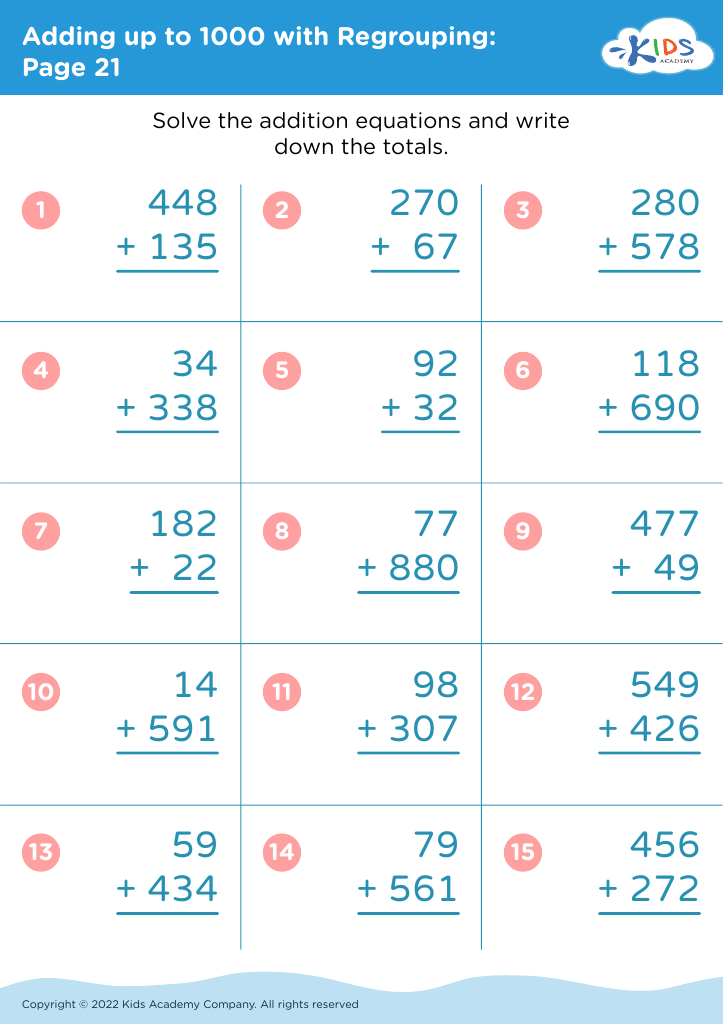
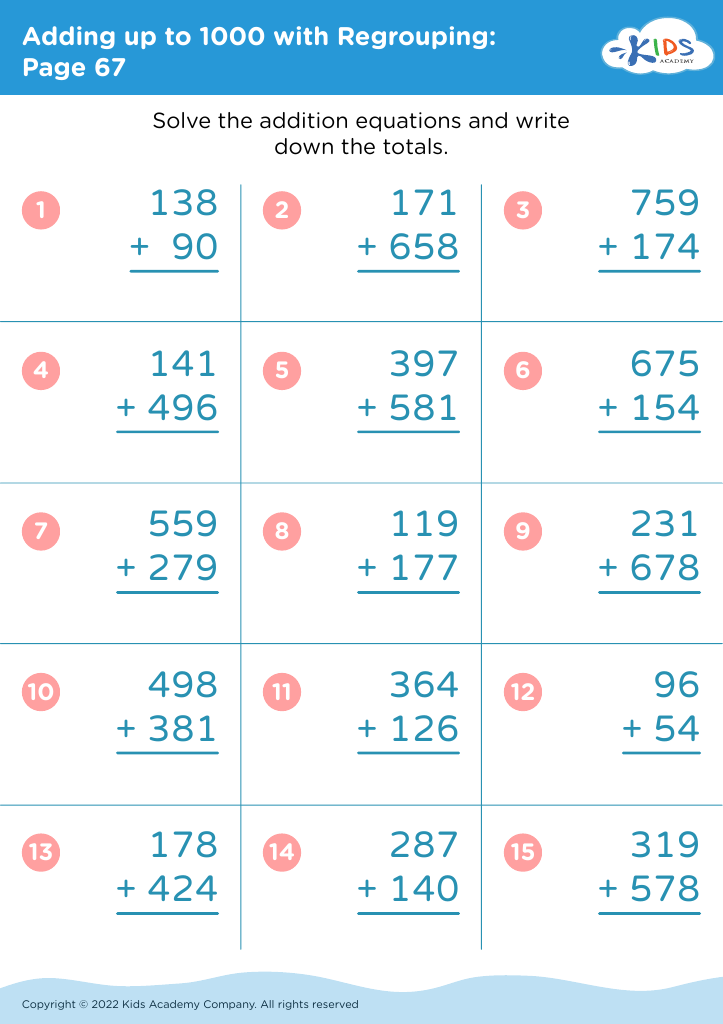
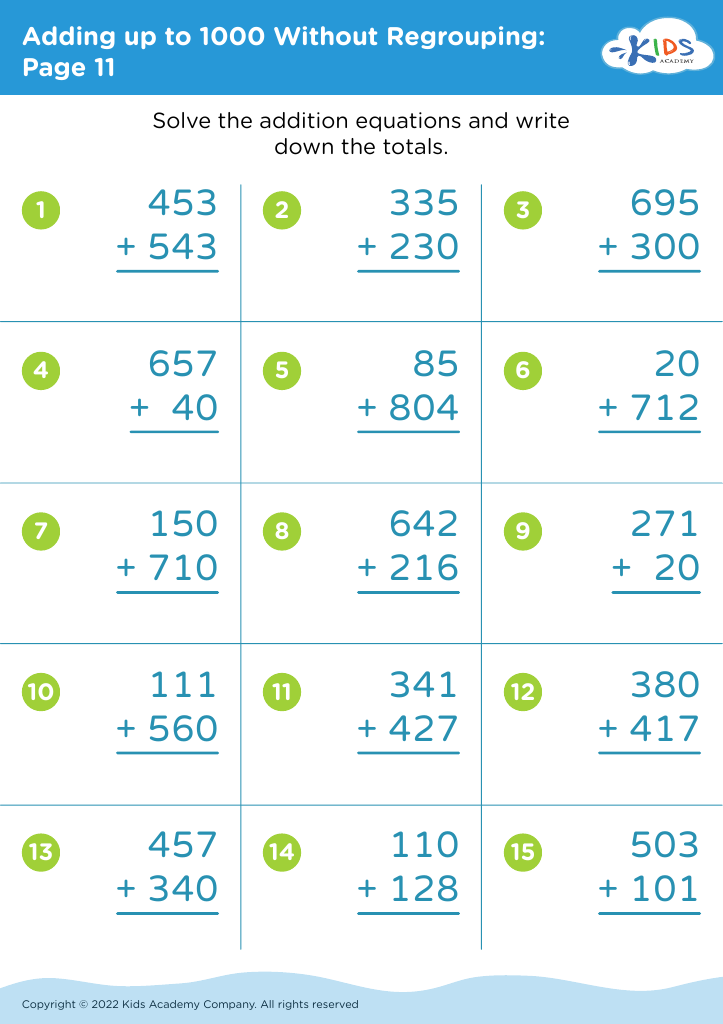
Boost your child’s math skills with our engaging Number Identification Worksheets, designed for ages 6-8! These worksheets focus on adding up to 1000, helping young learners identify and understand numbers through a variety of fun activities. Each exercise is crafted to enhance cognitive skills while nurturing a love for math. Children will practice recognizing numbers, solving addition problems, and developing critical thinking skills in an interactive format. Perfect for classroom use or at-home learning, these resources provide excellent support for foundational math concepts. Explore our vibrant worksheets and watch your child confidently master number identification while having fun!



Number identification and addition skills are crucial for children aged 6-8, as they form the foundation for future mathematical understanding and problem-solving abilities. At this age, children are typically transitioning from basic counting to more complex operations, and being able to identify and work with numbers up to 1000 is essential for their cognitive development.
Firstly, number identification fosters a sense of numeracy and confidence in young learners. Mastering this skill allows children to perform essential daily tasks, such as managing money, telling time, and estimating quantities, which are vital for their independence.
Secondly, addition fluency directly impacts academic performance. By helping children add numbers efficiently within the 1000 range, teachers and parents provide them with valuable tools for tackling word problems, understanding math concepts in higher grades, and eventually applying these skills in real-world scenarios.
Moreover, early engagement with numbers helps in developing logical thinking and analytical skills that extend beyond mathematics, fostering cognitive development as a whole. Thus, parents and teachers should prioritize number identification and addition practice to set a solid foundation for future learning and equip children with necessary life skills.








