Number Recognition Adding up to 1000 Worksheets for Ages 6-8 - Page 2
31 filtered results
-
From - To
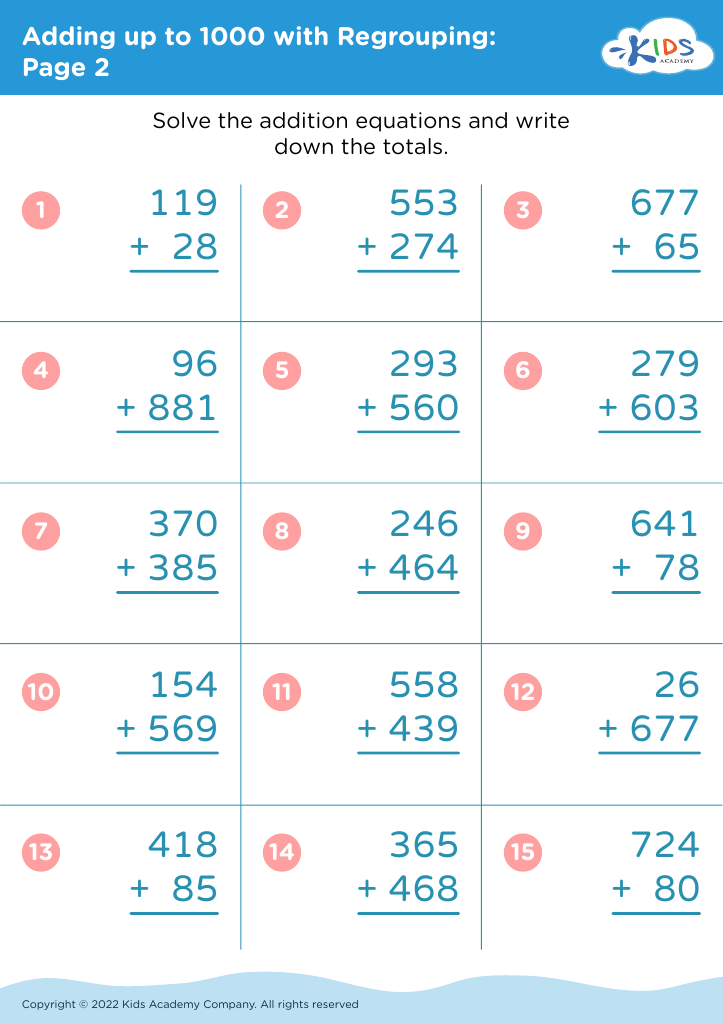
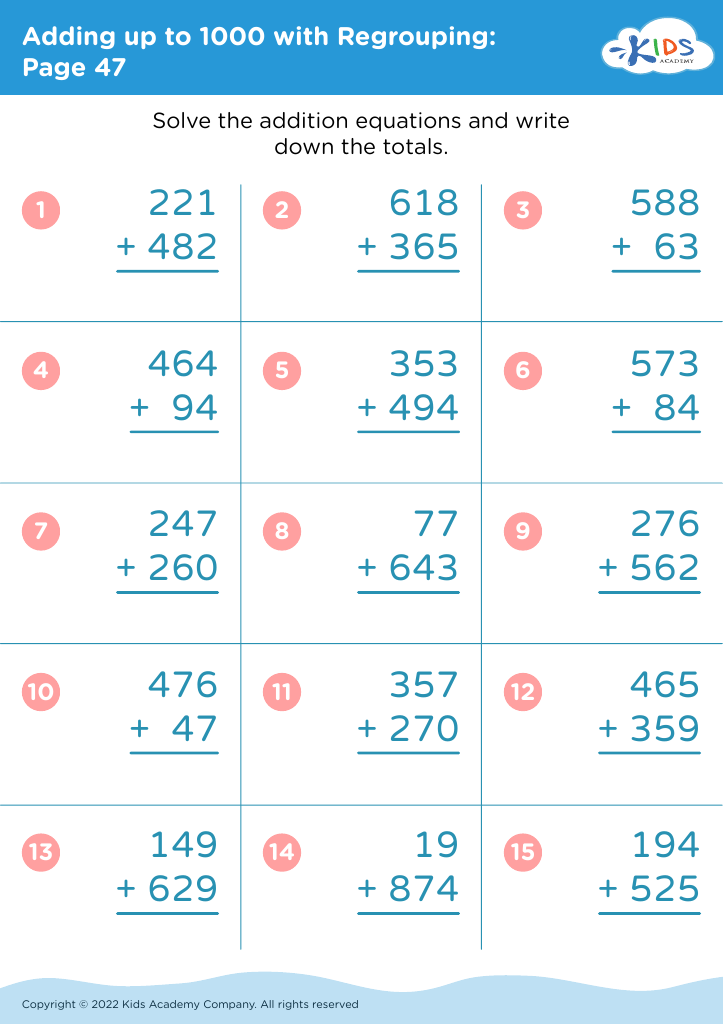
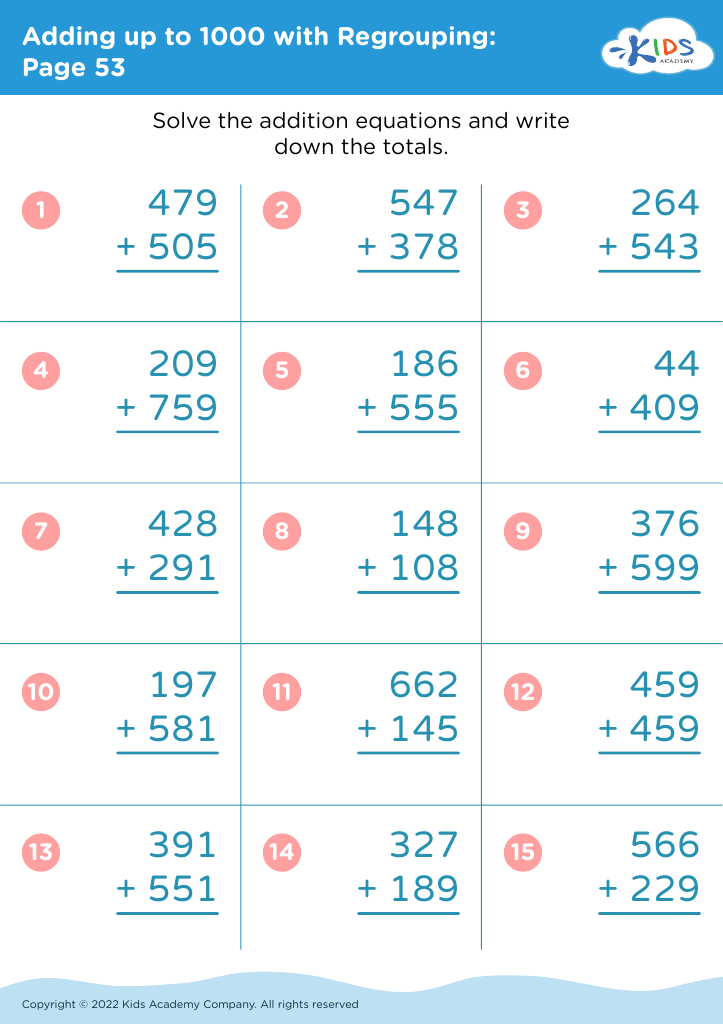
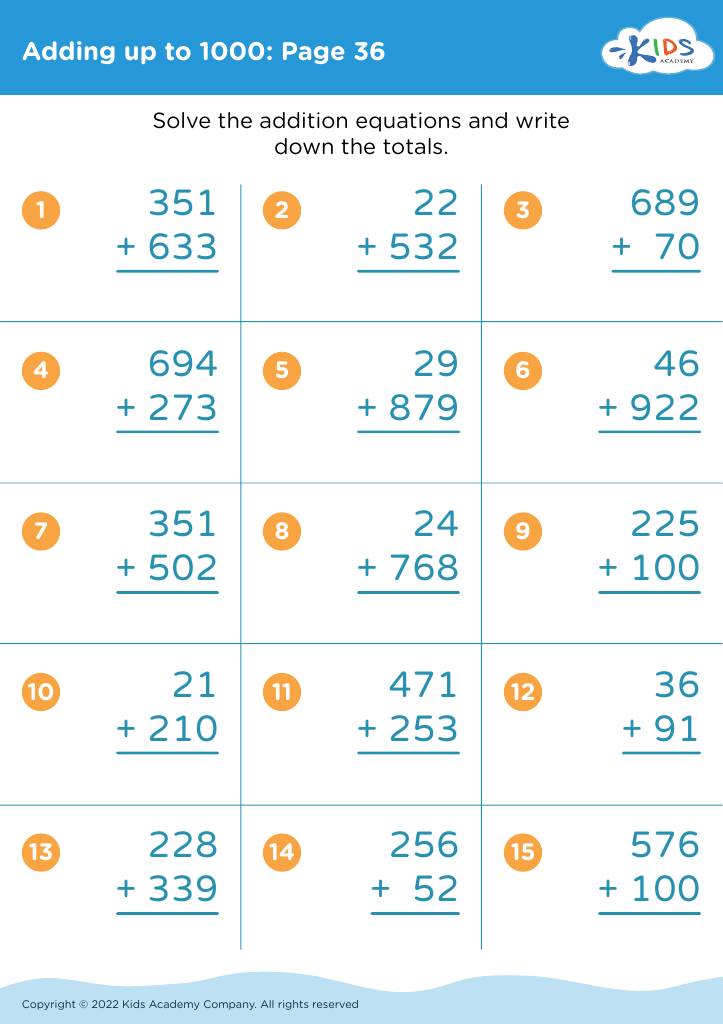
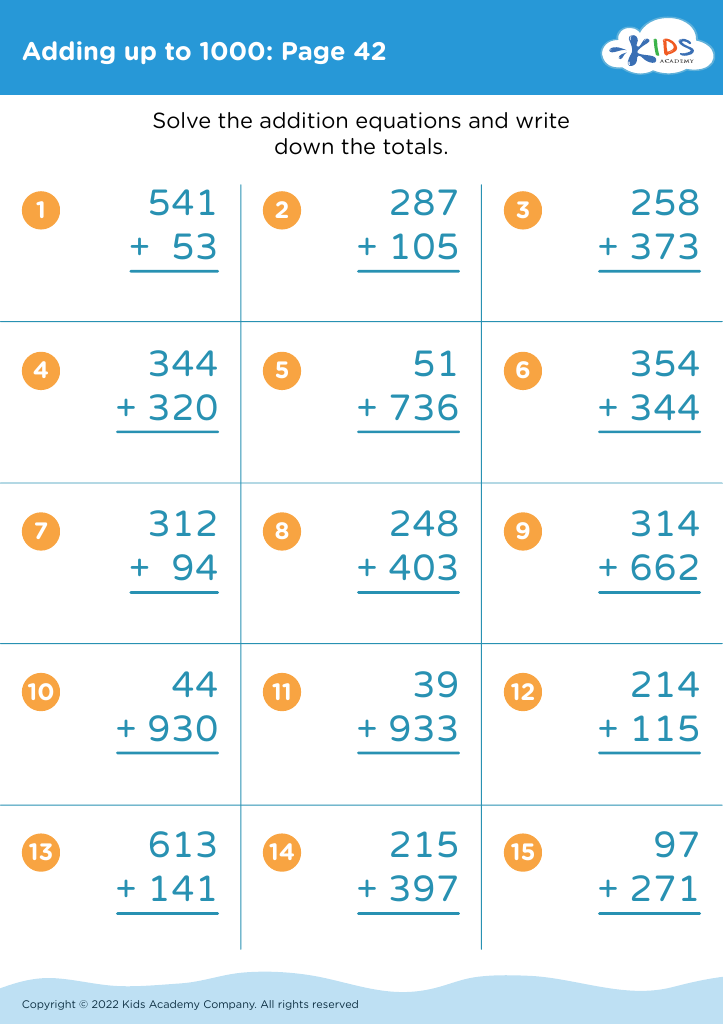
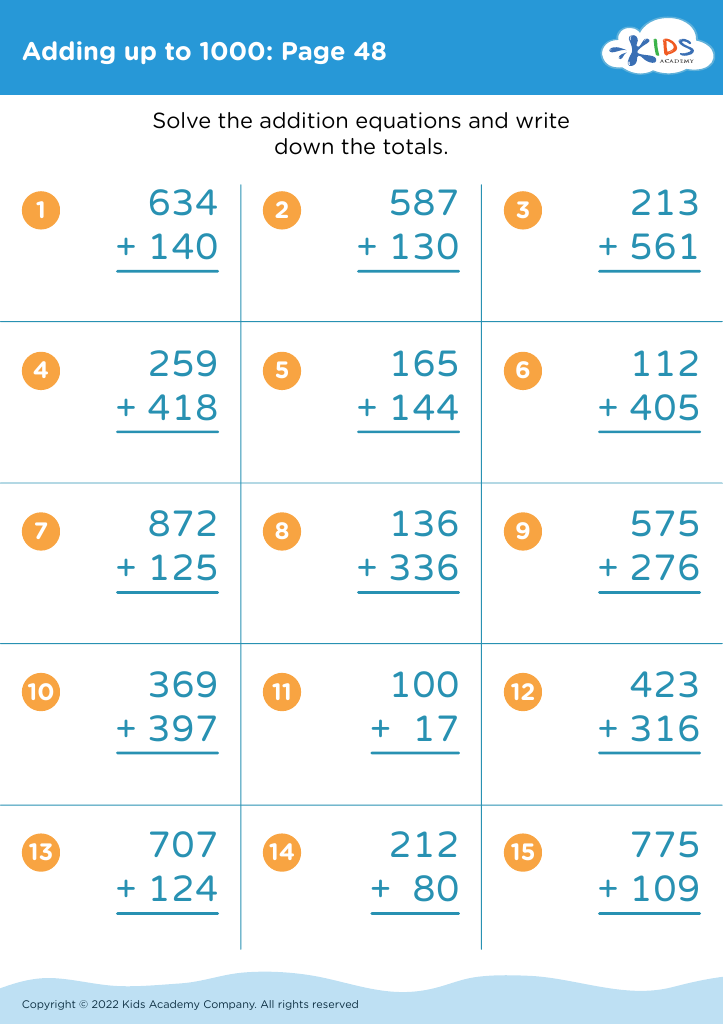
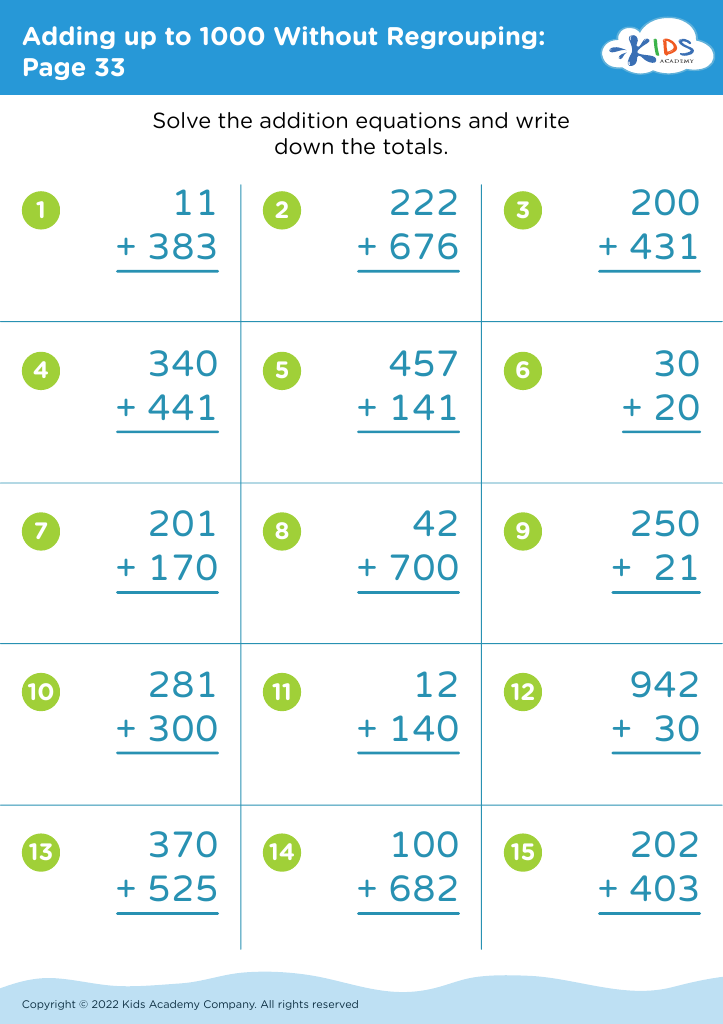




Number recognition and early arithmetic skills, such as adding up to 1,000, are foundational for cognitive and academic development in children aged 6-8. These skills not only enhance a child's mathematical understanding but also bolster critical thinking and problem-solving abilities across various subjects.
First, mastering number recognition and addition within this numerical range sets the groundwork for advanced math concepts encountered later in school. This proficiency is essential for understanding place value, arithmetic operations, and eventually fractions and decimals.
Second, these math skills foster confidence and independent thinking. When children feel competent in basic mathematics, they are more likely to approach complex problems with a positive attitude and resilience. This attitude can lead to better performance in all areas of learning, boosting their overall academic success.
Furthermore, number competence is connected to everyday life skills such as telling time, handling money, and measuring quantities. These practical applications emphasize the importance of instilling strong numerical skills at an early age.
In addition to academic benefits, improved math skills contribute to enhanced cognitive development. Skills such as logical reasoning, pattern recognition, and systematic thinking, all nurtured through math education, are critical cognitive abilities beneficial throughout life.
In summary, ensuring children recognize numbers and can add up to 1,000 equips them with essential skills for both academic achievement and everyday functioning, laying a robust foundation for their future learning and development.








