Number Sequencing Adding up to 1000 Worksheets for Ages 6-8
5 filtered results
-
From - To
Enhance your child's number sequencing skills with our "Number Sequencing Adding up to 1000" worksheets, specially designed for ages 6-8. These educational worksheets offer engaging exercises to help young learners master the art of adding numbers in sequence up to 1000. Each worksheet provides a variety of problems that foster critical thinking and mathematical confidence. Perfect for reinforcement at home or in the classroom, these activities support the development of essential math skills. Dive into a fun and effective learning experience with our expertly crafted worksheets that align with educational standards. Download today and watch your child excel!
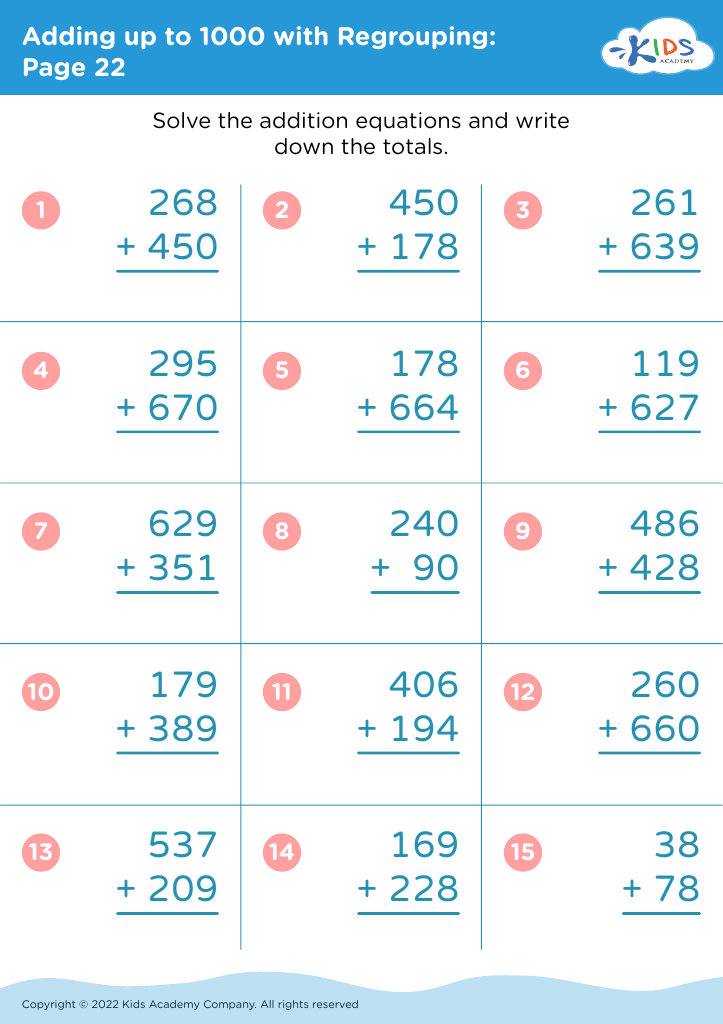
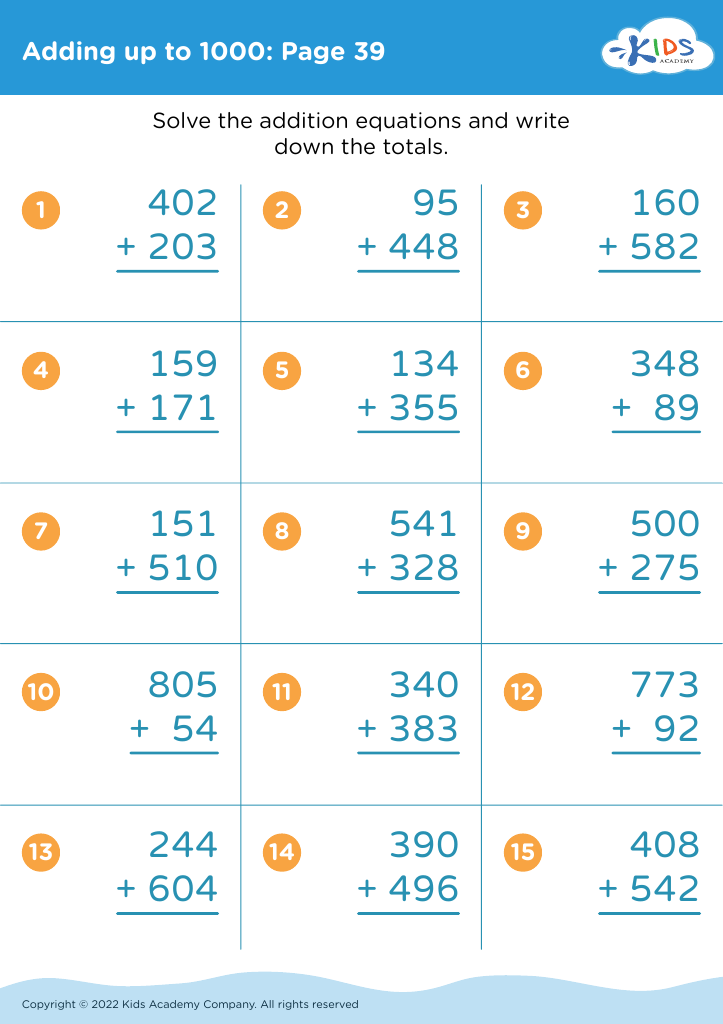
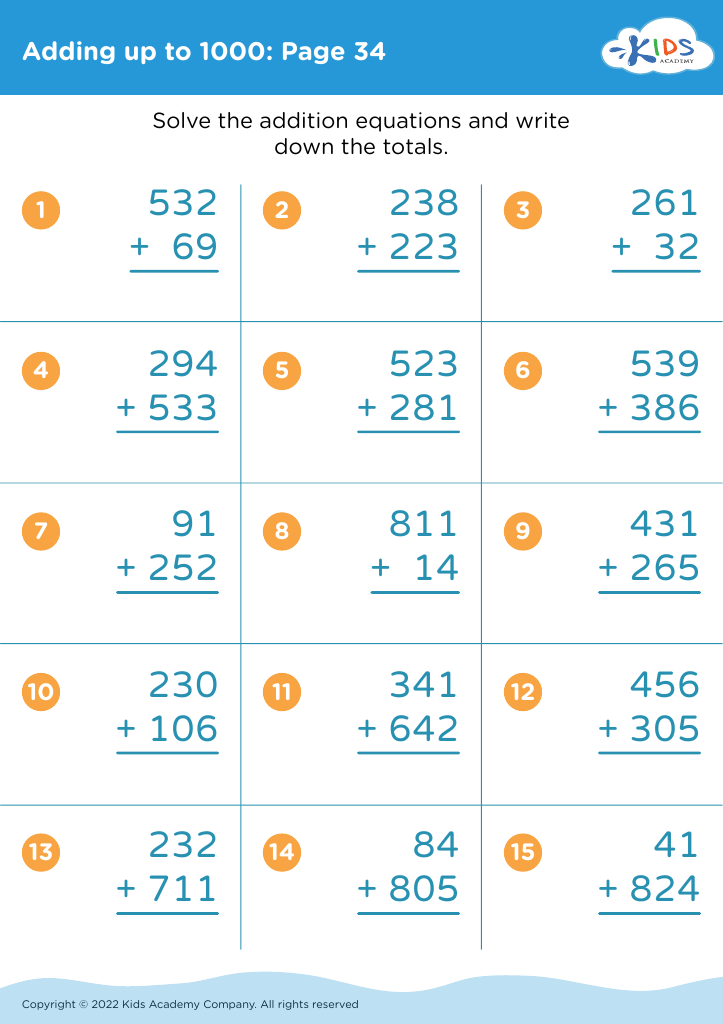
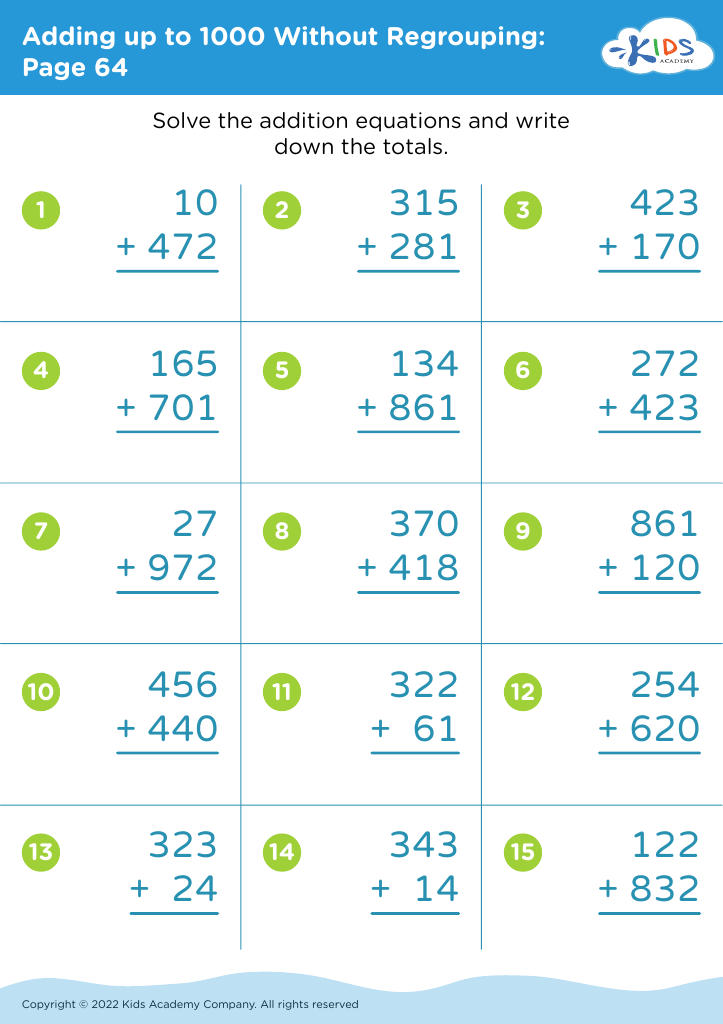
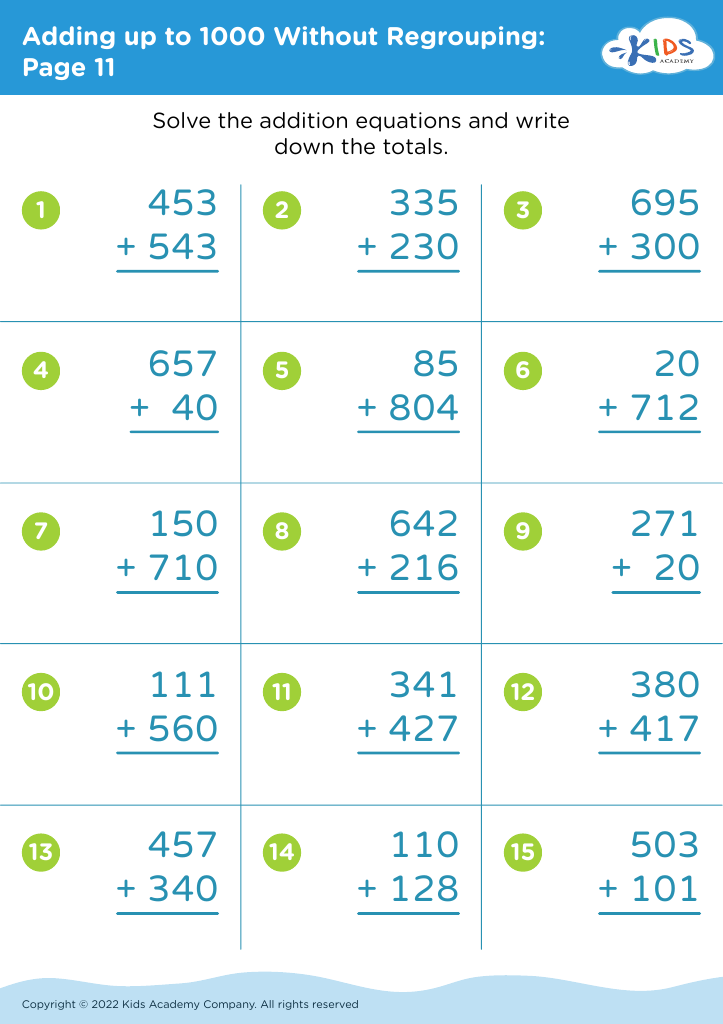



Parents and teachers should care about number sequencing and adding up to 1000 for children ages 6-8 because it is foundational for mathematical understanding and cognitive development. Learning to sequence numbers helps children recognize patterns, a critical skill that supports problem-solving and logical thinking. Fundamental concepts such as counting, number recognition, and place value are reinforced through sequencing activities, which also aid children in grasping the idea of numerical order and intervals.
When children practice adding up to 1000, they develop arithmetic fluency and essential operational skills such as addition and subtraction. At this stage, engaging in tasks that involve three-digit numbers enhances children's mental math abilities, boosting their confidence in handling larger numbers as they progress in their education. This practice also lays the groundwork for more advanced topics like multiplication, division, and eventually, concepts in algebra and other higher mathematics.
Additionally, early mastery of these skills contributes to overall academic success, instilling a level of competence and perseverance in students. By supporting their mathematical journey from an early age, parents and teachers help cultivate a positive attitude towards math, which can translate to better performance in school and an enhanced ability to tackle real-world problems. The holistic growth in intellectual capacity encourages lifelong learners adept at critical and structured thinking.








