Pattern recognition Adding up to 1000 Worksheets for Ages 6-8
3 filtered results
-
From - To
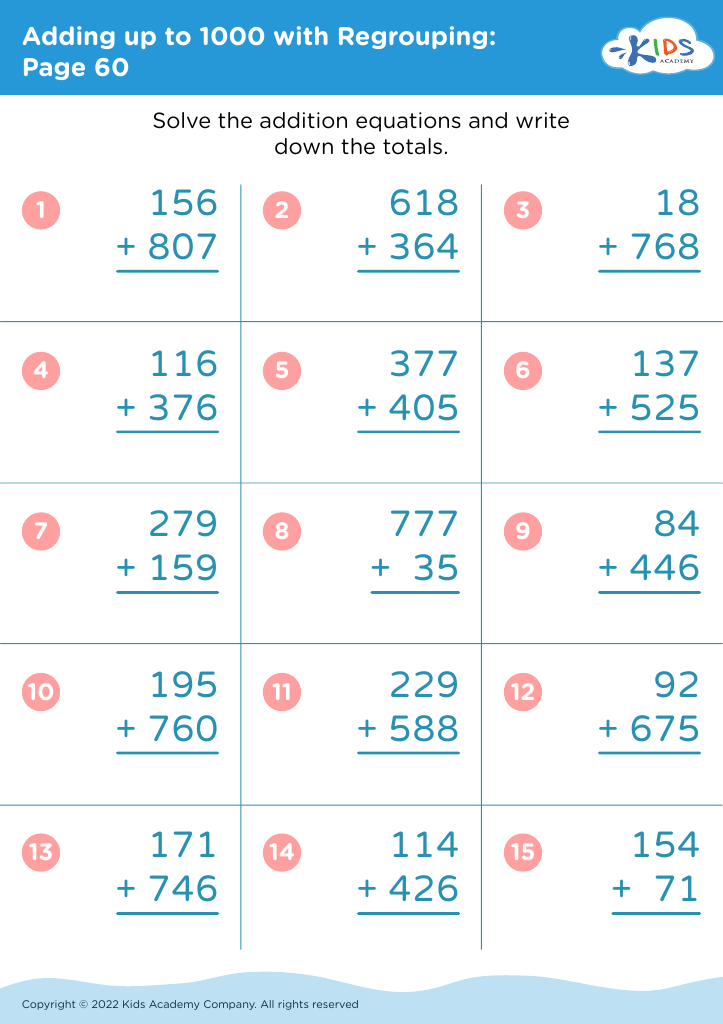
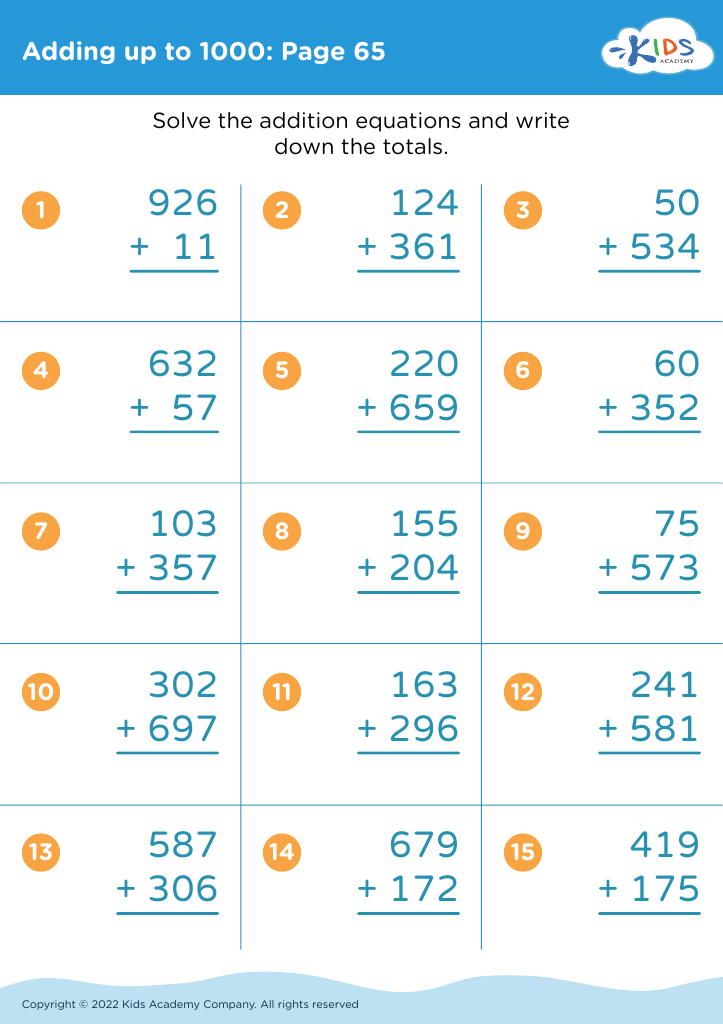
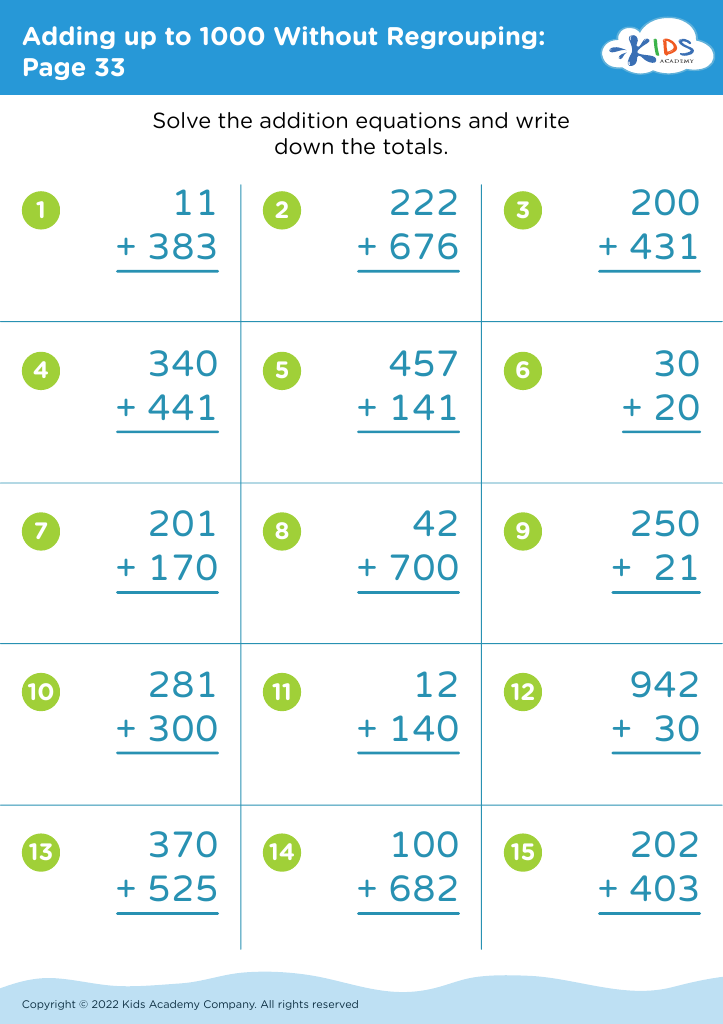
Unlock your child's potential with our "Pattern Recognition Adding Up to 1000 Worksheets" designed specifically for ages 6-8! This engaging resource helps young learners develop critical math skills by recognizing patterns in numbers while mastering addition up to 1000. With colorful visuals and fun activities, these worksheets encourage interactive learning and make complex concepts accessible. Each worksheet is meticulously crafted to enhance cognitive development and boost confidence in math. Ideal for teachers and parents alike, these printable worksheets promote independent practice and cater to diverse learning styles. Join us in fostering a love for math and enhancing problem-solving skills today!



Pattern recognition is an essential skill for children aged 6-8, as it lays the foundation for critical thinking and problem-solving in various subjects, particularly mathematics. Understanding patterns helps children recognize relationships among numbers, enabling them to grasp concepts like addition, subtraction, and even multiplication more effectively. When children learn to identify and create patterns, they become more adept at predicting outcomes, which fosters logical reasoning.
Adding up to 1000 introduces foundational numeracy skills, encouraging children to explore number combinations and enhance their fluency with basic calculations. It also emphasizes the connection between patterns and math, helping learners see beyond mere memorization. This understanding not only boosts their confidence in math but also equips them to tackle more advanced mathematical concepts in later grades.
Moreover, pattern recognition supports cognitive development and enhances memory retention, making learning more engaging and enjoyable. By fostering these skills, parents and teachers can cultivate a more enriching educational environment. Ultimately, as children become proficient in recognizing and utilizing patterns, they develop essential skills that transcend mathematics, benefiting their overall academic performance and daily life. Engaging with these concepts early sets the stage for a successful and confident future learner.








