Practice subtraction Adding up to 1000 Worksheets for Ages 6-8
3 filtered results
-
From - To
Welcome to our engaging "Practice Subtraction Adding Up to 1000 Worksheets" designed for children ages 6-8! Tailored to enhance foundational math skills, these worksheets offer a fun and interactive way for young learners to master subtraction concepts and tackle problems involving numbers up to 1000. Each worksheet is filled with colorful illustrations and age-appropriate exercises that support differentiated learning and keep kids motivated. Alongside developing essential subtraction skills, these activities promote critical thinking and problem-solving abilities. Perfect for classroom use or home study, our worksheets are a great tool to make math enjoyable while building confidence in young mathematicians!
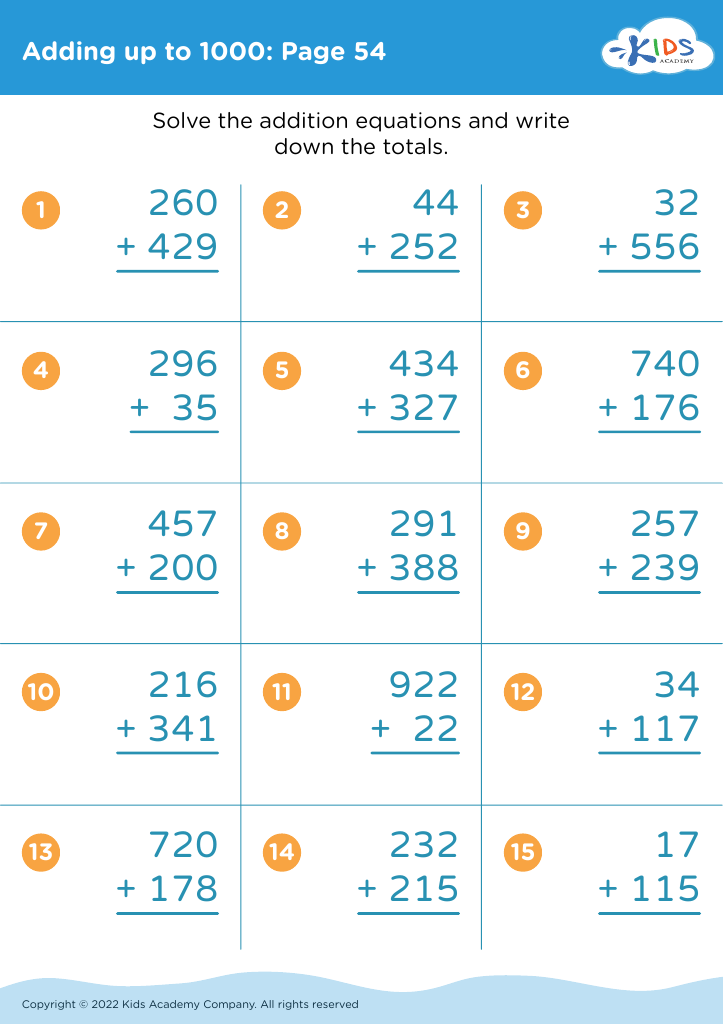
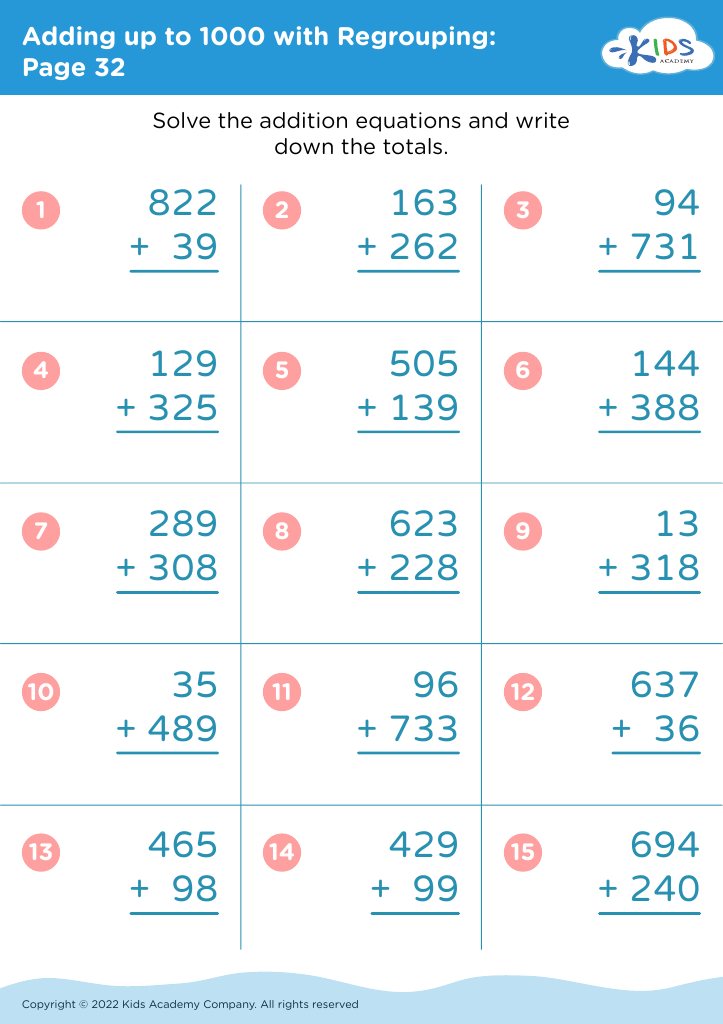
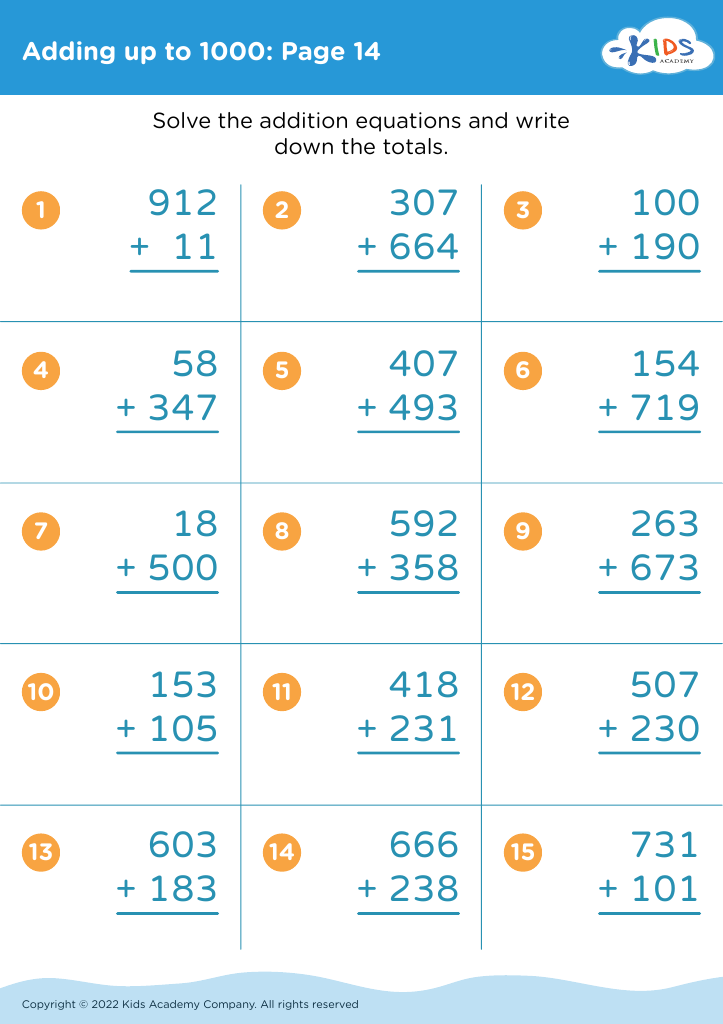



Parents and teachers should prioritize practice with subtraction and addition up to 1000 for children aged 6-8 because these foundational skills are critical for mathematical fluency and overall cognitive development. At this age, children are not just learning to perform calculations; they are developing problem-solving abilities, logical reasoning, and critical thinking skills that will serve them throughout their education.
Mastering subtraction and addition aids in building number sense, which fosters confidence and a positive relationship with math. It equips children to tackle more complex concepts in later grades, essential for their academic progress. Moreover, when children grasp how to manipulate numbers effectively, they enhance their ability to recognize patterns, make predictions, and engage with real-world math problems, such as budgeting or measuring.
Additionally, regular practice helps children solidify their math skills in a supportive environment. Whether at home or in school, parents and teachers can create engaging activities that encourage practice, making learning fun and interactive. With early encouragement and sufficient practice, children can become independent learners, reducing math anxiety and laying a strong foundation for their future academic pursuits. In essence, this investment in their early learning is pivotal for developing a lifelong appreciation for mathematics.








