Practice writing numbers Adding up to 1000 Worksheets for Ages 6-8
3 filtered results
-
From - To
Enhance your child's math skills with our "Practice Writing Numbers Adding Up to 1000" worksheets, specially designed for ages 6-8. These engaging resources allow kids to practice writing numbers in a fun and interactive way, building confidence in their numeral recognition and writing ability. Each worksheet features a variety of exercises focused on numbers up to 1000, blending essential writing practice with foundational math concepts. By completing these activities, children will not only improve their numeracy skills but also develop critical counting and problem-solving abilities. Perfect for at-home or classroom use, empower your child's learning journey today!
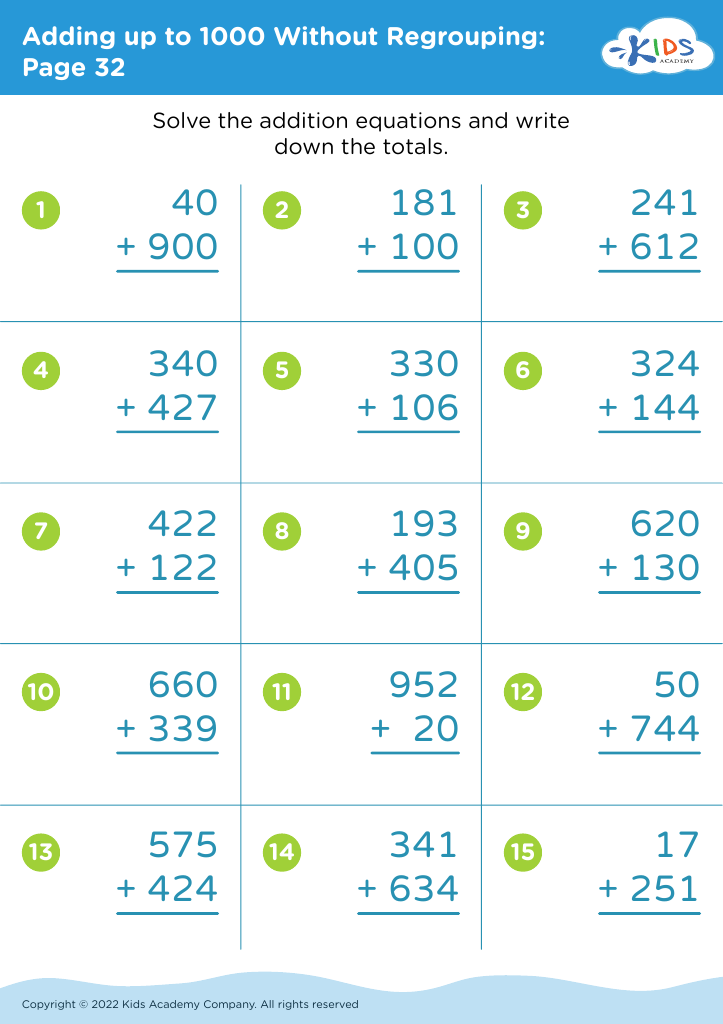
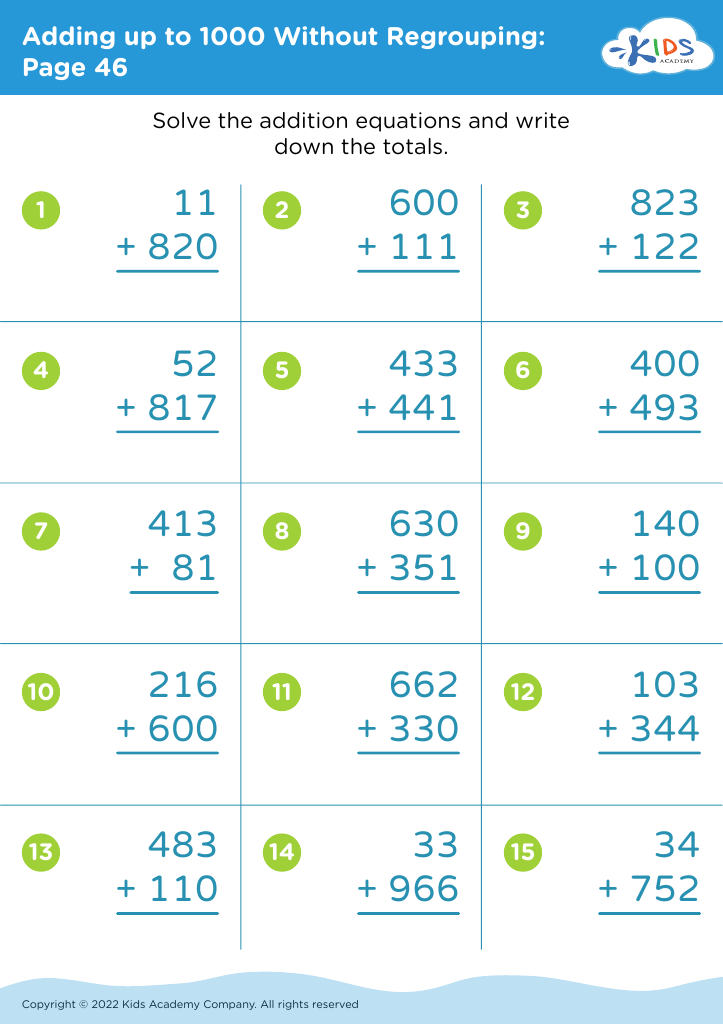
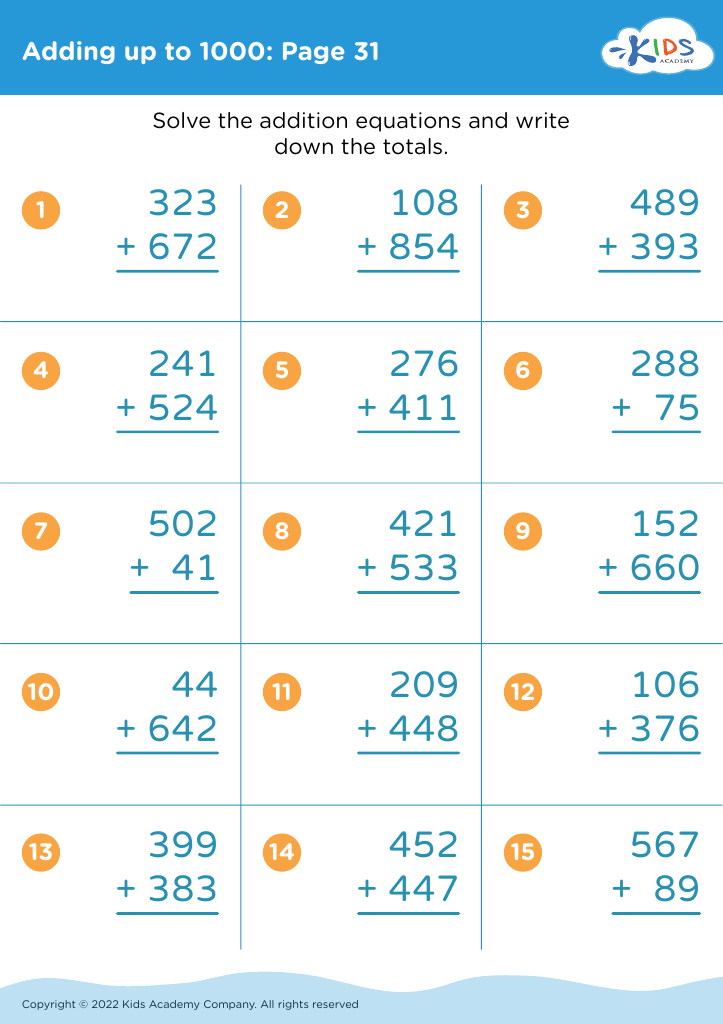



Practice writing numbers that add up to 1000 is crucial for children aged 6-8 as it forms the foundation of their mathematical understanding. At this stage, children's cognitive abilities are rapidly developing, making it an ideal time to enhance their number sense and appreciation for numeric relationships.
By engaging in practice that focuses on writing and manipulating numbers, children's familiarity with place value becomes stronger. They learn to appreciate how numbers are formed and how they can be broken down, which is essential for more complex operations in later grades. Through activities that encourage writing numbers, children also improve their fine motor skills, which are important for their overall development.
Moreover, learning to add up to 1000 introduces students to key concepts like addition, regrouping, and subtraction, promoting an understanding of how numbers interact in both practical and abstract contexts. This foundational knowledge boosts confidence and preparedness for future math challenges. For parents and teachers, fostering an environment that prioritizes numerical literacy is essential in helping children not only perform well in school but also develop critical problem-solving skills applicable throughout their lives. Engaging in number writing exercises encourages a positive attitude toward math and builds essential tools for academic success.








