Problem Solving Adding up to 1000 Worksheets for Ages 6-8
3 filtered results
-
From - To
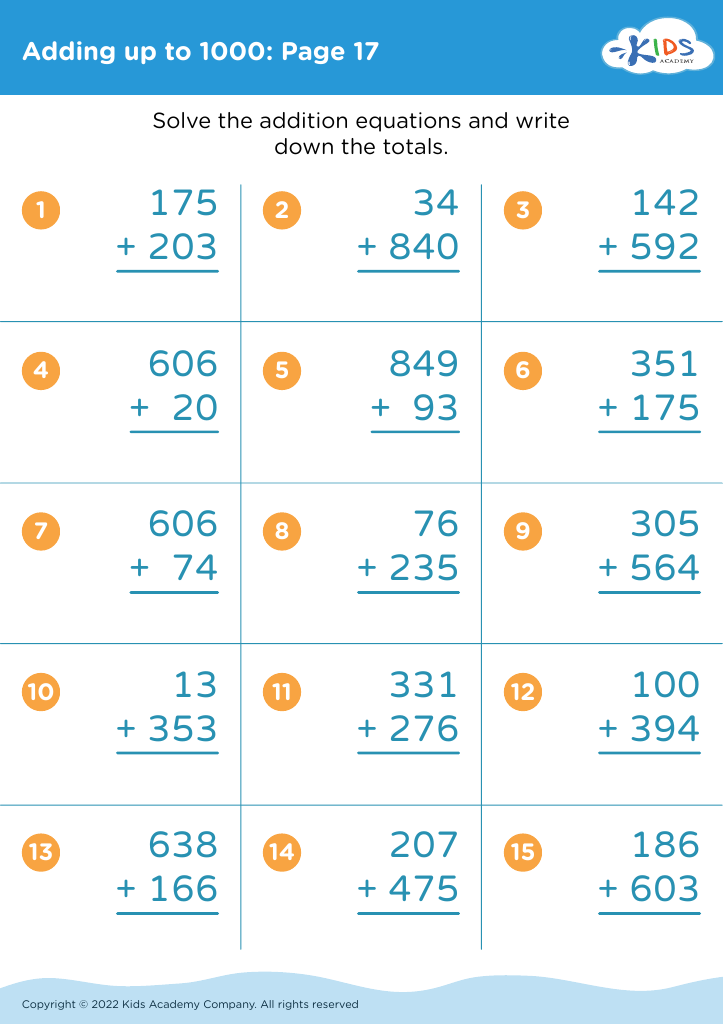
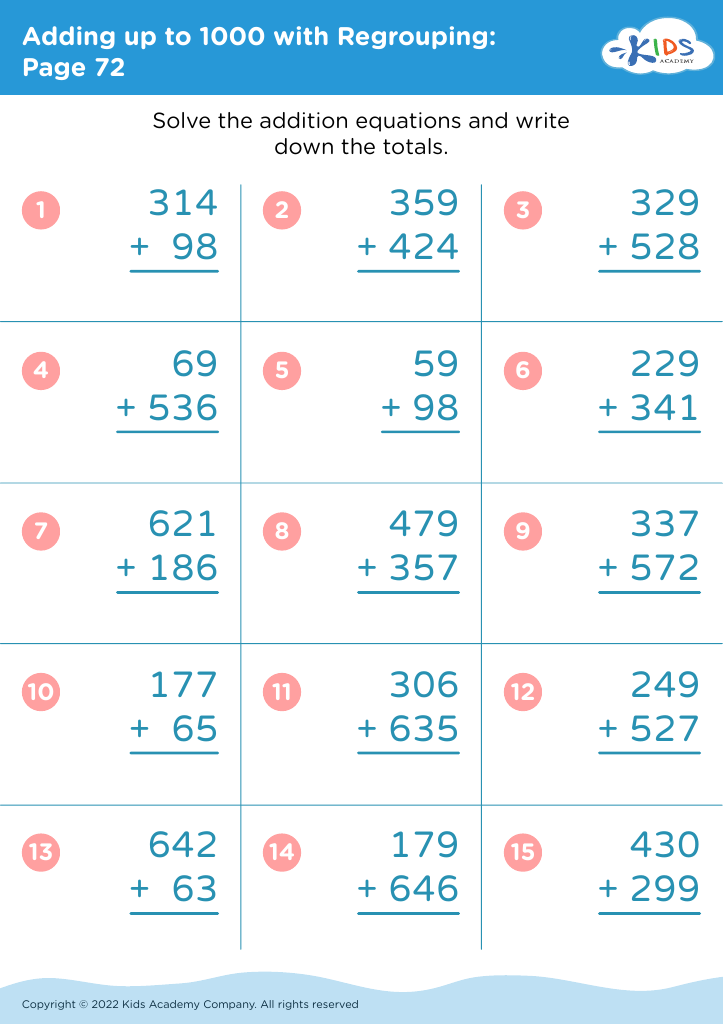
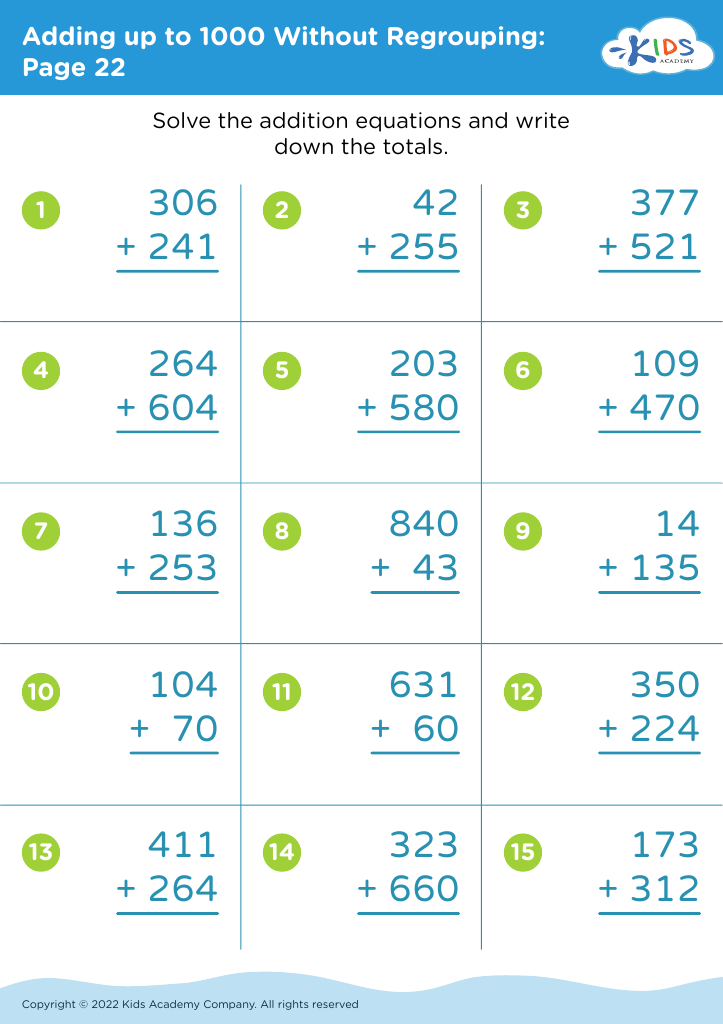
Enhance your child's math skills with our "Problem Solving Adding up to 1000 Worksheets" designed specifically for ages 6-8! These engaging worksheets are perfect for developing critical thinking, enhancing problem-solving abilities, and mastering addition techniques. Each activity encourages kids to tackle various real-life scenarios involving addition while building their confidence in math. With colorful illustrations and a fun approach, these printable worksheets can be easily integrated into your home or classroom routine. Help your child practice and enjoy learning math as they work towards adding up to 1000! Download now and turn math practice into an exciting adventure!



Problem solving, particularly in the context of adding numbers to reach a total of 1,000, is a crucial skill that parents and teachers should prioritize for children ages 6-8. At this developmental stage, children are building foundational math skills, which will serve as the basis for more complex concepts in the future. Engaging in problem-solving exercises helps them understand the relationships between numbers, reinforces basic addition practices, and promotes analytical thinking.
Furthermore, problem solving encourages perseverance and resilience. When children encounter challenging problems, they learn the importance of persistence and creativity in finding solutions. This equips them with a growth mindset, which is beneficial not only in math but across all areas of learning and life.
Additionally, learning to add up to 1,000 introduces children to larger numbers, enhancing their number sense and understanding of place value. This not only helps in academic proficiency but also prepares them for real-world scenarios (like budgeting and time management) where numbers play a significant role.
Ultimately, fostering problem-solving skills related to addition at this early age lays a robust groundwork for future success in math, critical thinking, and everyday decision-making.








