Recognize patterns Adding up to 1000 Worksheets for Ages 6-8
6 filtered results
-
From - To
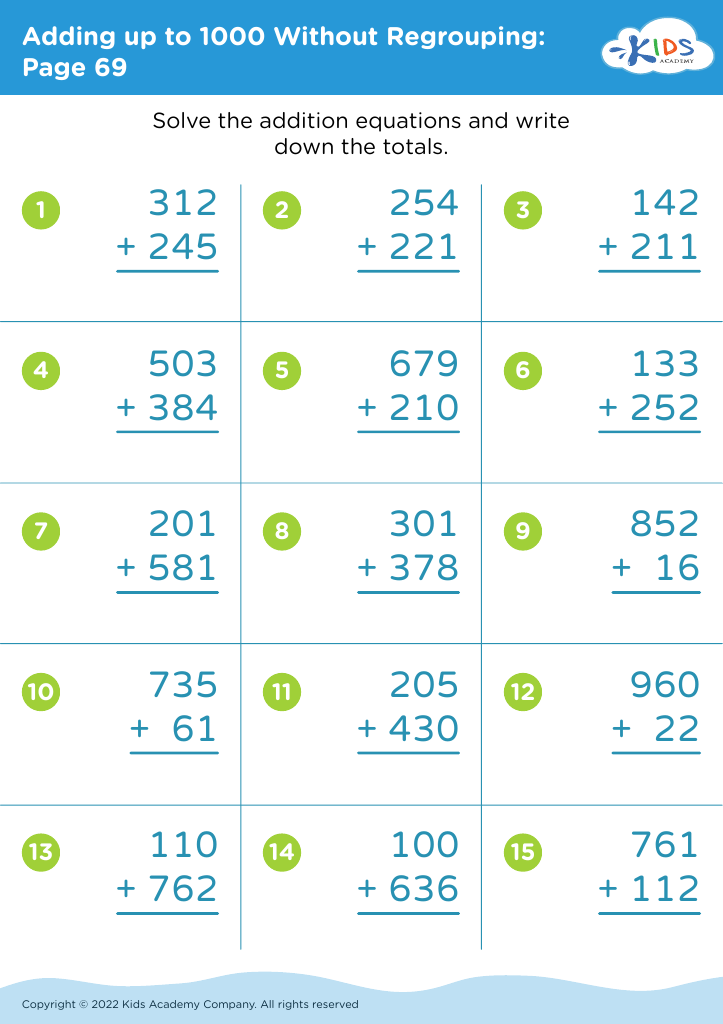
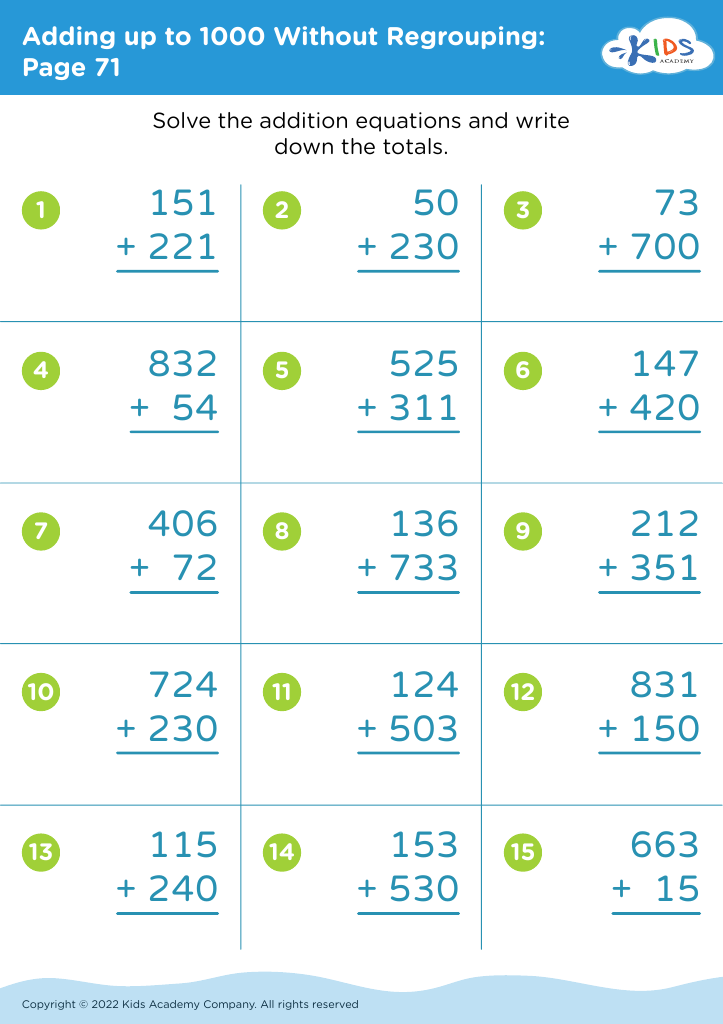
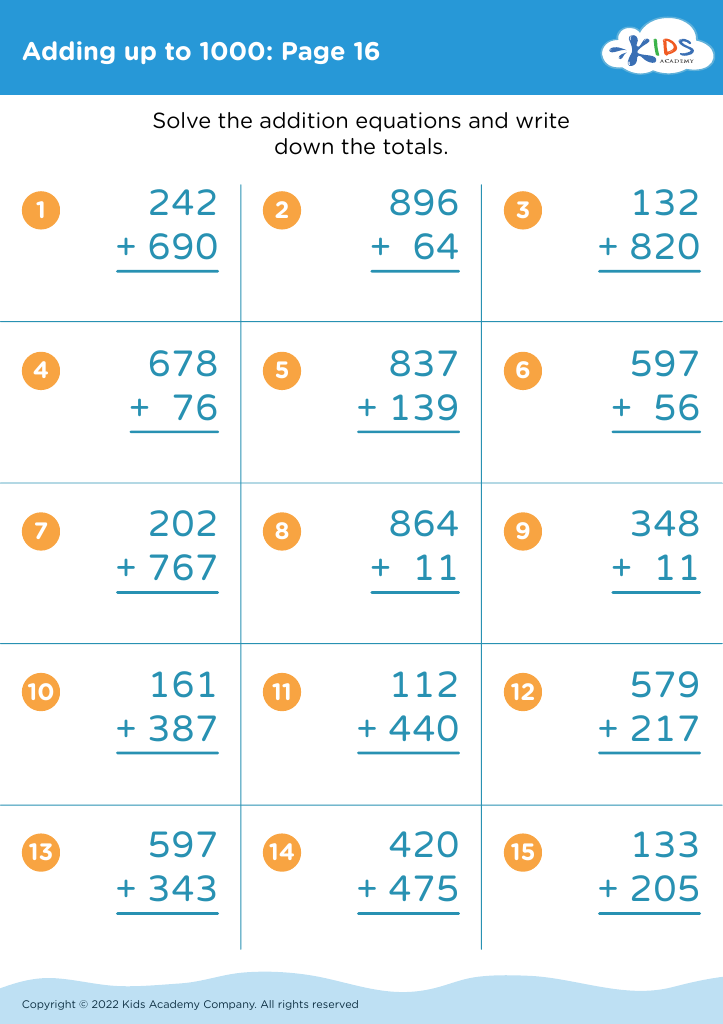
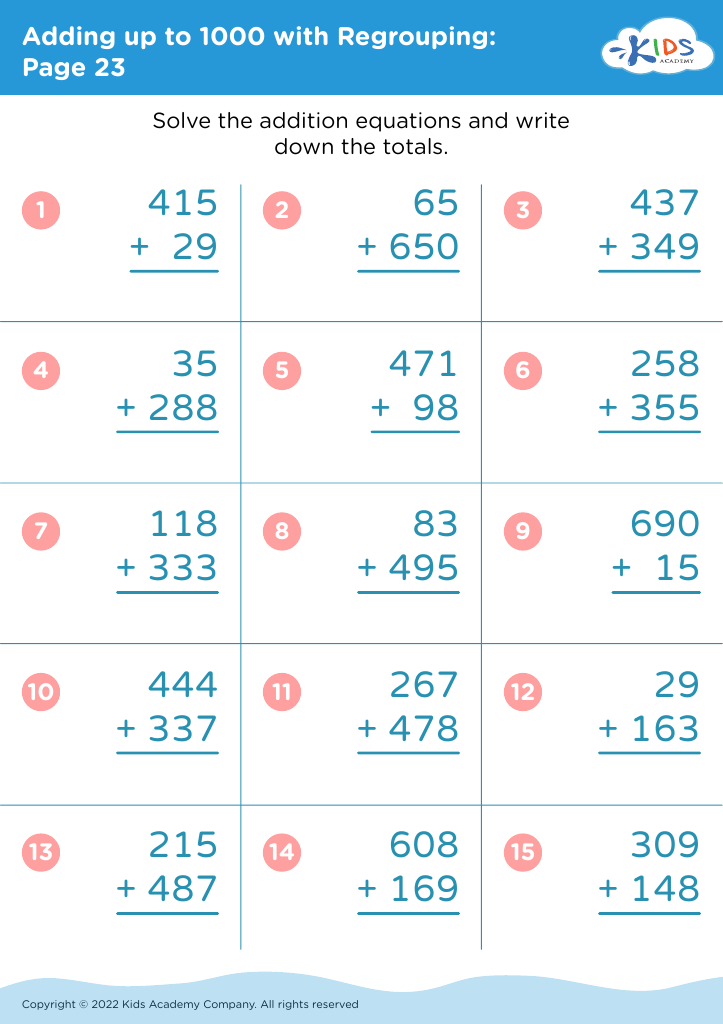
Explore our engaging "Recognize Patterns: Adding up to 1000 Worksheets" designed specifically for children aged 6-8. These printable resources help young learners develop essential math skills as they identify and understand numerical patterns. Each worksheet features thoughtfully crafted exercises that guide students in discovering how numbers relate to each other when adding up to 1000, fostering critical thinking and problem-solving abilities. With colorful illustrations and fun activities, our worksheets keep kids motivated while reinforcing their understanding of addition and pattern recognition. Perfect for home or classroom use, these worksheets are an excellent tool for nurturing confidence in math skills at an early age.
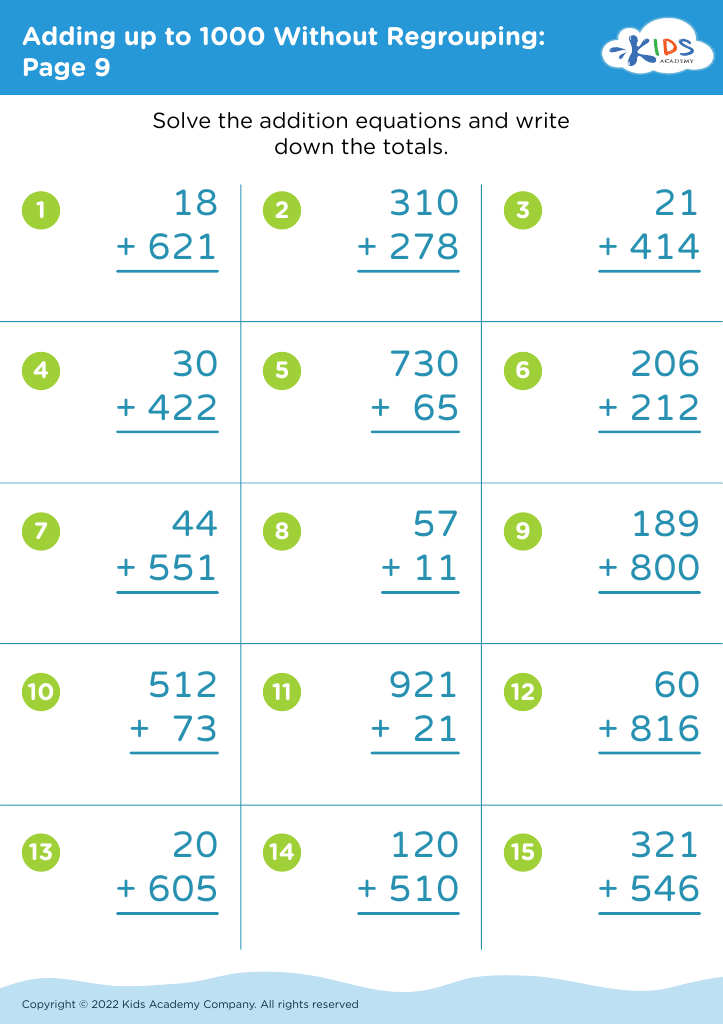
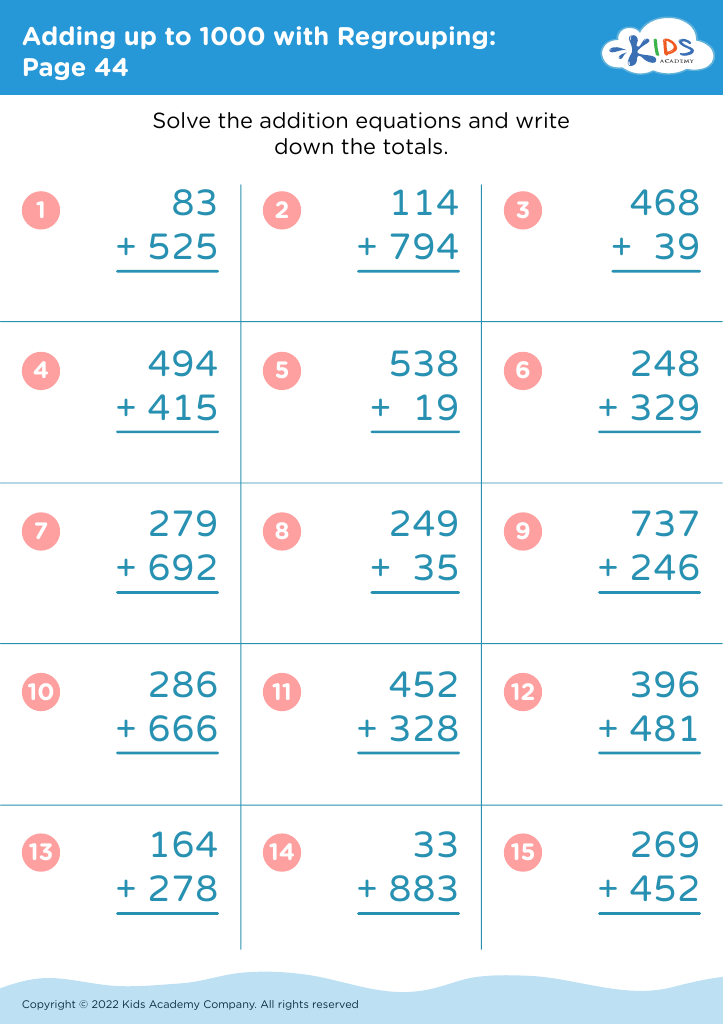



Recognizing patterns, particularly in addition up to 1000, is a vital skill for children aged 6-8 as it lays the foundation for more advanced mathematical understanding. Understanding patterns helps students recognize relationships between numbers, which is crucial for developing calculations and problem-solving skills.
When children learn to identify patterns in numbers, such as increments of ten, they gain a sense of number flexibility and can perform mental math more easily. This skill encourages them to look for shortcuts and strategies, making math less daunting and more enjoyable. Furthermore, pattern recognition fosters critical thinking and analytical skills, which are essential not just in mathematics but also in other areas of learning.
For parents and teachers, supporting children in recognizing patterns adds to their overall confidence in math. Early mastery can predict later success in math-related subjects, making it key for academic achievement. Moreover, involving children in activities that highlight patterns—like games or visual aids—can create a positive learning environment where they feel motivated to explore mathematical concepts. Ultimately, nurturing this skill equips children with the tools they need for future educational endeavors and promotes lifelong learning.








