Shape identification Adding up to 1000 Worksheets for Ages 6-8
6 filtered results
-
From - To
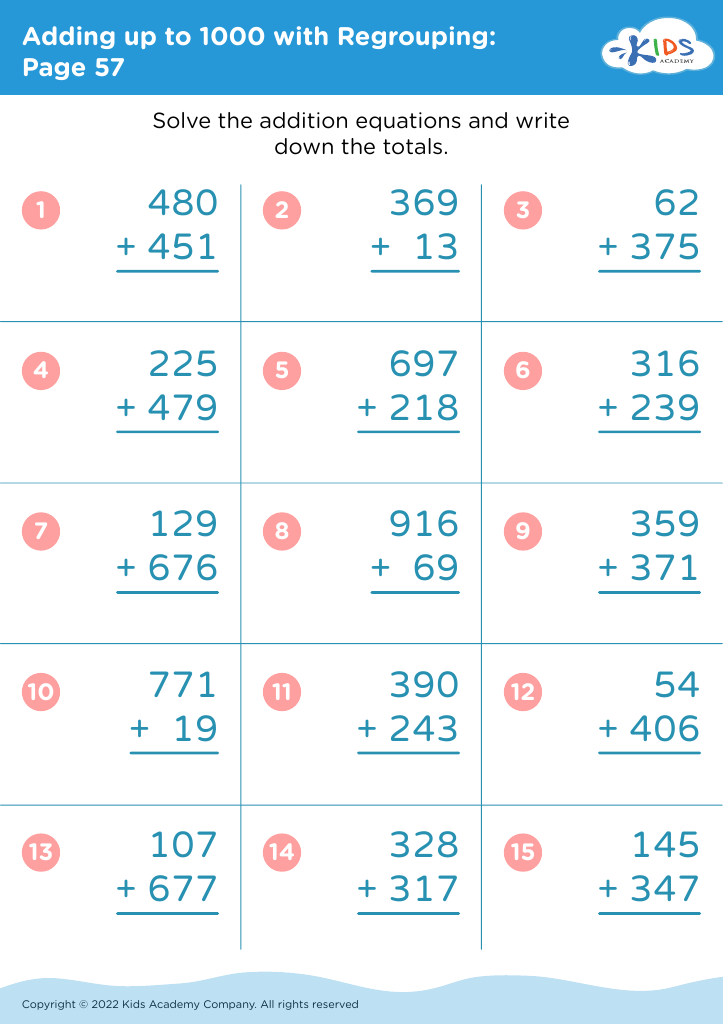
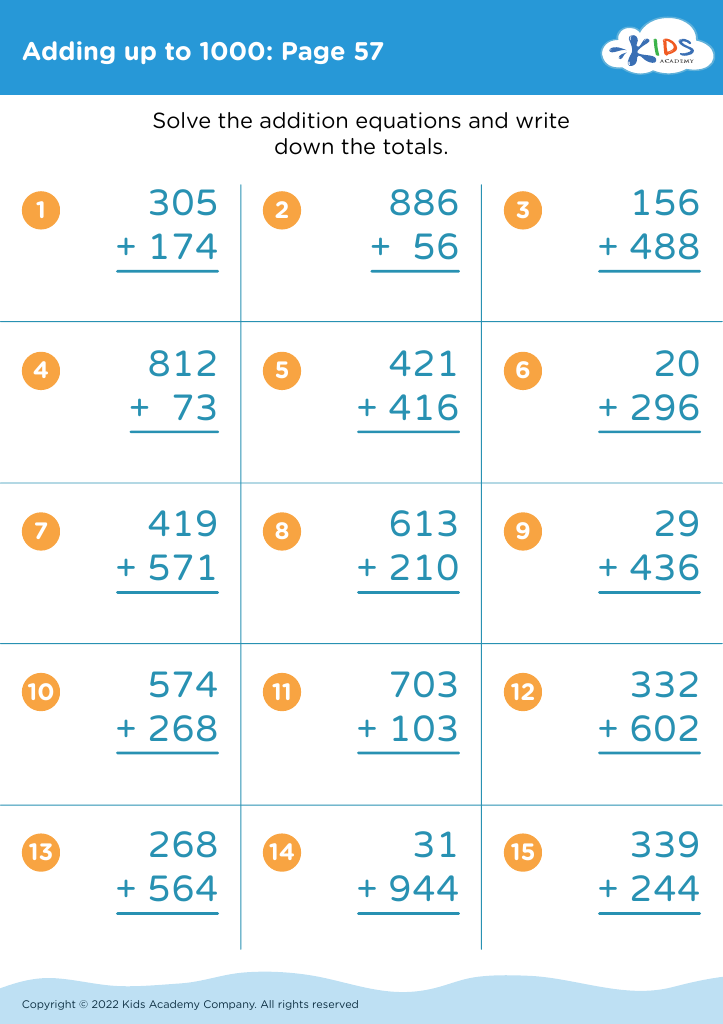
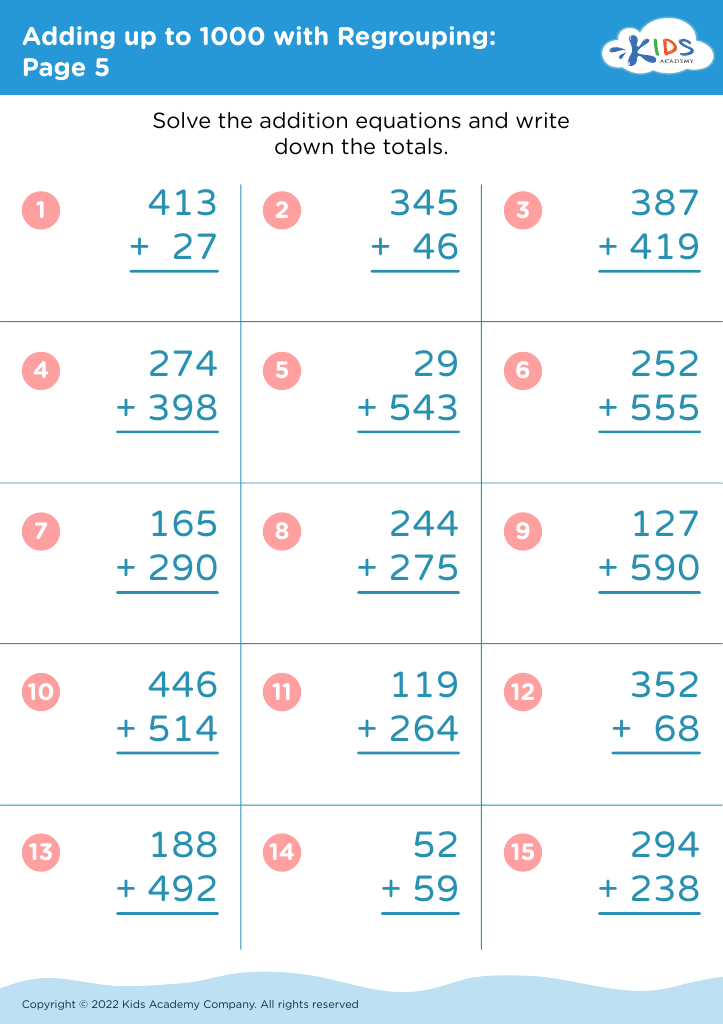
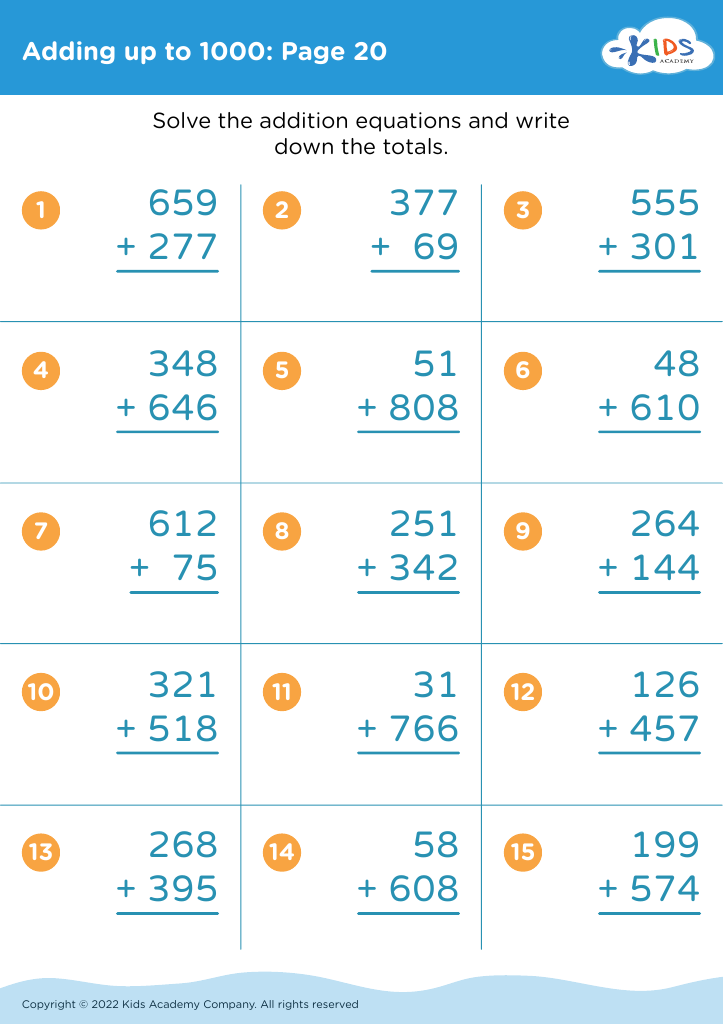
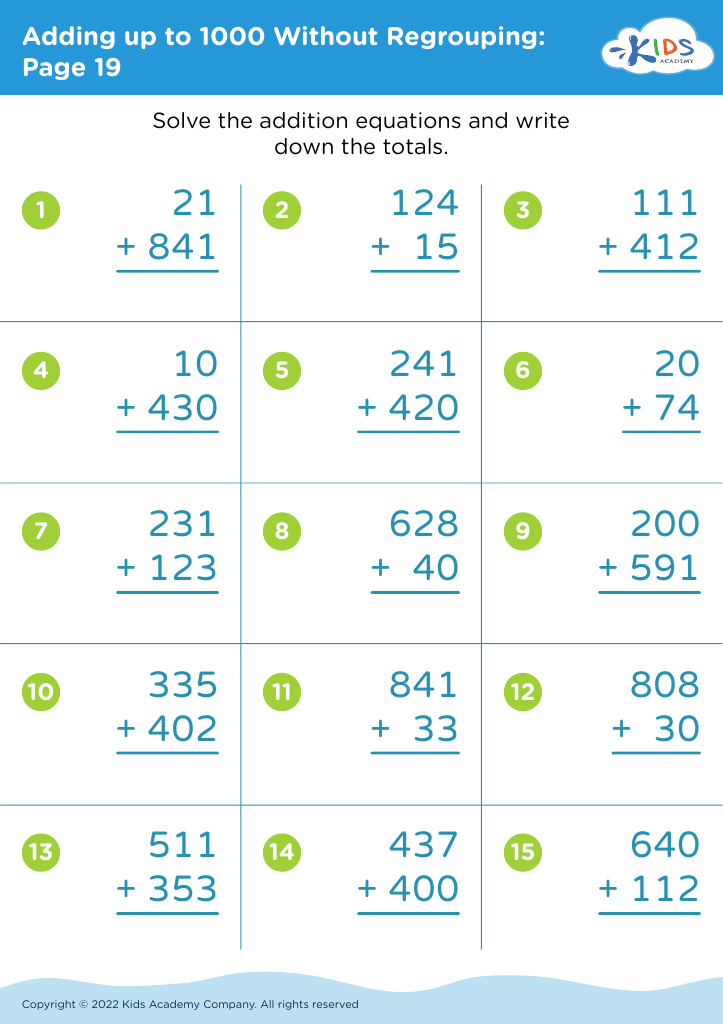
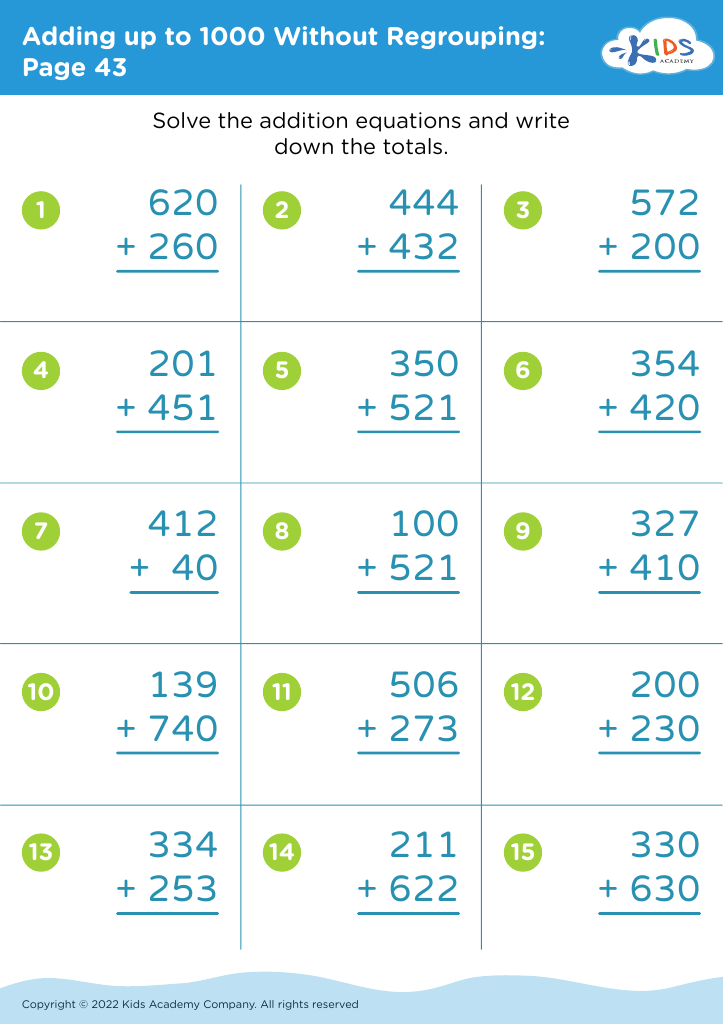
Discover our comprehensive collection of "Shape Identification Adding up to 1000 Worksheets" designed specifically for children aged 6-8. These engaging, printable worksheets offer a fun way to enhance shape recognition skills while introducing fundamental addition concepts, laying the groundwork for future math success. Each worksheet is tailored to keep young learners motivated through colorful illustrations and interactive activities. As they progress, kids will master identifying various shapes and improve their ability to add numbers up to 1000. Ideal for classroom practice or independent learning at home, these resources are perfect for fostering a love of math and shapes in early education!



Shape identification is a foundational skill for children aged 6-8, forming a crucial part of their cognitive development and mathematical understanding. As students learn to recognize and name different shapes, they enhance their spatial awareness and ability to sort and categorize, which are essential skills in problem-solving and logical thinking.
By focusing on shape identification, parents and teachers lay the groundwork for more advanced mathematical concepts. For instance, recognizing shapes assists in understanding basic geometry and understanding measurement. This knowledge not only aids in math but also fosters creativity, as children often incorporate shapes into their artwork and play.
Moreover, shape identification has real-world applications. From architecture to nature, children learn to connect the classroom with their environment, promoting observational skills and curiosity. Additionally, engaging with shapes helps build language skills, as children learn the vocabulary associated with different shapes.
When parents and teachers emphasize shape identification, they support a holistic approach to education, contributing to a child’s overall academic success. Encouraging hands-on activities and discussions around shapes not only enriches the learning experience but also instills confidence and enjoyment in math for young learners. This foundation ultimately encourages lifelong learning and analytical skills.








