Subtraction skills Adding up to 1000 Worksheets for Ages 6-8
4 filtered results
-
From - To
Enhance your child’s subtraction skills with our engaging worksheets designed for ages 6-8! Our "Subtraction Skills Adding Up to 1000" worksheets provide a fun and interactive way for young learners to grasp essential math concepts. With a variety of exercises tailored to reinforce subtraction operations, your child will gain confidence while tackling problems up to 1000. The worksheets feature vibrant illustrations and engaging activities that make learning enjoyable. Perfect for at-home practice or classroom use, these resources encourage critical thinking and problem-solving skills. Start your child's math journey today and watch them excel in subtraction with our comprehensive worksheets!
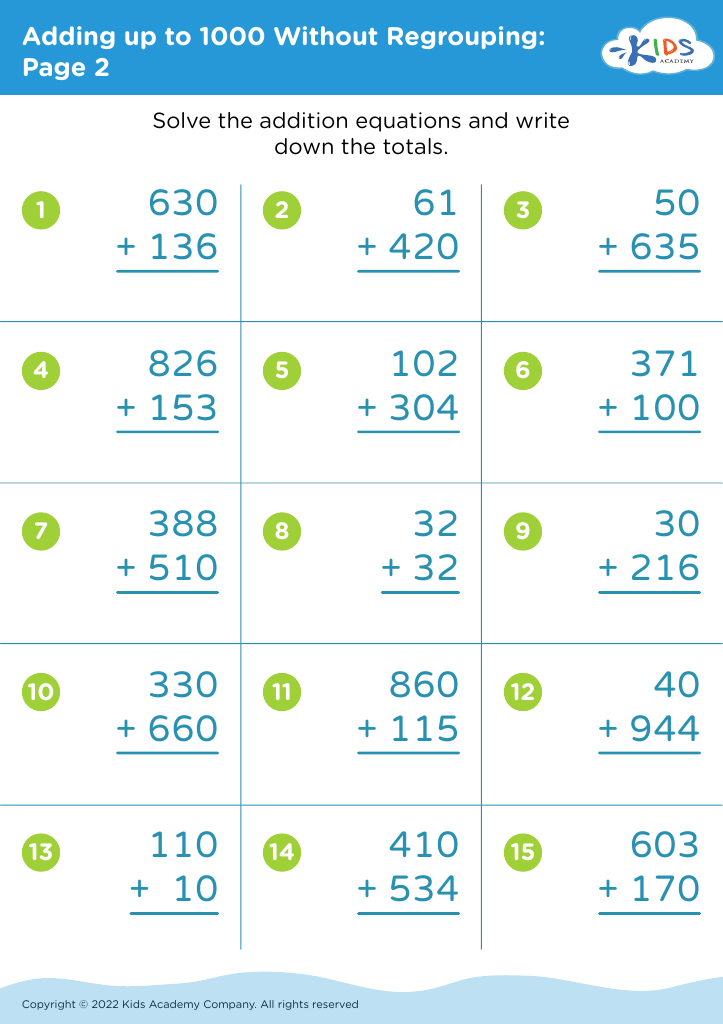
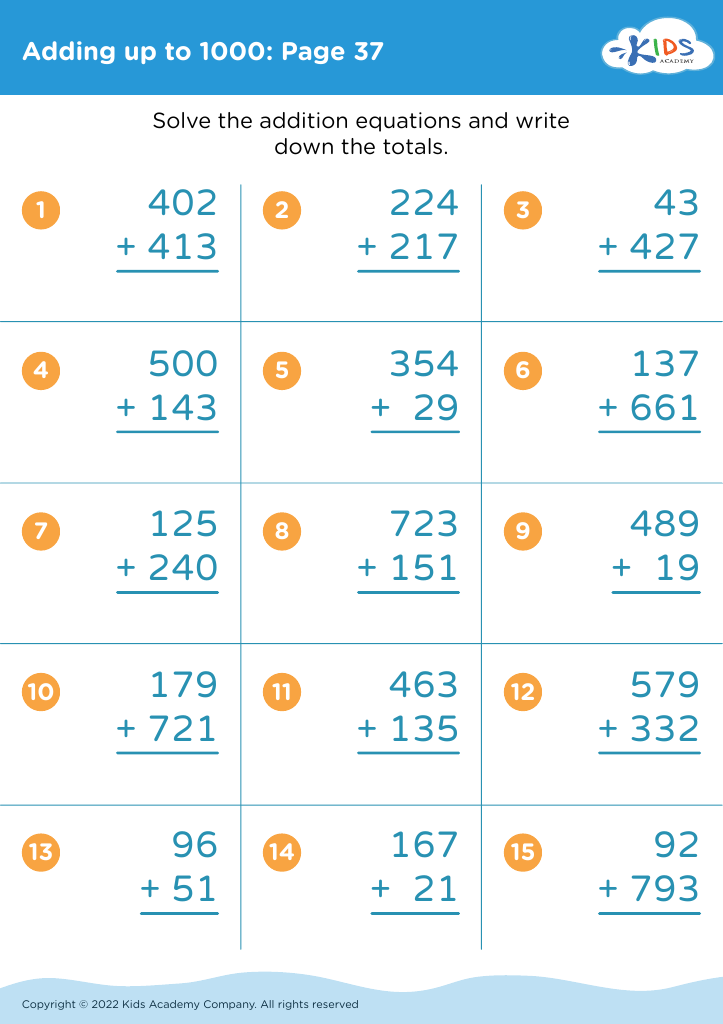
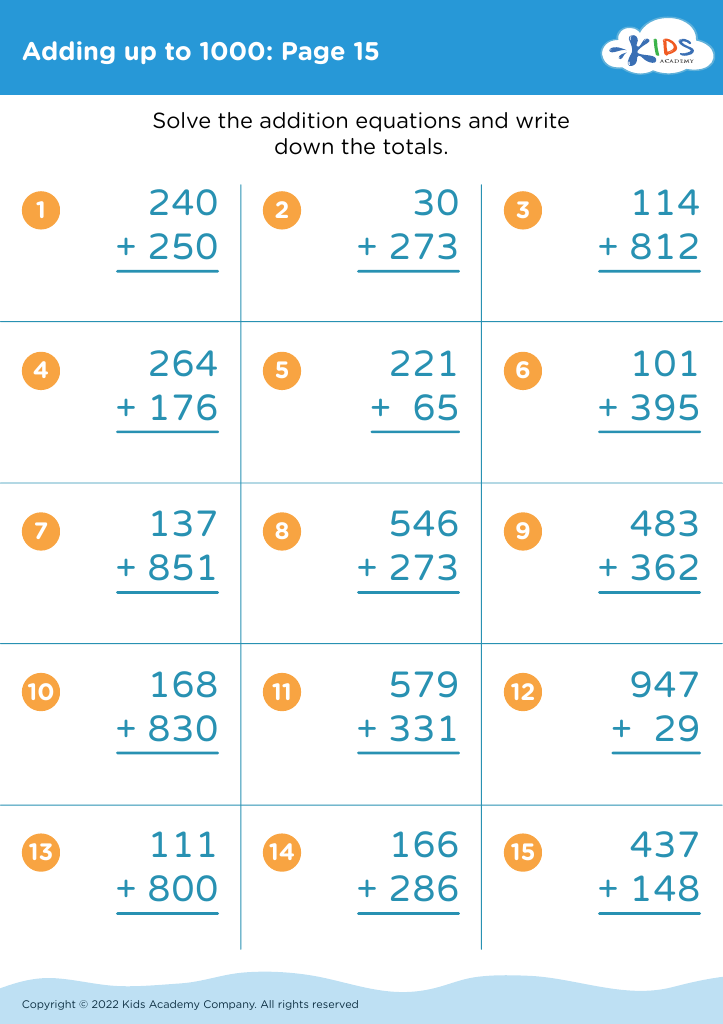
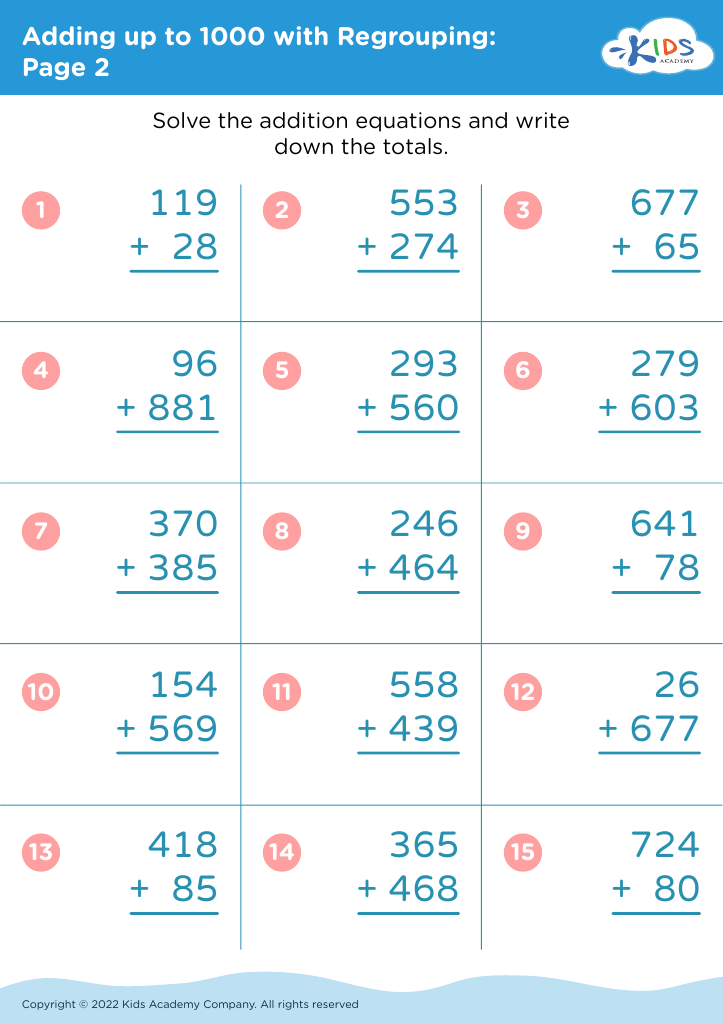



Subtraction skills underpin a child's mathematical foundation, enabling them to navigate everyday situations and complex academic challenges. For children aged 6-8, the ability to subtract numbers up to 1000 is crucial for several reasons. Firstly, it aids cognitive development; mastering subtraction sharpens critical thinking and problem-solving abilities. These skills are essential as they progress to more complex math concepts.
Moreover, strong subtraction abilities bolster a child's confidence in math. Feelings of competence foster a positive attitude towards learning, which is vital for lifelong academic success. In practical terms, subtraction is frequently used in real-life situations like budgeting, shopping, or measuring, making it essential for children to grasp its application early on.
In a classroom, teachers and parents play a pivotal role in reinforcing these skills through engaging activities such as games, worksheets, and everyday scenarios. This hands-on approach not only makes learning enjoyable but also enables children to understand subtraction as a valuable life skill. Investing time in developing robust subtraction skills for ages 6-8 ultimately builds a strong mathematical foundation, prepares children for higher-level mathematics, and equips them with essential tools for navigating their daily lives.








