Understanding division Adding up to 1000 Worksheets for Ages 6-8
3 filtered results
-
From - To
Unlock the world of division with our engaging "Understanding Division: Adding up to 1000" worksheets, designed specifically for children aged 6-8. These resources provide a fun and interactive way to grasp essential division concepts while enhancing problem-solving skills. With vibrant visuals and age-appropriate exercises, kids will learn to divide numbers confidently and understand the relationship between division and addition. Perfect for classroom use or at-home practice, our worksheets encourage independent learning and critical thinking. Whether your child is just starting or needs a bit more practice, our comprehensive materials will help them master division in no time. Explore now and empower their learning!
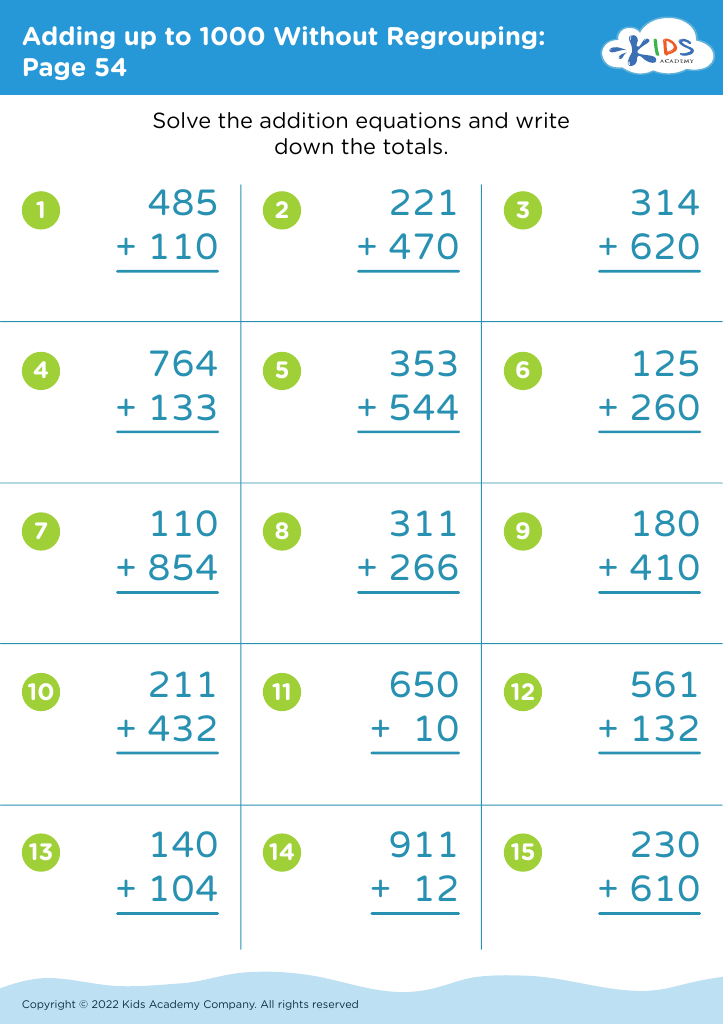
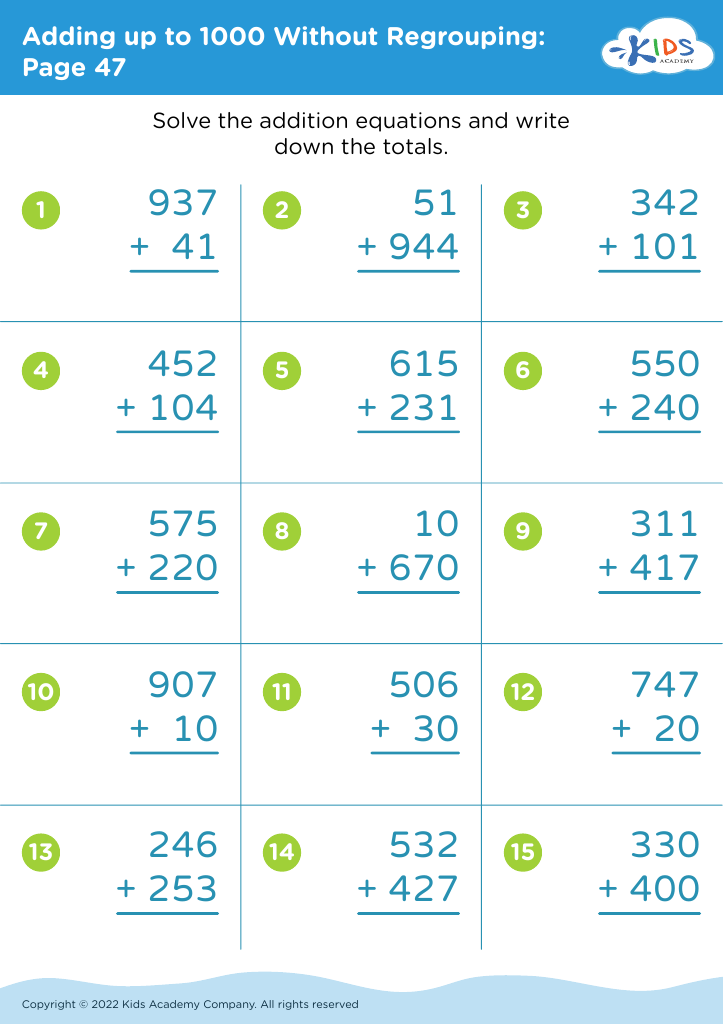
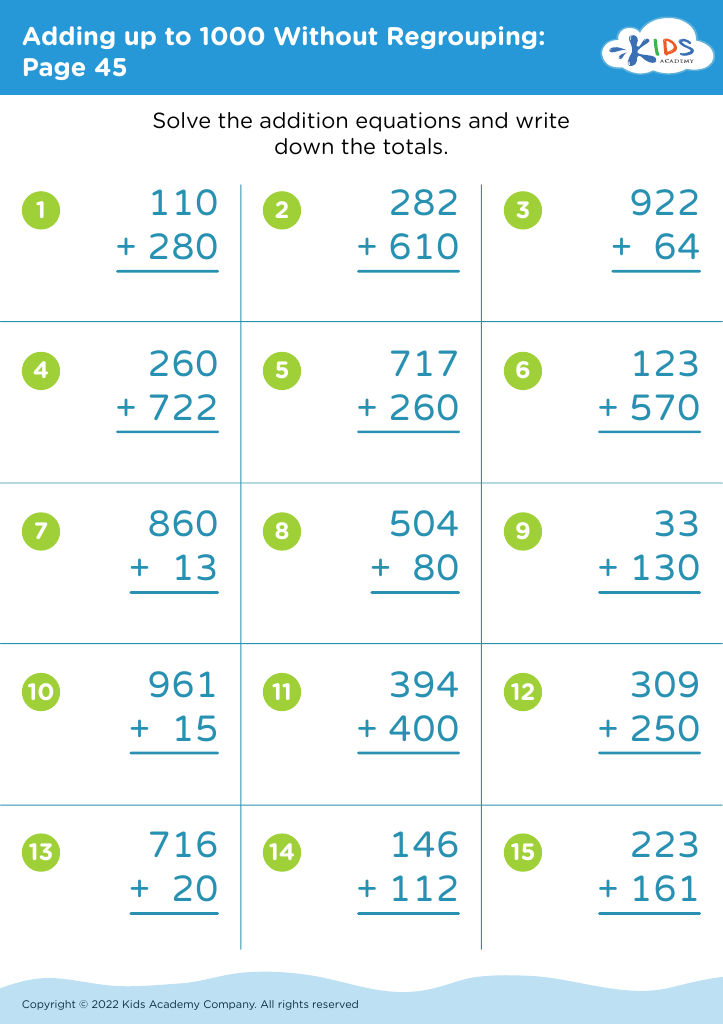



Understanding division and the concept of adding up to 1000 is crucial for children aged 6-8, as it lays the foundation for their future mathematical skills. At this age, children are developing critical thinking and problem-solving abilities, and grasping division introduces them to the concept of sharing and grouping—aspects crucial not just in math but also in daily life.
Division helps children understand how to break down larger numbers into manageable parts. When combined with addition, especially concerning reaching a sum of 1000, they learn to see relationships between numbers, enhancing their numerical fluency. This combination also fosters an understanding of the base-10 number system, which is vital for more advanced math in later years.
Parents and teachers play a pivotal role in guiding this understanding. By emphasizing these concepts, they can nurture a child's confidence in math and inspire a positive attitude toward learning. Additionally, a solid grasp of these fundamental skills promotes better performance in school and helps students make sense of other subjects that involve mathematical reasoning. Ultimately, caring about these concepts equips children with tools they need for academic success and everyday decision-making skills, contributing to their overall development.








