Understanding sequencing Adding up to 1000 Worksheets for Ages 6-8
3 filtered results
-
From - To
Enhance your child’s understanding of sequencing with our "Understanding Sequencing: Adding Up to 1000" worksheets, designed for ages 6-8. These engaging, age-appropriate activities help kids develop essential math skills by exploring the concepts of order and pattern recognition in addition up to 1000. Each worksheet is crafted to cultivate critical thinking and improve problem-solving abilities through fun, interactive exercises. By practicing sequencing through addition, students grasp foundational math concepts in an enjoyable way, preparing them for more advanced topics. Explore these thoughtful resources to promote confidence in math and foster a love for learning among young students!
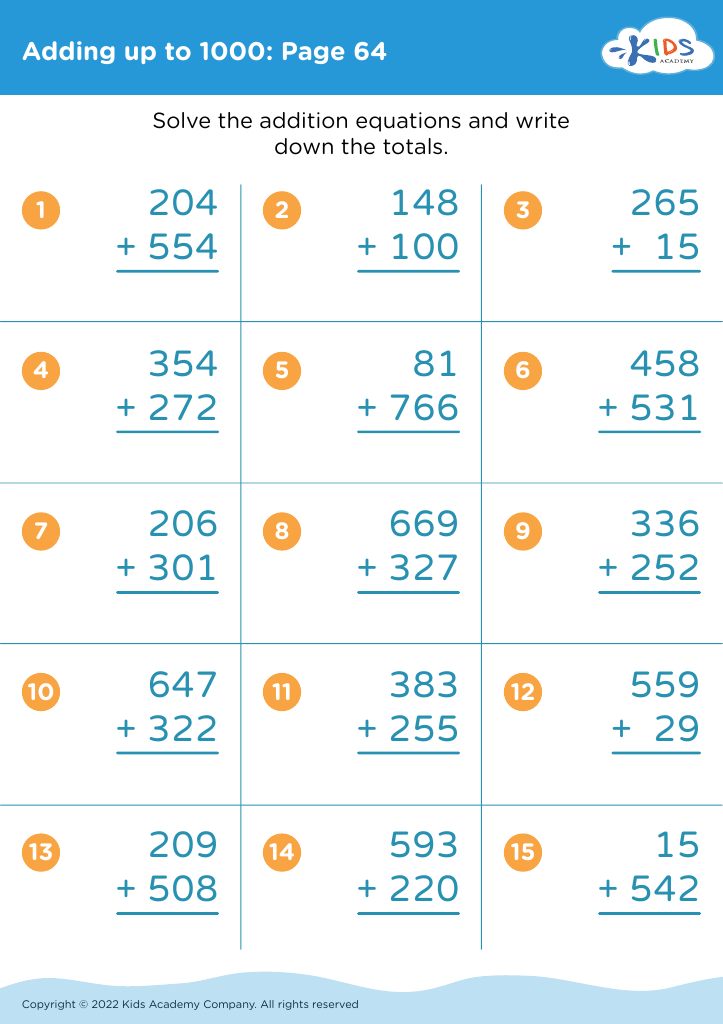
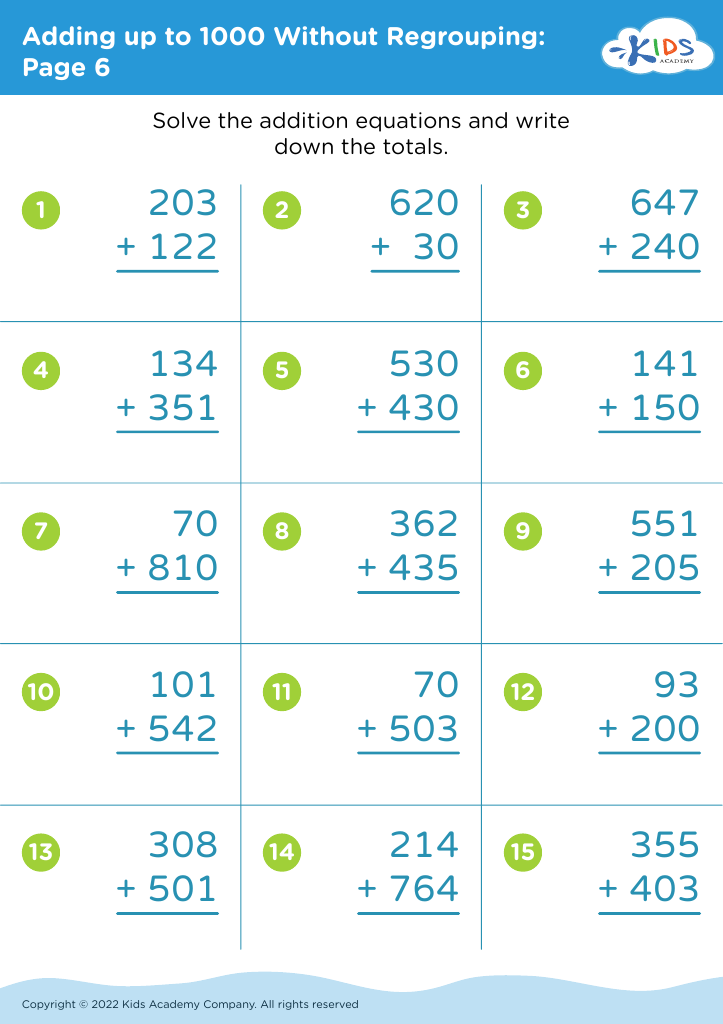
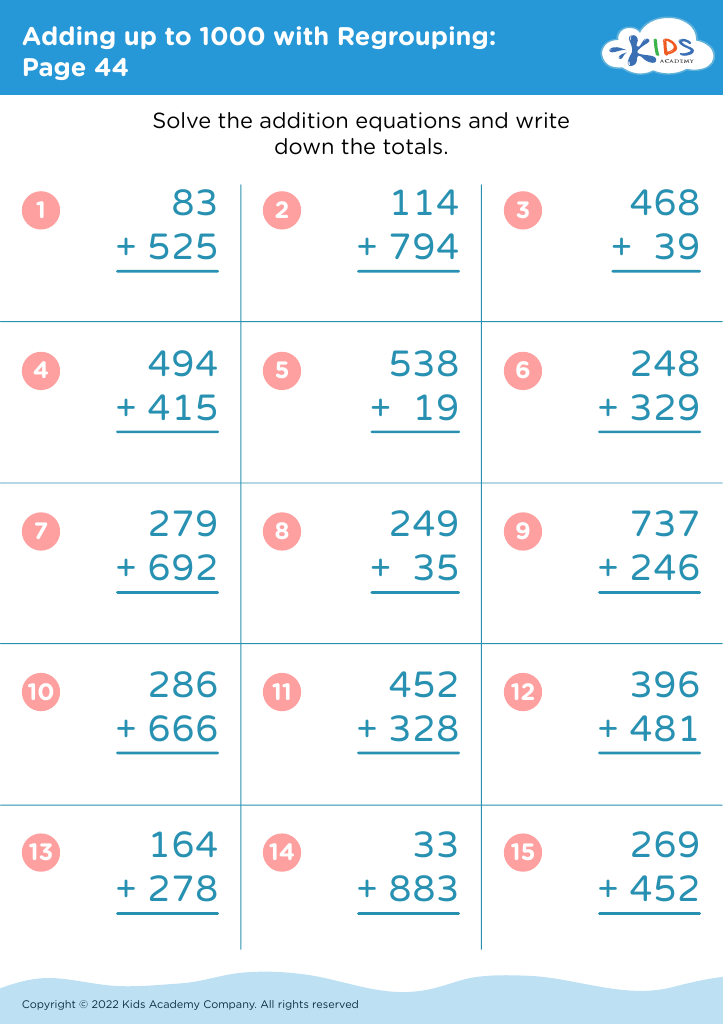



Understanding sequencing and addition up to 1000 is crucial for children aged 6-8 as it lays the foundation for their mathematical skills. Parents and teachers should care about this because it enhances cognitive development and fosters critical thinking. Sequencing helps children learn the order of operations in mathematics, which is essential for solving problems accurately and efficiently.
As students begin to grasp the concept of adding larger numbers, having a solid understanding of sequencing allows them to break down addition problems into manageable chunks. For instance, they can learn strategies like adding tens and then hundreds, making the memorization of math facts more accessible and less daunting. This ability to decompose problems is vital for future math concepts, such as multiplication, place value, and even basic algebra.
Moreover, developing these skills builds confidence in children, encouraging a positive attitude towards math. Engaging students in activities that promote sequencing, such as number lines or skip counting, can make learning enjoyable and interactive. As parents and teachers work together to nurture these competencies, they contribute to a child's overall academic success and developing a lifelong love for learning. Understanding these fundamentals is not just about numbers; it's about preparing young minds for future challenges.








