Understanding symmetry Adding up to 1000 Worksheets for Ages 6-8
4 filtered results
-
From - To
Introducing our "Understanding Symmetry Adding up to 1000 Worksheets for Ages 6-8"! These engaging and educational worksheets are designed to support young learners in mastering the concepts of symmetry and addition. Perfect for kids aged 6-8, the activities take them on a fun journey of exploring patterns and balancing equations. With vibrant images and interactive exercises, children will develop a strong foundation in math while honing their problem-solving skills. Ideal for both classroom and home learning, our worksheets provide the tools necessary for academic success. Join us in making learning enjoyable and effective!
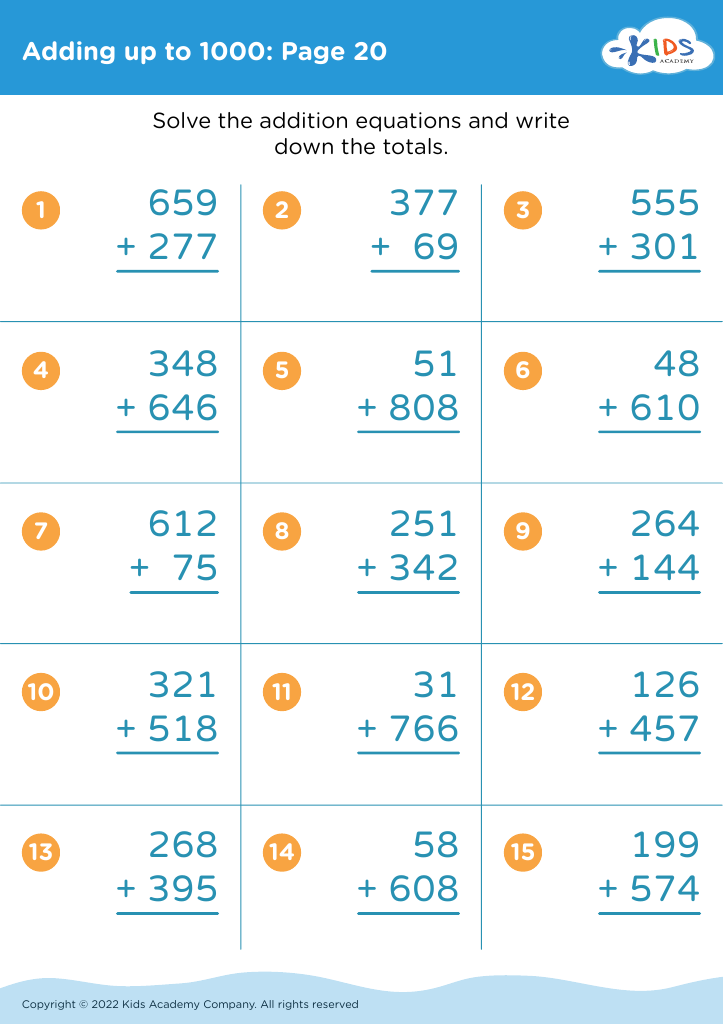
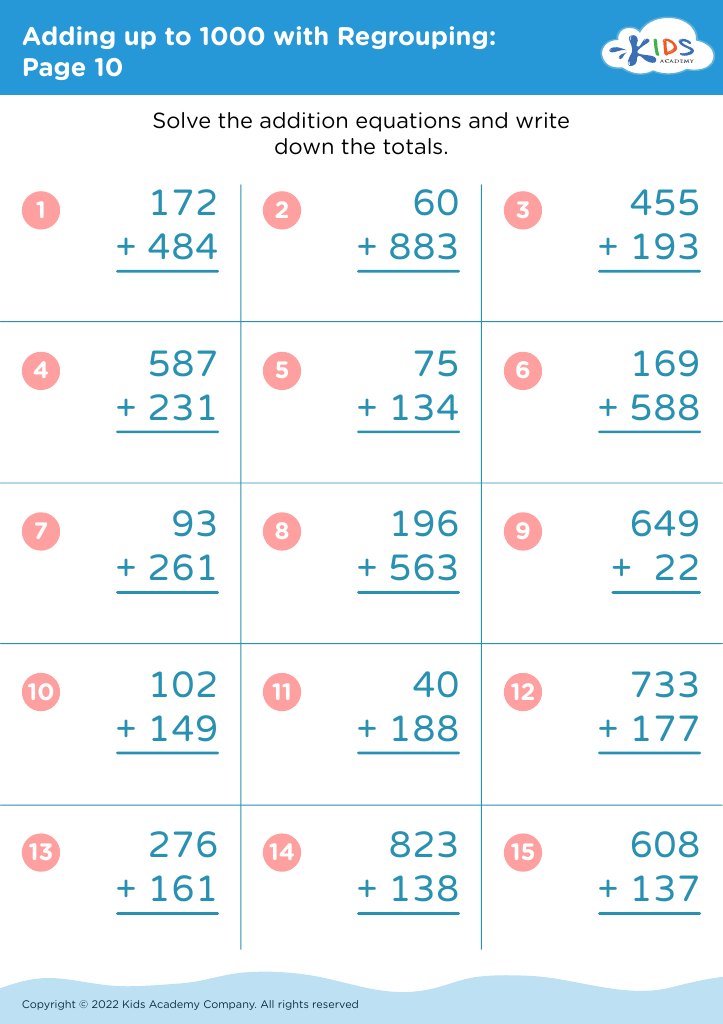
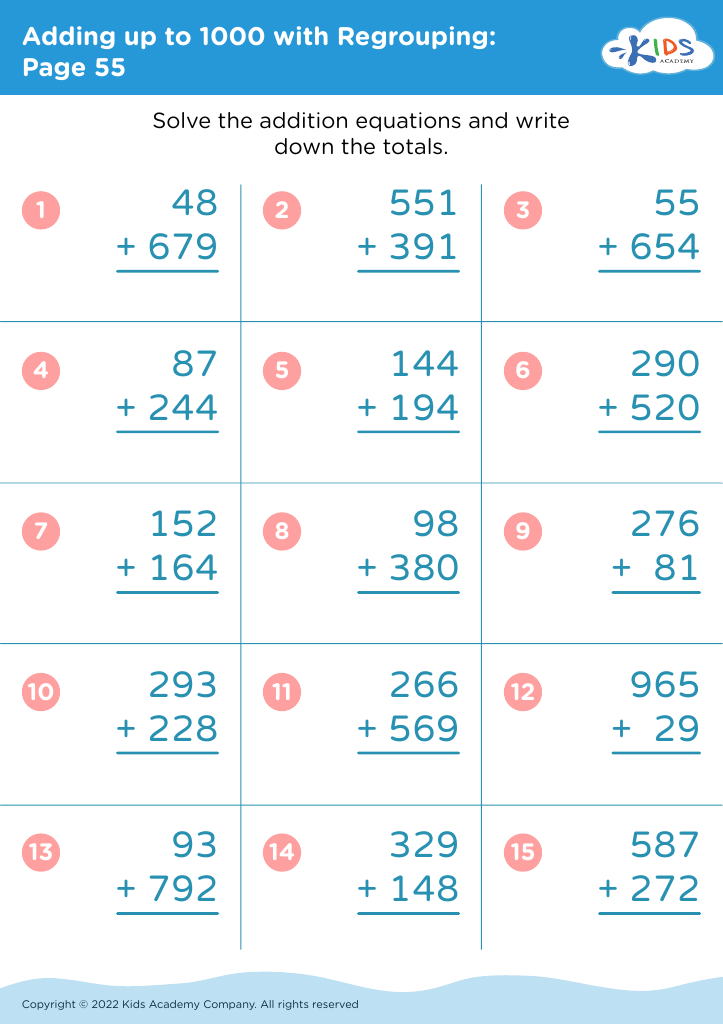
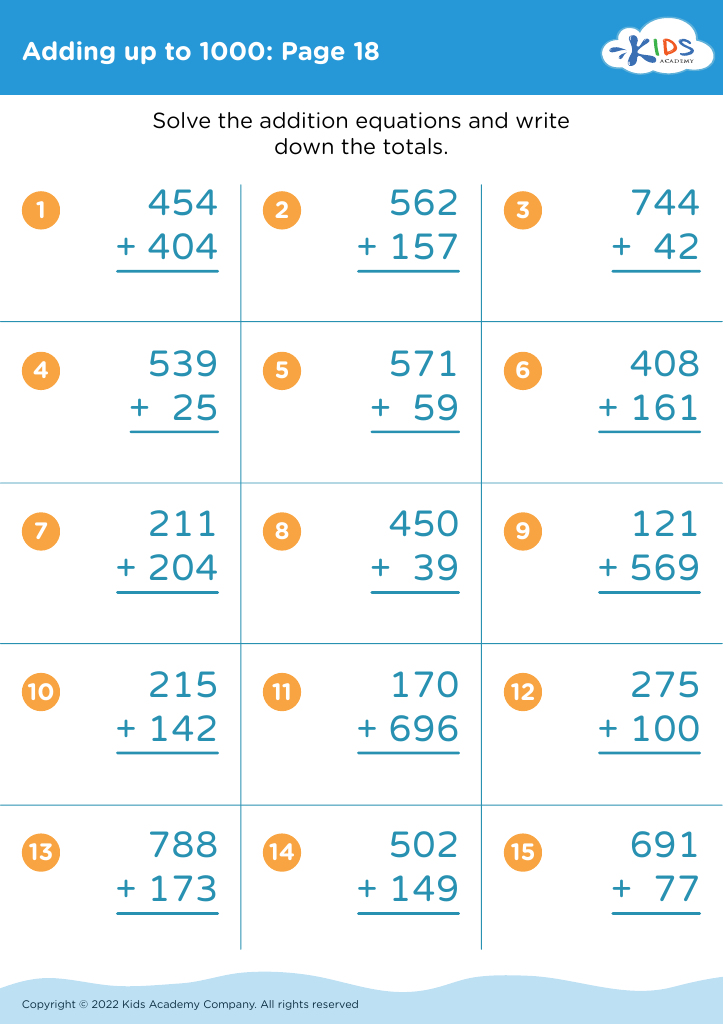



Understanding symmetry and learning to add up to 1000 are fundamental concepts for young children aged 6-8, and there are compelling reasons why parents and teachers should focus on these areas.
Symmetry introduces children to basic geometry and helps them develop spatial awareness. Recognizing symmetrical patterns aids in visual perception skills, which are crucial for reading and writing. Symmetry also exists in nature and art, allowing children to appreciate the world around them more fully. By understanding symmetry, children can enhance their problem-solving abilities and creativity, encouraging them to think critically and creatively.
Learning to add up to 1000 strengthens a child's arithmetic foundation, which is essential for more advanced math concepts. It provides them with confidence in handling larger numbers and improves their mental math skills. Addition is a fundamental operation in mathematics, and mastering it up to 1000 ensures children can transition smoothly to more complex operations like multiplication and division. Mastery of basic arithmetic also enhances logical thinking and the ability to make calculations in everyday situations, setting children up for academic and real-life success.
In sum, focusing on these concepts builds a robust mathematical and cognitive foundation, making other subjects more accessible and boosting overall academic confidence in young learners.








