Understanding time Adding up to 1000 Worksheets for Ages 6-8
3 filtered results
-
From - To
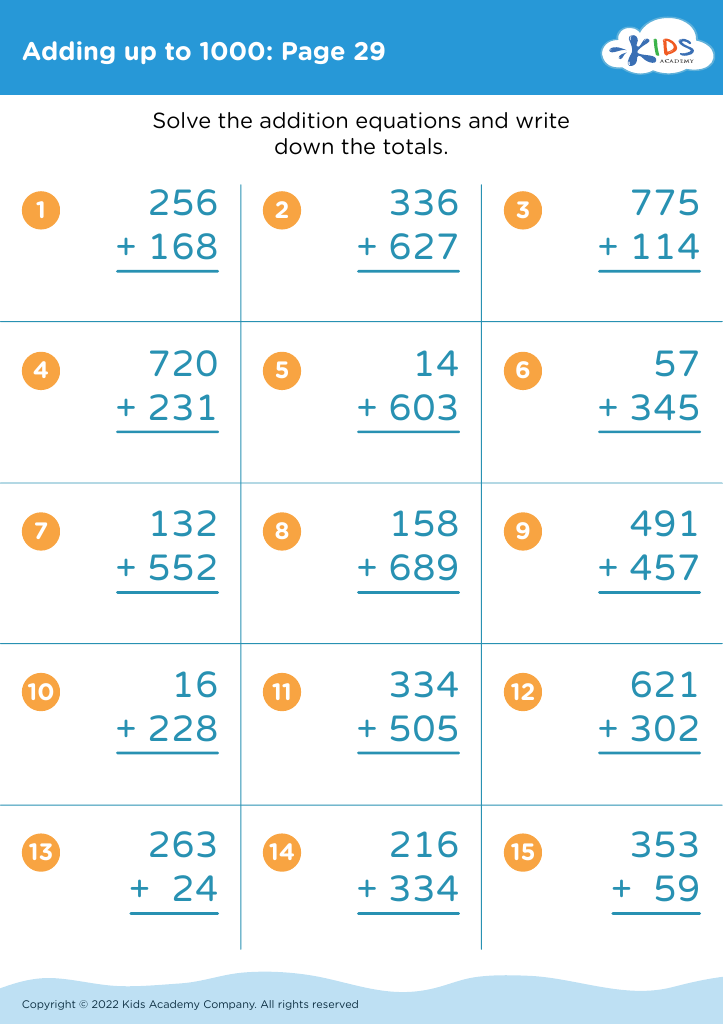
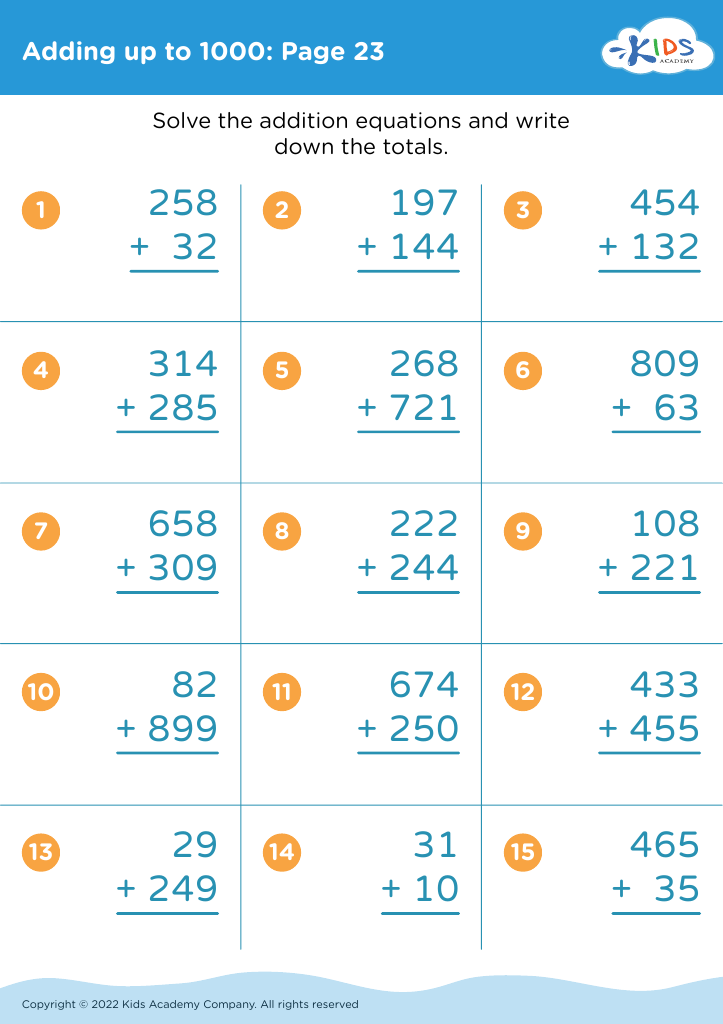
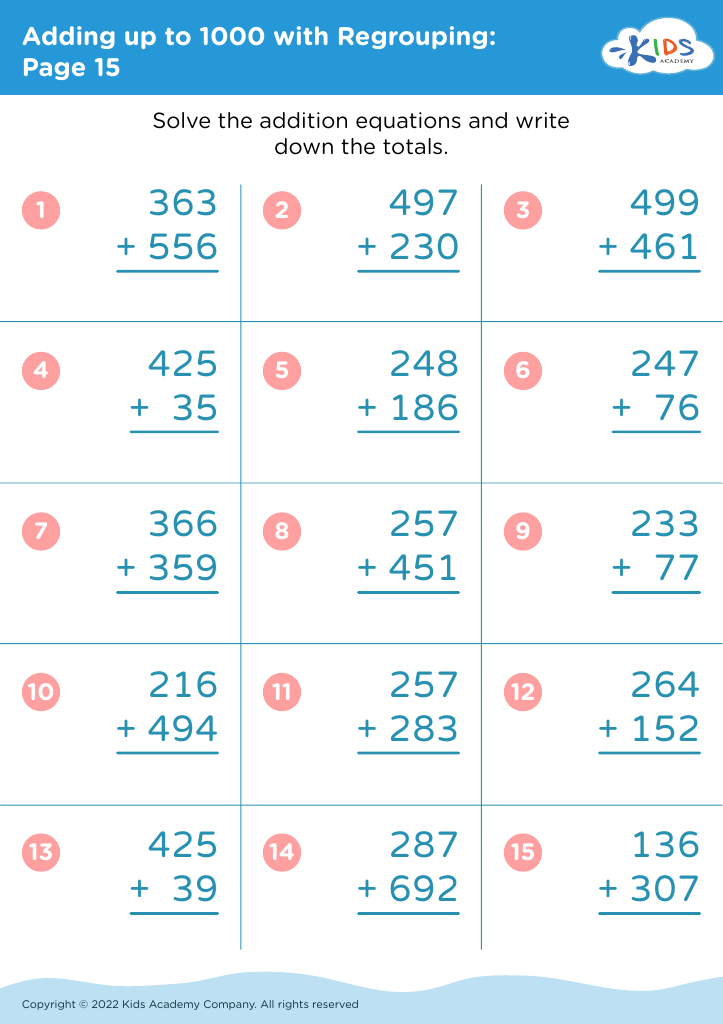
Discover our "Understanding Time: Adding up to 1000 Worksheets" designed for children ages 6-8. These engaging worksheets help young learners grasp the concept of time while practicing addition. Through exciting activities, students will enhance their math skills by solving problems that incorporate both time and addition up to 1000. Our carefully crafted worksheets motivate kids to explore various time-related scenarios, such as reading clocks, calculating duration, and solving real-life problems, all while building a strong foundation in math. Perfect for classroom or home use, these resources aim to make learning fun, interactive, and effective. Start your child’s journey to mastery today!



Understanding time and the ability to add up to 1000 are essential skills for children aged 6-8, and parents and teachers should prioritize them for several reasons. First, developing a solid grasp of time helps kids manage their daily schedules, from school hours to extracurricular activities, fostering independence and responsibility. Tasks like following routines and completing assignments become easier when children can visualize time clearly.
In addition, learning to add numbers up to 1000 supports foundational math skills. It enhances various cognitive abilities, including problem-solving and critical thinking. During this age, students are often introduced to concepts such as place value and mental math, which set the groundwork for more advanced arithmetic.
Furthermore, these skills contribute to academic success. A strong proficiency in mathematics not only boosts confidence but also correlates with better performance in diverse subjects. The ability to handle larger numbers prepares children for future learning, paving the way for more complex concepts in mathematics.
Lastly, reinforcing these skills within a collaborative environment between parents and teachers can lead to a consistent learning experience that encourages resilience and perseverance, equipping children with the tools they need for lifelong learning.








