Word Recognition Adding up to 1000 Worksheets for Ages 6-8
3 filtered results
-
From - To
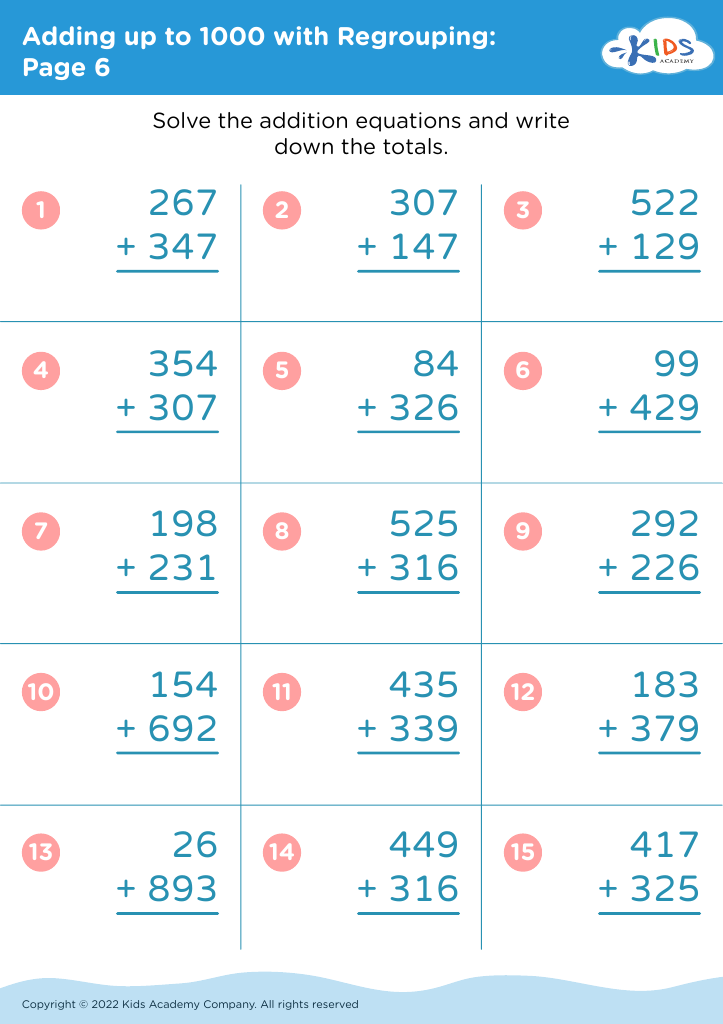
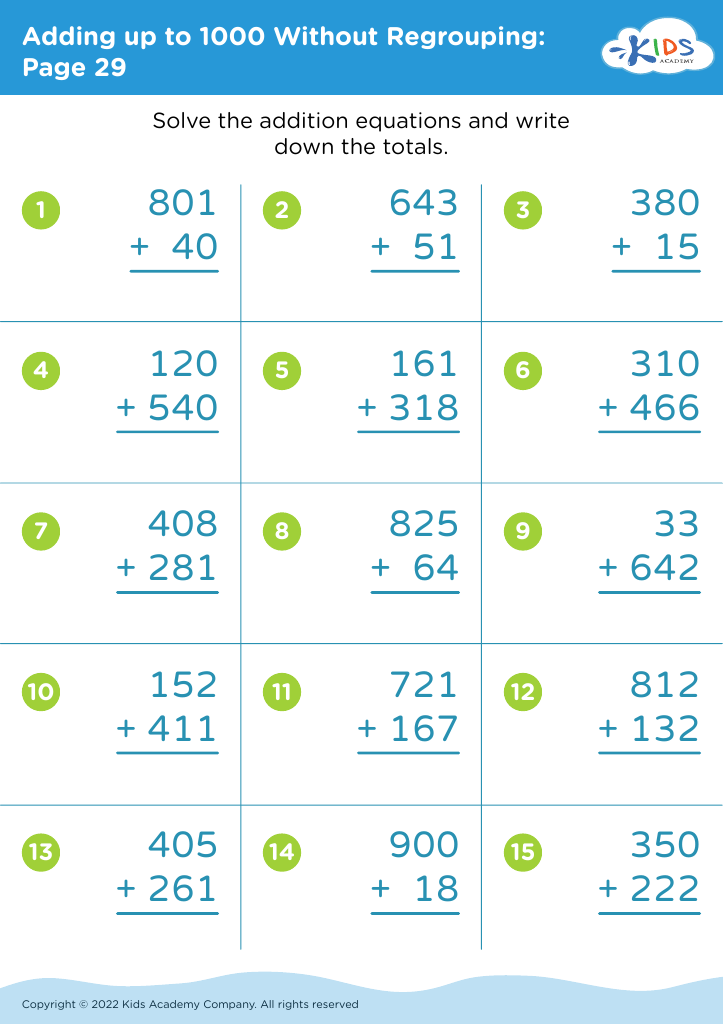
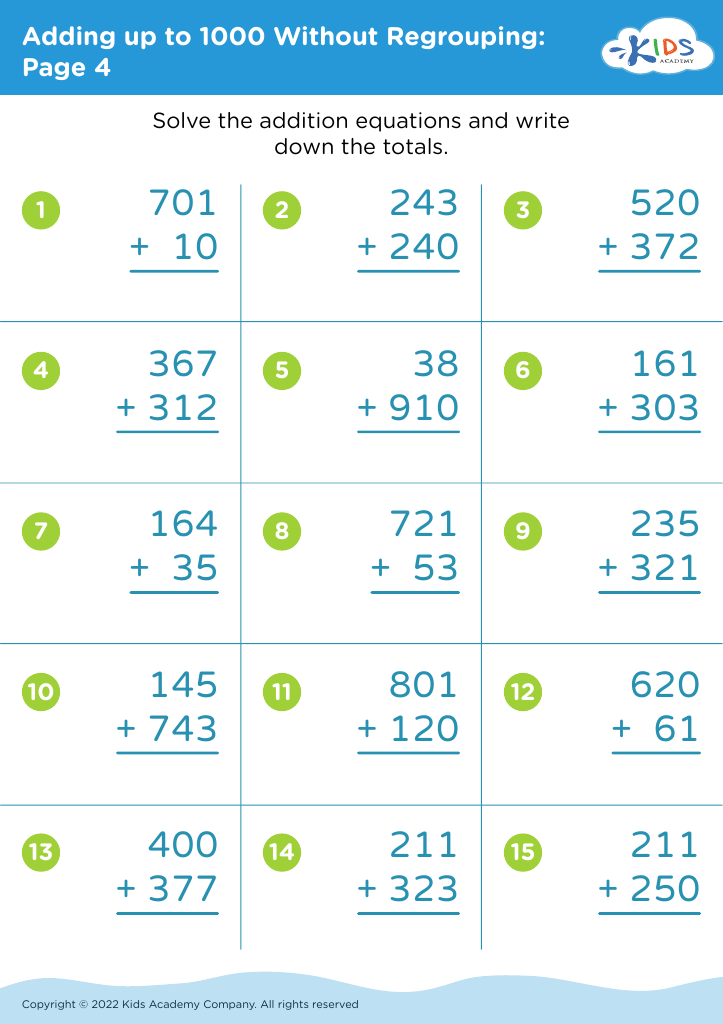
Unlock your child's potential with our "Word Recognition Adding up to 1000 Worksheets for Ages 6-8". These engaging printable resources are designed to enhance fundamental math proficiency and word recognition skills, setting a solid foundation for future learning. Perfectly crafted for young learners, they seamlessly blend fun and education. Each worksheet promotes critical thinking and reinforces basic addition up to 1000, helping kids build their confidence and math fluency. Ideal for classroom and home use, these worksheets promise to turn math practice into an enjoyable and rewarding experience for your child. Get started today!



Ensuring children ages 6-8 master Word Recognition Adding up to 1000 is crucial for their cognitive and academic development. At this stage, children are rapidly improving their literacy and numeracy skills, which serve as foundational building blocks for their future learning. Word recognition contributes greatly to reading fluency and comprehension, enabling children to understand and process information more effectively across various subjects.
Simultaneously, introducing the concept of adding up to 1000 helps children grasp larger numbers, enhancing their mathematical thinking and problem-solving abilities. This dual focus on literacy and numeracy helps foster a balanced cognitive development, ensuring children do not fall behind in either area.
For teachers, integrating these skills into everyday lessons promotes an engaging and comprehensive learning environment, while parents can support this at home through activities and practice exercises. Children who are more confident in their word recognition and numerical addition are better prepared to tackle the more complex subjects that await them in later grades, facilitating a smoother educational journey. Therefore, focusing on these skills at this pivotal stage sets a strong foundation for lifelong learning and academic success.








