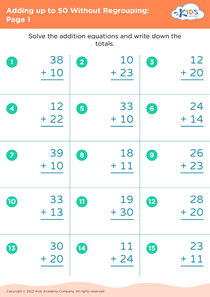
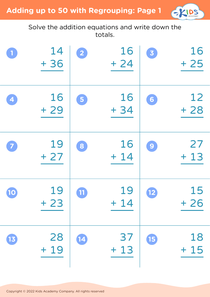
Addition skills Adding up to 50 Misc Worksheets for Ages 6-8
3 filtered results
-
From - To
Boost your child's math confidence with our comprehensive collection of "Addition Skills: Adding up to 50" worksheets, tailored for ages 6-8. These engaging activities are designed to enhance your child's understanding of basic addition concepts and improve their numerical fluency. With a variety of fun and interactive problems, your child will master adding numbers up to 50 while keeping interest and motivation high. Perfect for use in the classroom or at home, these worksheets provide a strong foundation for more advanced math skills and support overall academic success. Download now to watch your child excel in their math journey!
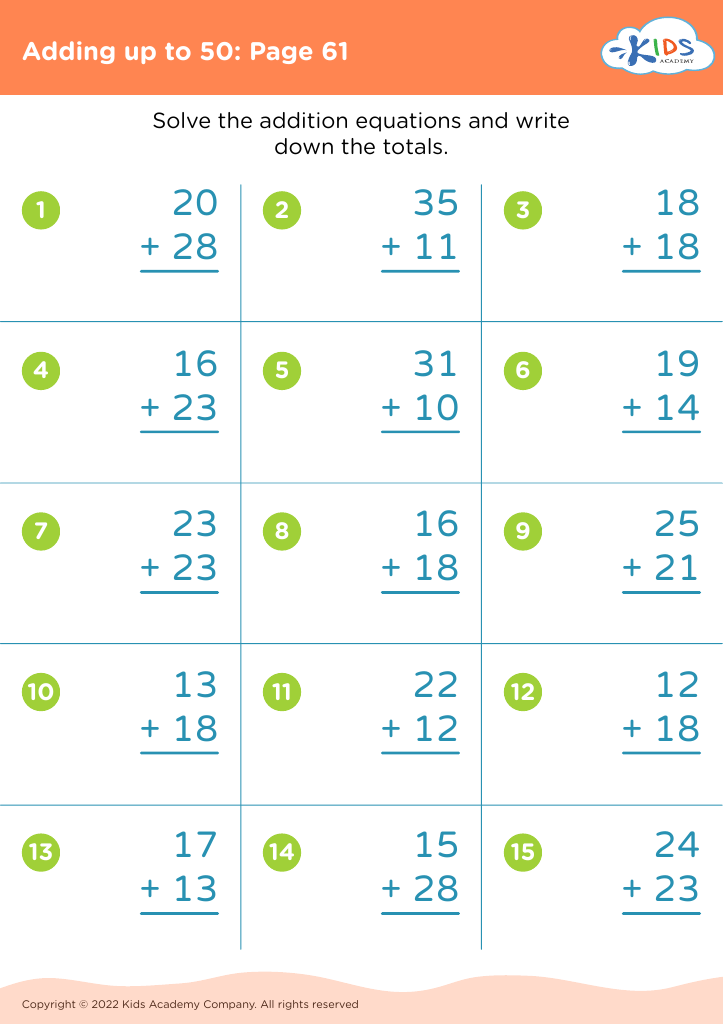
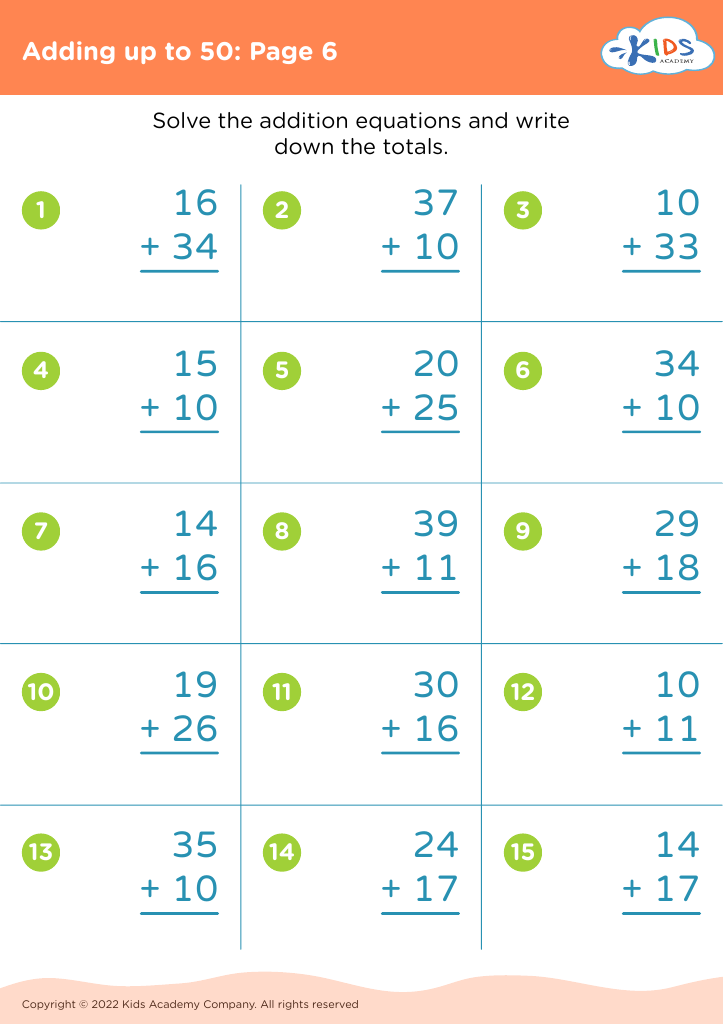
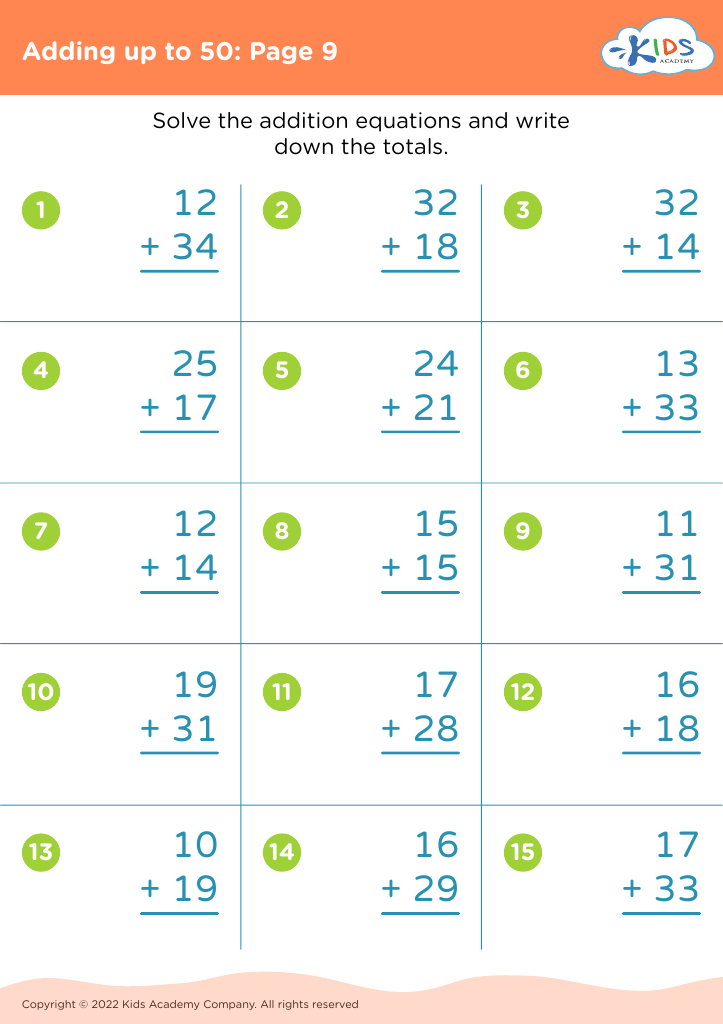


Learning addition skills up to 50 is crucial for children ages 6-8 as it lays the foundational groundwork for future mathematical learning. At this stage, children are honing their number sense and ability to understand and manipulate numbers, which is fundamental to almost all areas of math they will encounter later.
Addition up to 50 helps young learners build confidence and proficiency with basic arithmetic, ensuring they can progress to more complex problems without gaps in their understanding. It also reinforces critical thinking and problem-solving skills as they learn to approach various types of addition problems, such as those involving larger numbers, carrying over digits, and tackling word problems.
Furthermore, these skills are not just academic but practical; they apply to everyday tasks like counting money, measuring ingredients for a recipe, or even understanding time management. When parents and teachers prioritize the development of strong addition skills in early childhood, they foster an environment where children can thrive mathematically and feel competent in handling real-life quantitative challenges.
Providing encouragement and tools, such as hands-on activities or interactive worksheets for practicing addition up to 50, can make the learning process engaging and effective. Ultimately, nurturing these early math skills contributes significantly to a child's long-term academic success and confidence in their intellectual abilities.