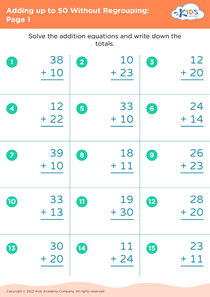
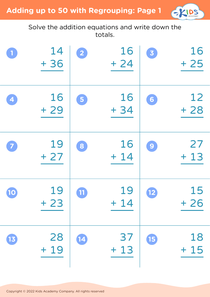
Basic Math Skills Adding up to 50 Misc Worksheets for Ages 6-8
5 filtered results
-
From - To
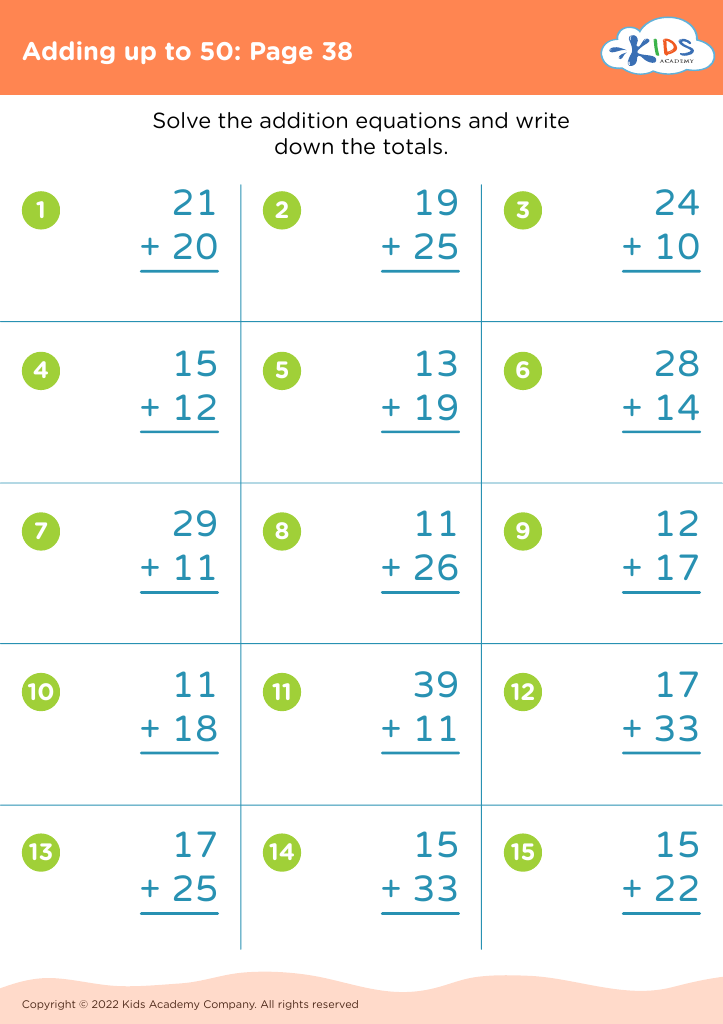
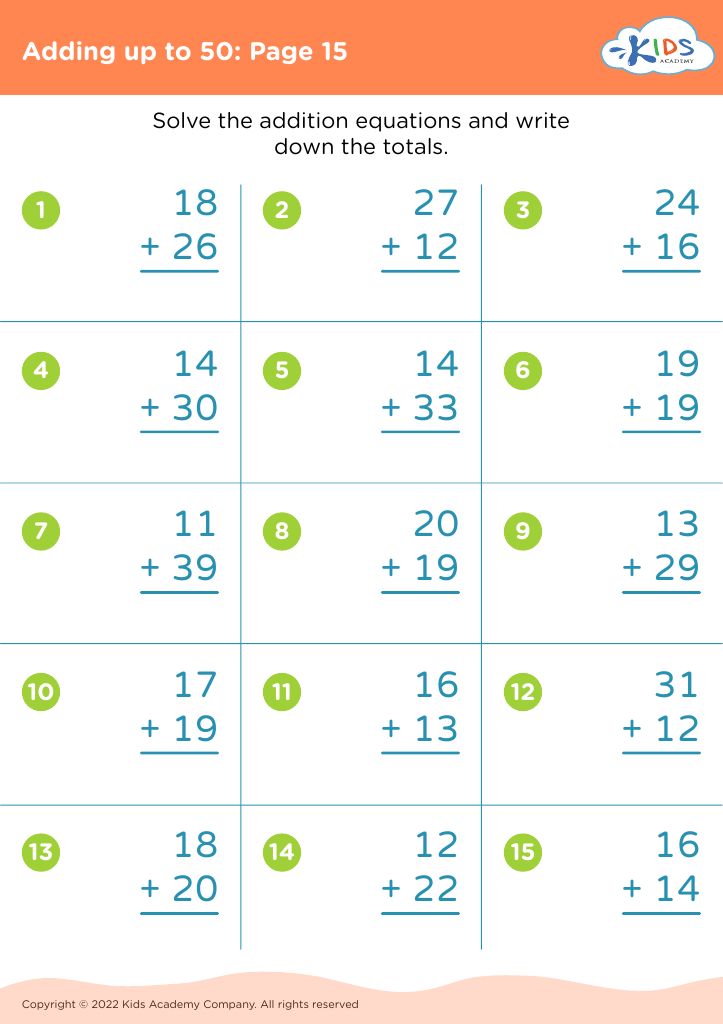
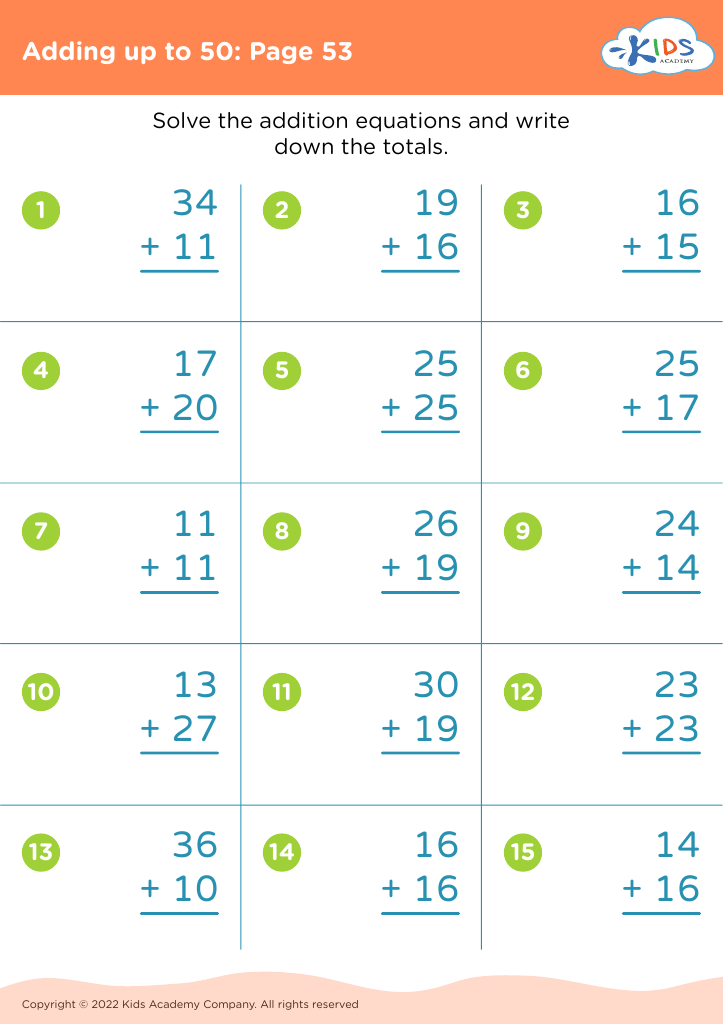
Explore our engaging collection of "Basic Math Skills: Adding Up to 50 Misc Worksheets," designed for children ages 6-8. These printable worksheets are tailored to enhance math proficiency through fun and interactive exercises. Your young learners will build essential skills in addition while nurturing their problem-solving abilities. Each worksheet features colorful visuals and age-appropriate challenges that encourage kids to practice addition in various contexts, perfect for in-class or home use. With our versatile resources, you can easily track progress and provide personalized support as they master adding up to 50. Start building a strong math foundation today!
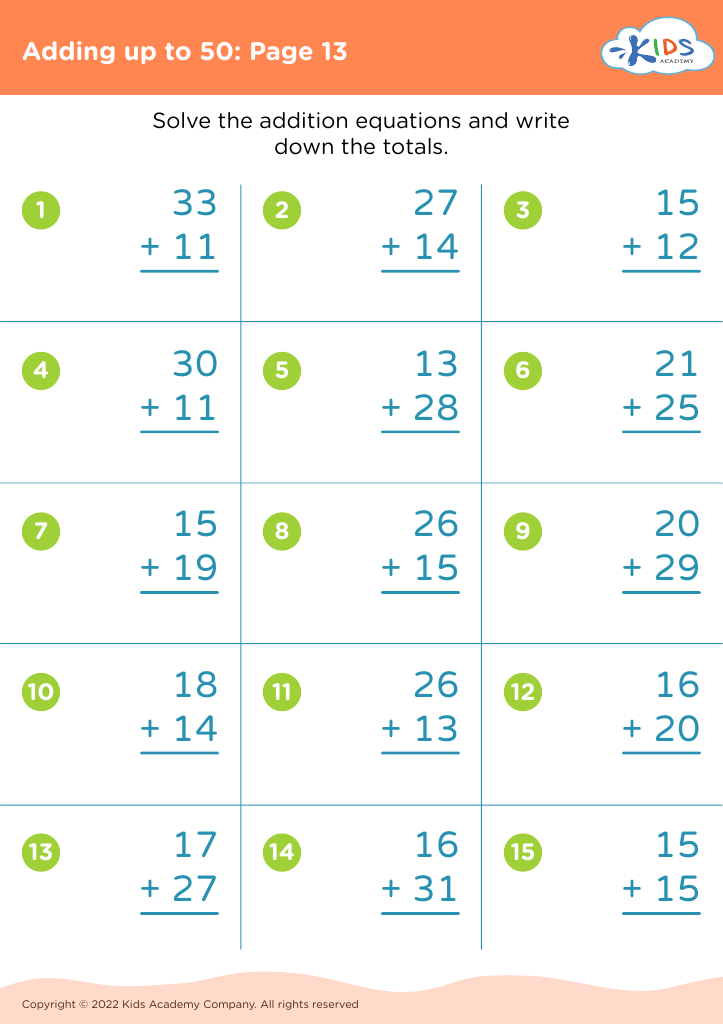
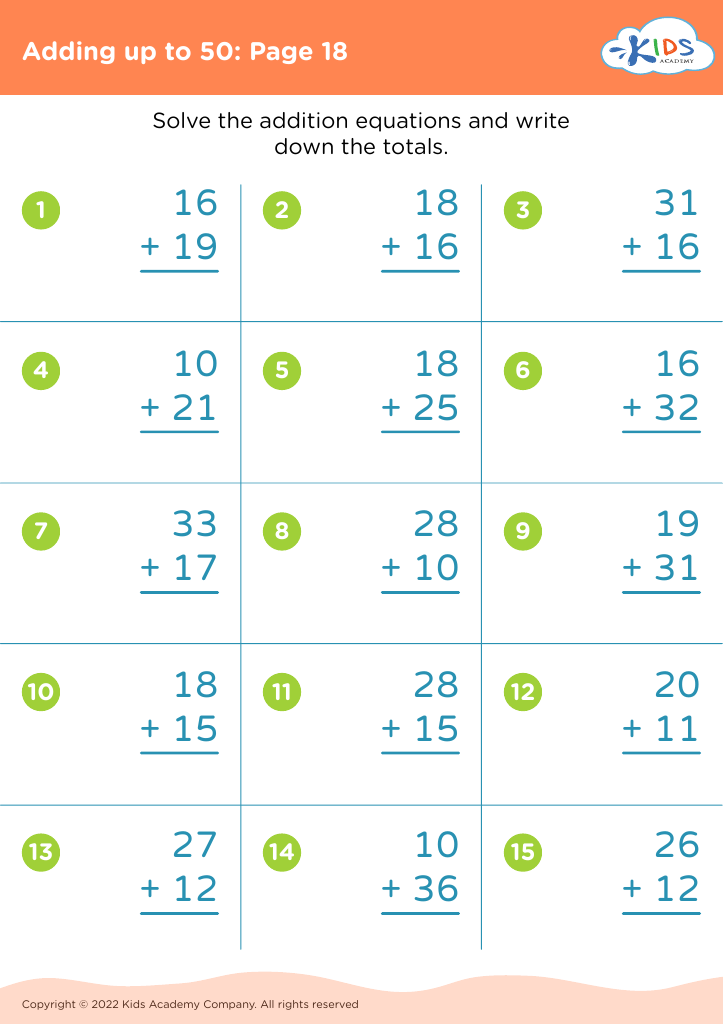


Basic math skills, particularly the ability to add up to 50, are foundational for children ages 6-8, and they are essential for several reasons. Firstly, these skills foster cognitive development. As children practice addition, they enhance their problem-solving abilities and critical thinking skills, which are crucial not only in math but across all academic subjects.
Furthermore, proficiency in basic math lays the groundwork for more complex concepts. Understanding addition up to 50 prepares children for future lessons in subtraction, multiplication, and eventually, algebra, helping them to transition smoothly through their educational journey.
Additionally, mastering basic math skills boosts children's confidence. When they can successfully tackle simple addition problems, they foster a positive attitude towards math, reducing anxiety and promoting a growth mindset. This self-confidence often translates to increased participation in class activities and a willingness to tackle challenges.
Moreover, math is a core competency in everyday life. Being able to add basic numbers ensures children can manage tasks such as counting money, estimating costs, and even understanding time, setting them up for success outside the classroom. Ultimately, caregivers should prioritize developing these skills to promote lifetime learning and positive attitudes towards math.