Understand fractions Adding up to 50 Misc Worksheets for Ages 6-8
3 filtered results
-
From - To
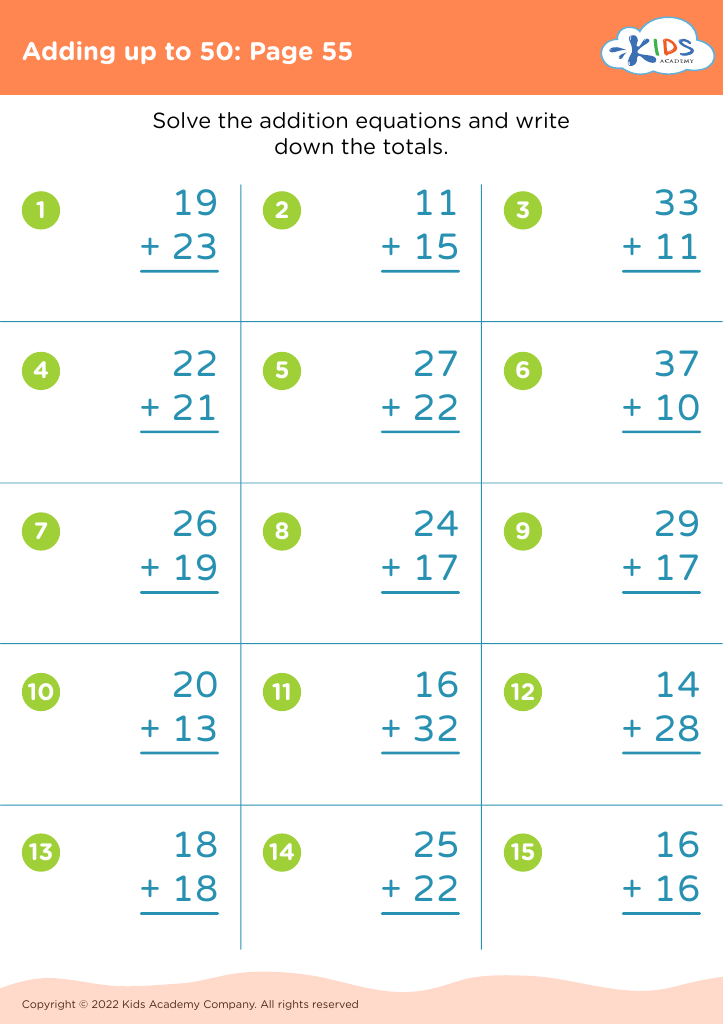
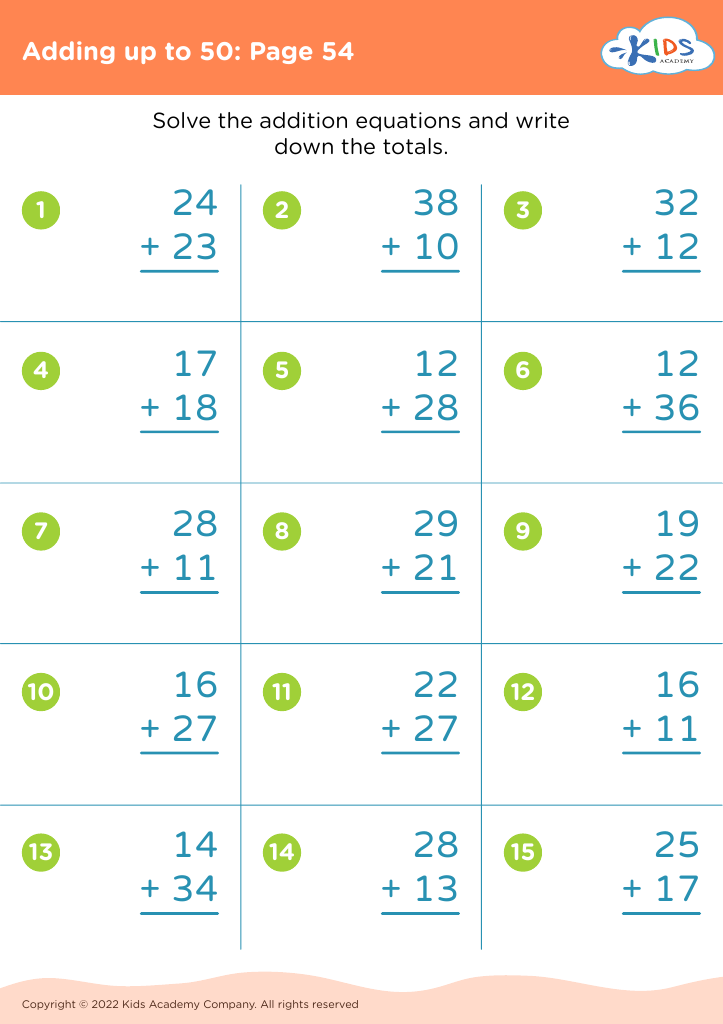
Discover engaging and educational worksheets designed to help children aged 6-8 understand fractions while adding up to 50. Our "Understand Fractions Adding up to 50" miscellaneous worksheets provide a fun and interactive way for young learners to grasp the concept of fractions through hands-on activities and practice problems. Tailored to enhance math skills, these worksheets include various formats like fill-in-the-blank exercises, visuals, and real-life scenarios to reinforce comprehension. Encourage your child’s learning journey with our carefully crafted resources that balance educational rigor with enjoyable exercises. Perfect for home or classroom use, these worksheets will make fractions a breeze!
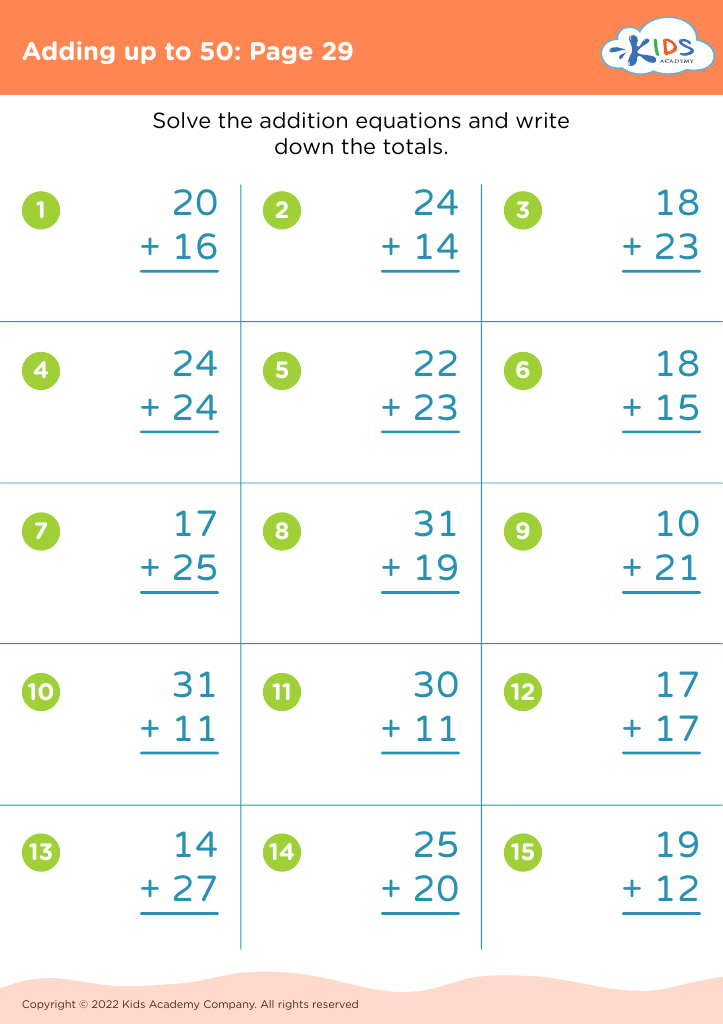


Understanding fractions and basic addition is foundational for children's mathematical development, particularly for ages 6-8. Parents and teachers should prioritize these concepts as they foster essential skills that extend beyond mathematics into everyday life.
Firstly, mastery of fractions helps children make sense of quantities in real-world contexts, such as cooking and measuring ingredients. As children learn to recognize, create, and compare fractions, they develop analytical thinking and problem-solving skills that are crucial for more complex mathematical concepts they'll encounter later.
Regarding addition, focusing on numbers up to 50 instills numerical fluency, encouraging children to recognize patterns and relationships between numbers. This builds confidence and prepares them for more advanced operations like subtraction, multiplication, and division.
Moreover, early mathematical skills are linked to later academic success. Engaging with these topics in fun and interactive ways can promote a love for learning. Parents and teachers can work together to create enriching experiences that solidify these concepts, ensuring that children are not only prepared for future math challenges but are also equipped with critical life skills. Ultimately, prioritizing fraction understanding and basic addition lays the groundwork for stronger academic performance and a positive attitude towards mathematics.