Understanding adjectives Adding up to 50 Misc Worksheets for Ages 6-8
4 filtered results
-
From - To
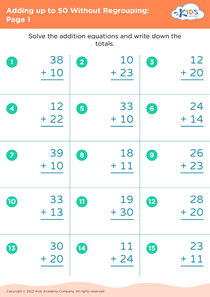
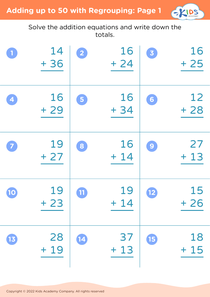
Enhance your child's learning experience with our "Understanding Adjectives" worksheets, designed for ages 6-8. This collection of 50 engaging and varied activities integrates grammar skills while reinforcing math concepts. Children will explore descriptions in language, learning to identify and use adjectives that add flair to their writing. These worksheets encourage creativity and comprehension, allowing young learners to connect words and numbers in a fun way. Perfect for home or classroom use, these resources make learning enjoyable and effective. Help your child build a strong foundation in language arts while practicing important math skills with our thoughtfully crafted worksheets!
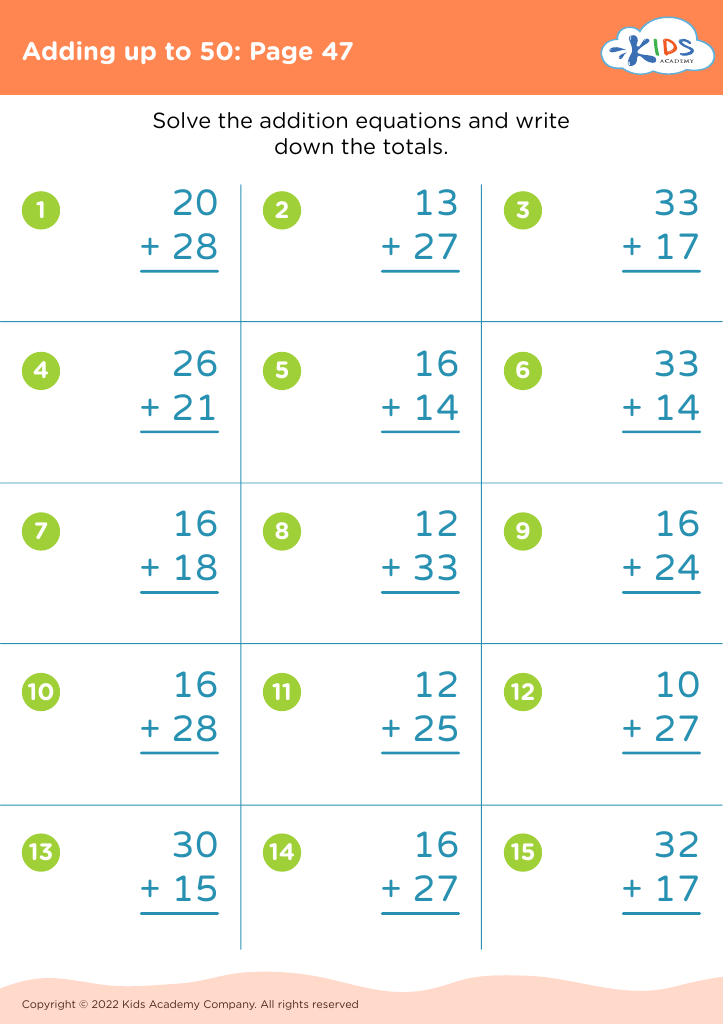
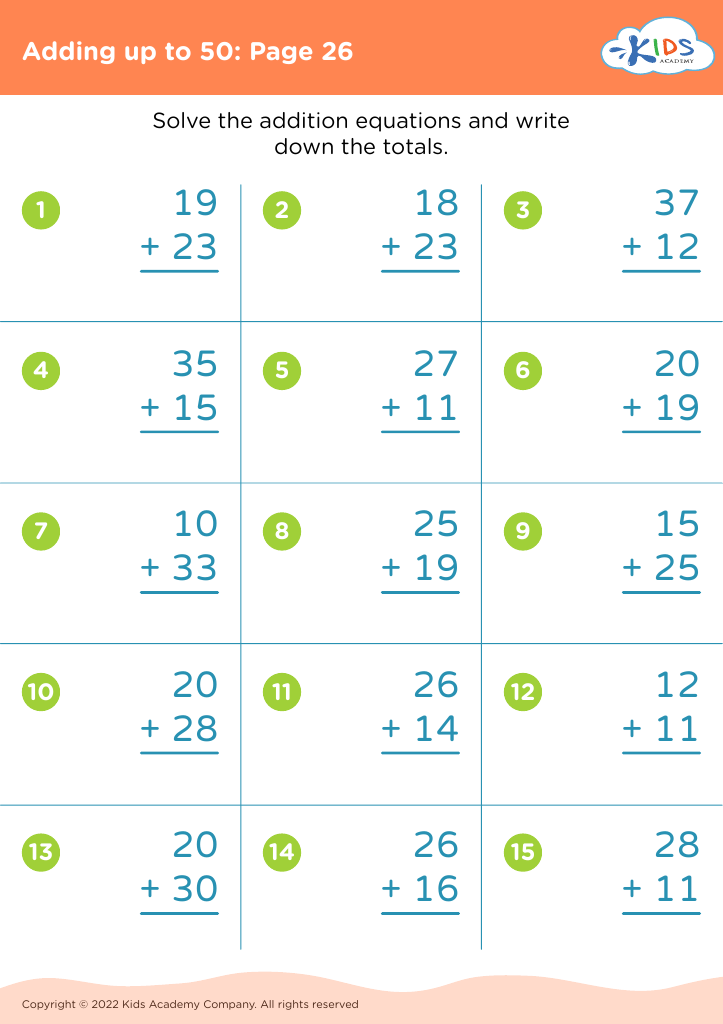
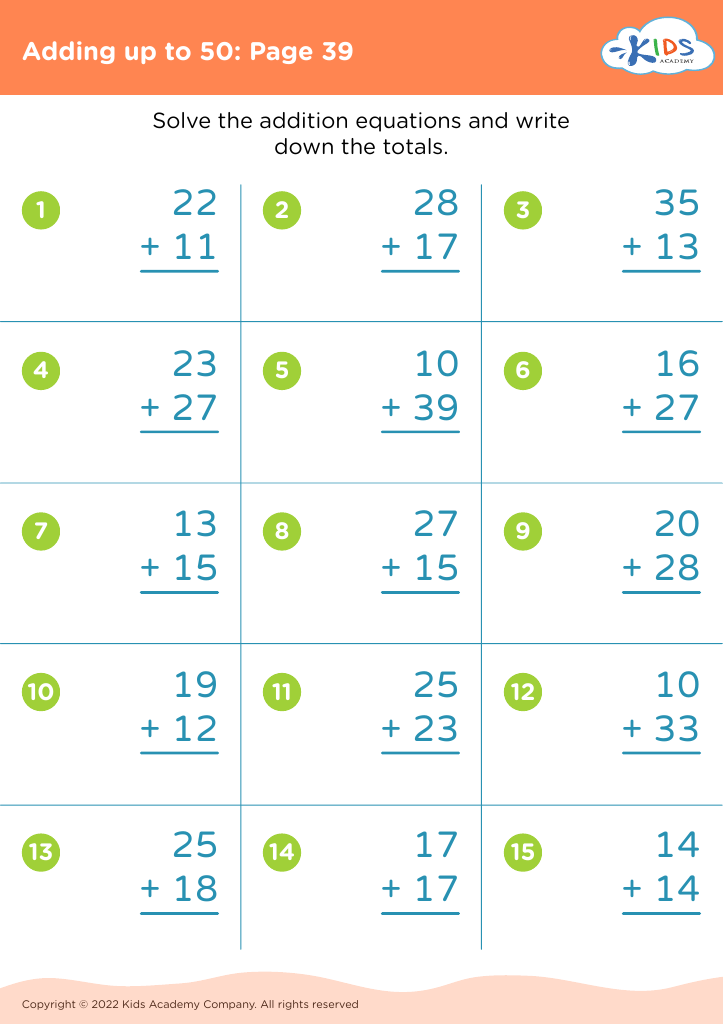
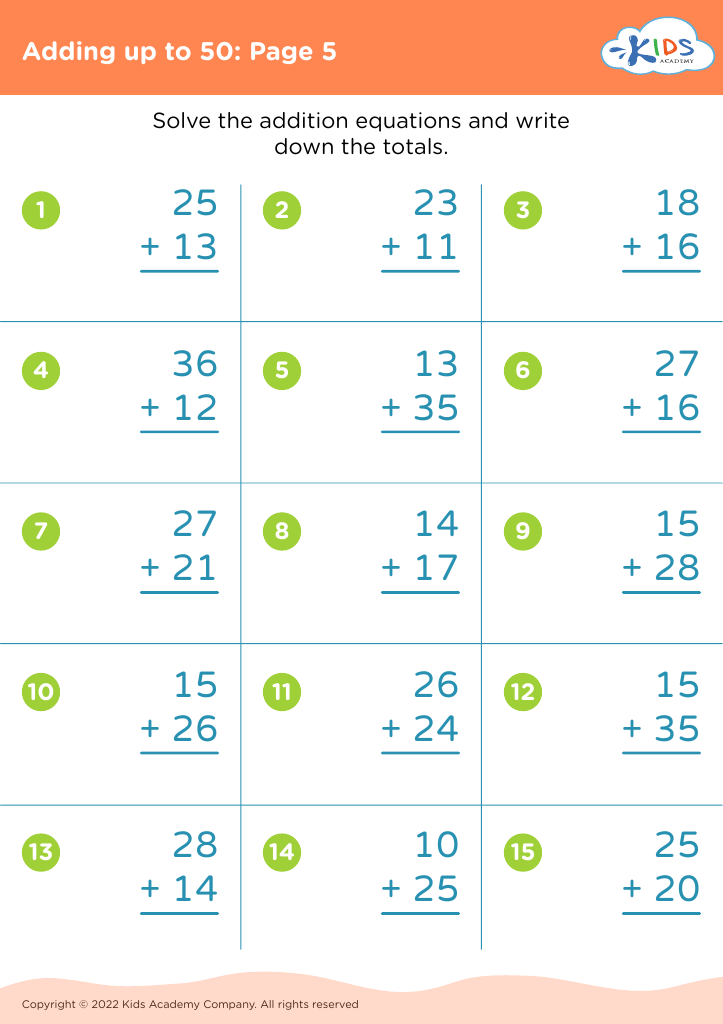


Understanding adjectives and engaging with concepts like "adding up to 50" are crucial elements in a child’s learning journey, particularly for ages 6-8. Adjectives enrich language skills by helping children describe people, places, and things more vividly, fostering creativity and enhancing communication. This skill enables them to express themselves better in both spoken and written forms, which is vital for developing comprehension and critical thinking.
On the other hand, mathematical concepts like adding up to 50 reinforce basic arithmetic skills essential for future learning. Early exposure to numbers helps build a strong foundation for more complex mathematical operations, promoting confidence and problem-solving abilities.
Parents and teachers should prioritize these skills because they are intertwined with overall academic success and personal development. By understanding adjectives, children become more engaged readers and writers, enhancing their literacy skills. Simultaneously, by mastering addition and early math concepts, they lay the groundwork for scientific reasoning and logical thinking.
Ultimately, when children are equipped with strong language and math skills, they are better prepared for academic challenges, social interactions, and everyday problem-solving, setting them on a path for lifelong learning and success.