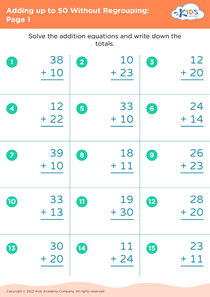
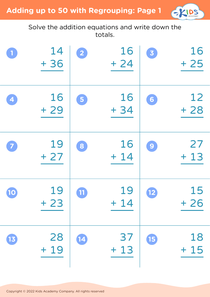
Understanding fractions Adding up to 50 Misc Worksheets for Ages 6-8
17 filtered results
-
From - To
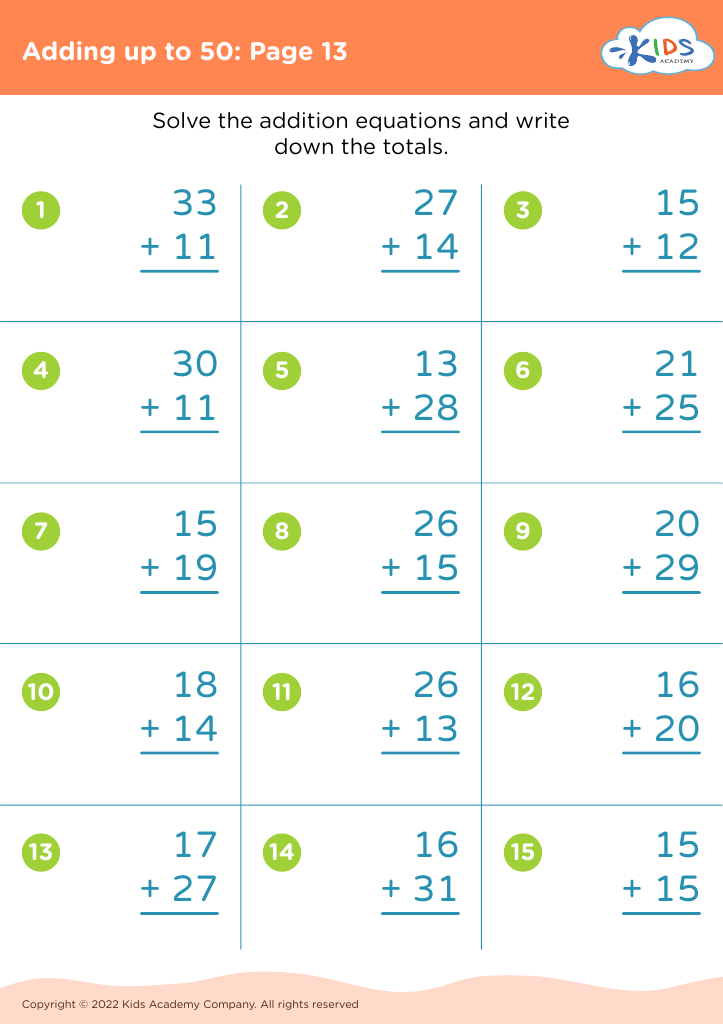
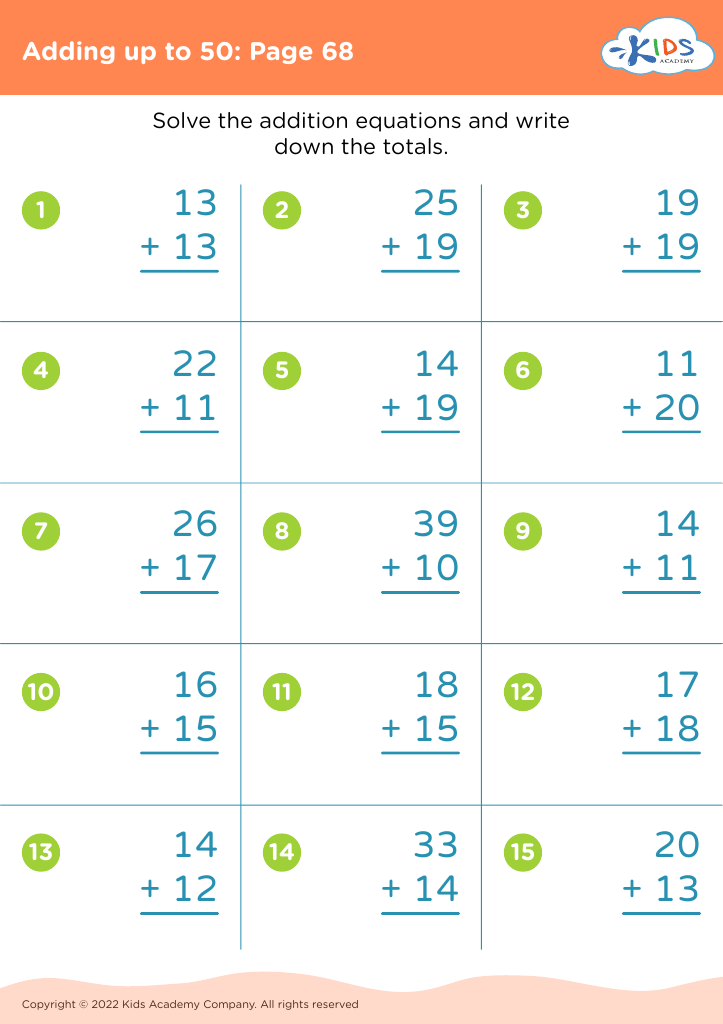
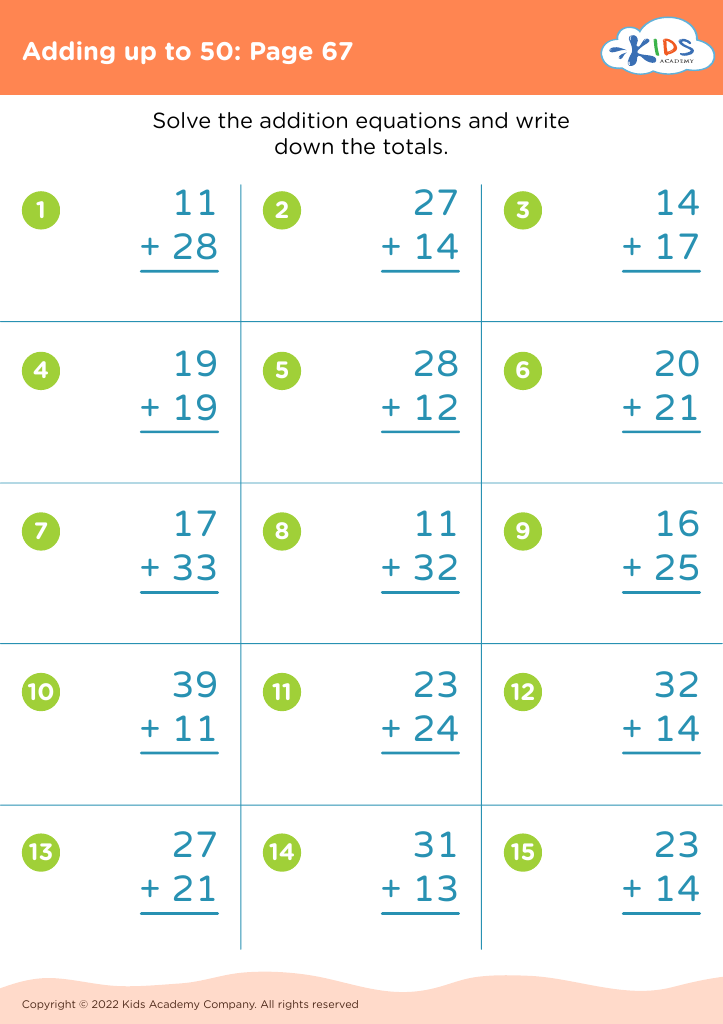
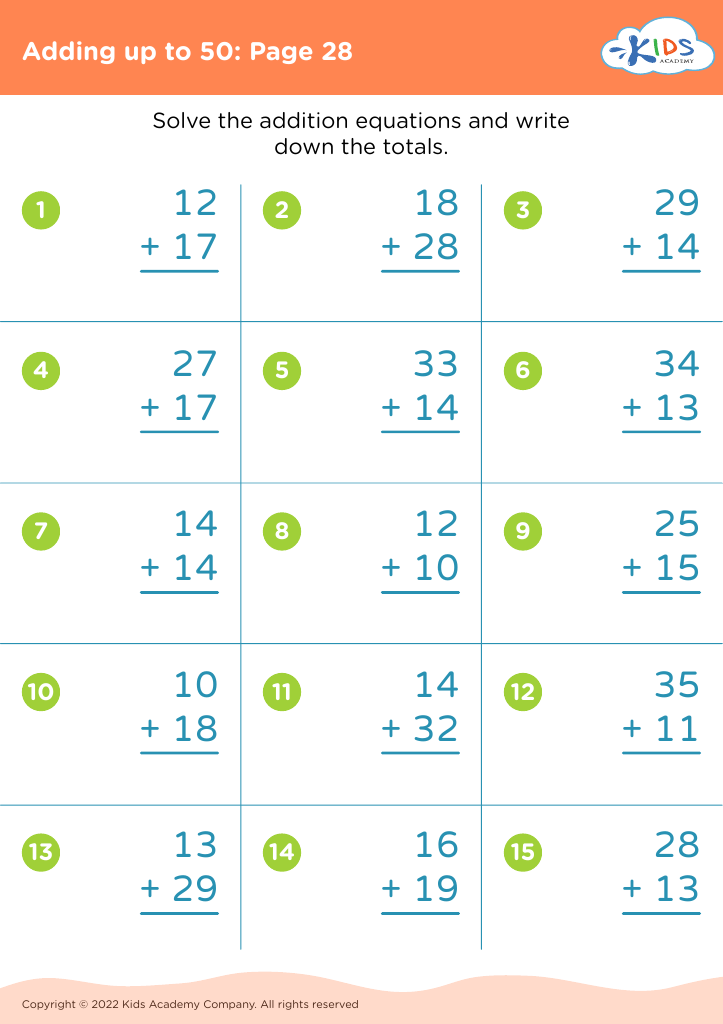
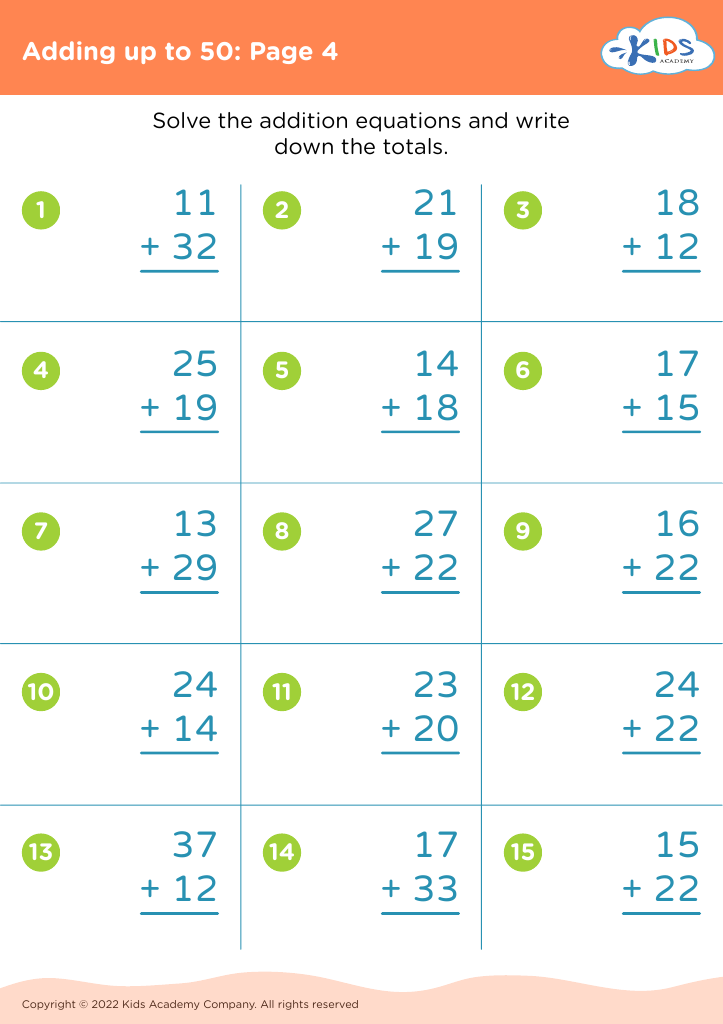
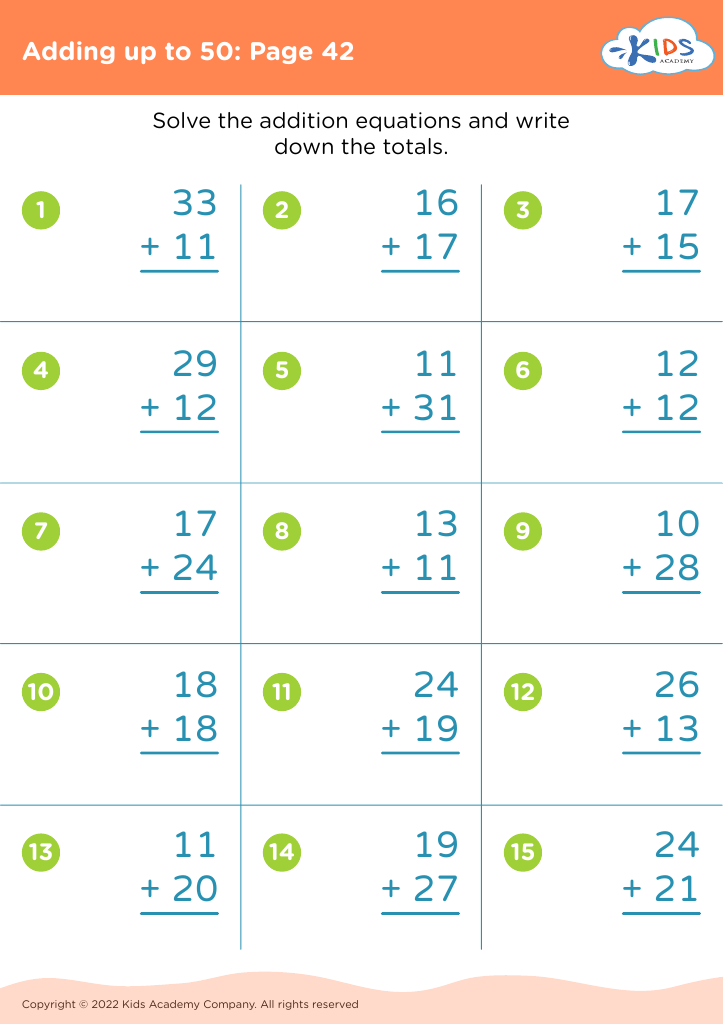
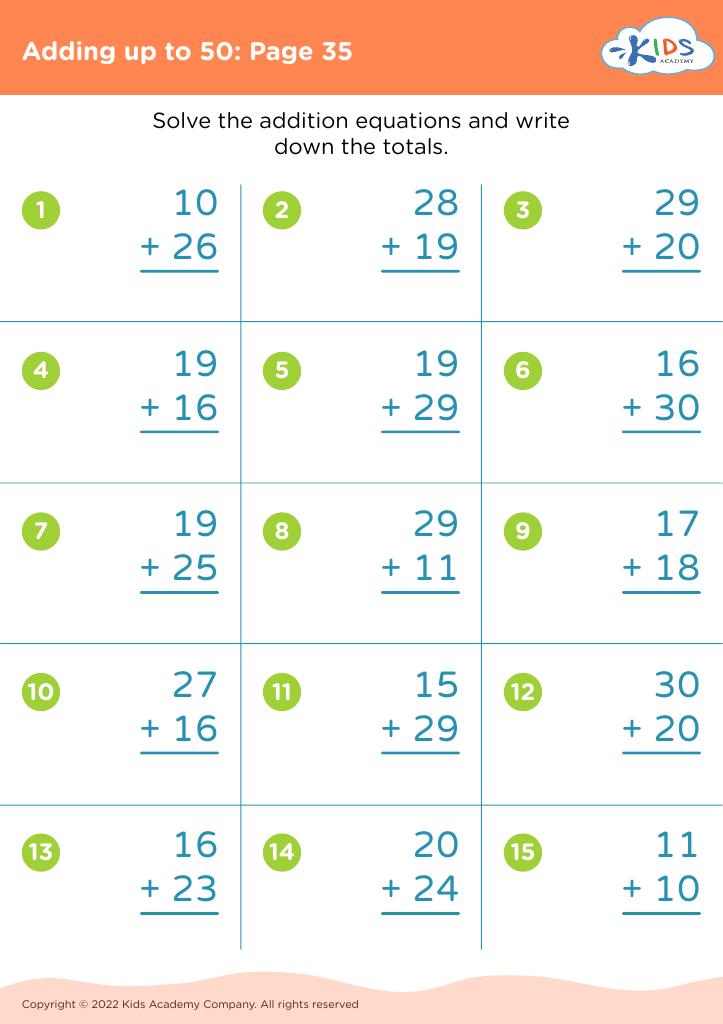
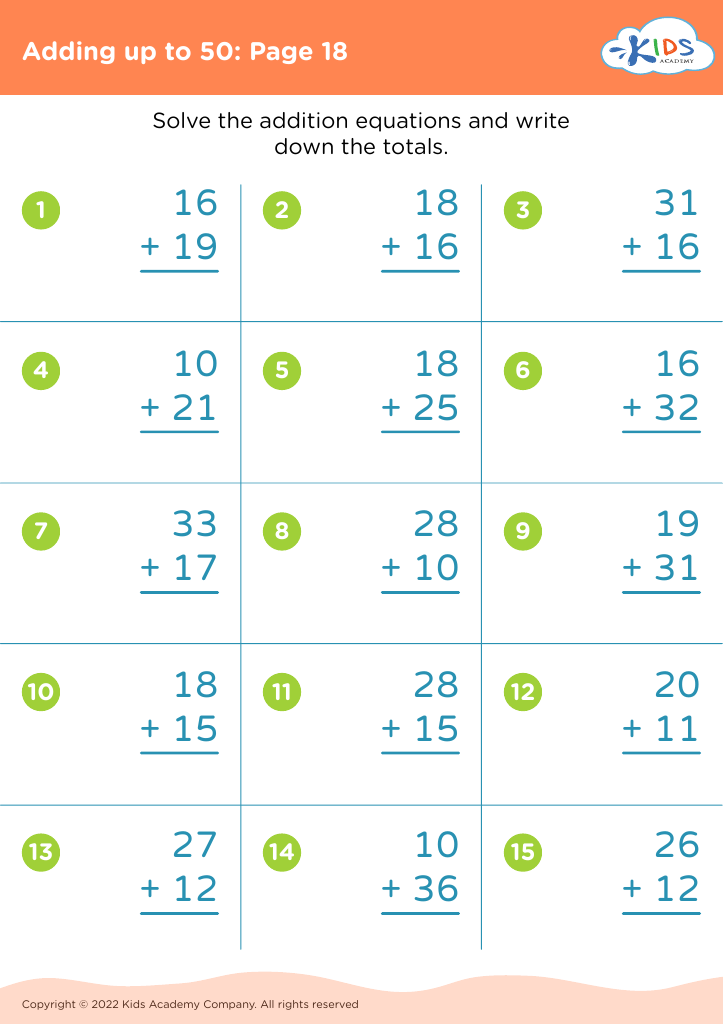
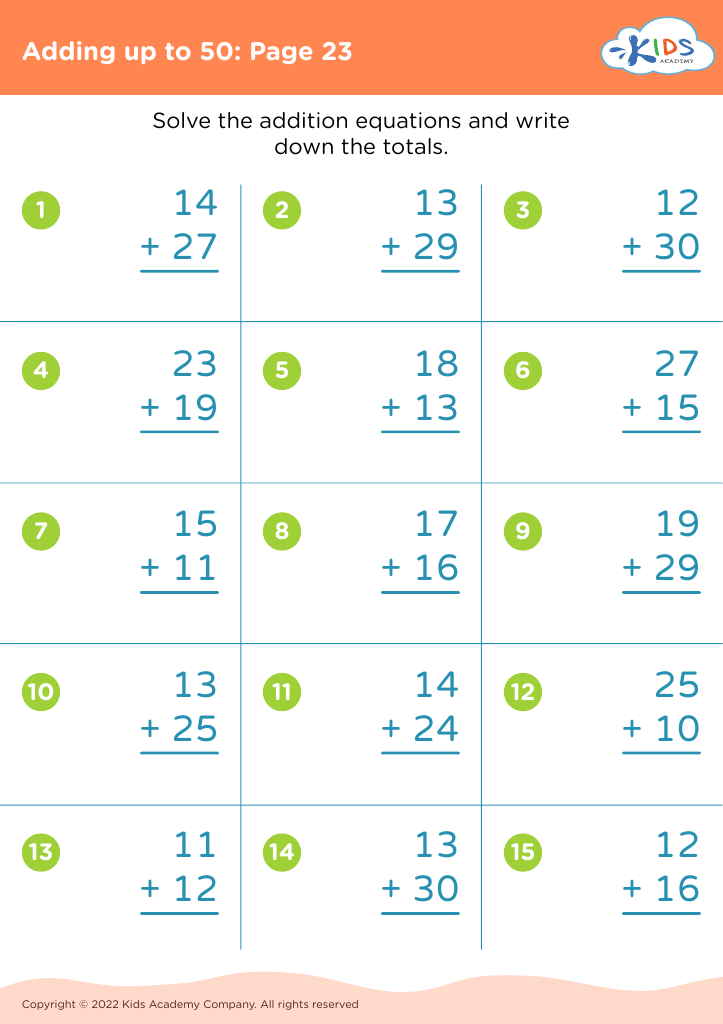
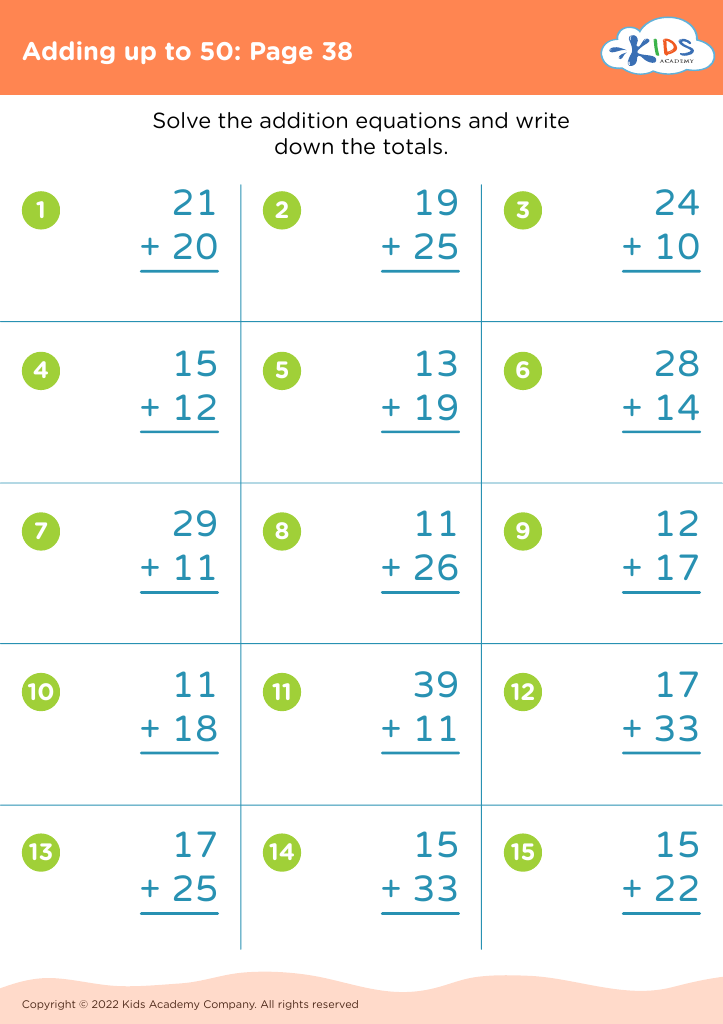
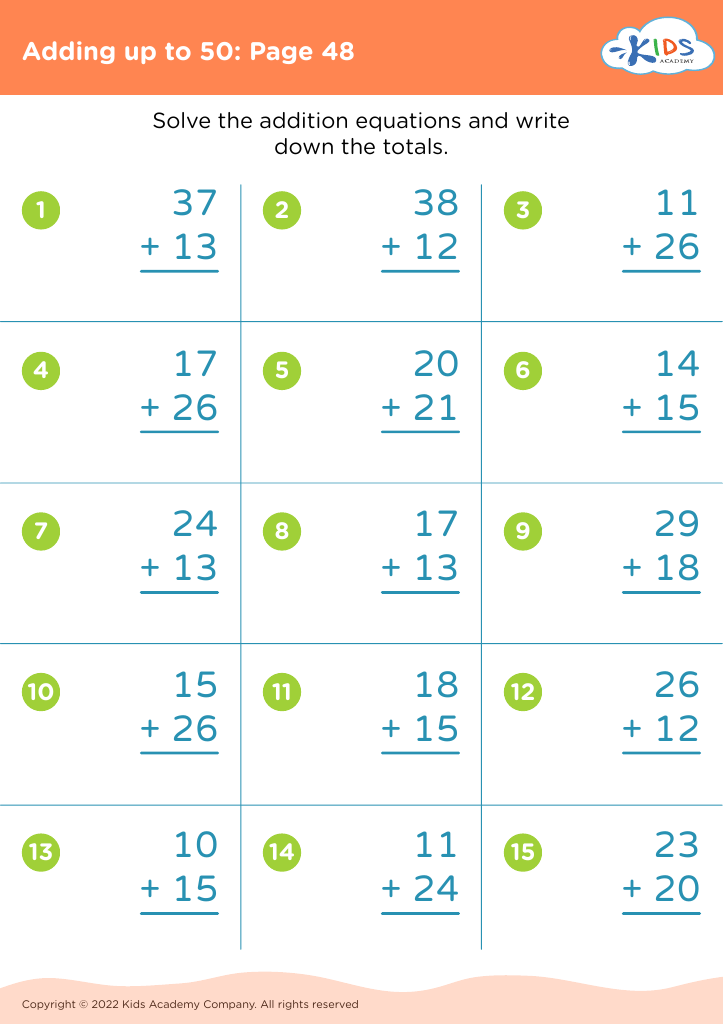
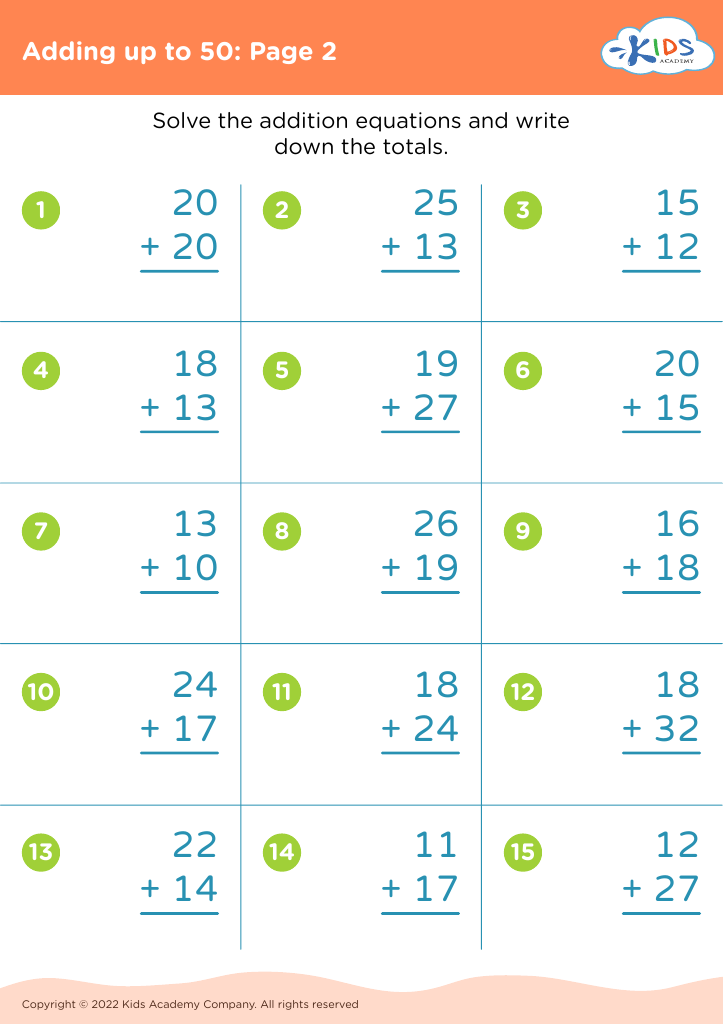
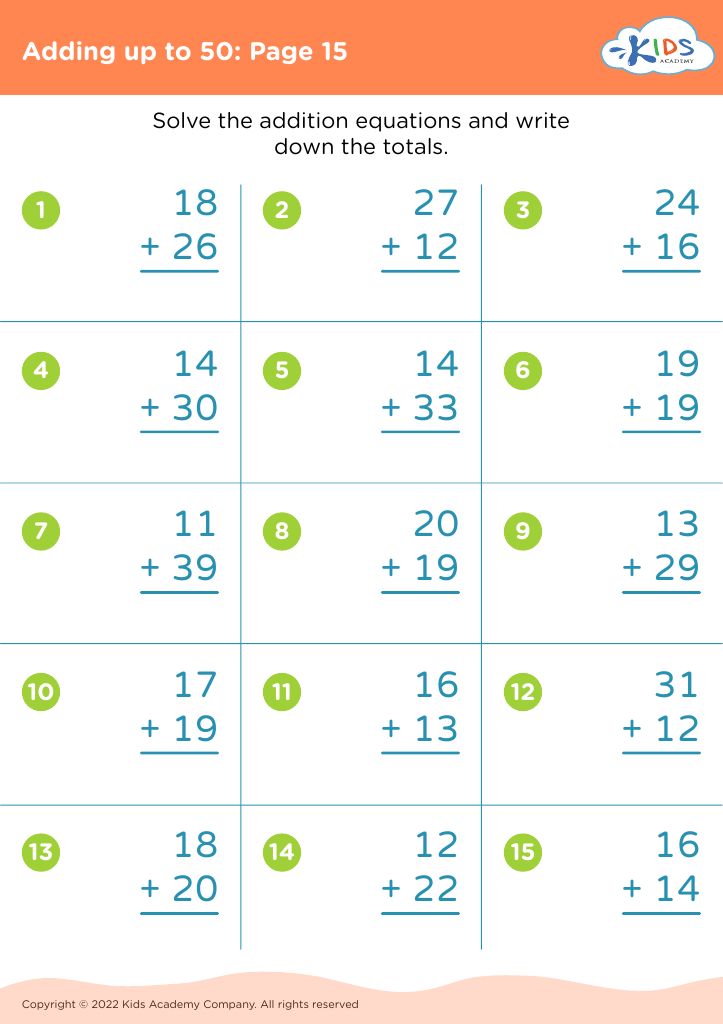
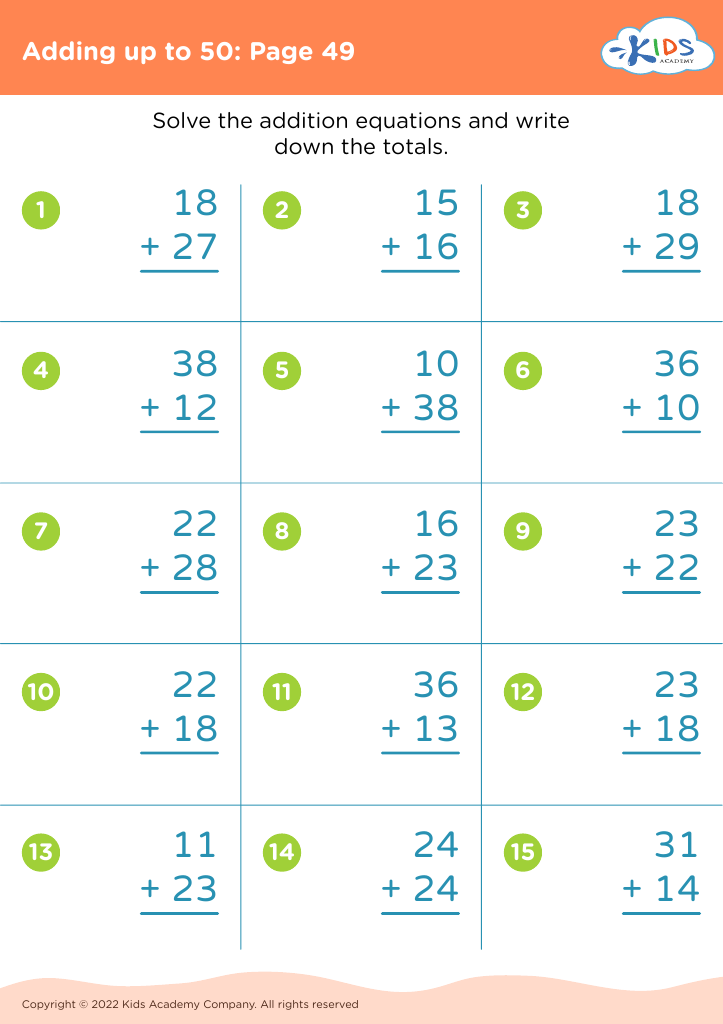
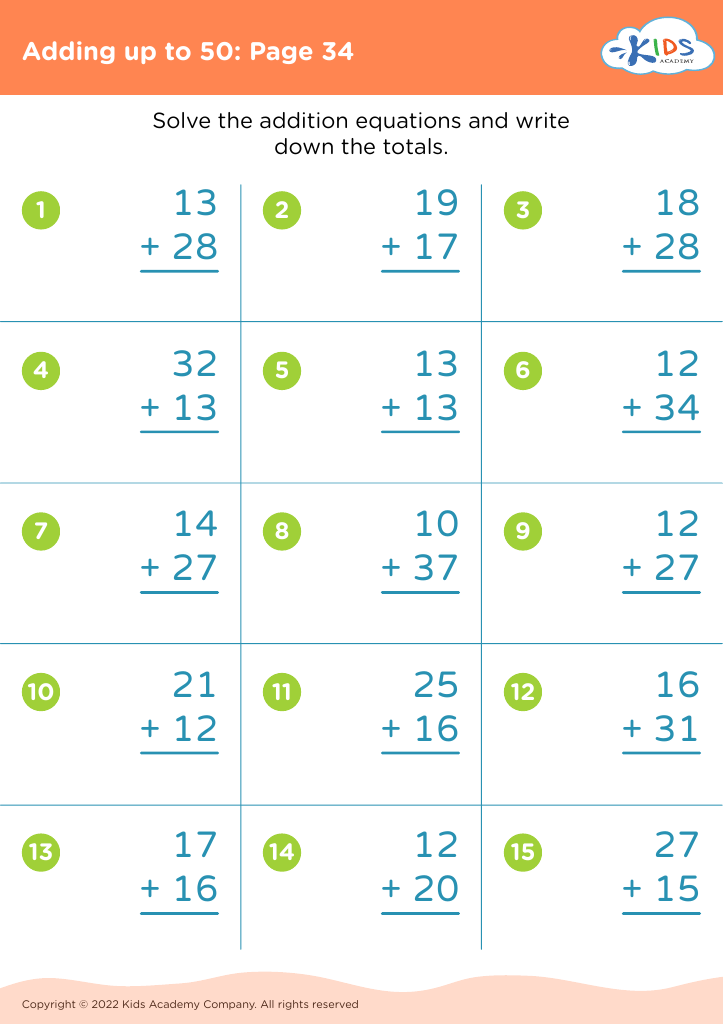
Explore our "Understanding Fractions: Adding Up to 50" miscellaneous worksheets, designed specifically for children ages 6-8. This engaging resource helps young learners build a solid foundation in fractions through fun, interactive activities. Each worksheet encourages students to grasp basic concepts of fractions while practicing addition skills up to 50. Ideal for homeschooling or classroom use, these worksheets promote critical thinking and reinforce mathematical understanding in a playful manner. Dive into a world of numbers as kids enhance their fraction skills with colorful graphics and relatable scenarios, making learning a rewarding experience. Get started on their mathematical journey today!
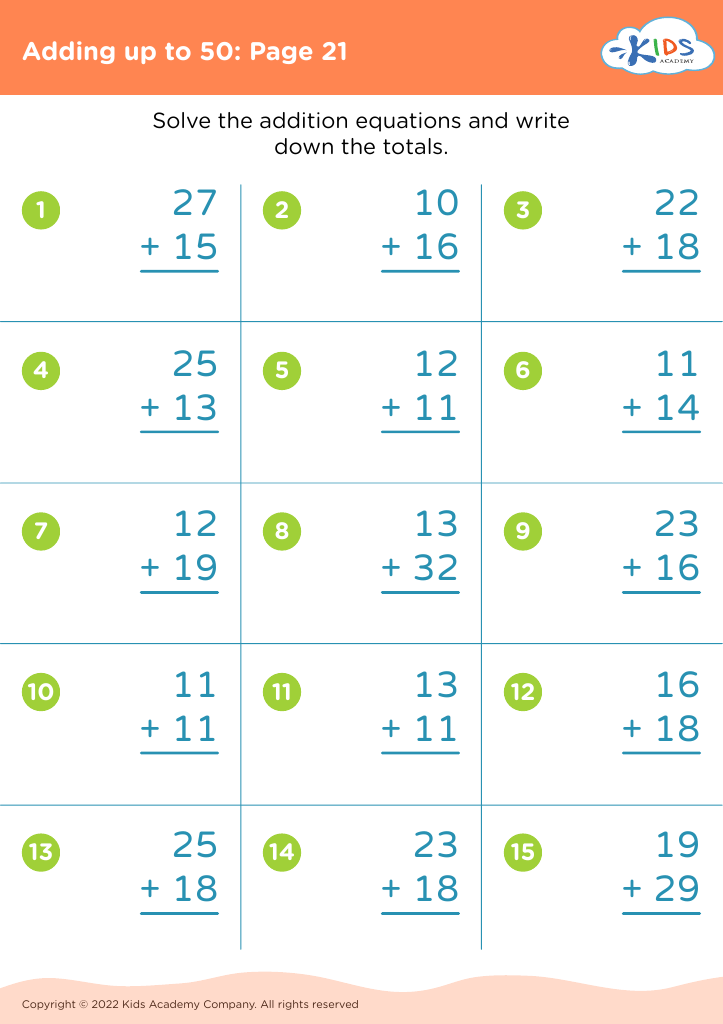
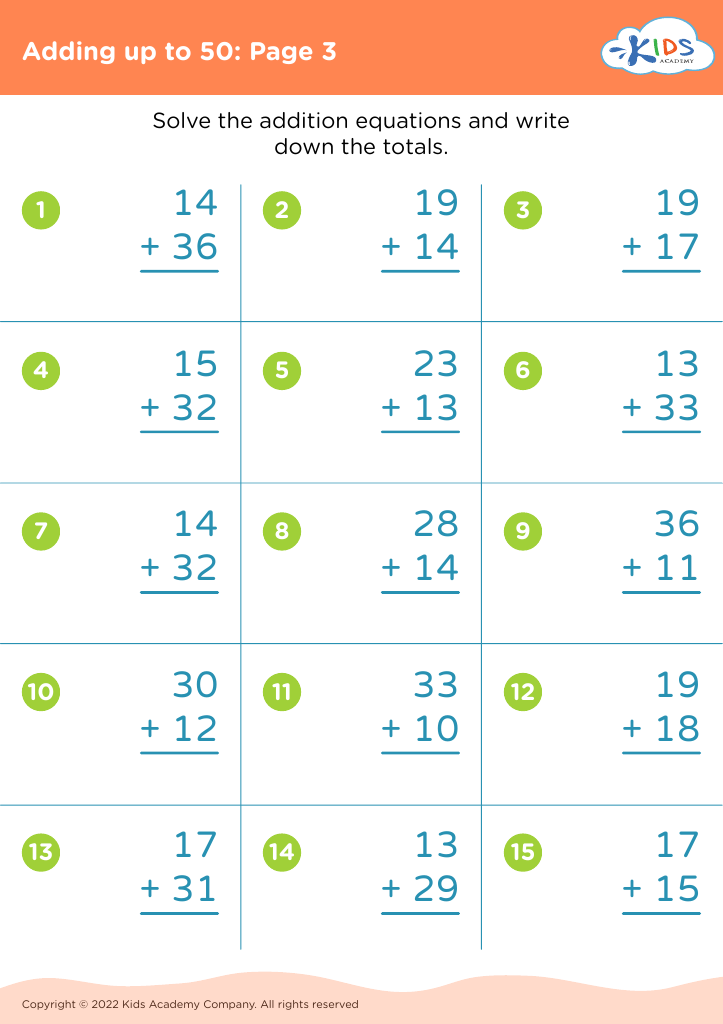


Understanding fractions is a fundamental skill that lays the groundwork for deeper mathematical concepts. For children aged 6-8, learning about fractions is not just about numbers; it's about developing critical thinking and problem-solving abilities. Fractions help young learners comprehend parts of a whole, making connections across various subjects, including art, cooking, and sharing.
When parents and teachers focus on teaching fractions, such as adding up to 50, they introduce concepts of proportion and comparison, which are essential for later math skills. Mastering fractions enhances a child’s ability to navigate and understand more complex ideas like decimals and percentages as they progress in school.
Additionally, engaging with practical examples of fractions, such as using food or daily activities, makes the learning process enjoyable and relatable. This fosters a positive attitude towards math, which is crucial for lifelong learning. Understanding fractions not only prepares children academically but also builds confidence, encouraging them to share their understanding with peers.
In sum, investing time in learning fractions is vital for the overall cognitive development of children and equips them with essential skills that extend beyond the classroom, promoting critical life skills as they grow.