Simplifying Fractions Adding up to 50 with Regrouping Worksheets for Ages 6-8
4 filtered results
-
From - To
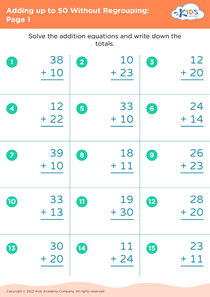
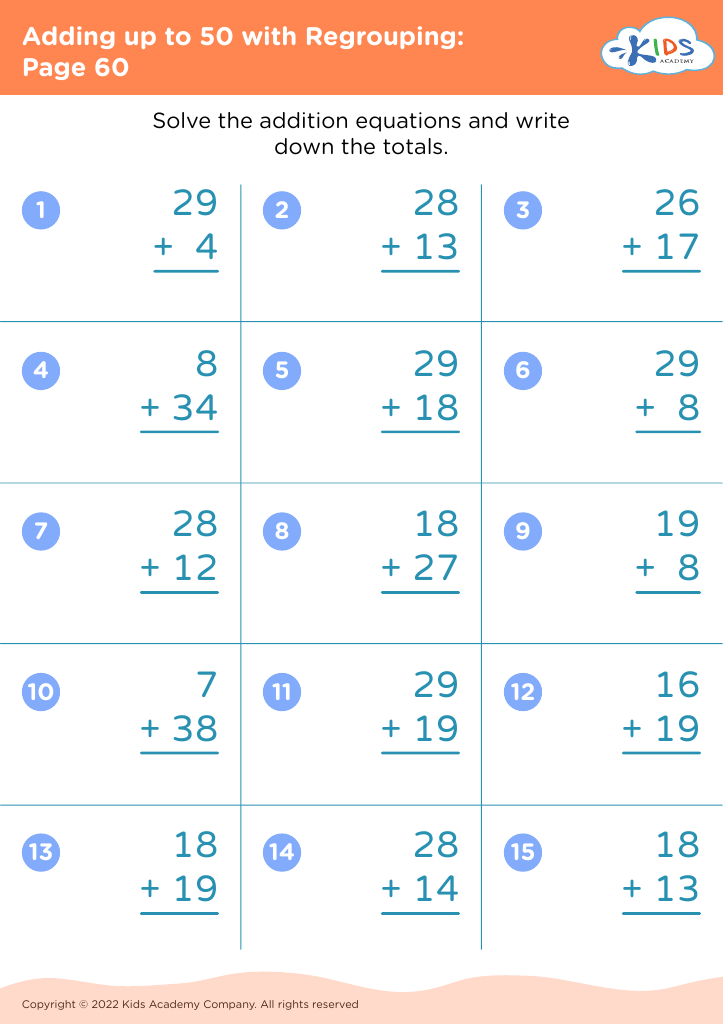
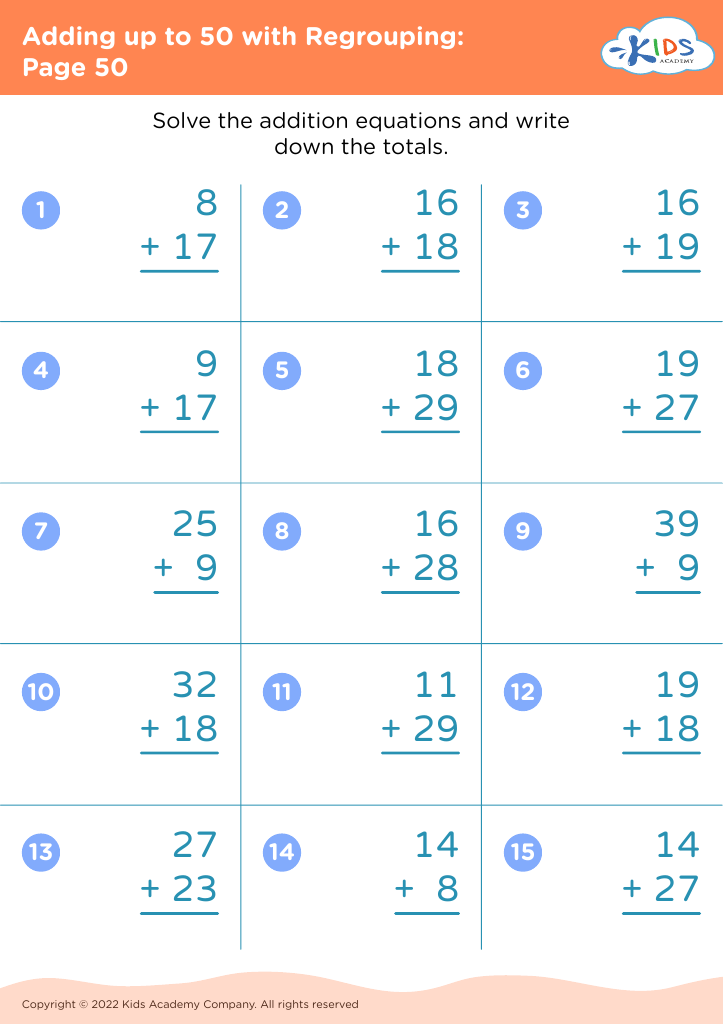
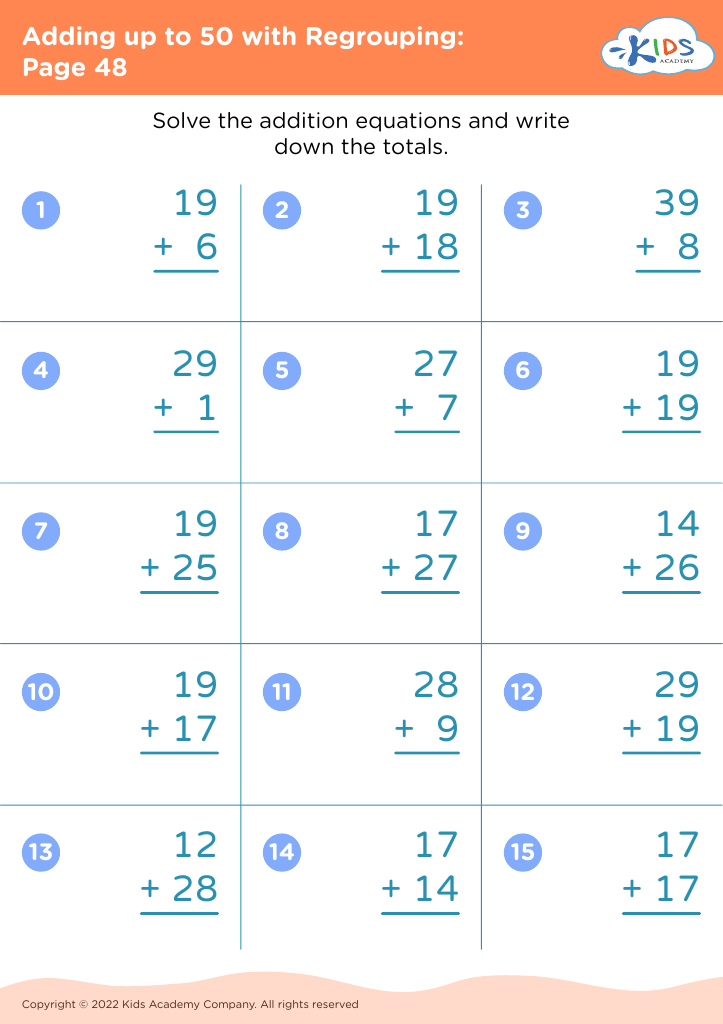
Explore our "Simplifying Fractions Adding up to 50 with Regrouping Worksheets" designed for ages 6-8! These comprehensive, engaging worksheets help young learners grasp the concept of fractions and addition within 50, providing practical, step-by-step exercises to master regrouping. Spark your child's interest in math with vibrant visuals and intuitive problems that simplify complex concepts into easy, manageable steps. Perfect for classroom or home use, these worksheets align with educational standards, fostering critical thinking and problem-solving skills. Download now and watch your child's confidence in math soar as they enjoy the journey of learning fractions!
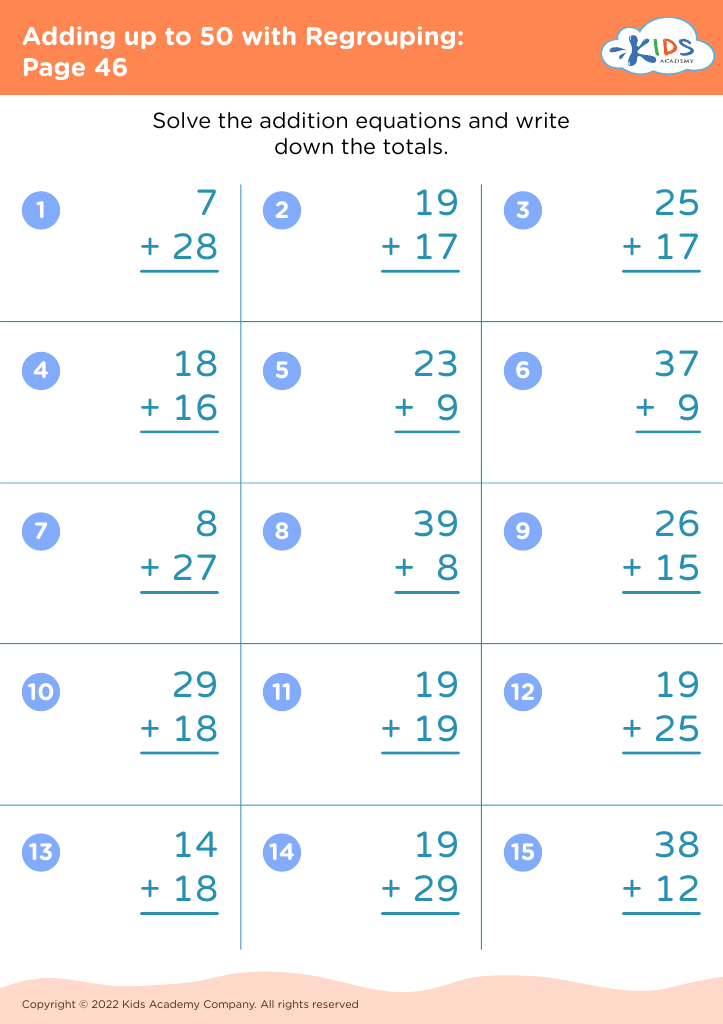


As parents or teachers, focusing on skills like simplifying fractions and addition with regrouping for children ages 6-8 is crucial for laying a solid foundation in mathematics. Understanding fractions is a critical component of mathematical literacy; it helps children grasp parts of a whole, a concept that is pivotal not just in advanced math classes, but also in everyday decision-making scenarios such as measuring ingredients in cooking or dividing items equally among peers.
Furthermore, mastering addition with regrouping enhances both numerical fluency and cognitive skills. It challenges students to understand place value and perform complex calculations, garnering confidence in their mathematical abilities. This skill also cultivates precision and attention to detail, fostering problem-solving abilities that are essential in academic and real-life situations.
For younger students, engaging with these foundational arithmetic operations in a simplified, age-appropriate manner ensures that they do not develop anxiety or aversion to math. Positive early experiences with such topics encourage a growth mindset, nurturing a child's belief in their ability to tackle and master increasingly complex challenges. This can result in a lasting positive attitude toward learning, ensuring their success across different subjects and throughout their educational journey. Therefore, parents and teachers should prioritize these skills to set young learners on a path to long-term academic achievement.