Addition Practice Adding up to 50 Without Regrouping Worksheets for Ages 6-8
6 filtered results
-
From - To
Enhance your child’s math skills with our "Addition Practice: Adding up to 50 Without Regrouping" worksheets, tailored for ages 6-8. Perfect for young learners, these engaging worksheets offer a fun and interactive way to master basic addition concepts. Through various well-designed problems, kids will practice adding numbers without regrouping, building confidence and fluency in their math abilities. These worksheets are ideal for classroom use or at-home reinforcement, ensuring that your child grasps essential math skills at an early age. Foster a love for learning and make math enjoyable with our easy-to-follow, colorful worksheets! Explore today and watch them thrive!
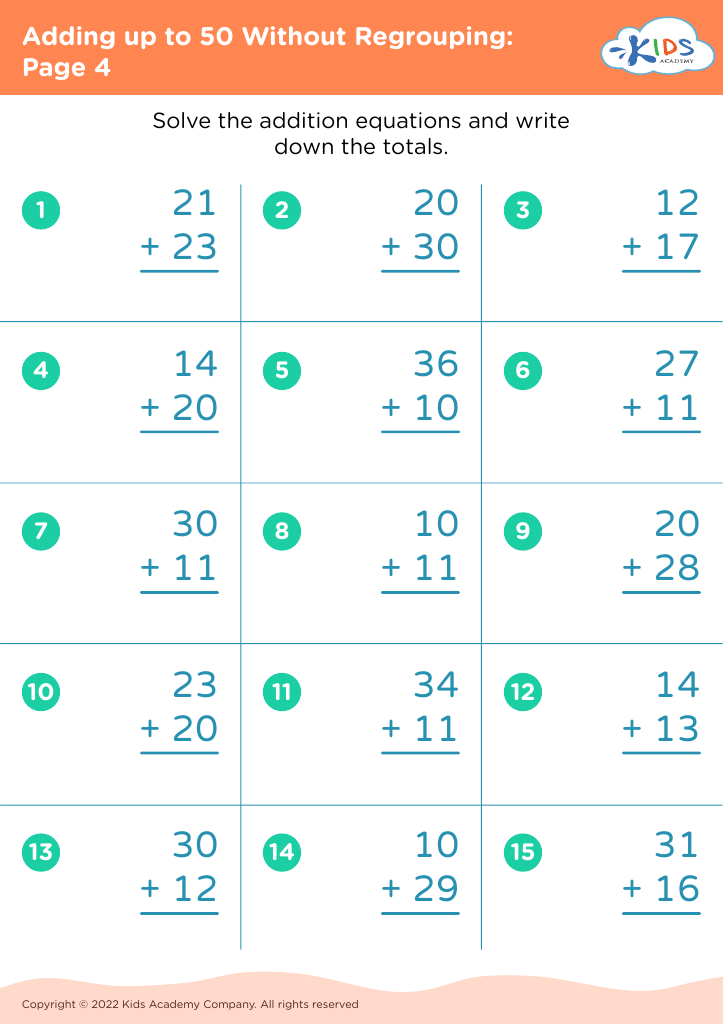
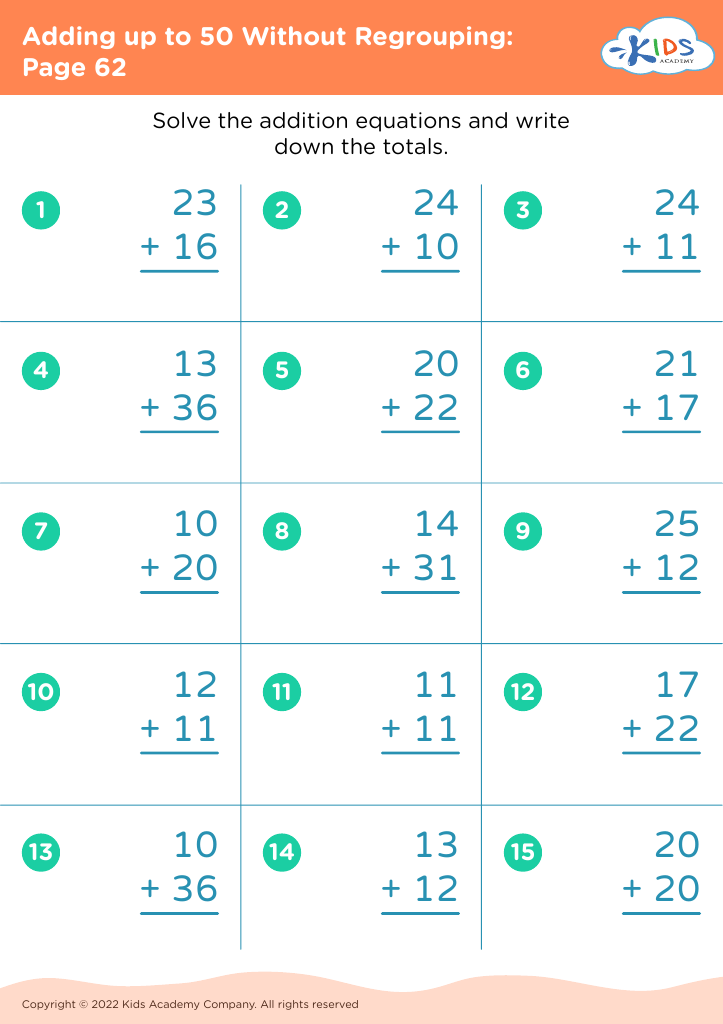
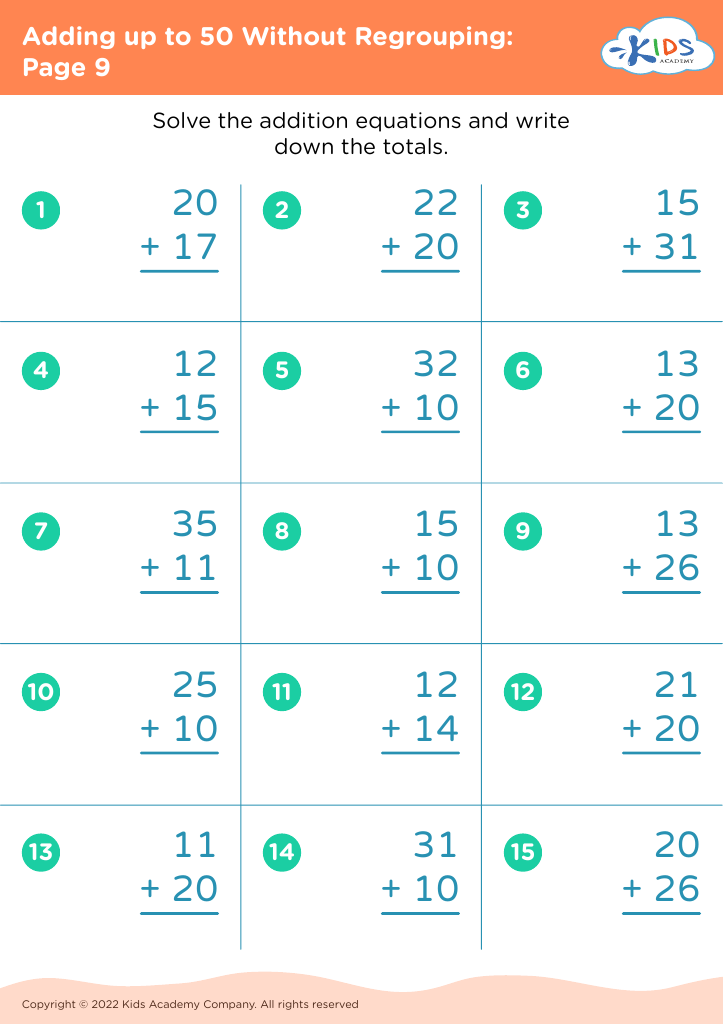
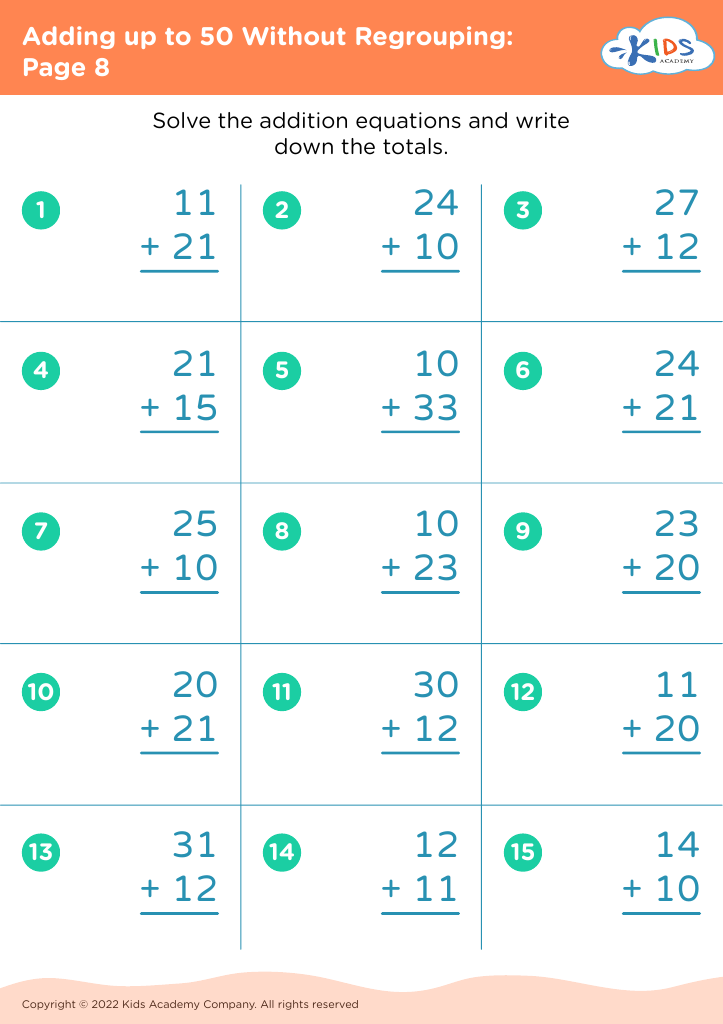
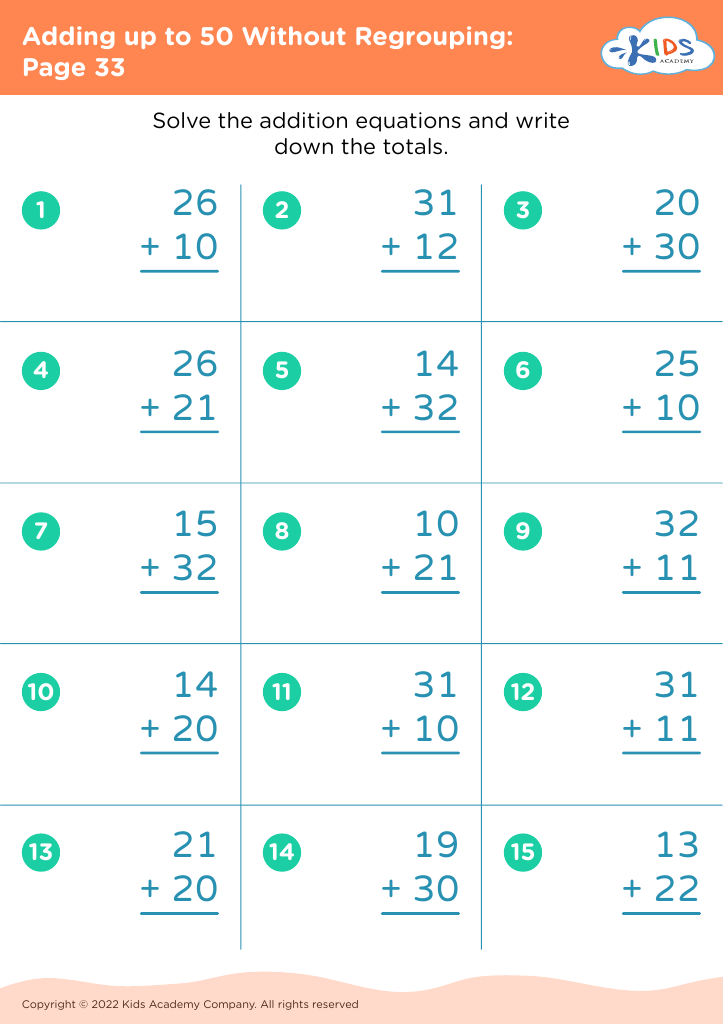
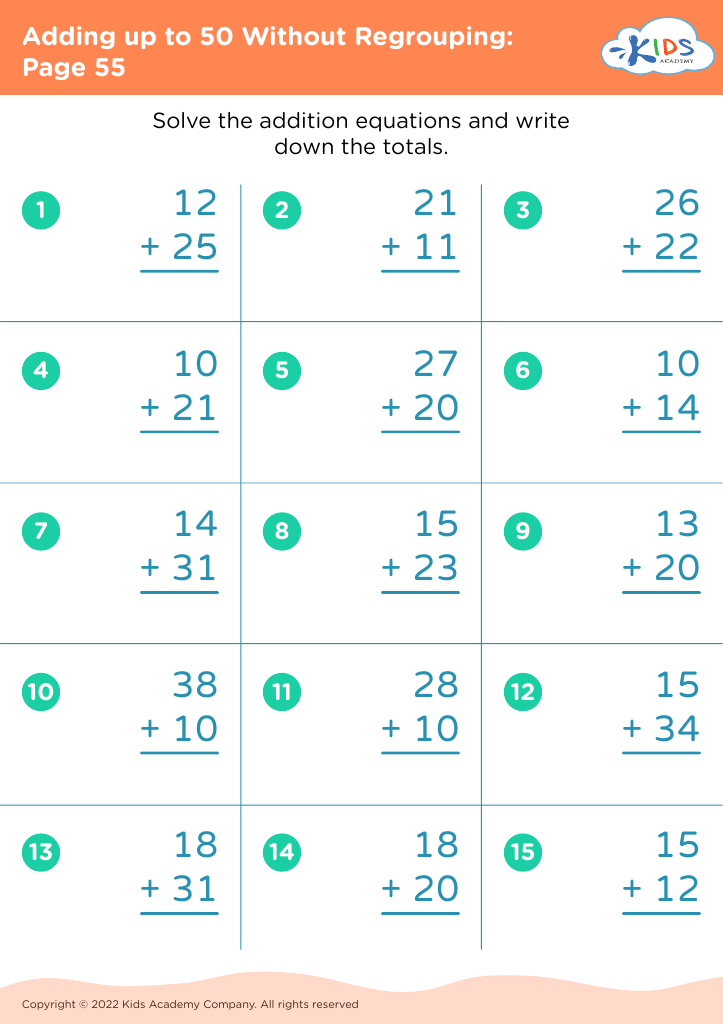


Addition practice, particularly adding numbers up to 50 without regrouping, is a critical foundational skill for children aged 6-8. At this developmental stage, students are building their mathematical fluency, which sets the groundwork for future, more complex mathematical concepts. Mastery of addition problems without regrouping helps children develop speed and accuracy in their calculations, which are essential for problem-solving in everyday life and future academic pursuits.
Additionally, this practice fosters number sense, enabling students to understand how numbers relate to one another. As they consistently add small numbers, children gain confidence in their abilities, promoting a positive attitude towards math. For parents and teachers, reinforcing these skills at home or in the classroom cultivates a supportive learning environment where math becomes an engaging and less daunting subject.
Moreover, focusing on addition skills without regrouping helps identify any potential learning gaps early on. Addressing these issues promptly enables children to catch up and ensures they have a solid understanding before moving on to more complicated operations, such as carrying over in addition or working with larger numbers. In essence, early addition practice equips young learners with essential tools for academic success and lifelong numerical literacy.