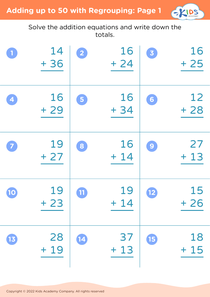
Comparing Fractions Adding up to 50 Without Regrouping Worksheets for Ages 6-8
7 filtered results
-
From - To
Discover our engaging "Comparing Fractions Adding Up to 50 Without Regrouping" worksheets designed for children ages 6-8. These interactive resources help young learners develop essential math skills by comparing and contrasting fractions at an early age. With a focus on easy-to-understand concepts, our worksheets promote hands-on practice and reinforce the understanding of fractions within sums that total 50, ensuring students build confidence without the need for regrouping. Ideal for classroom activities or at-home learning, these worksheets support your child's mathematical journey, making learning both fun and effective. Help young minds master fractions today!
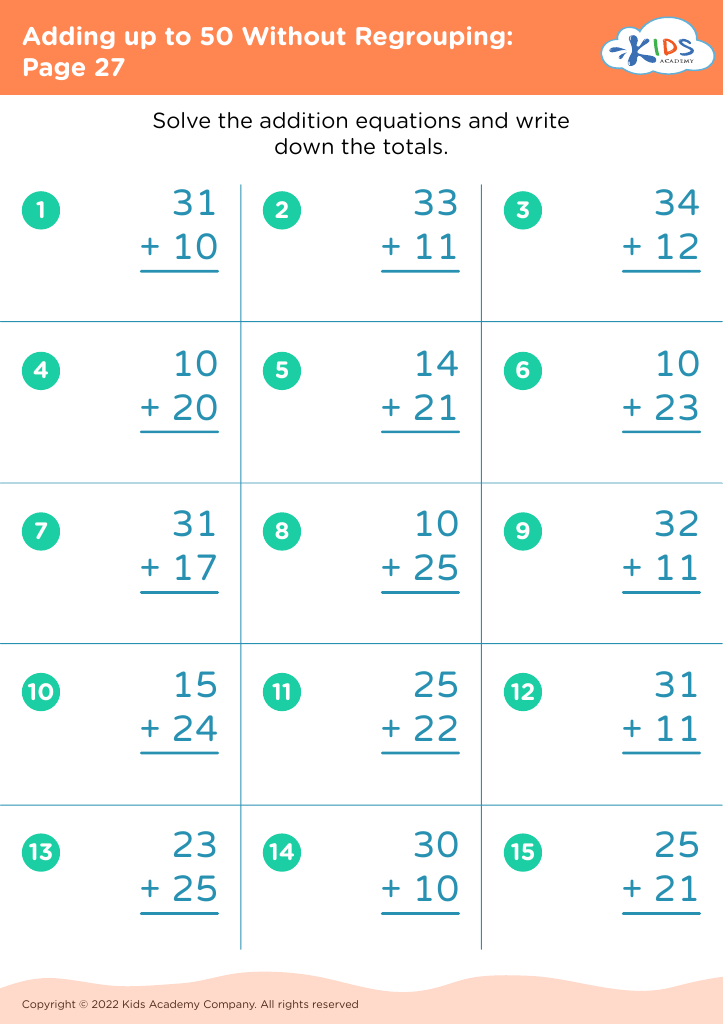
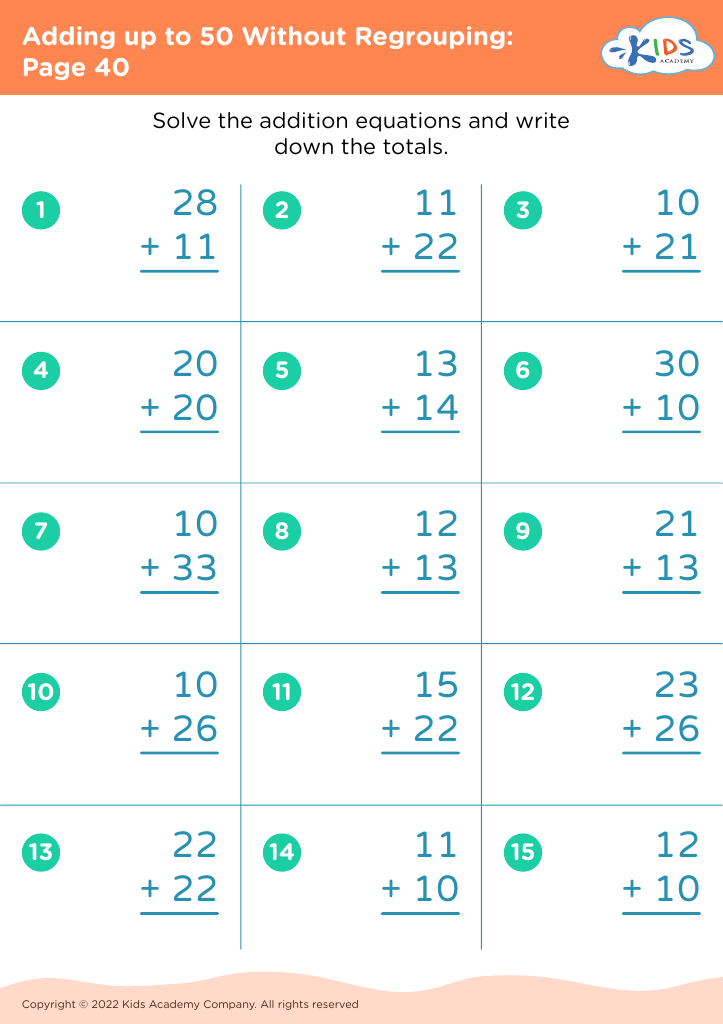
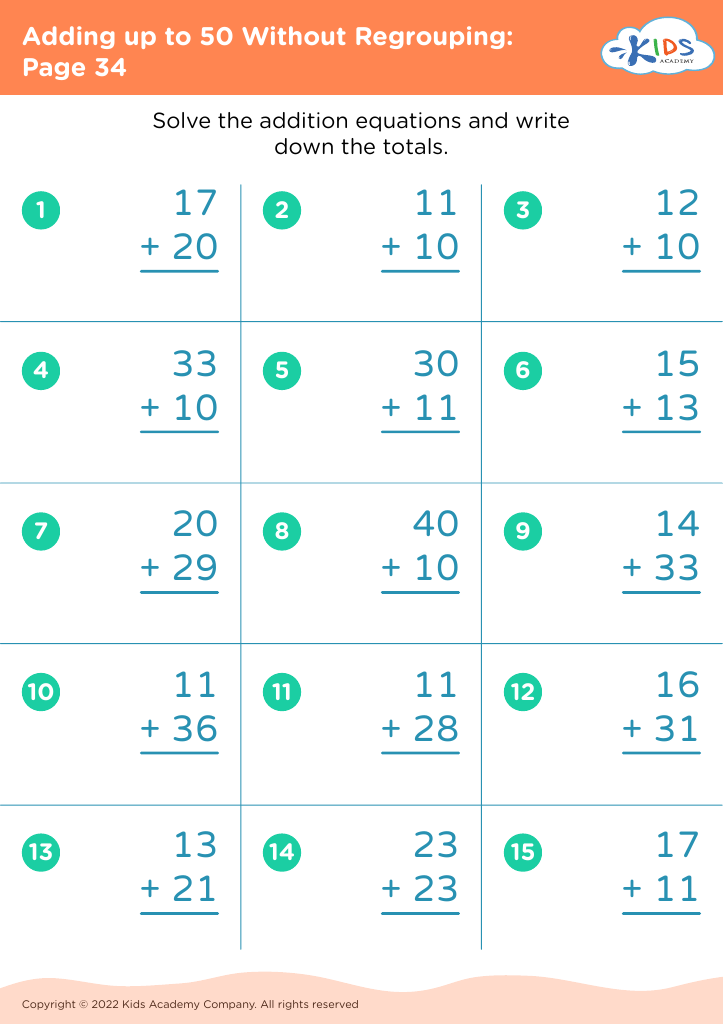
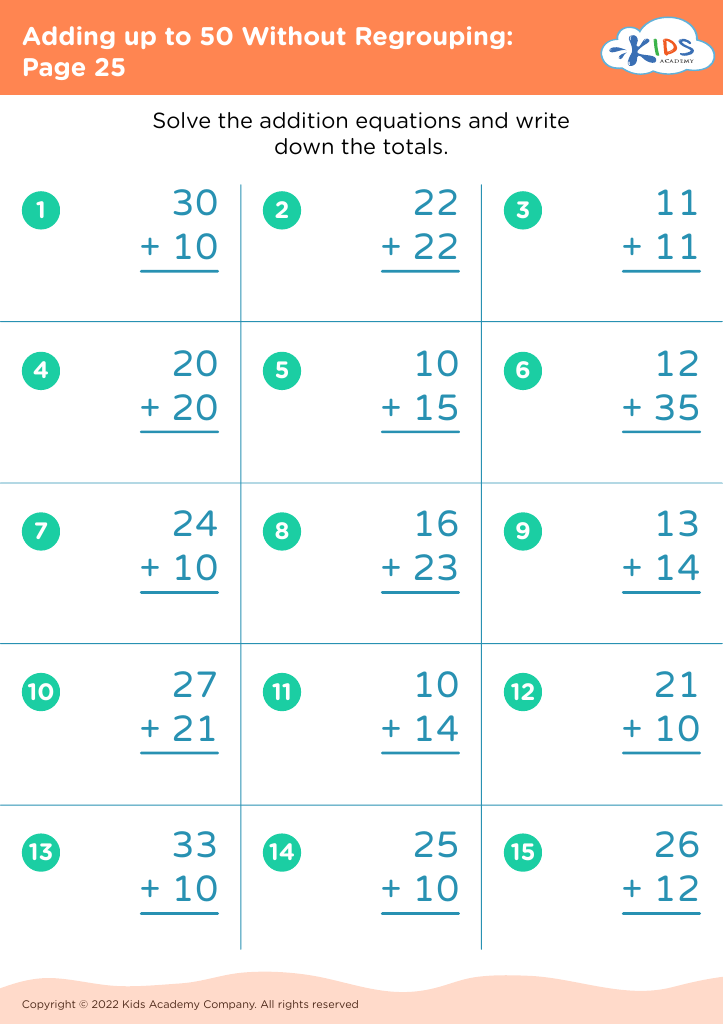
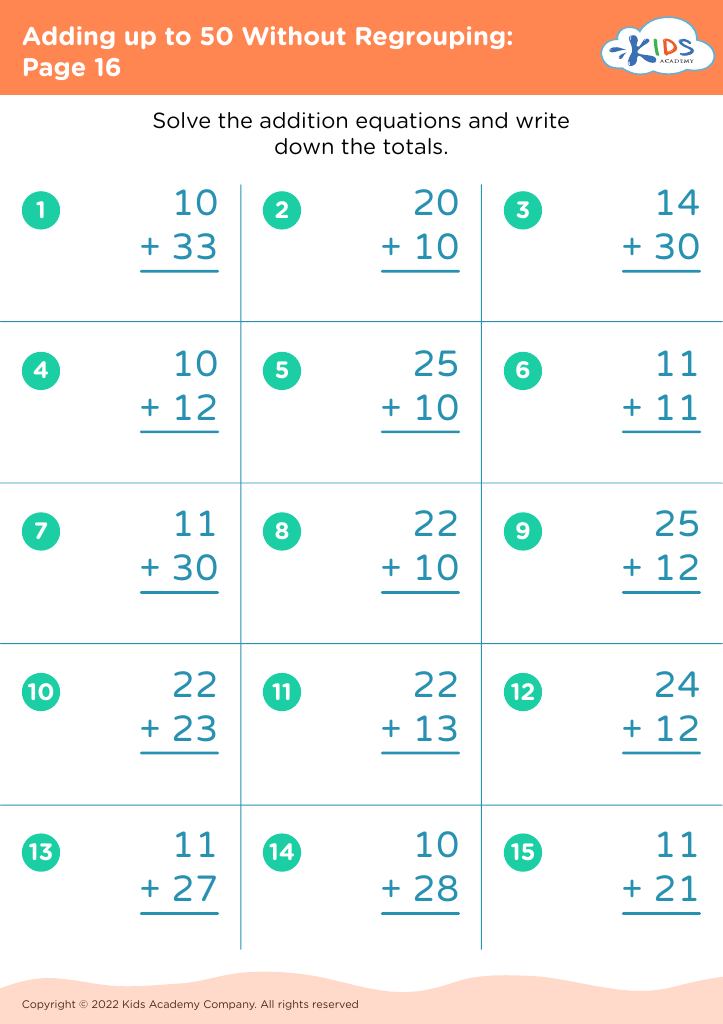
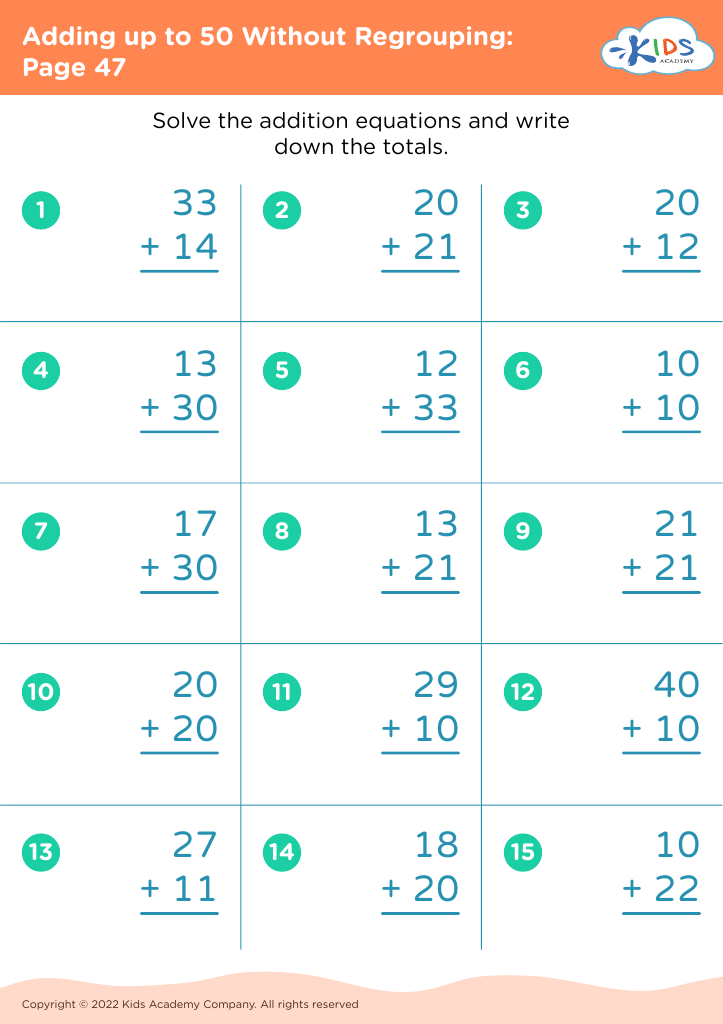
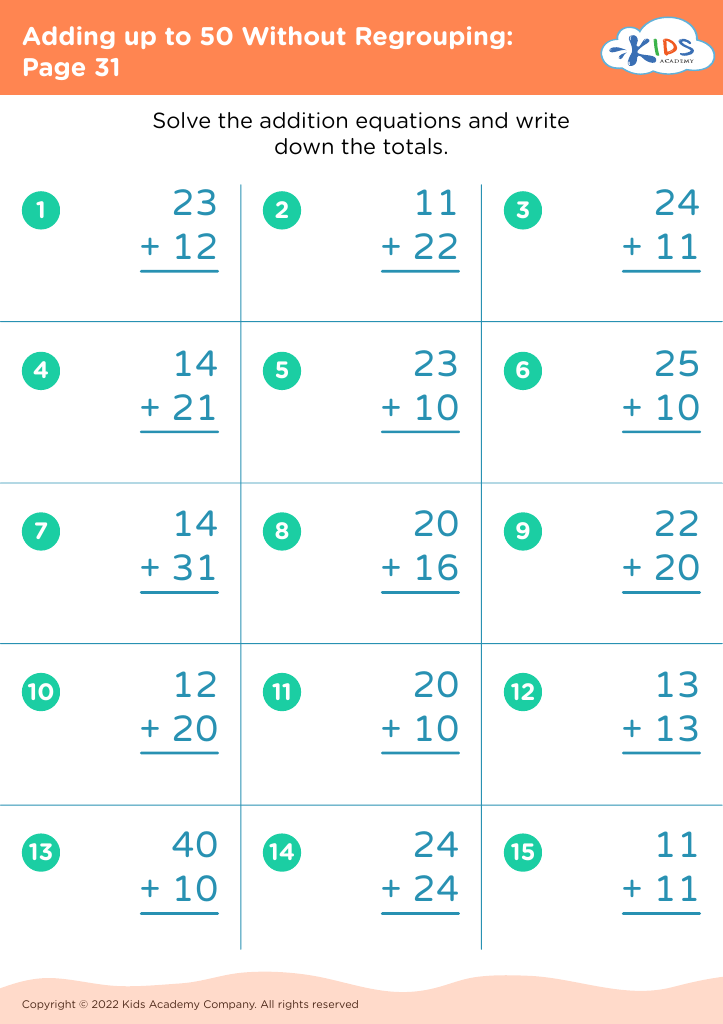


Comparing fractions and understanding their relationships is a crucial mathematical skill for children ages 6-8. Parents and teachers should care about this concept, especially when dealing with tasks like adding fractions up to 50 without regrouping, as it lays the foundation for more advanced math concepts in the future.
At this age, children are developing their numeracy skills, and comparing fractions helps them understand how parts relate to a whole, which is integral in daily life and more complicated math problems later on. Through activities such as visual models or number lines, children learn to recognize equivalent fractions, which enhances their critical thinking and problem-solving abilities.
Moreover, the ability to add fractions correctly, without needing to regroup, promotes confidence and fluency in math. This fosters a positive attitude towards mathematics as a whole. Additionally, understanding fractions helps children to succeed in other subjects that rely on mathematical concepts, reinforcing their overall academic performance and future learning.
By emphasizing these foundational skills, parents and teachers contribute to building a strong mathematical framework, equipping children with the tools they need for ongoing success in the classroom and in life. Overall, attention to these early fractions engineering builds crucial skills for a well-rounded education.