Identifying shapes Adding up to 50 Without Regrouping Worksheets for Ages 6-8
6 filtered results
-
From - To
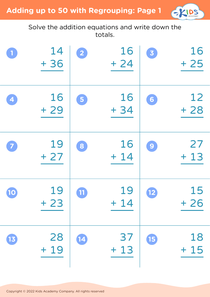
Enhance your child's mathematical skills with our "Identifying Shapes Adding up to 50 Without Regrouping Worksheets" tailored for ages 6-8. These interactive and engaging worksheets combine essential shape recognition with addition practice, allowing young learners to seamlessly connect geometry and arithmetic. Each worksheet provides fun exercises that focus on identifying various shapes while adding numbers up to 50 without regrouping. Designed to foster critical thinking and problem-solving, these activities encourage kids to develop their mathematical fluency in a playful way. Perfect for home or classroom use, these worksheets will keep your child motivated and excited about learning math!
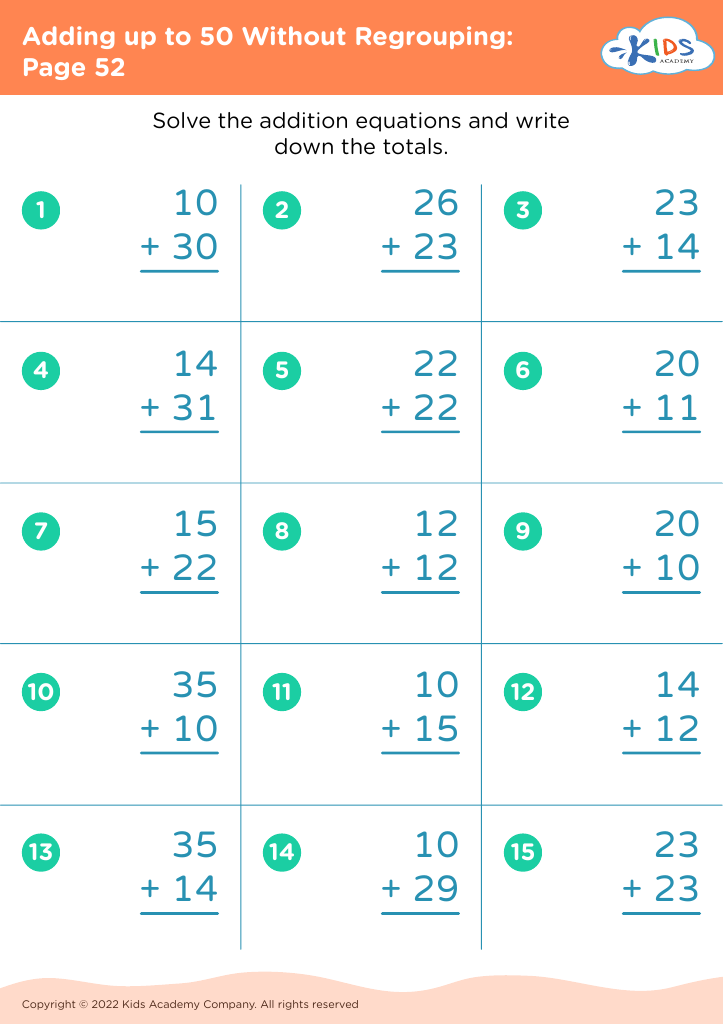
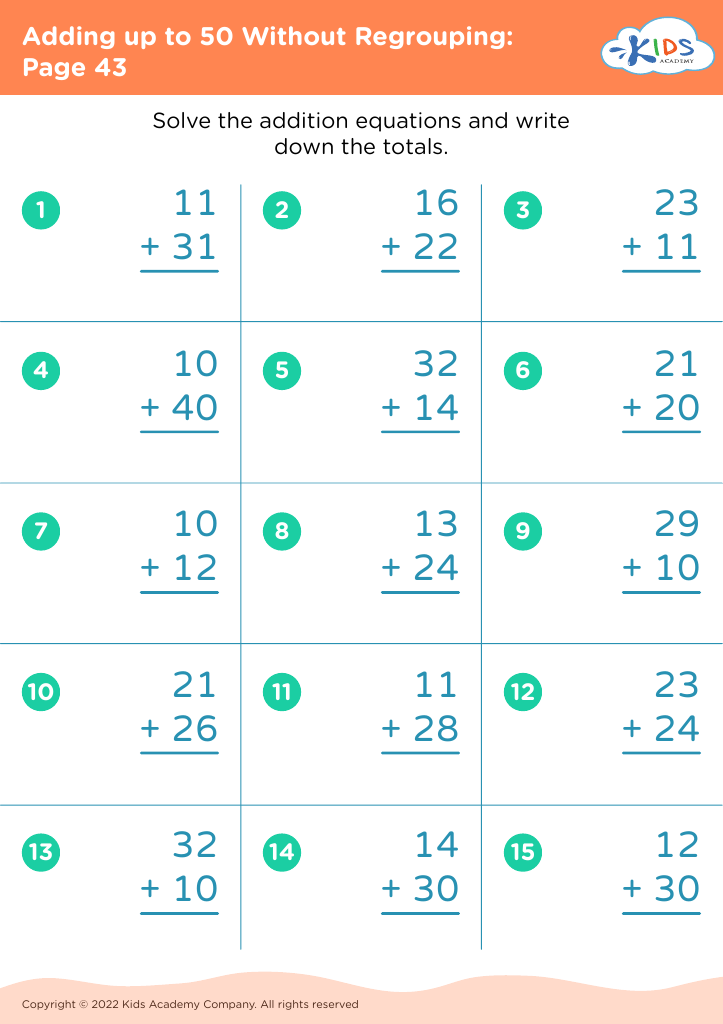
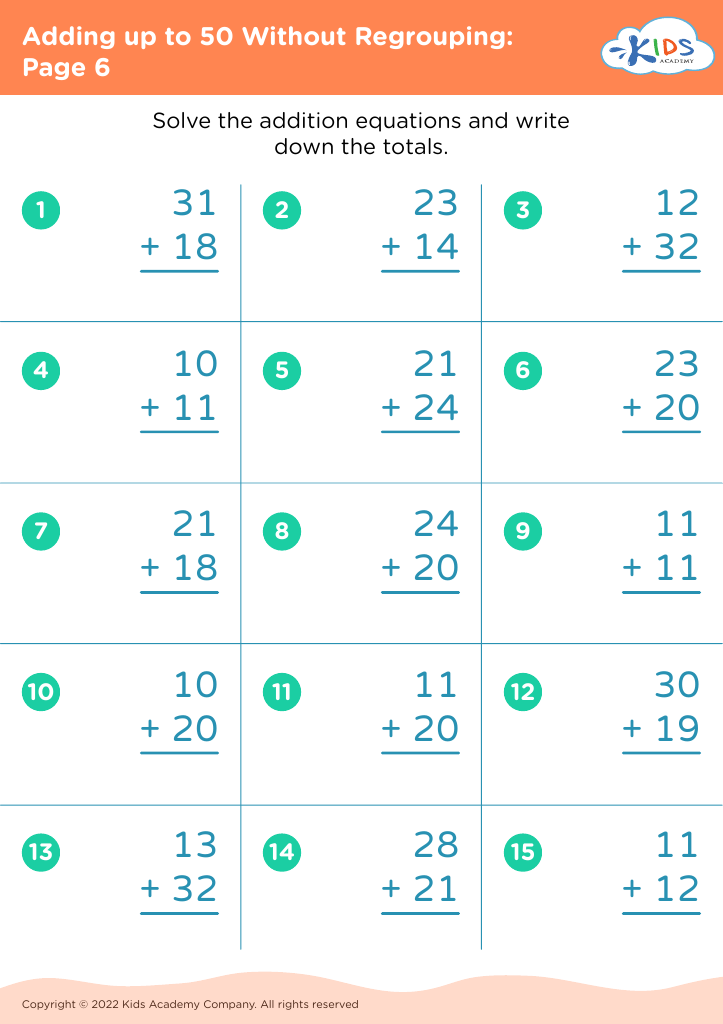
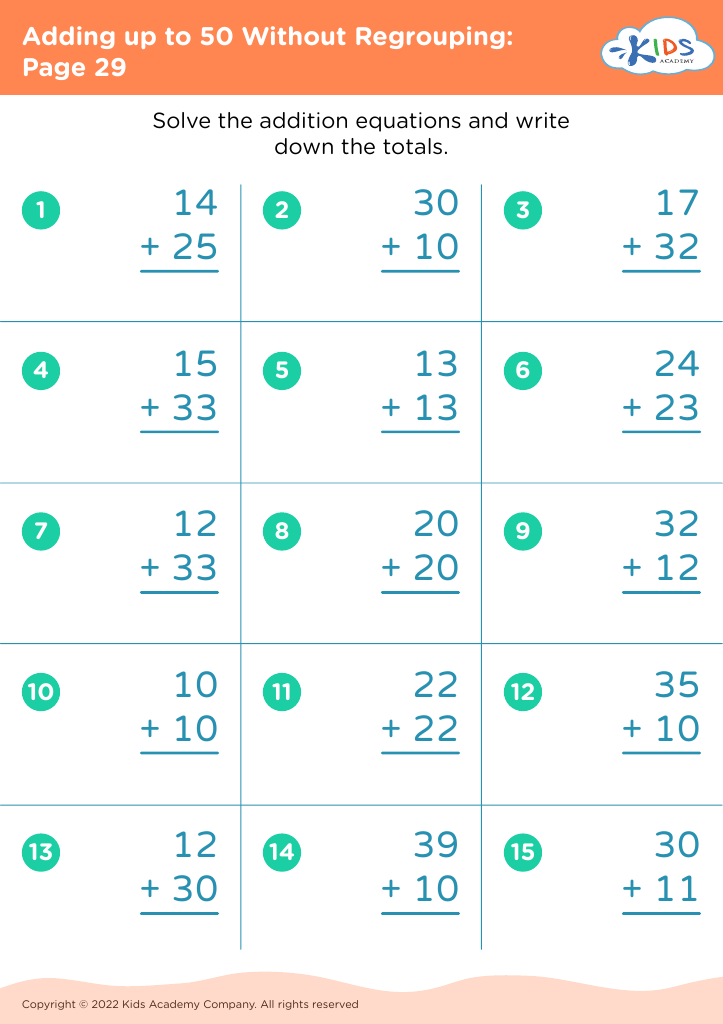
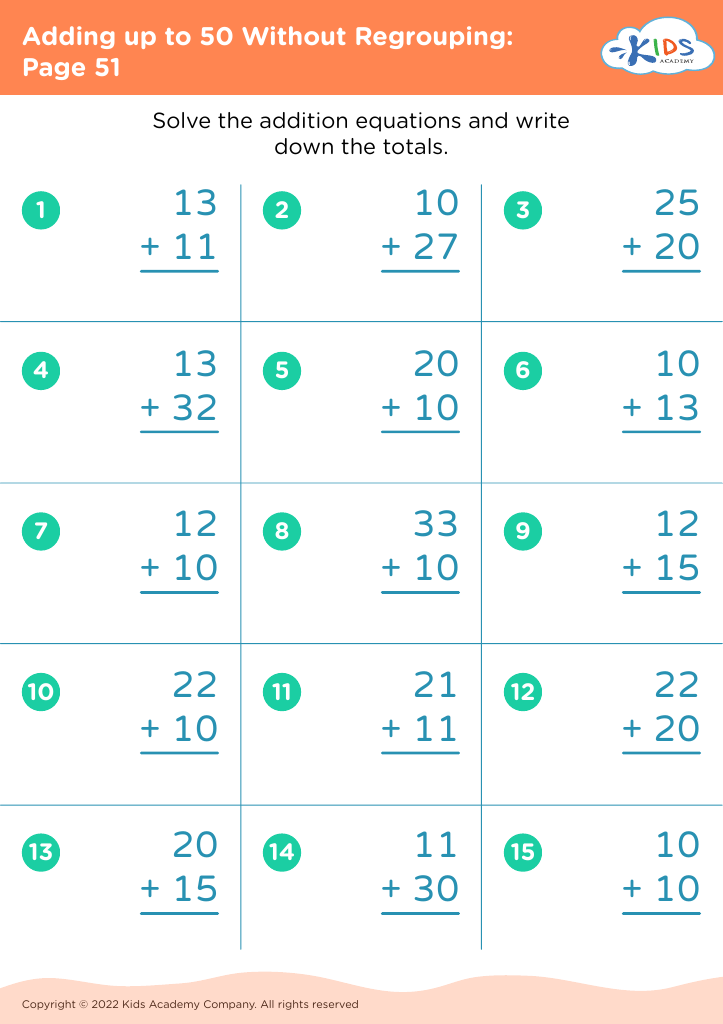
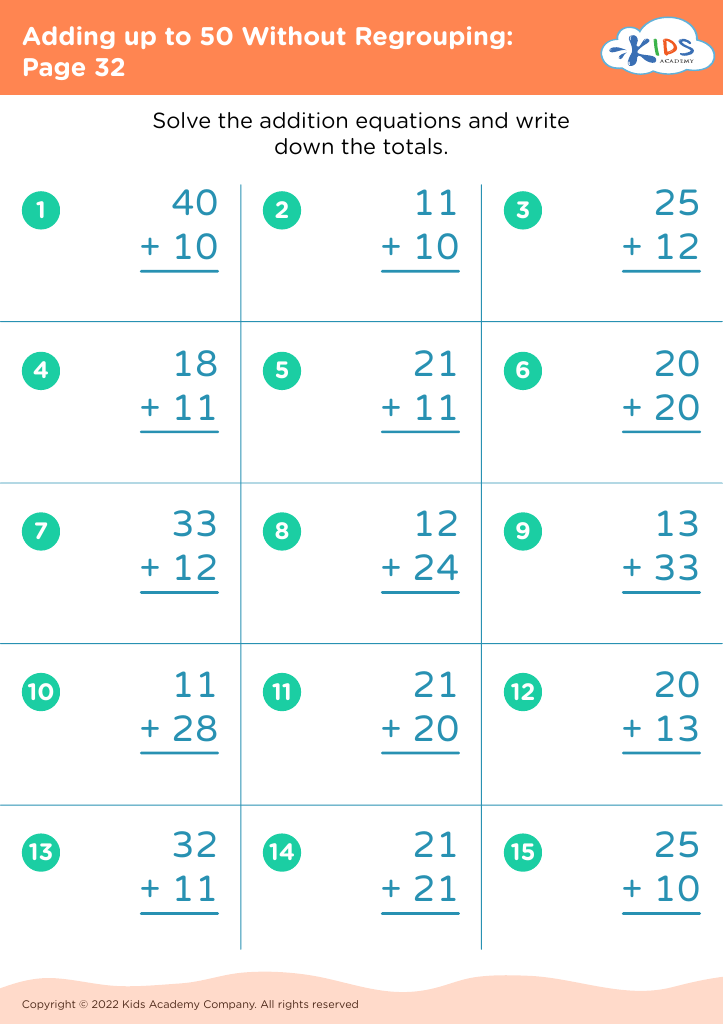


Identifying shapes and mastering addition skills, like adding up to 50 without regrouping, are crucial developmental milestones for children aged 6-8. These concepts build foundational math skills and shape recognition that are key to academic success in later grades.
Understanding shapes helps children recognize patterns, improve their spatial awareness, and develop critical thinking skills. It fosters geometry skills essential for science and engineering subjects. Additionally, early familiarity with basic shapes encourages creativity and can enhance problem-solving abilities, which are important in everyday life.
On the other hand, mastering addition skills without regrouping reinforces number sense and enhances children's confidence in arithmetic. Being able to add numbers accurately and efficiently aids in more complex mathematical reasoning and bushy future schooling. It also primes children for higher-level math concepts such as subtraction and place value operations.
Moreover, both shape identification and addition empower children to apply their learning in real-life situations, such as measuring spaces or calculating money. For parents and teachers, emphasizing these areas fosters a holistic approach to mathematics education, laying the groundwork for stronger academic performance and a lifelong love for learning. Engaging children through fun activities related to shapes and math can further ignite their interest and enthusiasm.