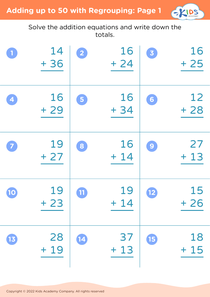
Improve counting skills Adding up to 50 Without Regrouping Worksheets for Ages 6-8
6 filtered results
-
From - To
Boost your child's counting confidence with our "Improve Counting Skills: Adding Up to 50 Without Regrouping" worksheets, designed for ages 6-8. These engaging, printable worksheets emphasize fundamental math skills, reinforcing simple addition and ensuring children understand basic principles without the complexity of regrouping. Perfect for both classroom use and home practice, each worksheet fosters a positive and fun learning environment, helping young learners gain proficiency and build a strong mathematical foundation. Watch your child's counting and addition skills flourish, paving the way for future success in more advanced math concepts.
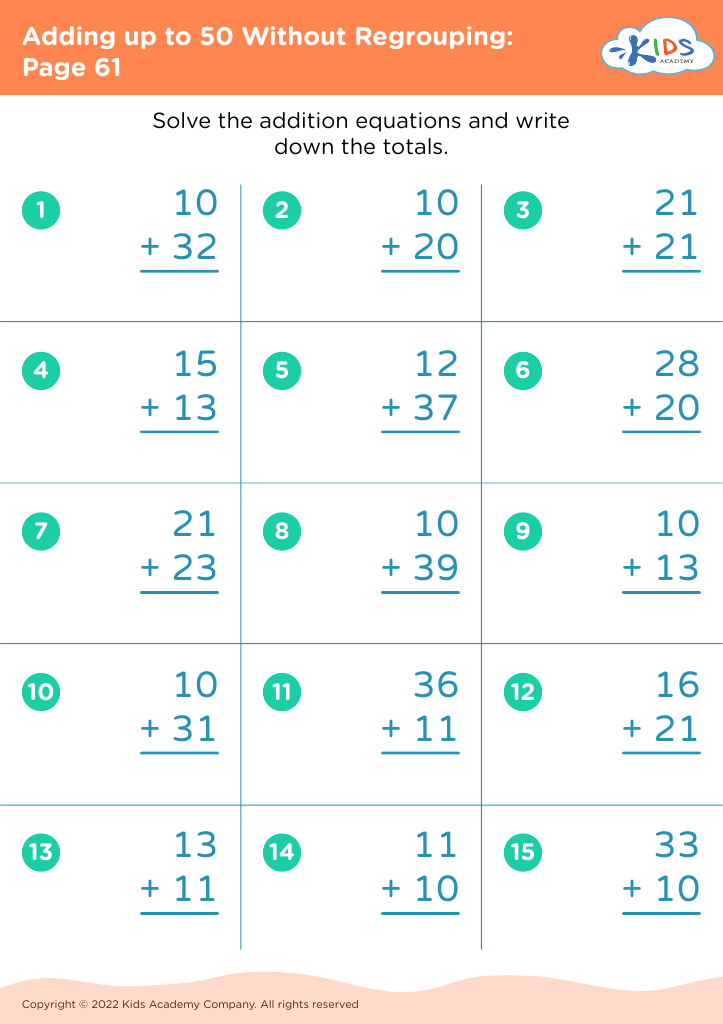
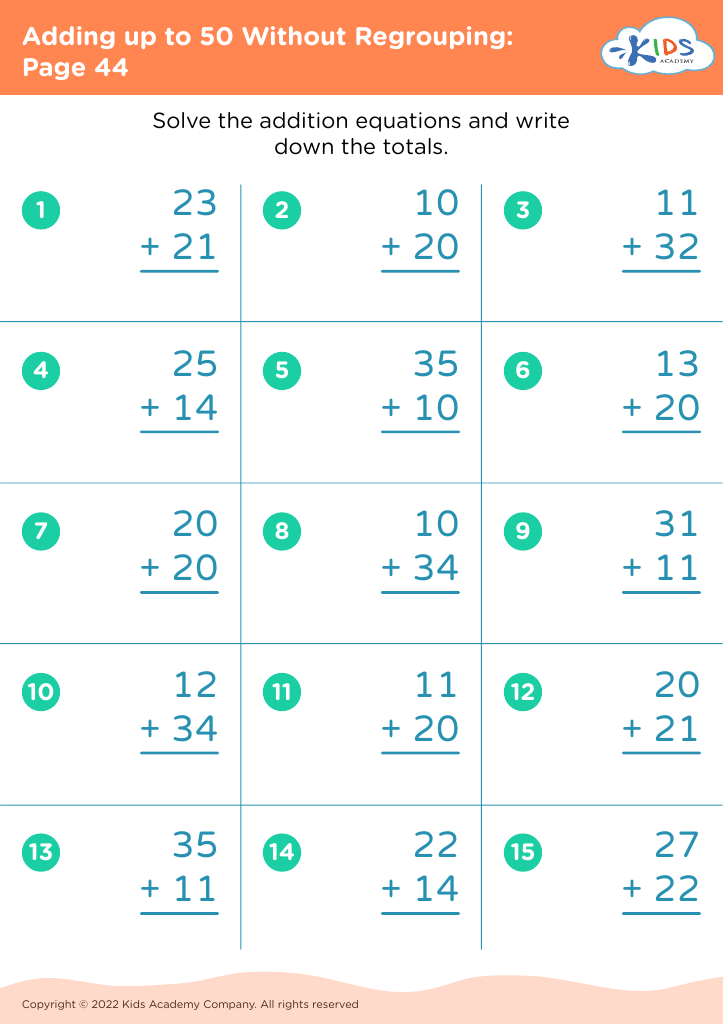
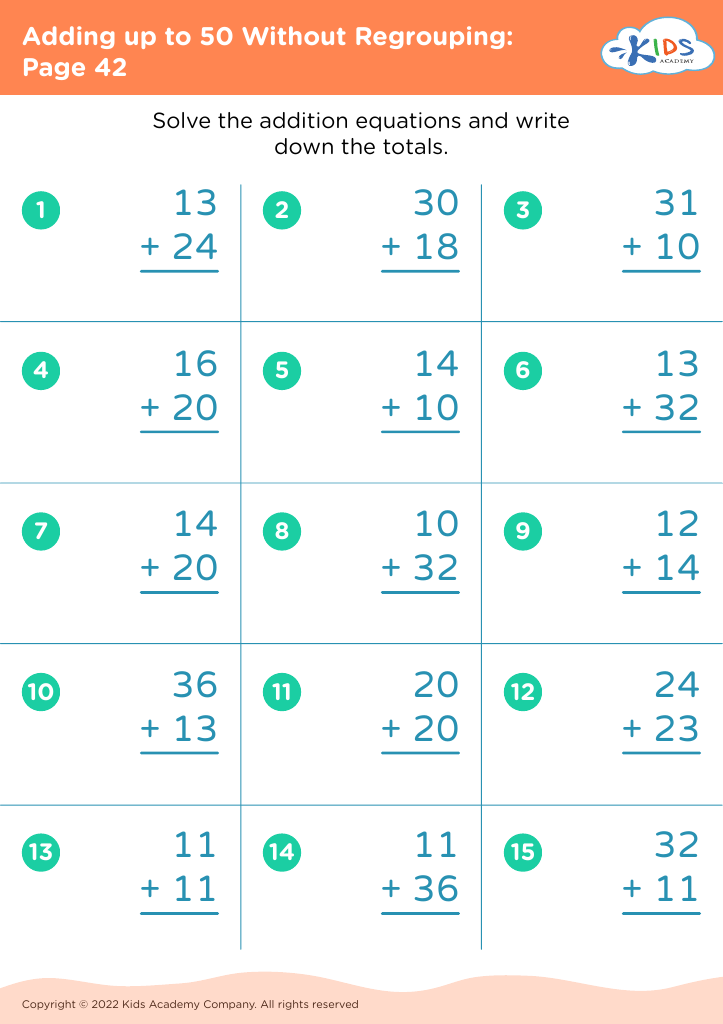
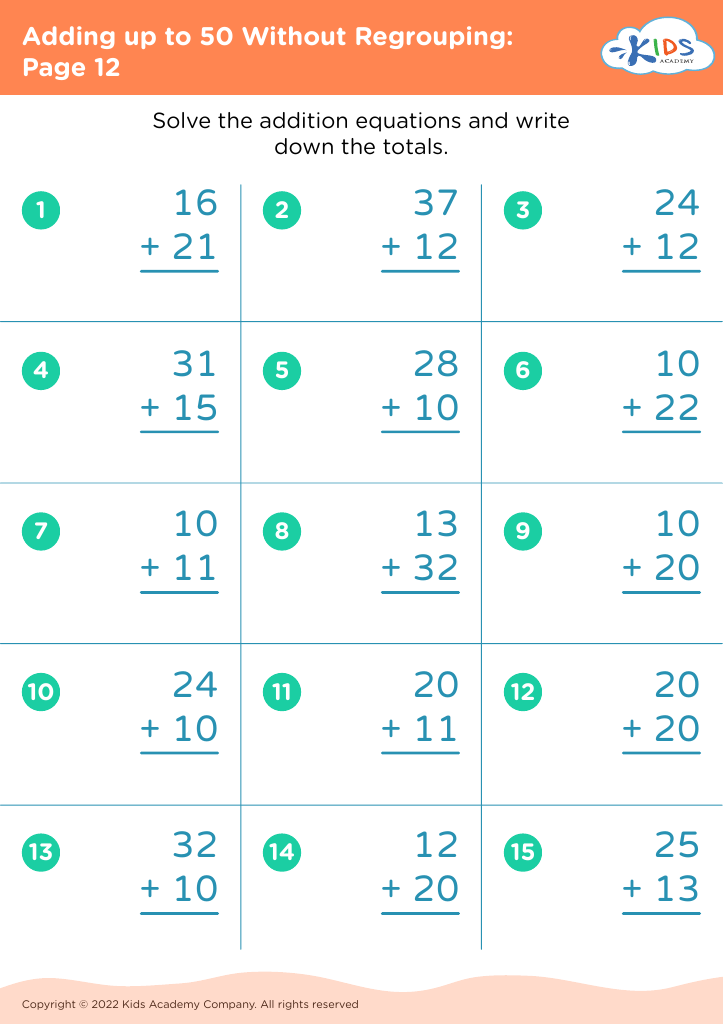
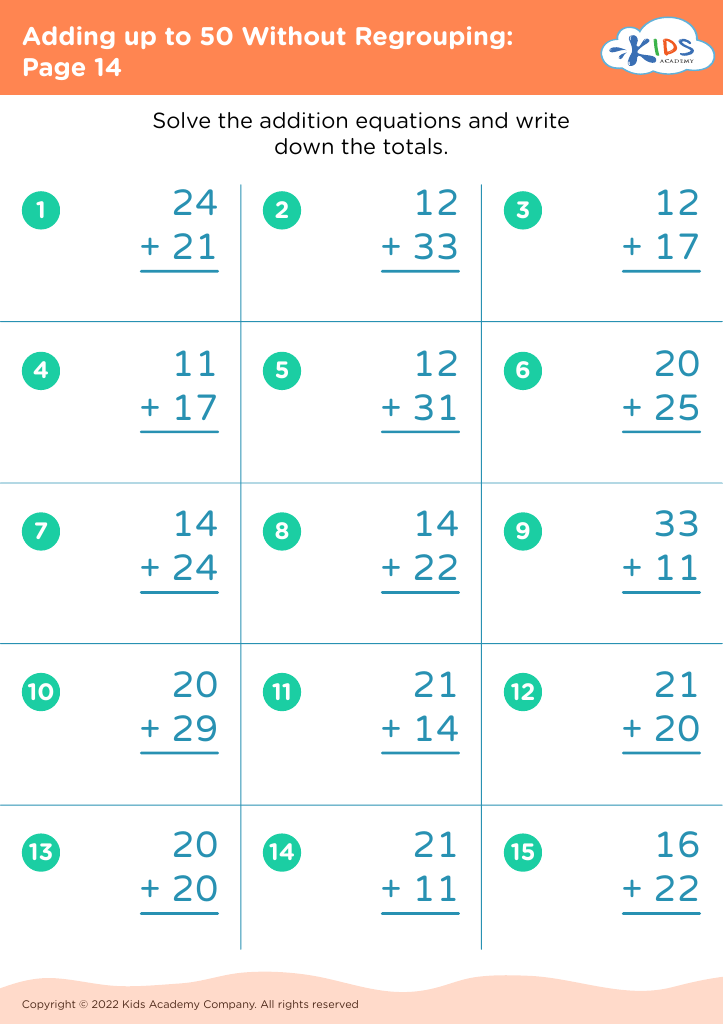
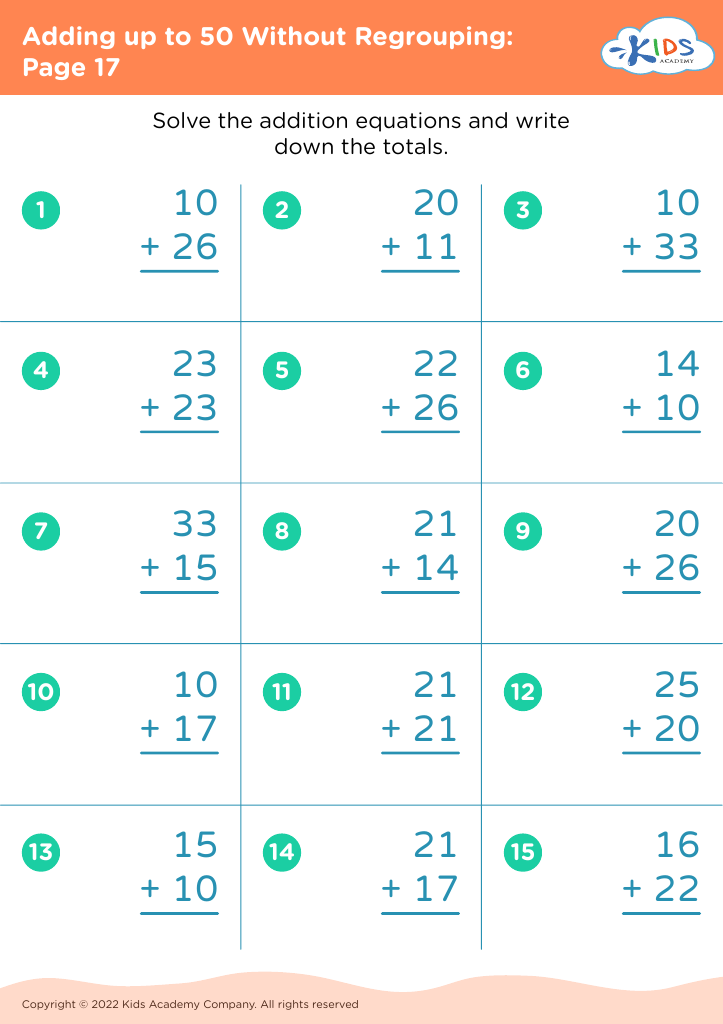


Parents and teachers should prioritize improving counting skills and basic addition up to 50 without regrouping for children aged 6-8, as these form the foundation for future mathematical understanding. At this developmental stage, the brain is rapidly developing, making it the prime time to instill essential number concepts.
Mastering these concepts enhances a child's ability to perform more complex calculations as they progress in their education. Addition without regrouping consolidates an understanding of number sequencing, place value, and arithmetic, ensuring a solid grasp of fundamental math principles. It also promotes problem-solving abilities by enabling children to approach higher-level math with confidence.
By focusing on counting and basic addition, children also develop essential cognitive skills such as memory and logical thinking. These skills are crucial not just in mathematics, but across all subjects. Furthermore, competence in early math fosters a positive attitude towards learning as children experience success and build self-confidence.
For parents and teachers, providing a supportive, engaging environment to practice these skills through games, hands-on activities, and interactive lessons makes learning enjoyable and effective. This approach helps children view math as an exciting challenge rather than a chore, laying a strong foundation for academic success.