Recognizing Patterns Adding up to 50 Without Regrouping Worksheets for Ages 6-8
4 filtered results
-
From - To
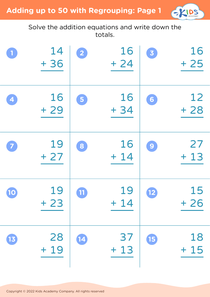
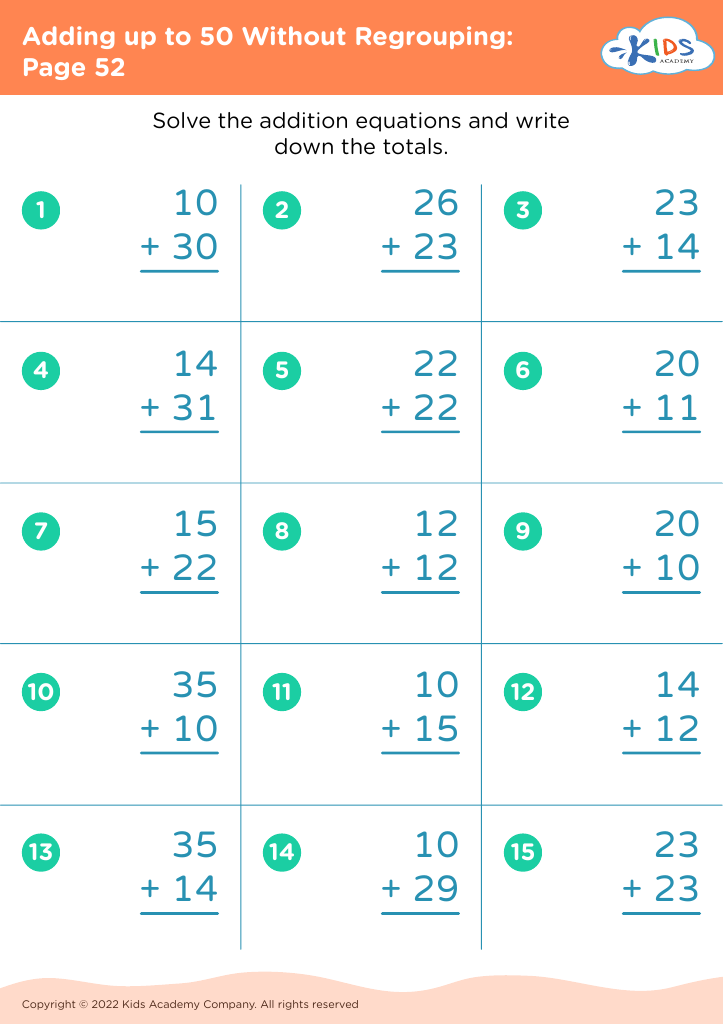
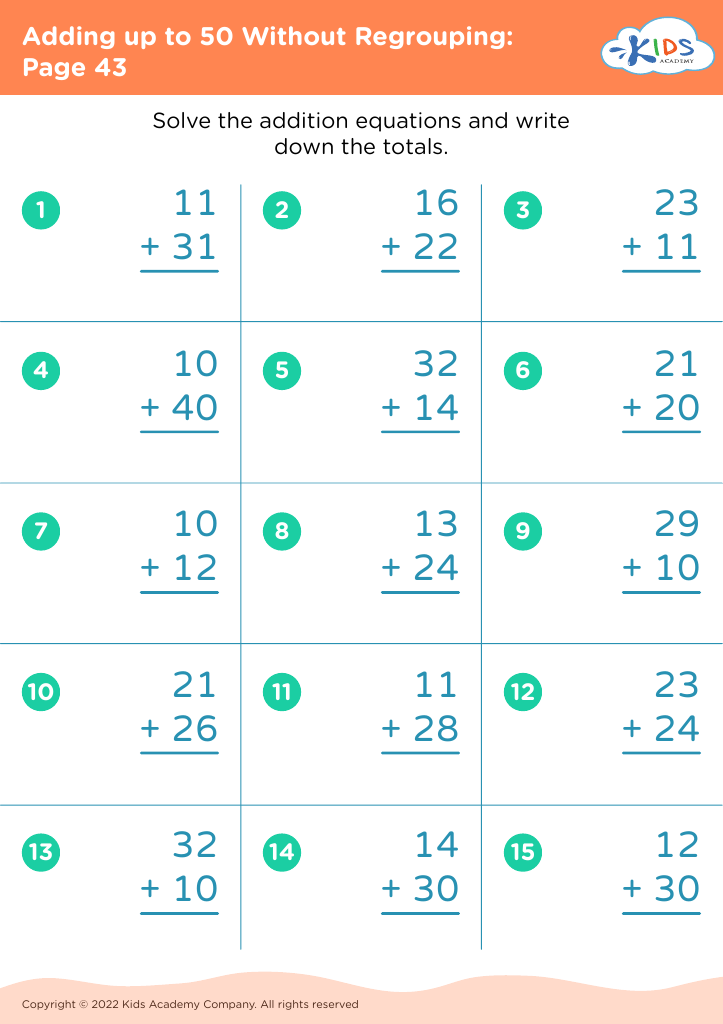
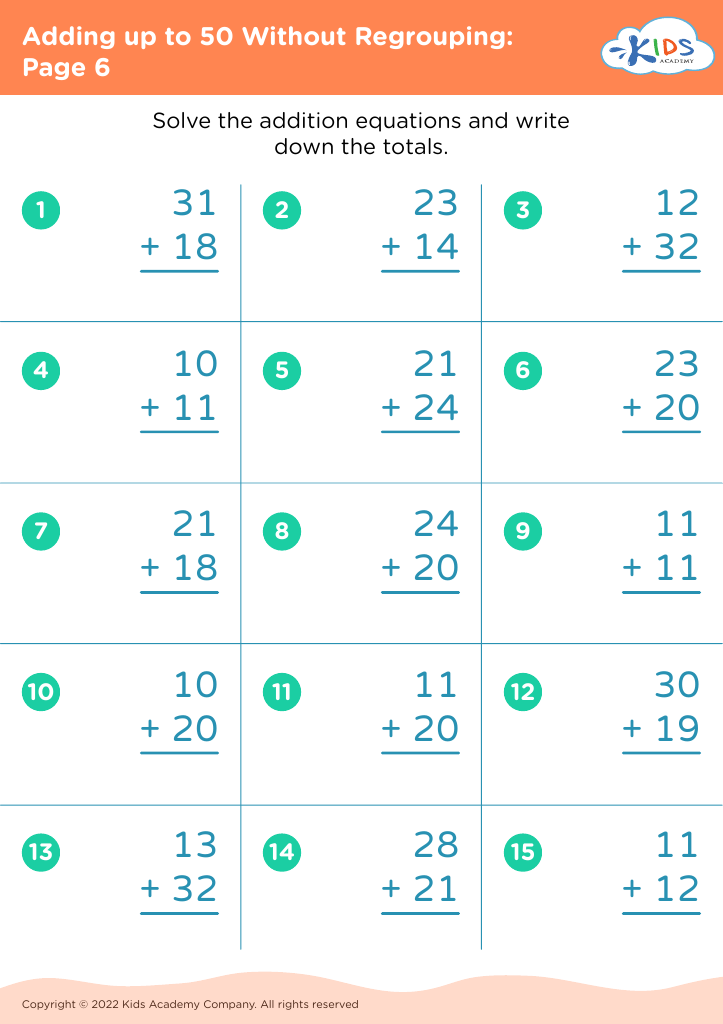
Explore our engaging "Recognizing Patterns Adding up to 50 Without Regrouping Worksheets," designed specifically for children ages 6-8. These worksheets help young learners identify numerical patterns while mastering addition skills without the need for regrouping. Using fun and vibrant activities, students will enhance their problem-solving abilities and boost their confidence in math. Each worksheet encourages critical thinking through interactive exercises that seamlessly blend learning with play. Ideal for both classroom and home use, these worksheets ensure that your child develops a strong foundation in recognizing patterns, making math enjoyable and accessible. Help your child thrive in mathematics today!
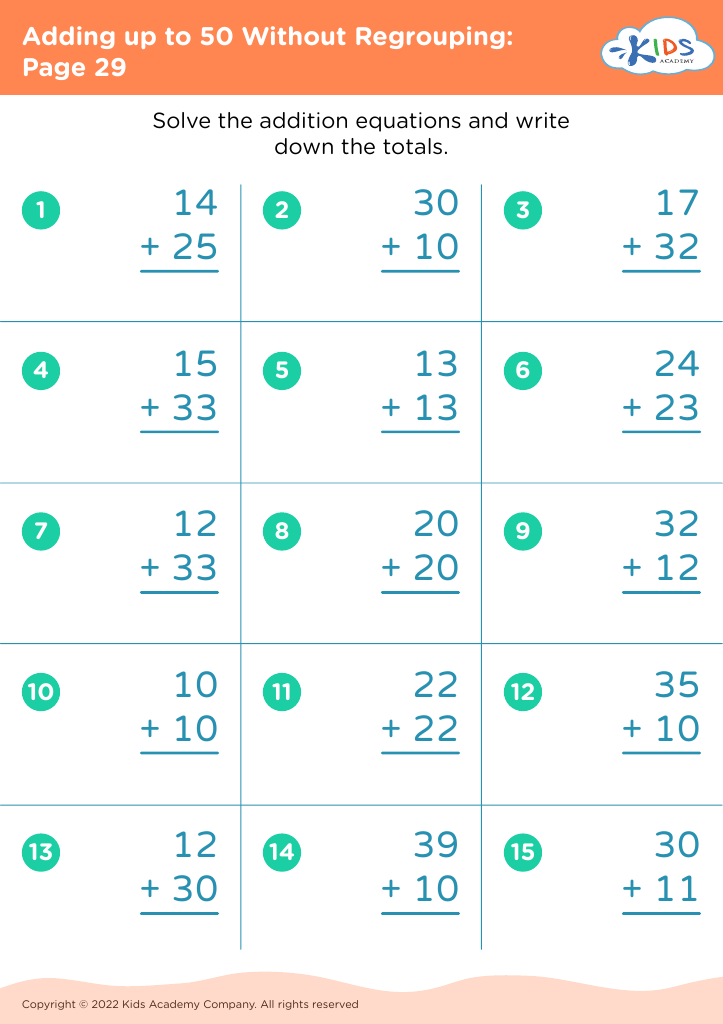


Recognizing patterns while adding numbers up to 50 without regrouping is a foundational math skill crucial for children aged 6-8. This ability forms the basis of more advanced mathematical concepts like addition, subtraction, and problem-solving. When children learn to identify patterns in numbers, they develop number sense, which involves understanding how numbers relate to each other.
Parents and teachers should care about this skill for several reasons. First, recognizing patterns helps children to solve problems more efficiently, promoting a more autonomous learning experience. For example, by noticing pairs that add up to ten (like 3 + 7 or 4 + 6), students can quickly compute larger sums without cumbersome calculations.
Additionally, mastery of addition up to 50 without regrouping builds confidence. When children succeed in recognizing patterns, they experience a sense of accomplishment that encourages further exploration and perseverance in mathematics.
Finally, fostering this skill aids in developing critical thinking and analytical skills that extend beyond math. Early exposure to pattern recognition enhances children’s cognitive flexibility, preparing them for complexities in later math concepts and real-life problem-solving situations. Therefore, parents and teachers play a vital role in engaging children with these skills early on.