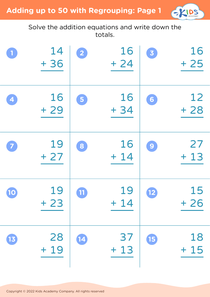
Recognizing shapes Adding up to 50 Without Regrouping Worksheets for Ages 6-8
5 filtered results
-
From - To
Explore our engaging "Recognizing Shapes Adding up to 50 Without Regrouping Worksheets" designed specifically for children aged 6-8. These user-friendly worksheets seamlessly blend geometry and arithmetic, helping young learners recognize various shapes while mastering addition within 50. Our thoughtfully crafted activities foster critical thinking skills and promote cognitive development. Each worksheet encourages children to identify shapes and solve addition problems with no regrouping required, setting a solid foundation for future math success. Encourage your child's love for learning with these interactive and fun worksheets that make math and shapes exciting! Perfect for classroom or at-home practice!
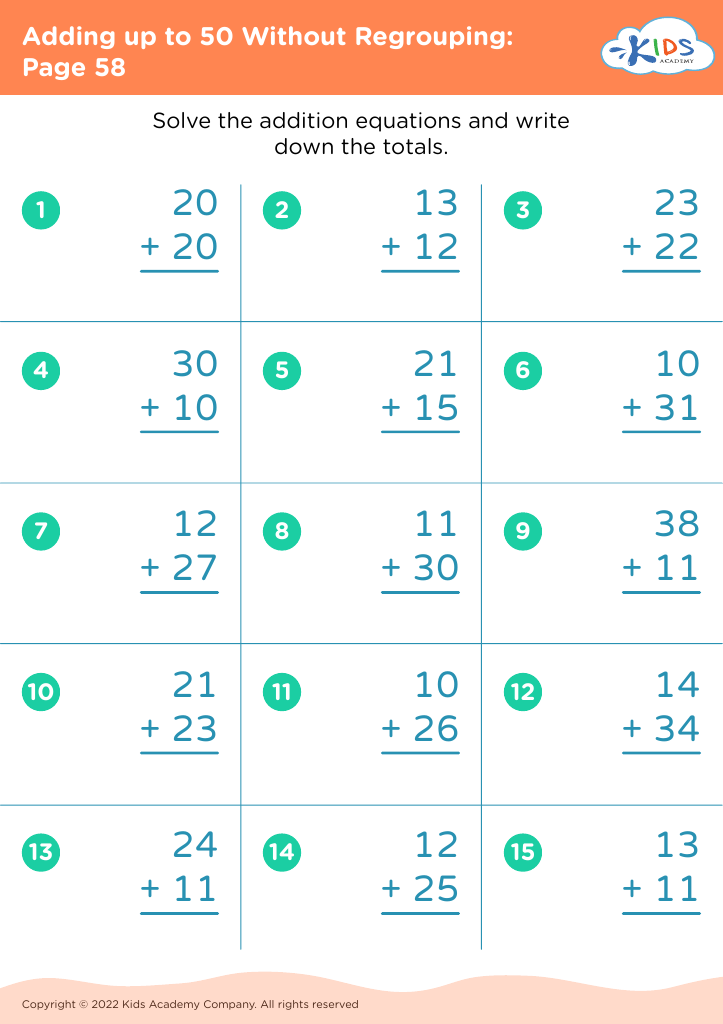
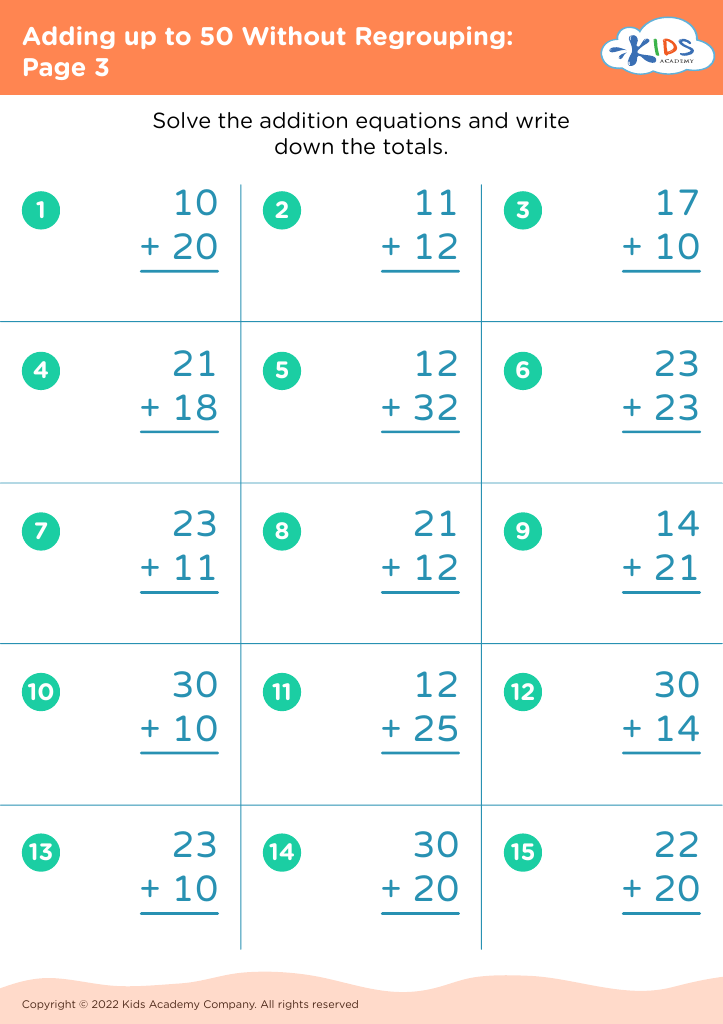
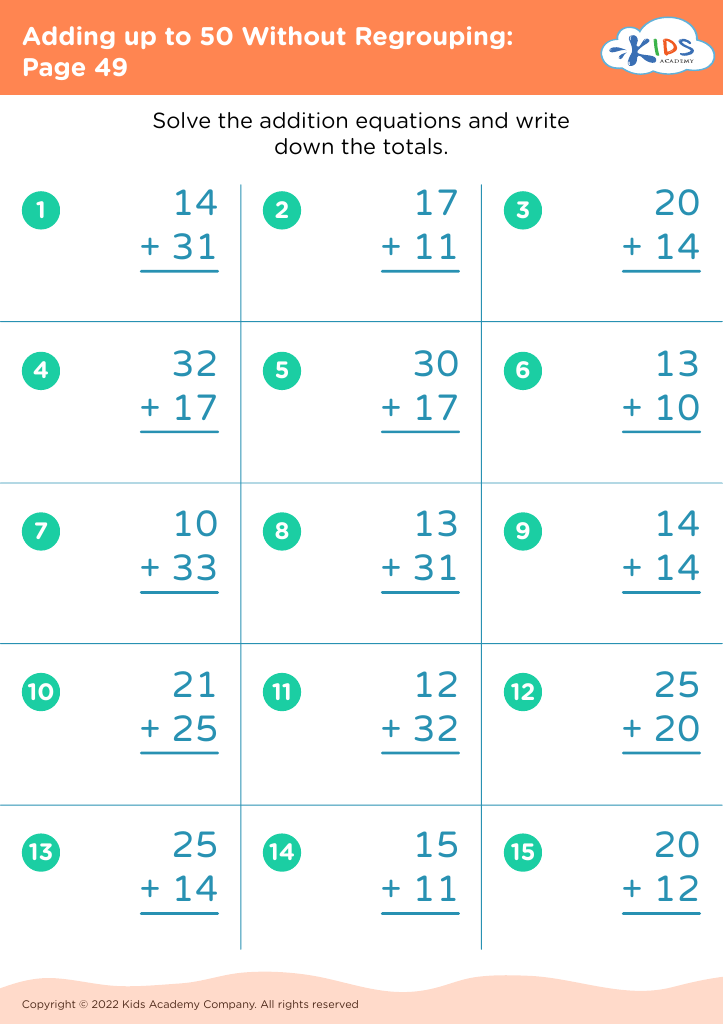
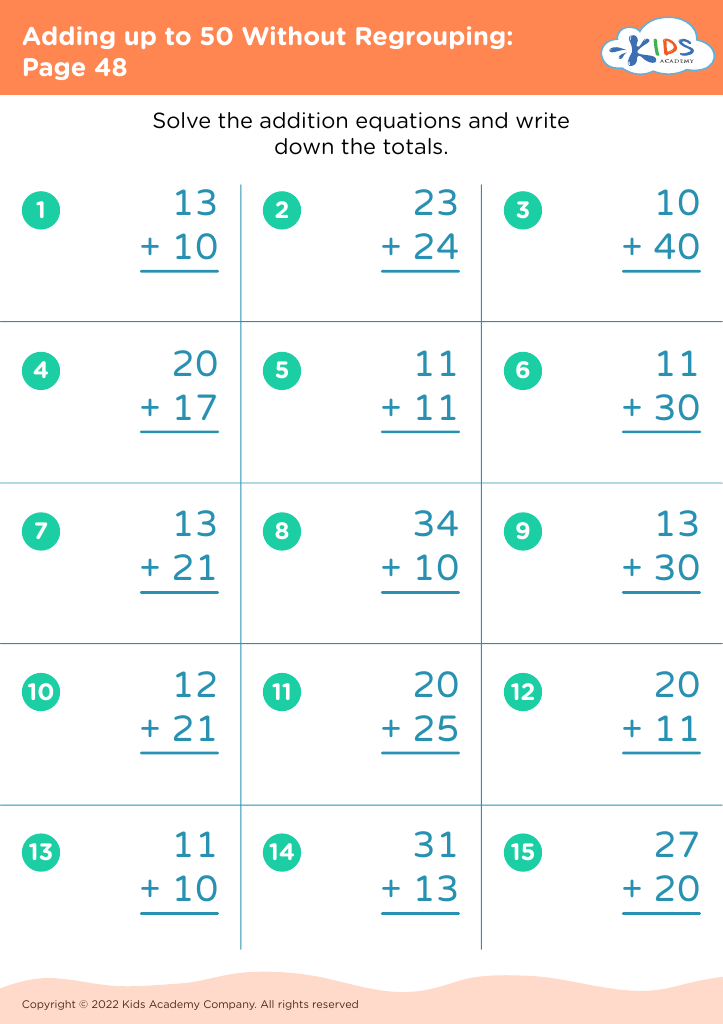
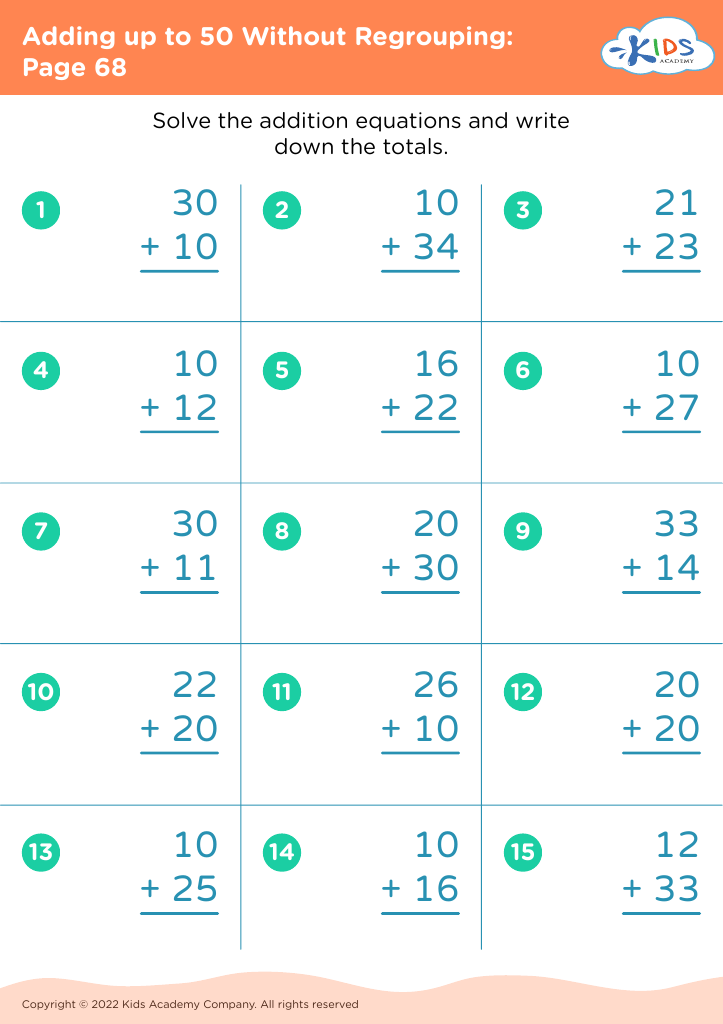


Recognizing shapes and mastering addition without regrouping for children aged 6-8 are essential foundational skills that significantly contribute to their overall development. Understanding shapes enhances spatial awareness, helping children categorize and organize their world, which is crucial for problem-solving and critical thinking. This skill also forms the basis for future learning in geometry, art, and everyday practical tasks.
On the other hand, adding up to 50 without regrouping strengthens basic arithmetic skills, fostering numerical fluency. This ability enables children to perform mathematical operations smoothly, promoting confidence and reducing anxiety around math. It lays the groundwork for more complex math concepts that they will encounter in later grades, preparing them for success in subjects that rely on numeracy.
Furthermore, parents and teachers play a key role in encouraging these skills. By creating engaging activities focused on shape recognition and straightforward addition, they can make math enjoyable and relatable. These early learning experiences contribute to positive attitudes towards math, promoting a lifelong love for learning. As in the rapidly evolving world, strong mathematical and analytical skills are vital, ensuring children are well-equipped for academic challenges ahead. Recognizing shapes and simple addition champion foundational cognitive development and foster skills for lifelong success.