Understanding patterns Adding up to 50 Without Regrouping Worksheets for Ages 6-8
5 filtered results
-
From - To
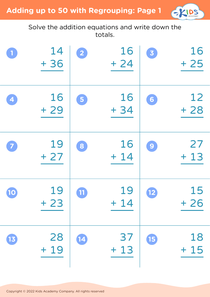
Welcome to our "Understanding Patterns: Adding Up to 50 Without Regrouping" worksheets, designed specifically for children ages 6-8. These engaging activities help young learners grasp the concept of addition through identifying and utilizing patterns. By focusing on adding numbers without regrouping, your child will build a solid foundation in math while developing critical thinking skills. Our worksheets encourage hands-on practice, ensuring a fun learning experience as students work through various activities to strengthen their understanding of number relationships. Explore our resources and watch your child gain confidence in math while mastering addition up to 50 through the power of patterns!
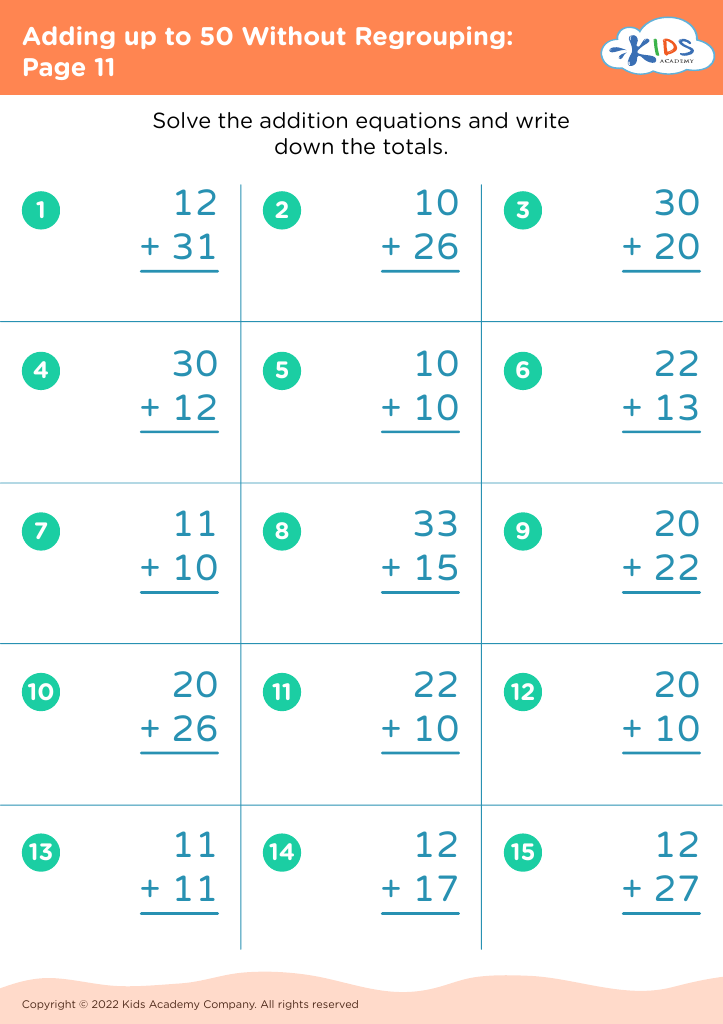
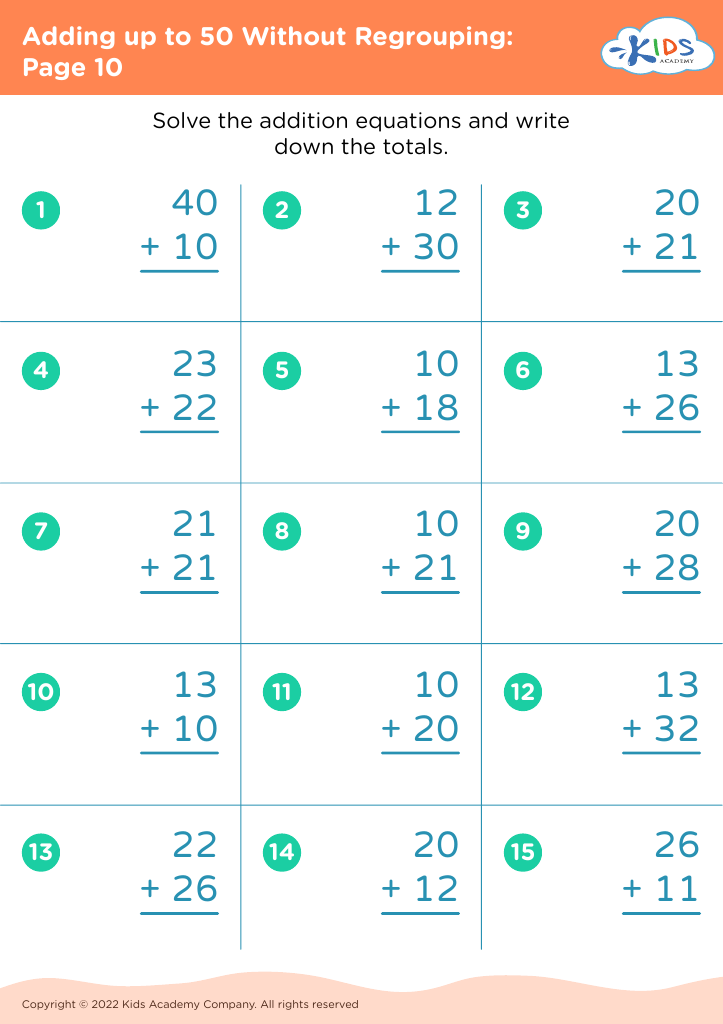
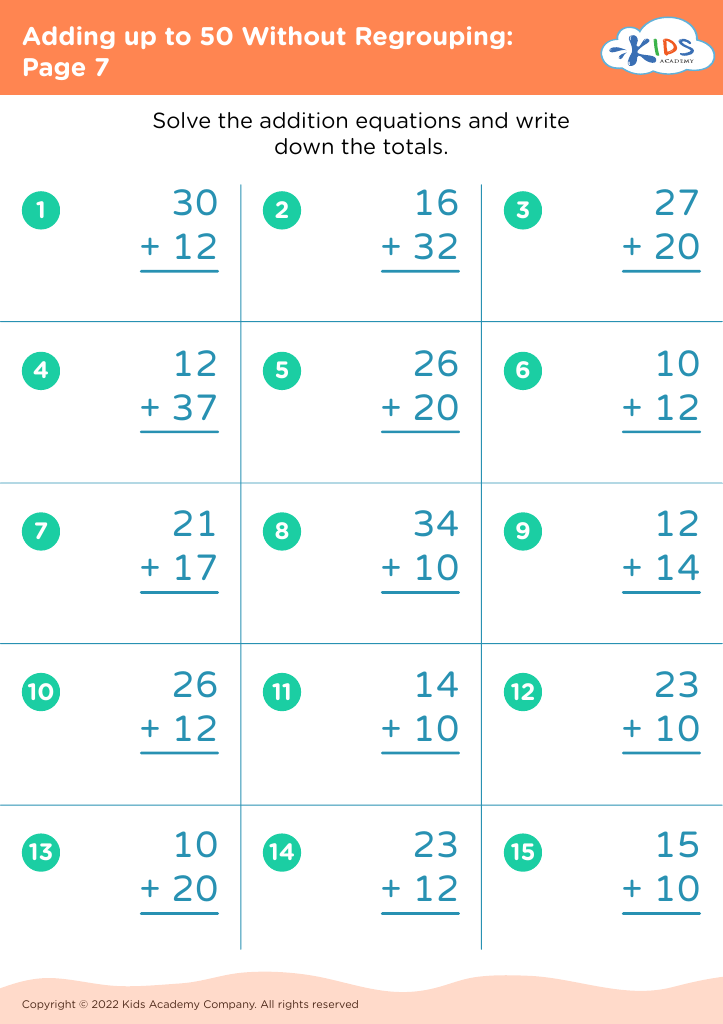
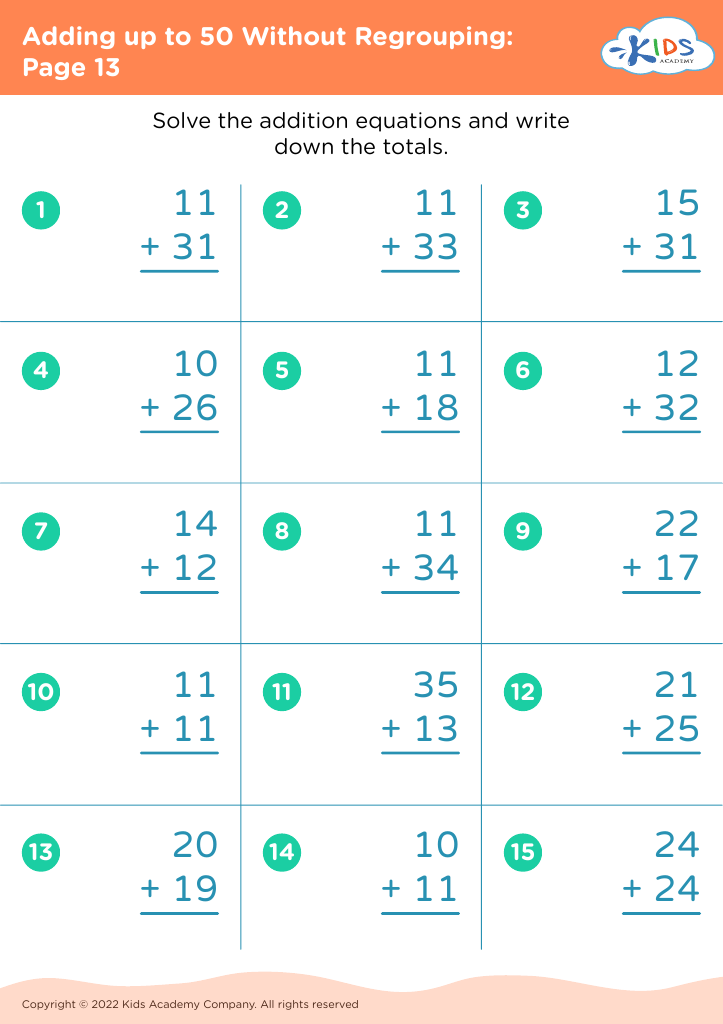
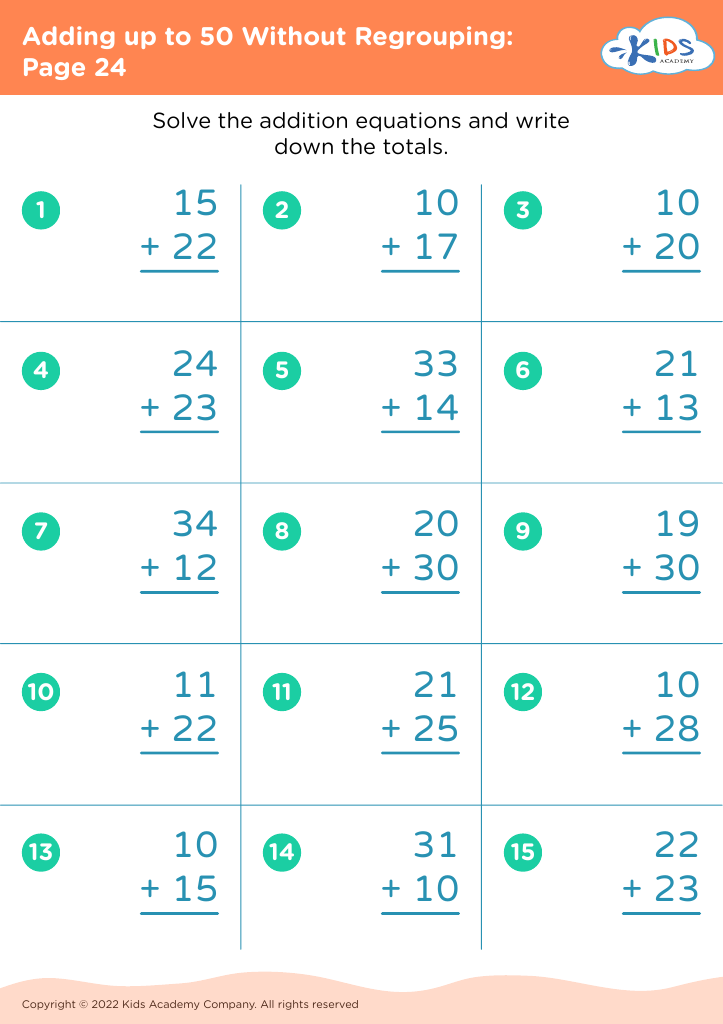


Understanding patterns in addition, particularly when adding up to 50 without regrouping, is vital for children aged 6 to 8 for several reasons. First, recognizing patterns helps foster number sense, allowing students to make connections between different mathematical concepts. When children see patterns in numbers—such as adding 10s or using anchor numbers like 5 or 10—they can compute more efficiently, laying a strong foundation for future math skills.
Additionally, without the need for regrouping, children develop confidence and a more manageable approach to addition, reducing frustration. This confidence translates into better problem-solving skills, as they learn to approach math using strategies rather than rote memorization. Furthermore, mastering these patterns promotes number fluency, enabling students to confidently tackle more complex calculations as they advance to higher grades.
For parents and teachers alike, focusing on these foundational skills ensures that children not only excel in math but also cultivate a positive attitude towards the subject. Engaging children in pattern-based activities fosters a love for learning, supporting crucial cognitive development during these formative years and preparing them for a successful educational journey. Overall, emphasizing pattern recognition in addition enriches children's mathematical toolkit and confidence.