Mental math practice Addition and Subtraction Word Problems Worksheets for Ages 6-8
3 filtered results
-
From - To
Enhance your child's mental math skills with our dynamic range of Addition and Subtraction Word Problems Worksheets, carefully designed for ages 6-8. These engaging exercises help young learners develop quick thinking and problem-solving abilities, essential for academic success. Each worksheet blends fun and educational tasks, making math practice enjoyable and effective. Dive into a collection of scenarios that sharpen arithmetic capabilities while boosting confidence. Ideal for both classroom use and at-home practice, our mental math worksheets ensure children grasp fundamental addition and subtraction concepts, setting the groundwork for a strong mathematical foundation. Empower your child’s learning journey with our expertly crafted worksheets!

Adding at the Hospital Worksheet
 Assign to My Students
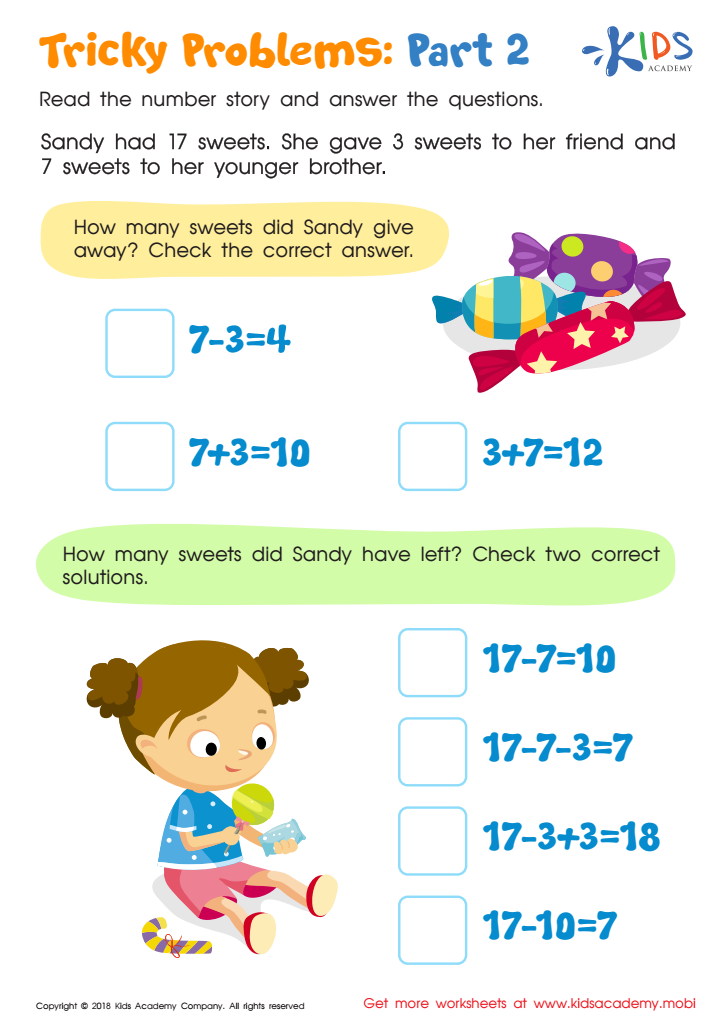
Tricky Problems Worksheet: Part 2
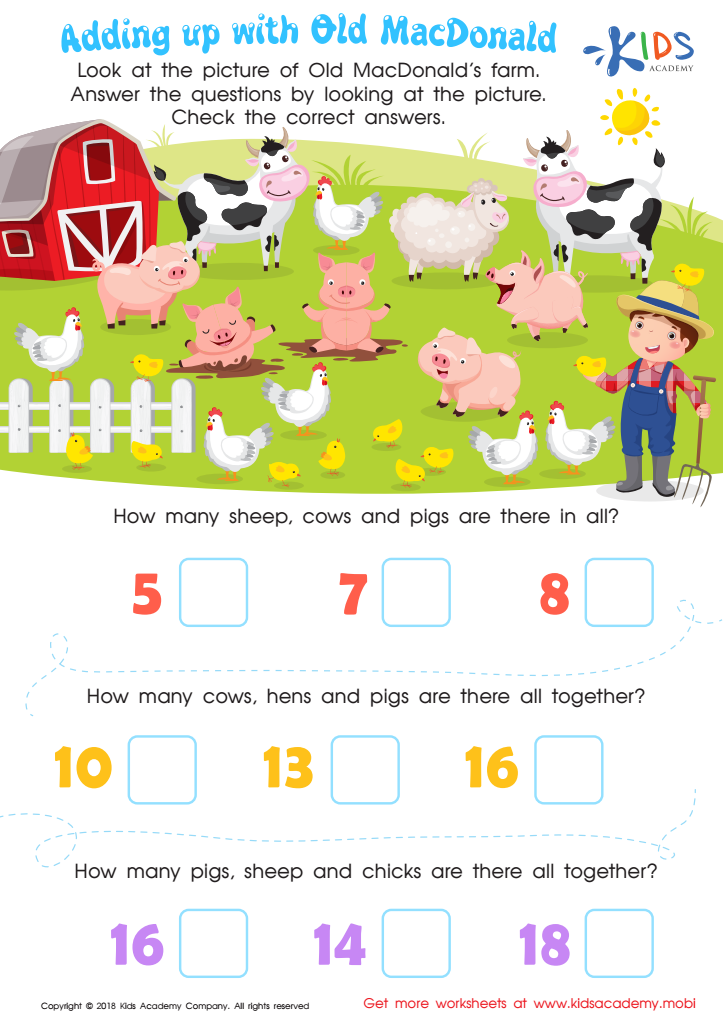
Adding Up with Old MacDonald Worksheet








Mental math practice for addition and subtraction word problems is crucial for children aged 6-8 as it lays the groundwork for their future academic success and everyday life skills. First, engaging with mental math improves numerical fluency, allowing children to perform arithmetic operations swiftly and accurately. This fluency is essential when progressing to more complicated mathematical concepts. Second, solving word problems enhances critical thinking and problem-solving abilities. It requires kids to comprehend a situation, dissect it into individual components, and apply the appropriate mathematical operations, fostering logical reasoning and analytical skills.
Third, mental math boosts confidence. Children who can solve problems in their heads often feel more capable and less anxious about math, which translates to a more positive attitude towards learning in general. Fourth, it builds a strong foundation for life skills, such as budgeting an allowance, making change, or estimating costs while shopping. These real-world applications help kids see the relevance of what they're learning, increasing their engagement and motivation.
Finally, daily practice strengthens working memory, an essential cognitive skill that affects not just math learning but other academic and extracurricular activities. Thus, parents and teachers should prioritize mental math practice to ensure well-rounded cognitive development and instill a lifelong love for learning.