
Critical thinking development Addition & Subtraction Worksheets for Ages 6-8
3 filtered results
Difficulty Level
Grade
Age
-
From - To
Subject
Activity
Standards
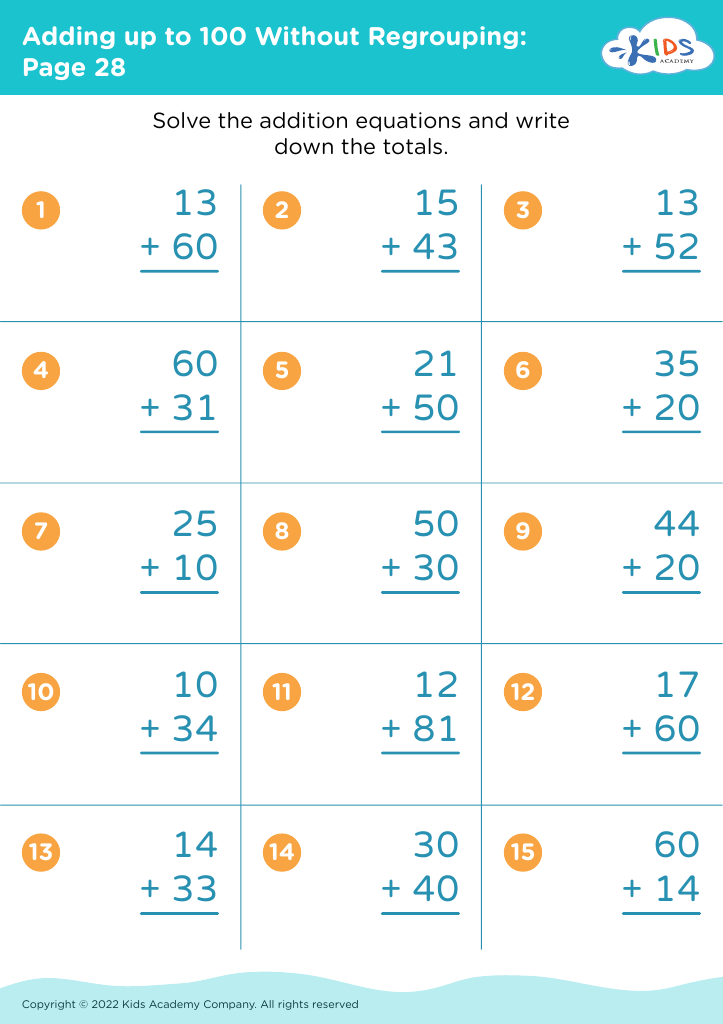
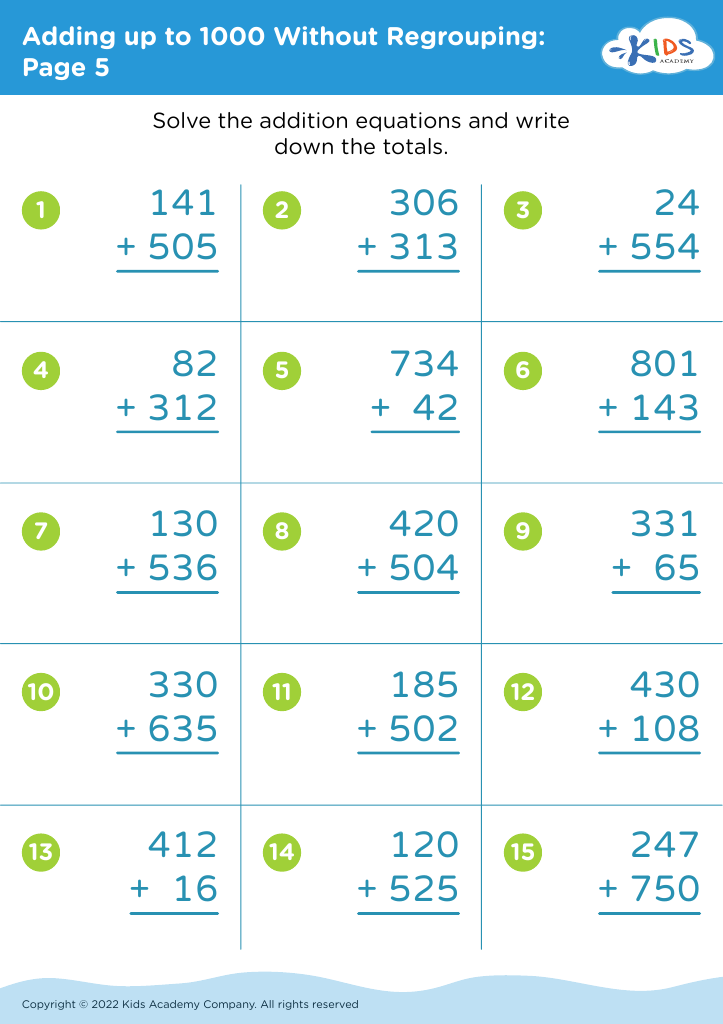
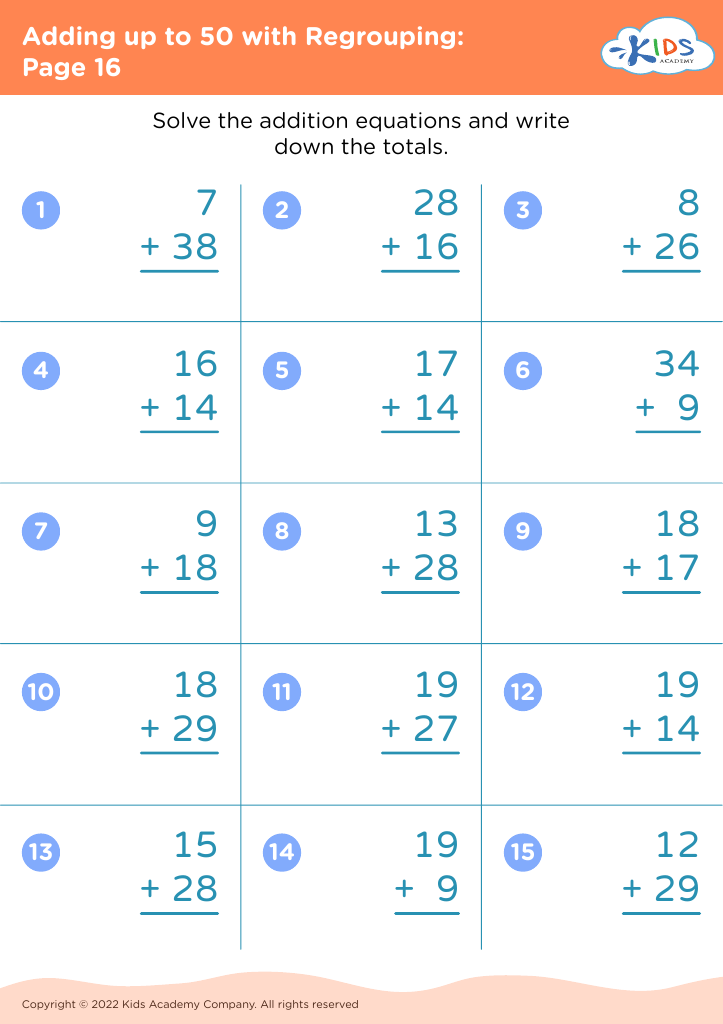
Enhance your child's critical thinking skills with our Addition & Subtraction Worksheets, designed for ages 6-8! These engaging math exercises encourage young learners to go beyond rote calculation by solving problems that stimulate logical and analytical thinking. As children navigate through various puzzles, games, and word problems, they develop a deeper understanding of addition and subtraction. Each worksheet is carefully crafted to make learning fun while promoting cognitive growth and problem-solving abilities. Perfect for both classroom use and home schooling, our worksheets offer a great way to support your child's math journey and build a solid foundation for future learning.
Favorites
With answer key
Interactive
Join Kids Academy for Free
Who is primarily going to use this learning content?








Parents and teachers should prioritize the development of critical thinking through addition and subtraction for children aged 6-8 because these foundational skills form the basis for future academic and life success. At this early stage, children's brains are highly adaptable and primed for learning. Introduction to arithmetic operations like addition and subtraction encourages logical reasoning, problem-solving, and the ability to make connections between concepts.
First, critical thinking development in mathematics enhances cognitive abilities. Children learn to analyze problems, strategize solutions, and reflect on their methods and results. This "numbers thinking" translates into practical skills for evaluating everyday situations, fostering independent thinking and decision-making. These analytical skills are invaluable not just in mathematics, but across all academic disciplines and in real-life situations.
Second, a positive and solid grounding in math helps build confidence and reduces anxiety related to future mathematical tasks. When children comprehend and apply arithmetic operations in diverse contexts, they are more likely to embrace challenging scenarios with enthusiasm rather than fear.
Lastly, these skills align with educational standards and expectations, ensuring that children meet grade-appropriate milestones. By fostering these competencies early, parents and teachers help establish a trajectory of academic excellence and a lifelong love of learning. Engaging young minds in critical thinking through math thus equips them with essential tools for a successful future.








