Developing logical thinking Addition & Subtraction Worksheets for Ages 6-8
4 filtered results
-
From - To
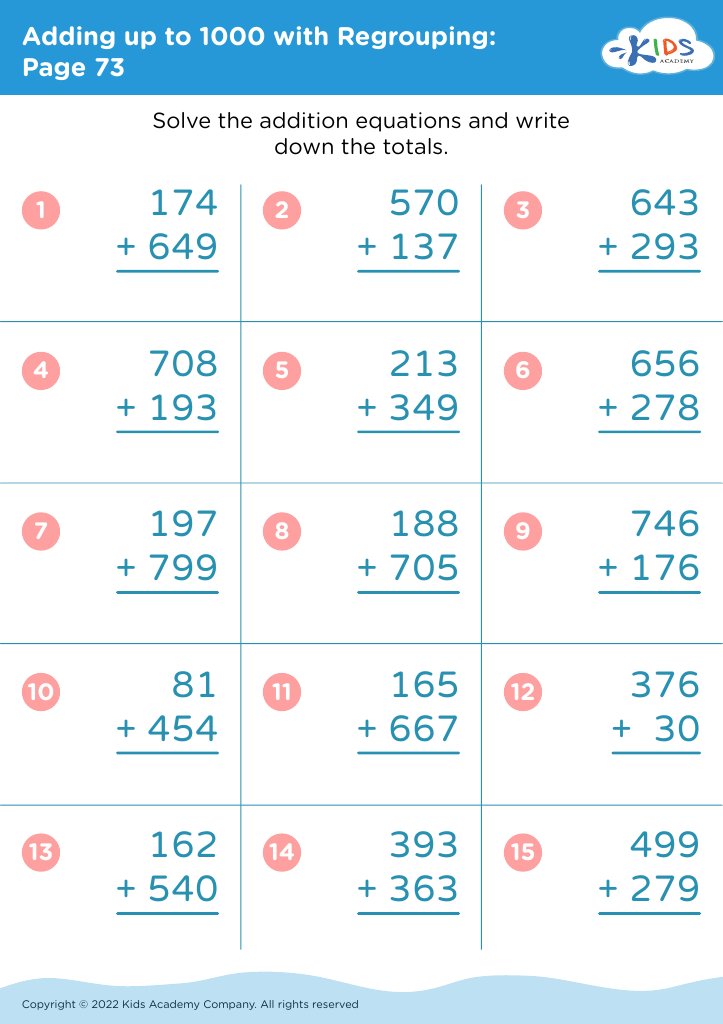
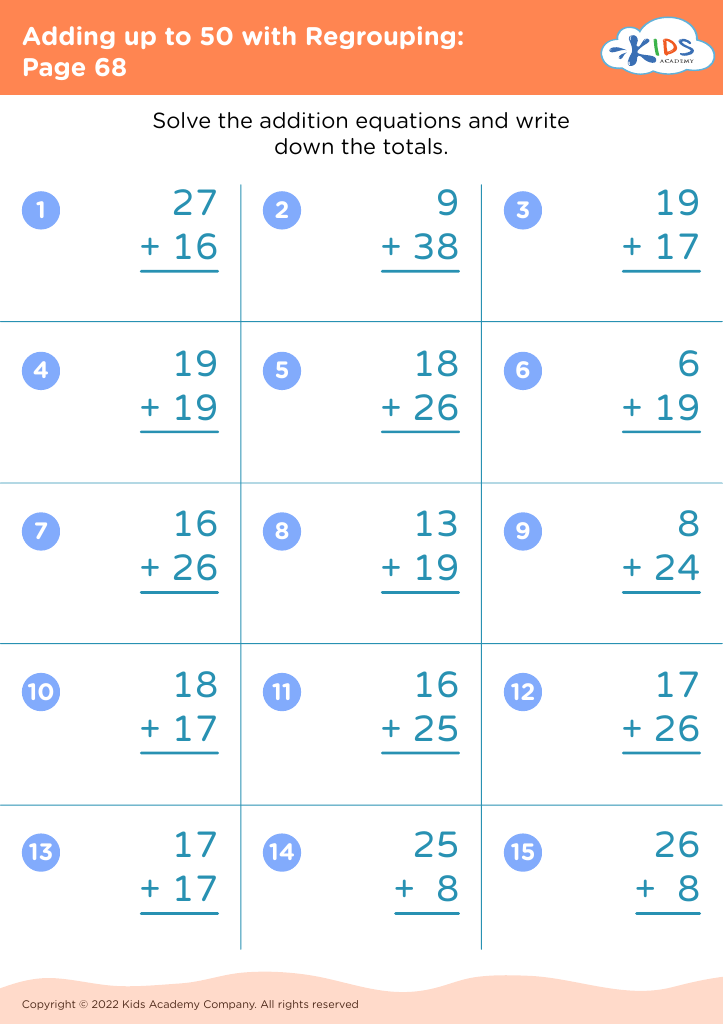
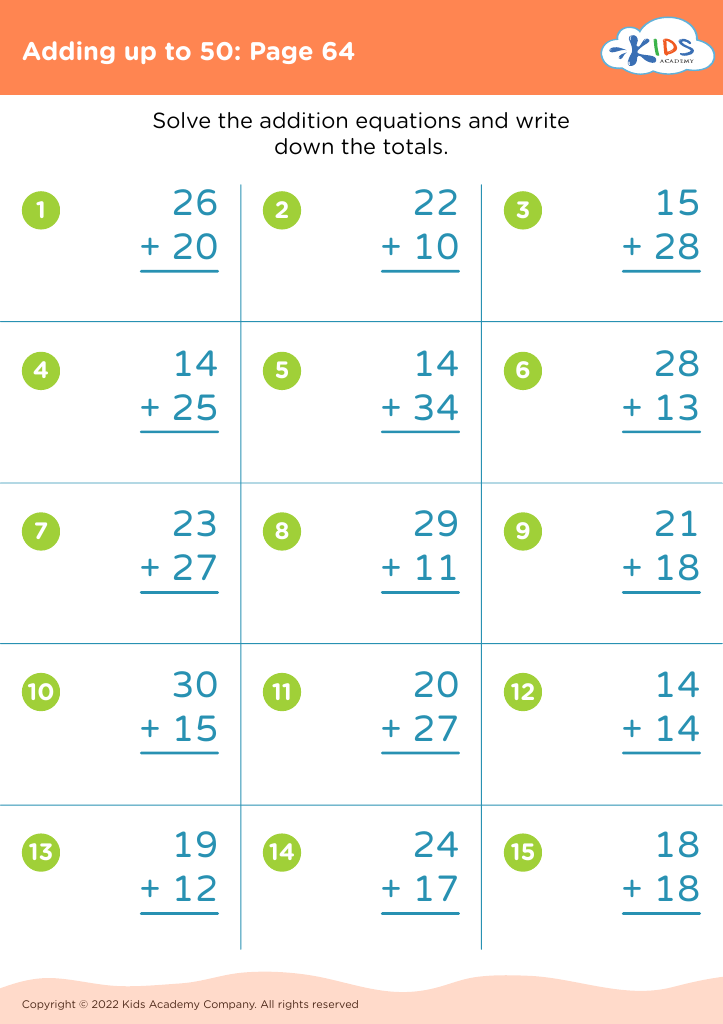
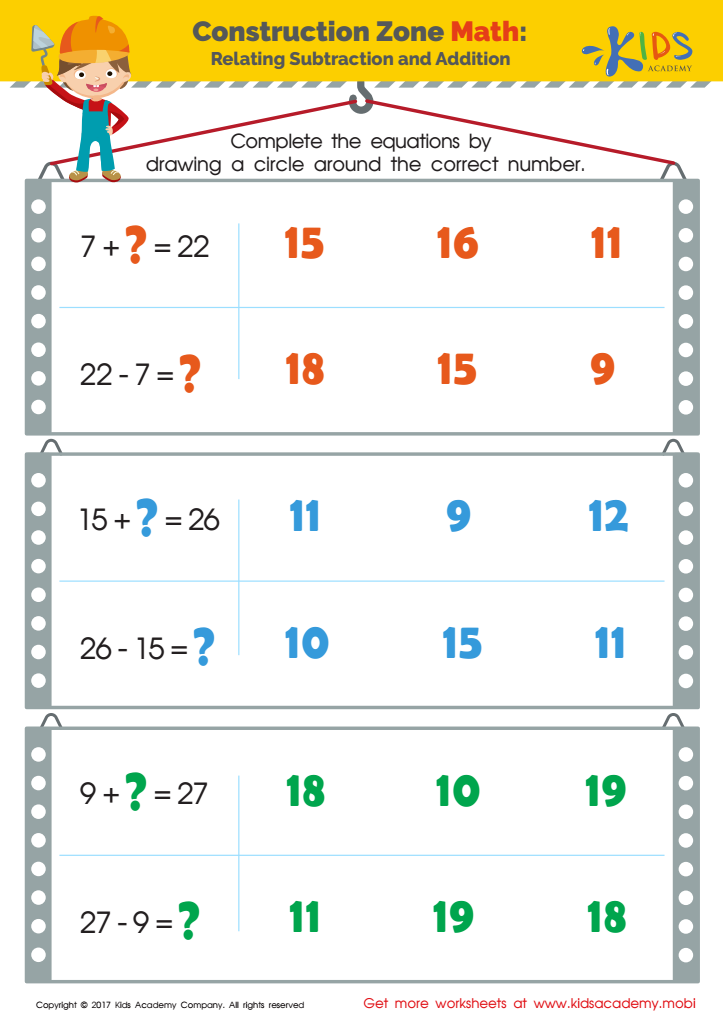
Enhance your child's logical thinking with our engaging addition and subtraction worksheets designed for ages 6-8. These resources aim to build problem-solving skills through fun and interactive exercises that challenge young learners. Our worksheets encourage students to think critically as they solve various math problems, laying a solid foundation for future mathematical concepts. The hands-on approach promotes cognitive development, allowing children to approach addition and subtraction with confidence and creativity. Perfect for teachers and parents alike, these printable worksheets are tailored to stimulate logical reasoning while making math enjoyable. Discover the joy of learning through structured and playful activities today!
Related Addition and Subtraction Facts Worksheet
 Assign to My Students








Developing logical thinking in addition and subtraction for children ages 6-8 is crucial for several reasons. At this age, children are laying the groundwork for their mathematical understanding, which serves as a foundation for all future learning in this subject area. Logical thinking enables them to recognize relationships between numbers, understand the concept of quantity, and develop problem-solving skills that are applicable across various disciplines.
Furthermore, fostering logical thinking enhances a child’s confidence in their mathematical abilities. When students grasp how addition and subtraction relate to everyday situations—for instance, sharing snacks or counting toys—they become more engaged and motivated in their learning. This connects math to real life, making it more relevant and understandable.
Parents and teachers play a vital role in this development. They can enhance children’s logical thinking by offering engaging and supportive learning environments that emphasize exploration and inquiry. Through games, hands-on activities, and discussion, children learn to approach problems methodically, which builds critical thinking skills essential for success in both academic and daily life.
Ultimately, nurturing logical thinking in early math not only promotes academic achievement but also helps children grow into competent and confident individuals, ready to tackle both math and life’s challenges.








