Enhances counting skills Addition & Subtraction Worksheets for Ages 6-8
5 filtered results
-
From - To
Boost your child's arithmetic abilities with our Addition & Subtraction Worksheets designed for ages 6-8! Our expertly crafted worksheets help enhance counting skills through engaging and interactive activities. Perfect for young learners, these materials make mastering basic math fun and effective. Your child will enjoy vibrant illustrations and hands-on problem-solving scenarios, making practice both productive and enjoyable. These worksheets ensure a solid foundation in addition and subtraction, preparing kids for future math success. Start your child's journey to excellent counting skills today with our top-quality educational resources!
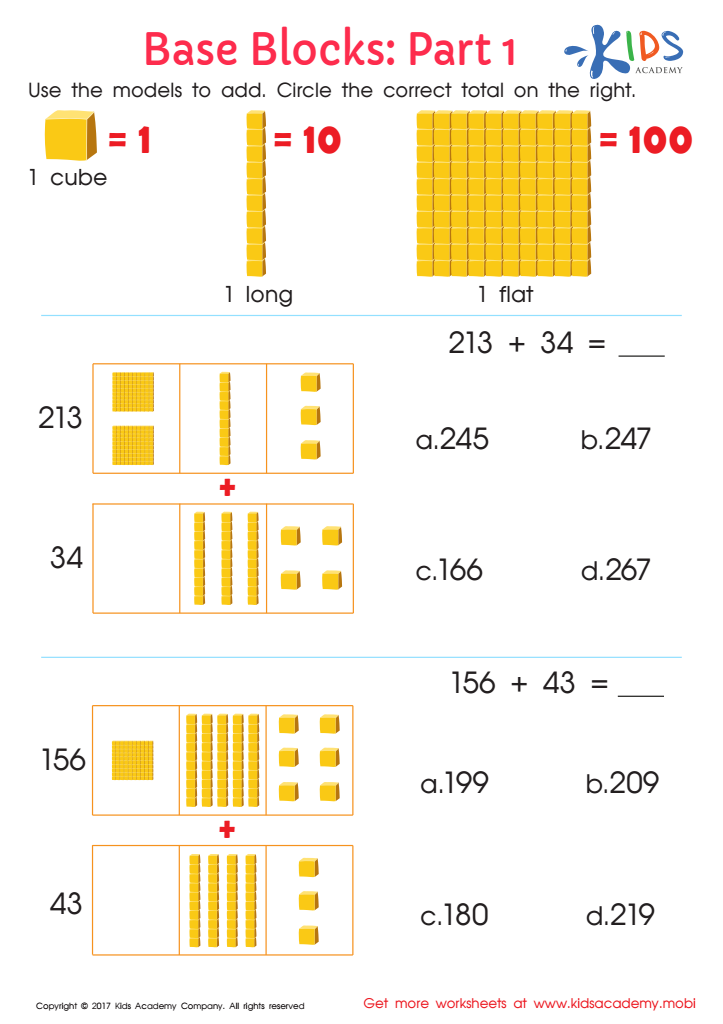
Base Ten Blocks Worksheet: Part 1
 Assign to My Students
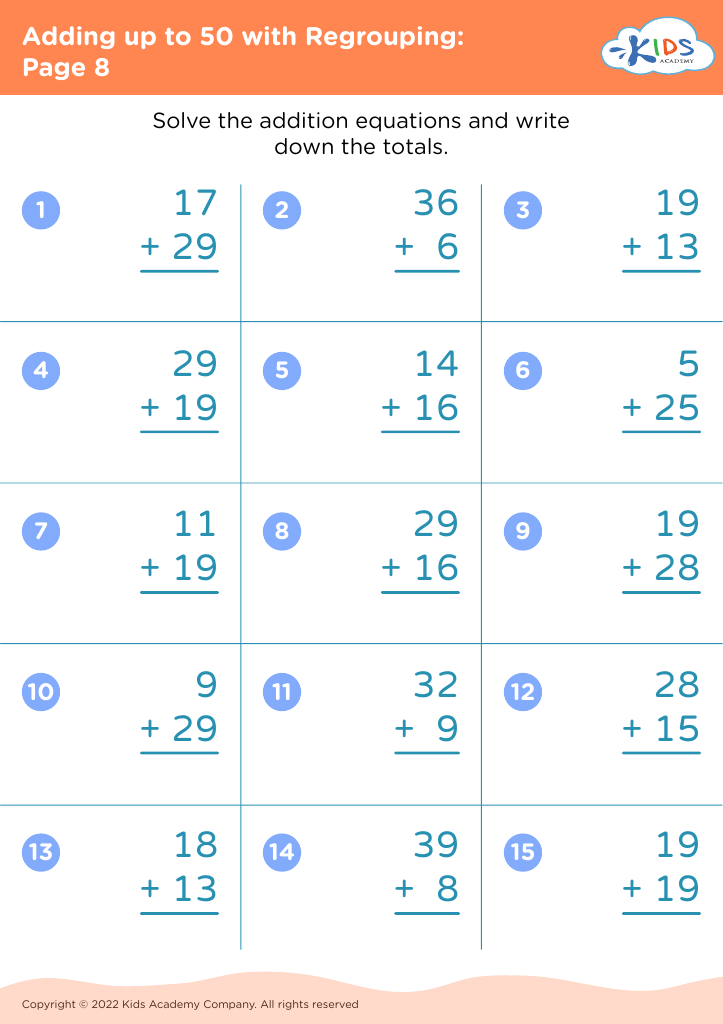
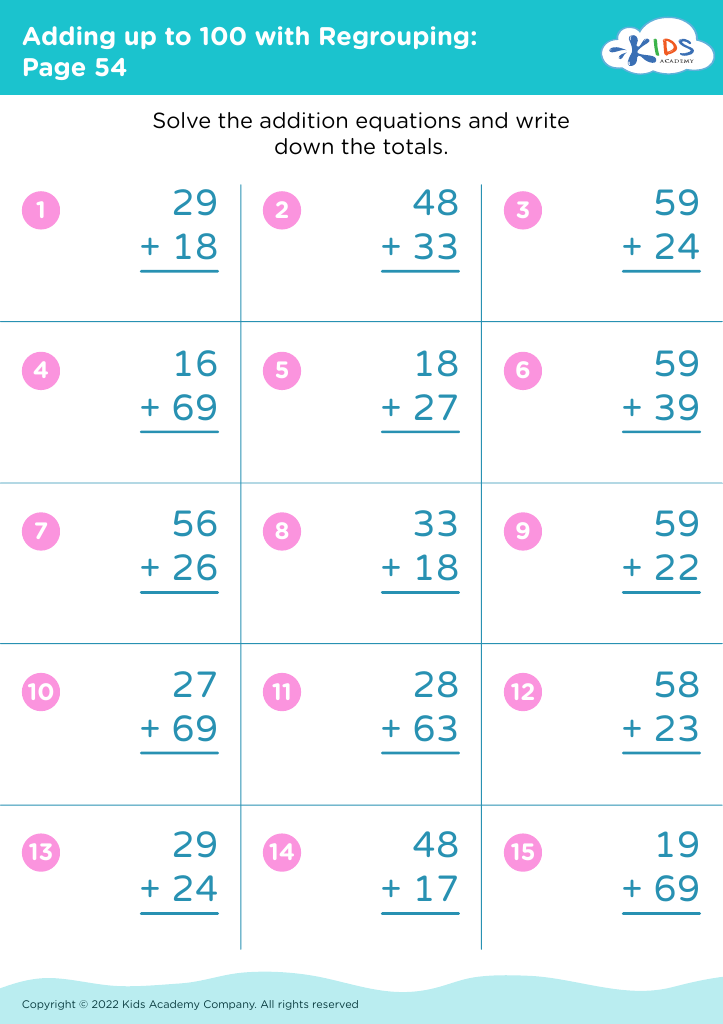
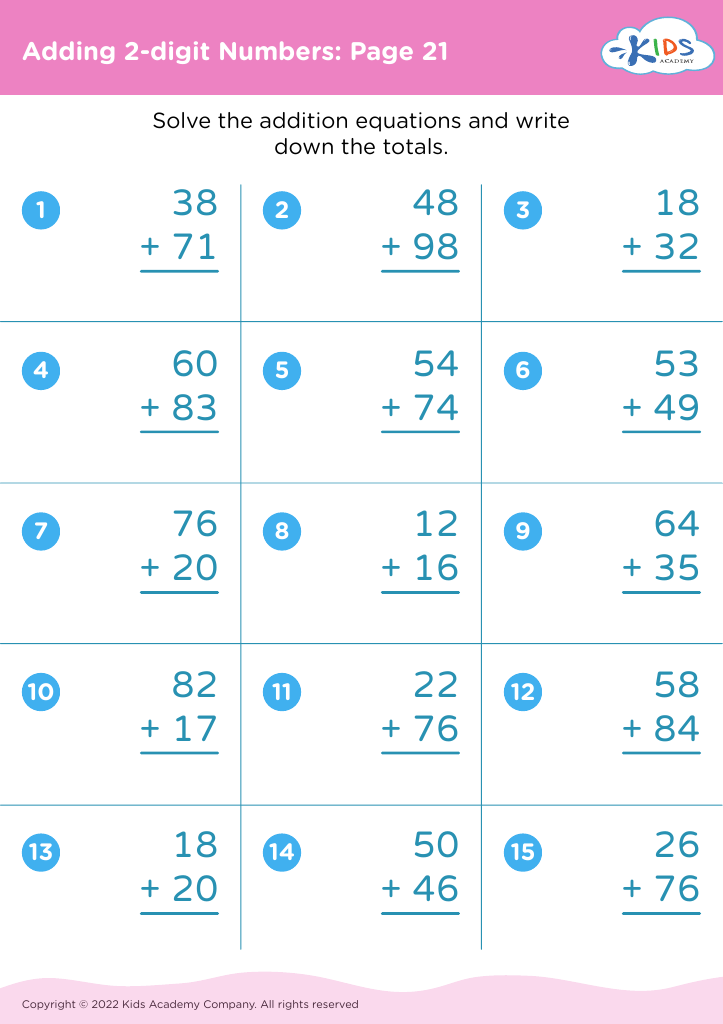
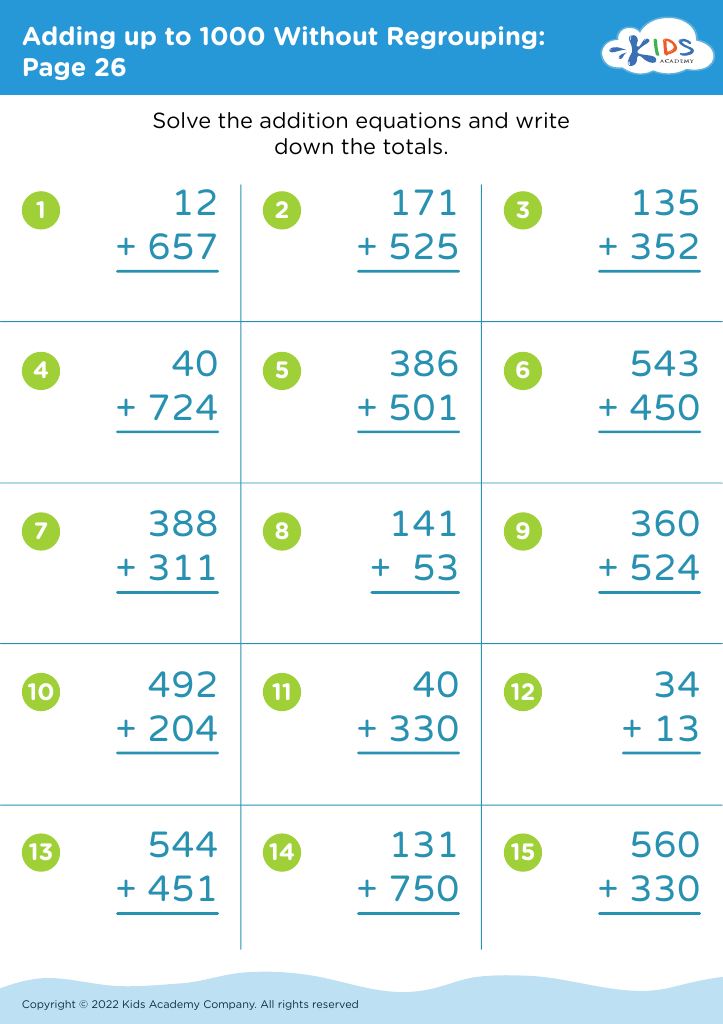








Parents and teachers should place great importance on enhancing counting skills, addition, and subtraction for children ages 6-8. This foundational stage is critical for developing a robust mathematical understanding that will support more advanced concepts later on. Counting, addition, and subtraction are the bedrock of arithmetic and introduce children to the world of numbers and basic operations, fostering both analytical thinking and problem-solving abilities.
Firstly, developing proficiency in these skills boosts children’s confidence and promotes a positive attitude towards mathematics, a subject often perceived as challenging. Early success in math can lead to continued interest and pursuit of more complex mathematical ideas.
Secondly, these skills are essential for everyday life. Whether it's calculating change at a store, measuring ingredients for a recipe, or planning a budget for a small project, the concepts of addition and subtraction are ubiquitously applied. Instilling these skills at an early age equips children to navigate daily tasks effectively.
Lastly, proficiency in counting, addition, and subtraction forms the basis for understanding higher-level math concepts, such as multiplication, division, fractions, and problem-solving in algebra. Without a strong foundation, children might struggle as math becomes more abstract in higher grades. Prioritizing these skills prepares students for future academic success and fosters a lifelong capacity to use math as a functional tool in their personal and professional lives.








