Improve reading comprehension Addition & Subtraction Worksheets for Ages 6-8
10 filtered results
-
From - To
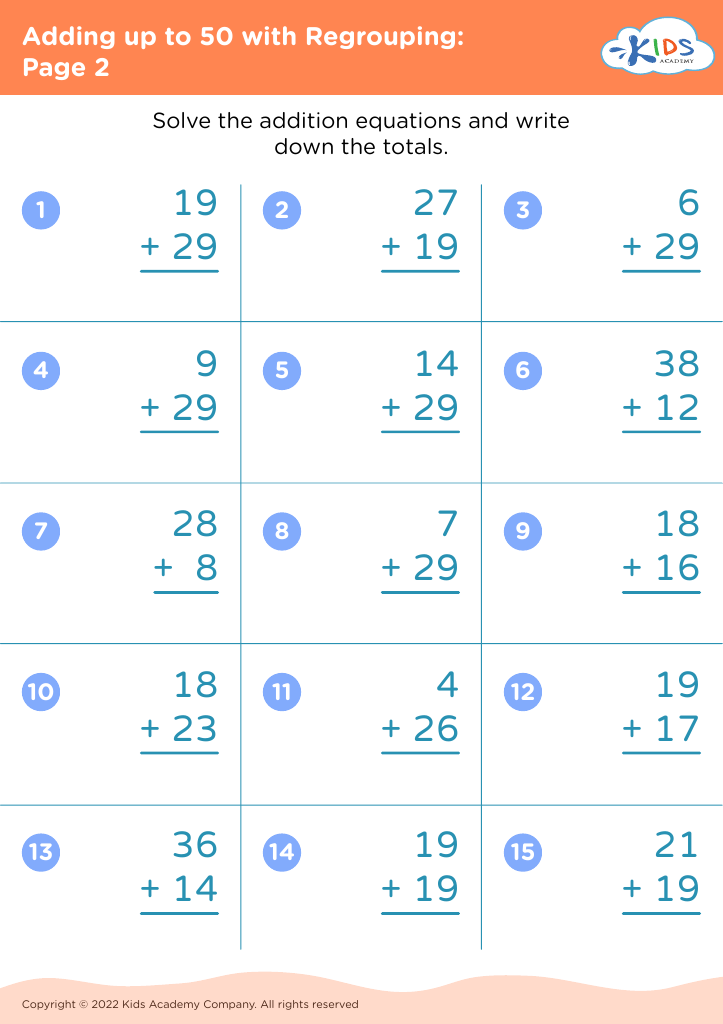
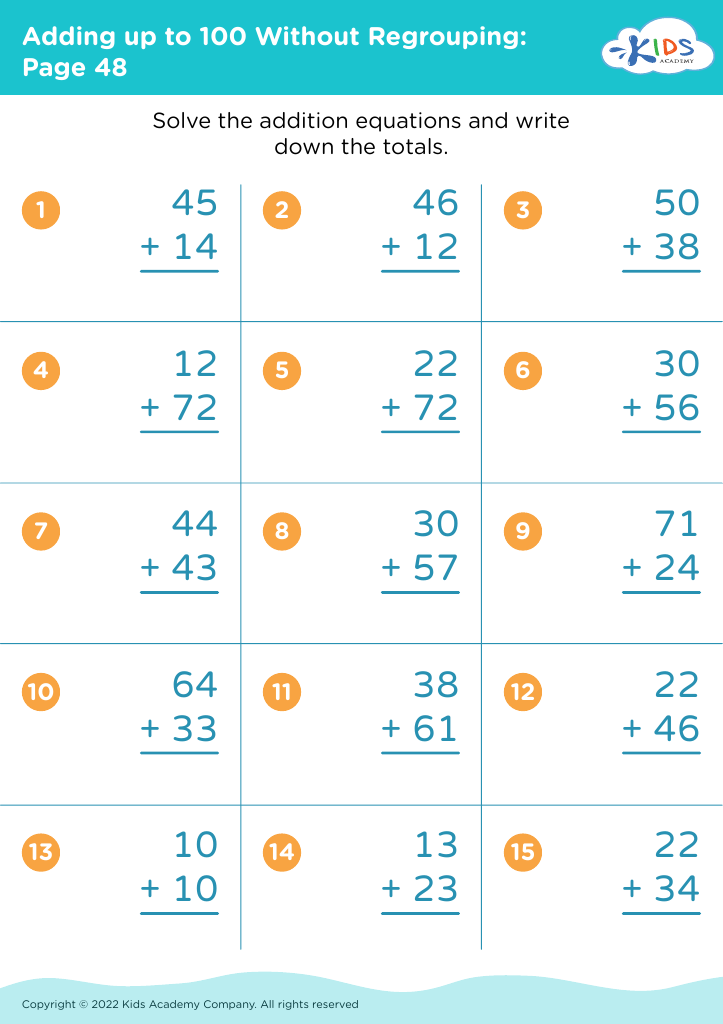
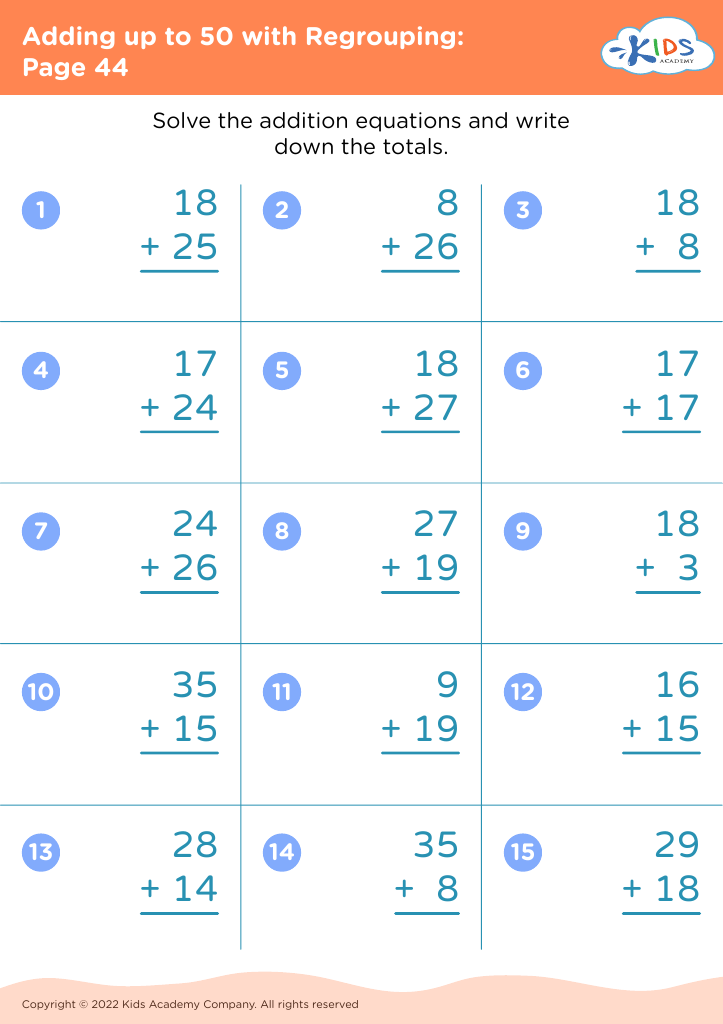
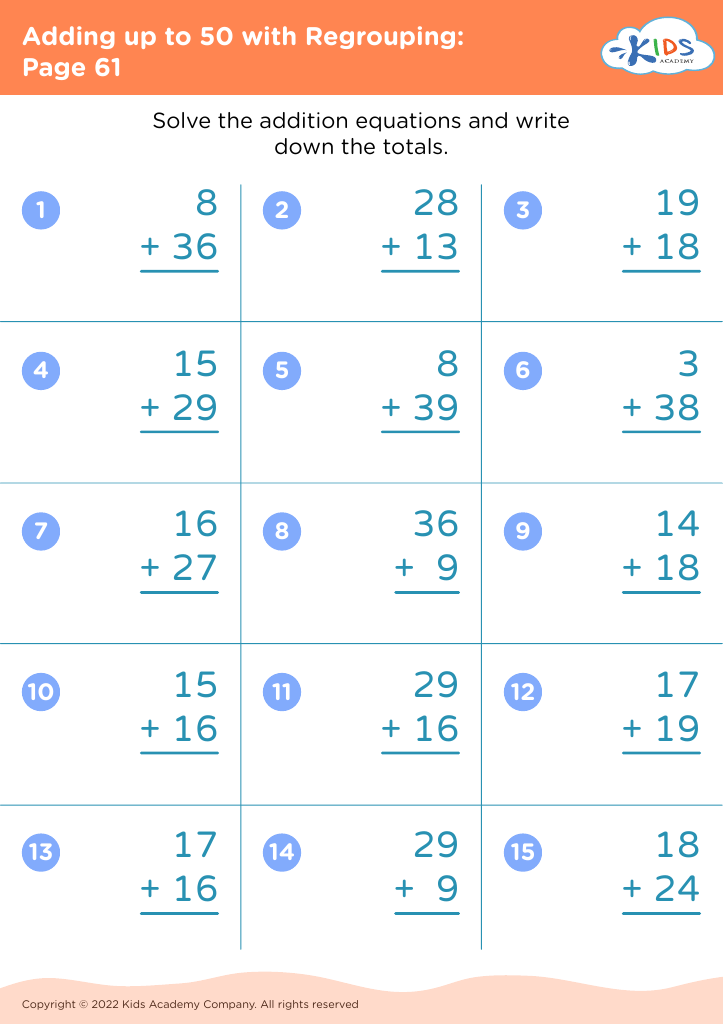
Enhance your child's reading comprehension with our engaging Addition and Subtraction worksheets designed for ages 6-8. These worksheets not only reinforce essential math skills but also integrate reading activities to promote understanding and retention. Interactive exercises encourage children to follow instructions, interpret problems, and apply their reasoning skills effectively. Our resources help cultivate critical thinking while making learning enjoyable. Scene-based problems illustrate real-life scenarios, allowing students to connect mathematics with their everyday experiences. Explore our printable worksheets and watch your child thrive academically, gaining confidence in both reading and math concepts as they progress through each enjoyable activity!
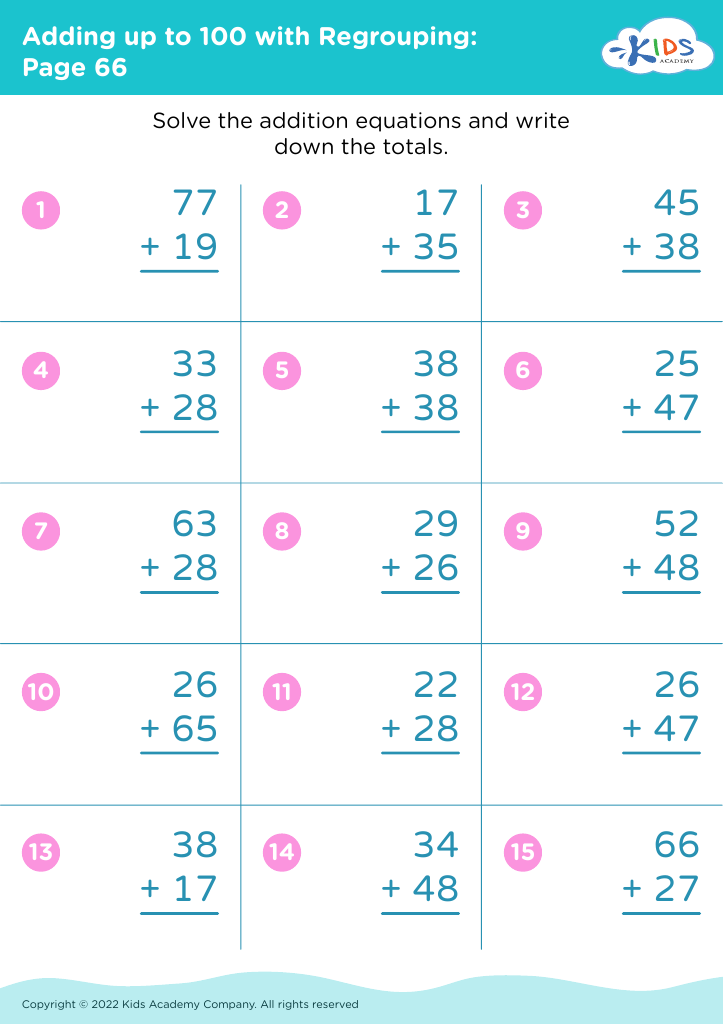
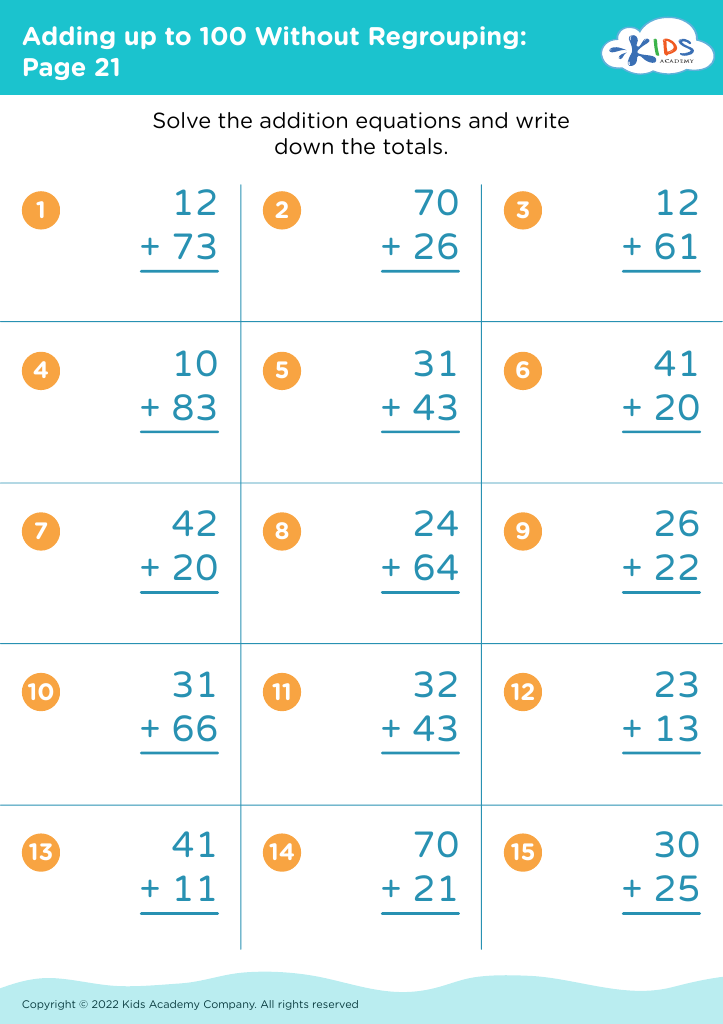
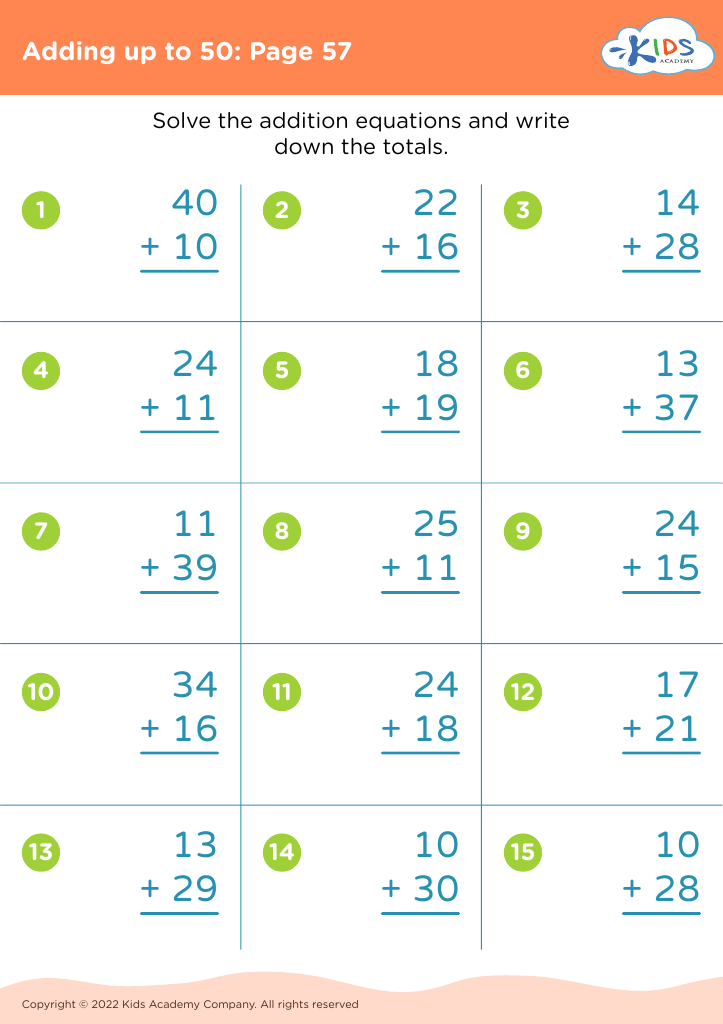
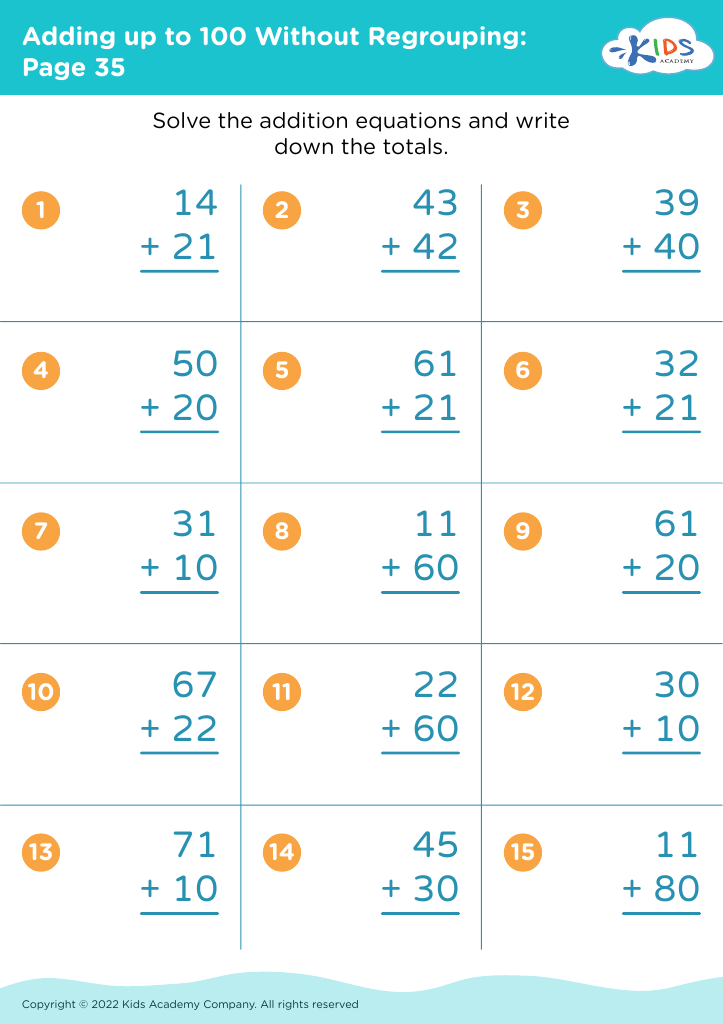
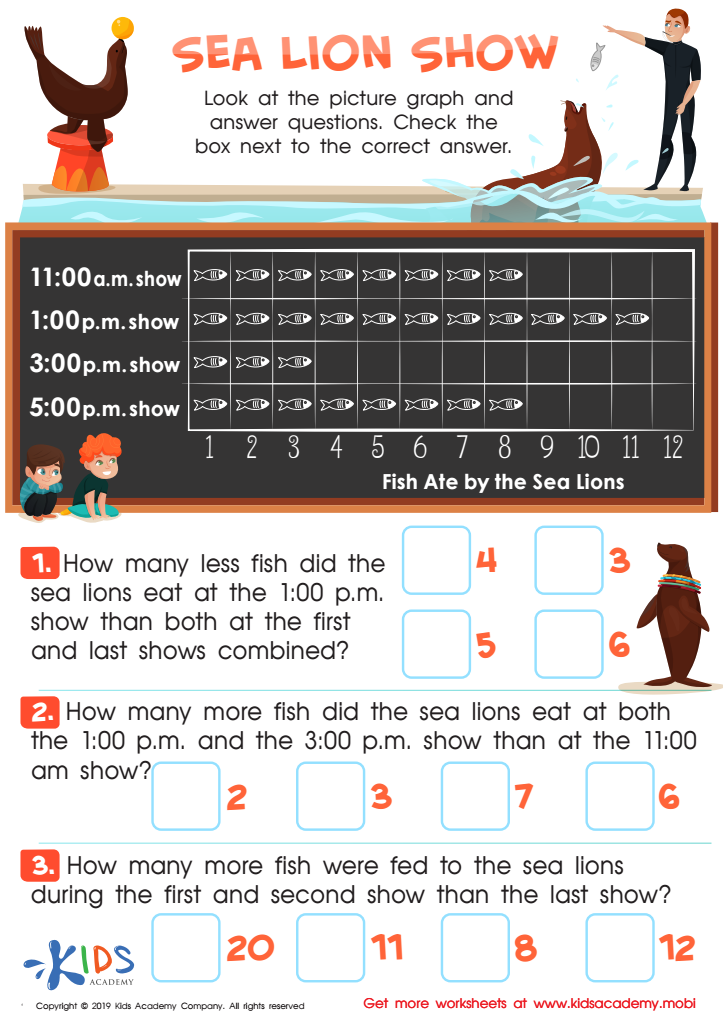
Sea Lion Show Worksheet
 Assign to My Students
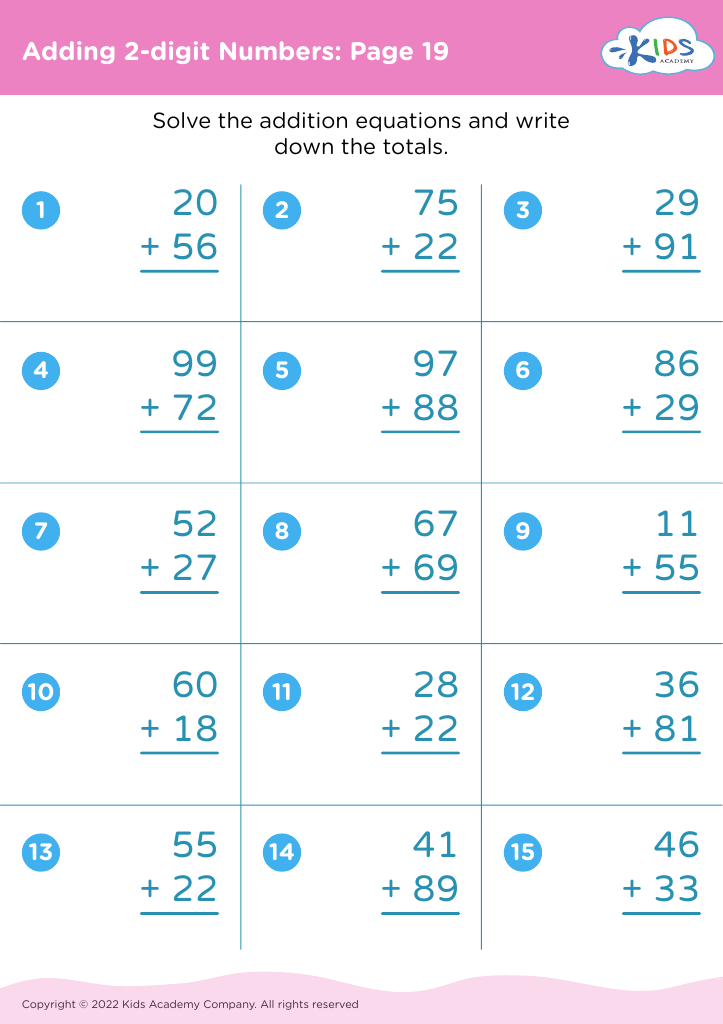








Improving reading comprehension and mathematical skills in addition and subtraction for children aged 6-8 is crucial as it lays the foundation for lifelong learning and academic success. During these formative years, children are developing essential cognitive skills that help them understand and navigate the world around them.
Reading comprehension is vital as it enables students to process and understand information across all subjects, enhancing their ability to follow directions, engage with texts, and develop critical thinking skills. When children comprehend what they read, they become more confident learners, which positively impacts their overall academic performance.
Similarly, mastering addition and subtraction ensures children grasp basic mathematical concepts necessary for more complex calculations in the future. Proficiency in these skills promotes logical thinking and problem-solving abilities, which are applicable beyond the classroom. Developing a solid foundation in both reading and math creates a synergistic effect, as strong reading skills allow children to better access math problems and explanations.
Moreover, engaging parents and teachers in the improvement of these skills fosters a supportive learning environment, encouraging motivation and positive reinforcement. Together, they can identify individual learning needs and implement strategies, ensuring that children become well-rounded, capable learners prepared for future academic challenges.








