
Observational skills Addition & Subtraction Worksheets for Ages 6-8
3 filtered results
Difficulty Level
Grade
Age
-
From - To
Subject
Activity
Standards
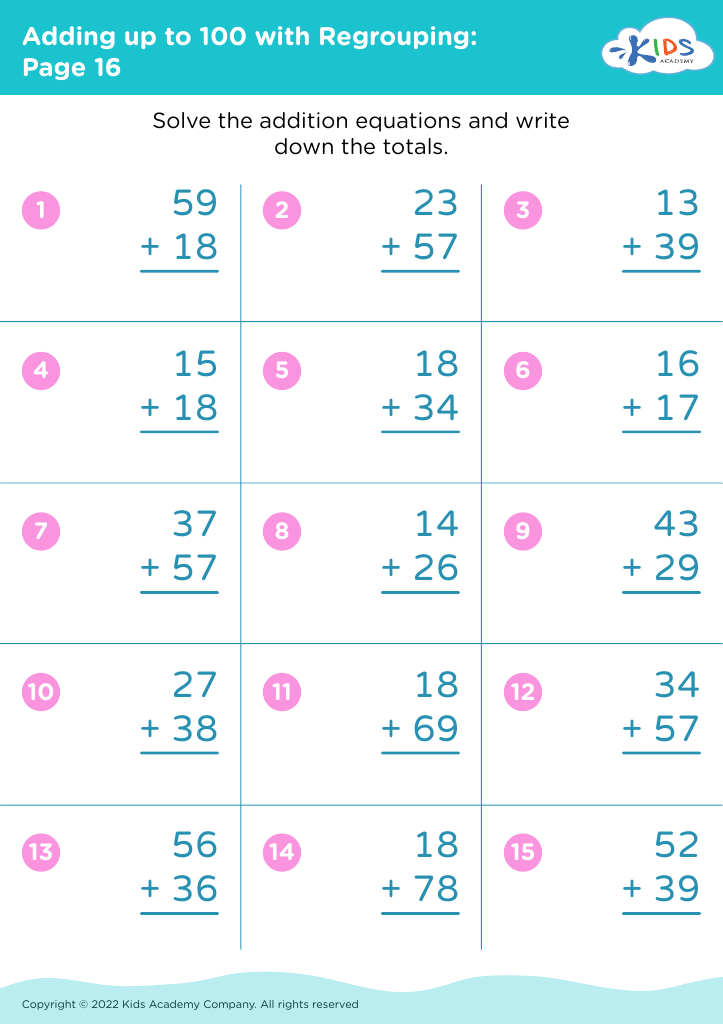
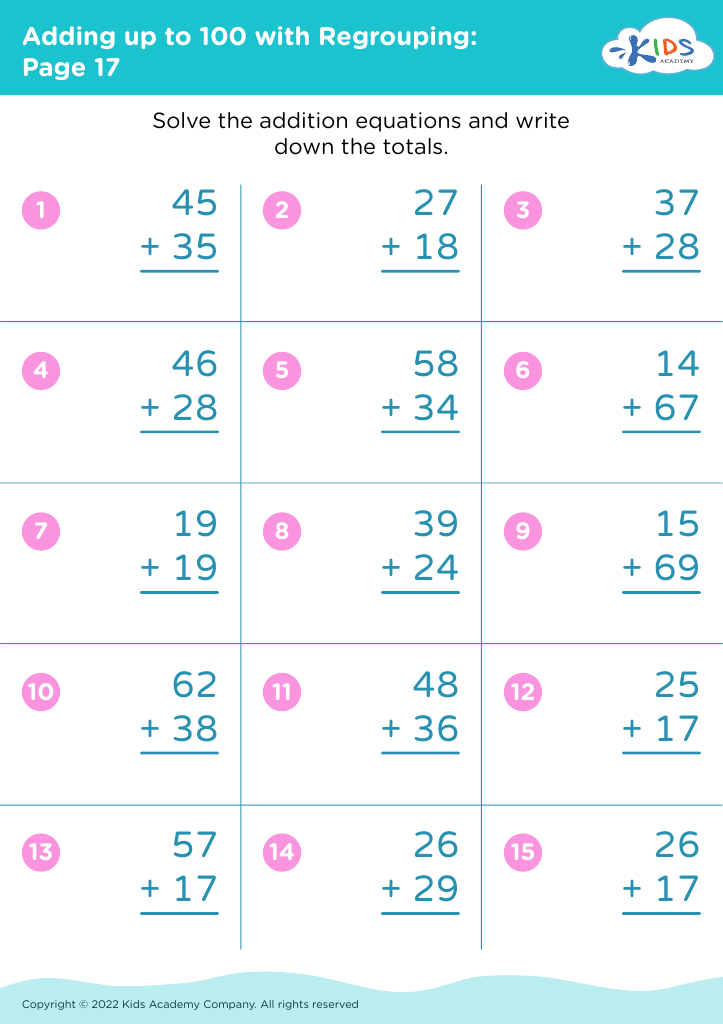
Enhance your child's math proficiency with our "Observational Skills Addition & Subtraction Worksheets for Ages 6-8". Tailored for young learners, these insightful worksheets blend numerical exercises with engaging visuals to bolster both arithmetic and cognitive observation abilities. Designed to cultivate critical thinking and accuracy, each activity encourages careful analysis and problem-solving through fun, interactive challenges. Ideal for strengthening focus and concentration, these printable worksheets are perfect for reinforcing classroom learning or practicing at home. Equip your young mathematicians with the skills they need for success. Visit Kids Academy today to download and start practicing these essential skills!
Favorites
With answer key
Interactive
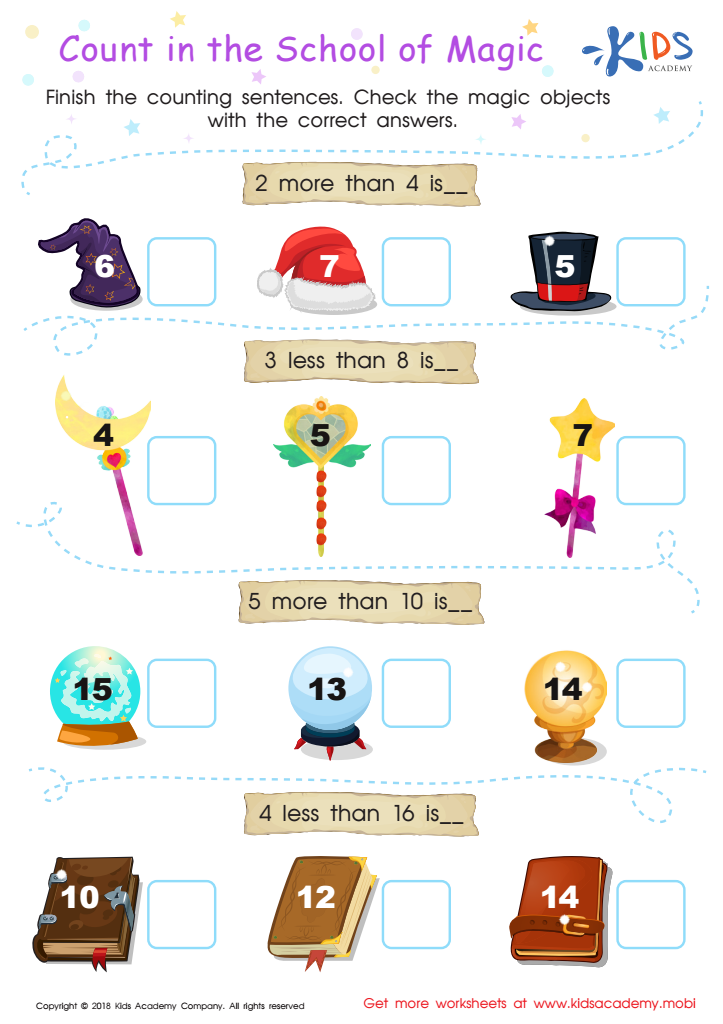
Count in the School of Magic Worksheet
Your math learners can explore the School of Magic with this worksheet. They'll read equations with addition and subtraction numbers under 20, count back and forth to find the answer, then complete the counting sentences. Fun pictures and easy accuracy make it an enjoyable and successful learning experience.
 Assign to My Students
Count in the School of Magic Worksheet
Worksheet
Join Kids Academy for Free
Who is primarily going to use this learning content?








Parents and teachers should prioritize the development of observational skills and proficiency in addition and subtraction for children aged 6-8 as these foundational abilities are crucial for overall cognitive development and academic success. Observational skills enable children to notice details, patterns, and changes in their environment, fostering curiosity and critical thinking. Through regular observation, children learn to identify problems and gather relevant information—a process integral to learning and problem-solving across all subjects.
Addition and subtraction form the basis of arithmetic, a key component of early mathematics education. Mastery of these operations enhances a child’s ability to tackle more complex math problems in the future, such as multiplication, division, and fractions. Understanding and fluency in these basic skills also translate into improved performance in pressing real-life situations, such as making change when shopping or sharing treats equally with friends.
Moreover, engaging young learners in these practices encourages organization, patience, and persistence. These are important mindset traits and lay down a solid foundation for lifelong learning. By fostering strong observational skills and supporting the development of critical mathematical abilities during these formative years, parents and teachers help children build confidence in their abilities, setting them on a path toward academic and personal success.








