Practice counting Addition & Subtraction Worksheets for Ages 6-8
6 filtered results
-
From - To
Discover our engaging "Practice Counting Addition & Subtraction Worksheets" designed specifically for kids aged 6-8. These interactive worksheets provide a fun and effective way for young learners to master essential math skills, fostering a strong foundation in counting, addition, and subtraction. Each worksheet features vibrant illustrations and age-appropriate challenges that help stimulate interest and enhance learning. Perfect for use at home or in the classroom, these resources promote independent practice while encouraging critical thinking. Equip your child with the tools needed for academic success, and watch their confidence grow as they tackle each colorful, creative activity! Download your worksheets today!
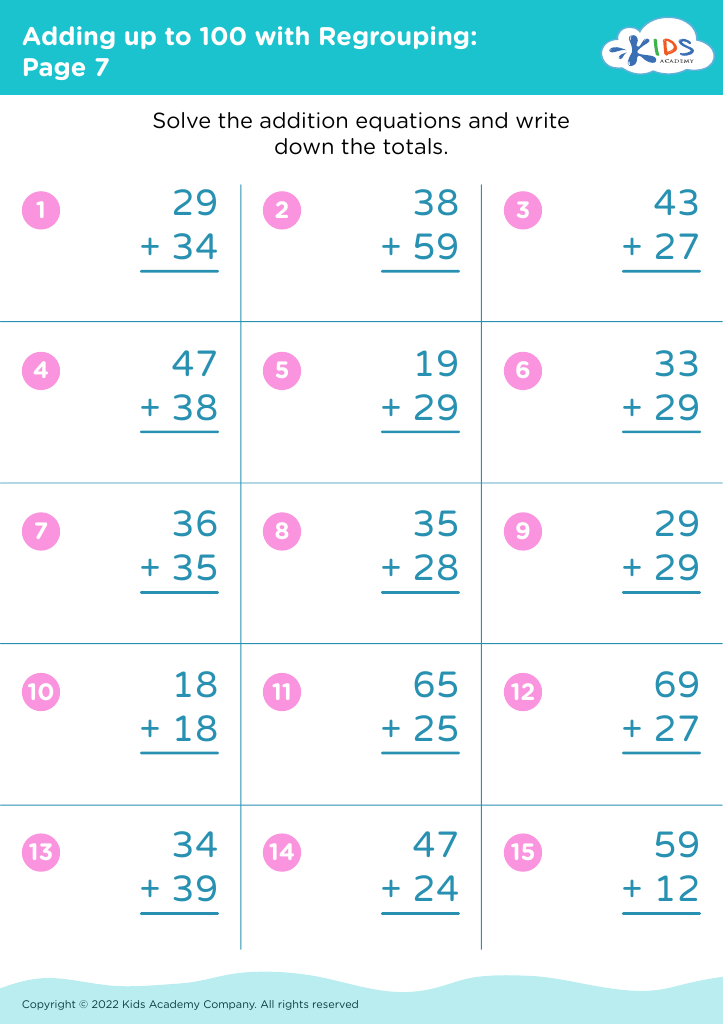
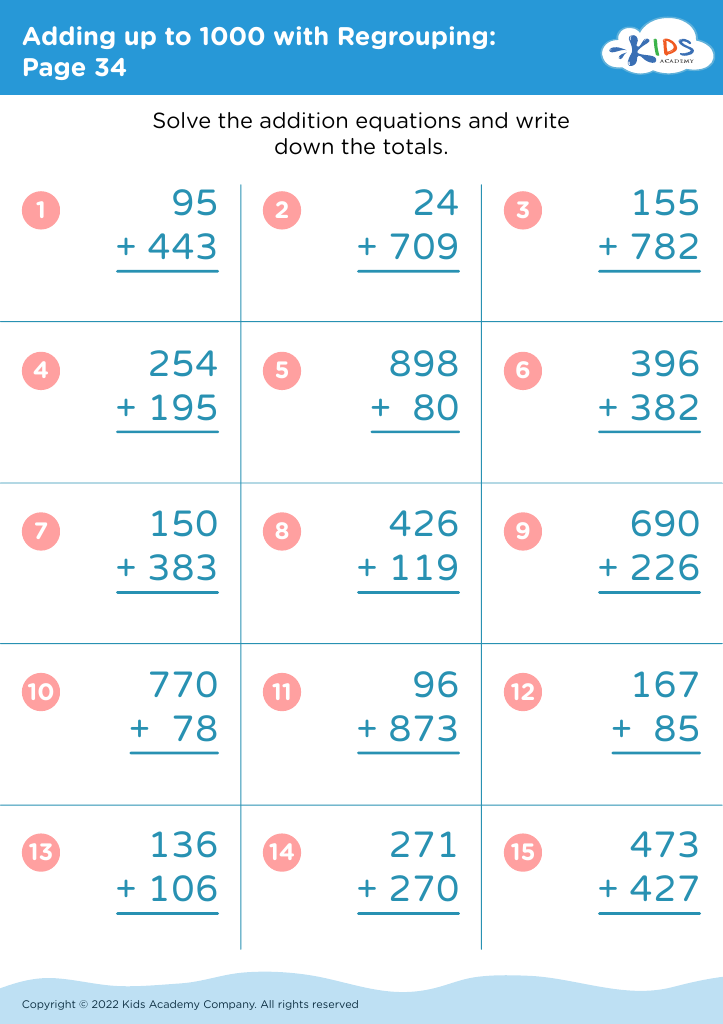
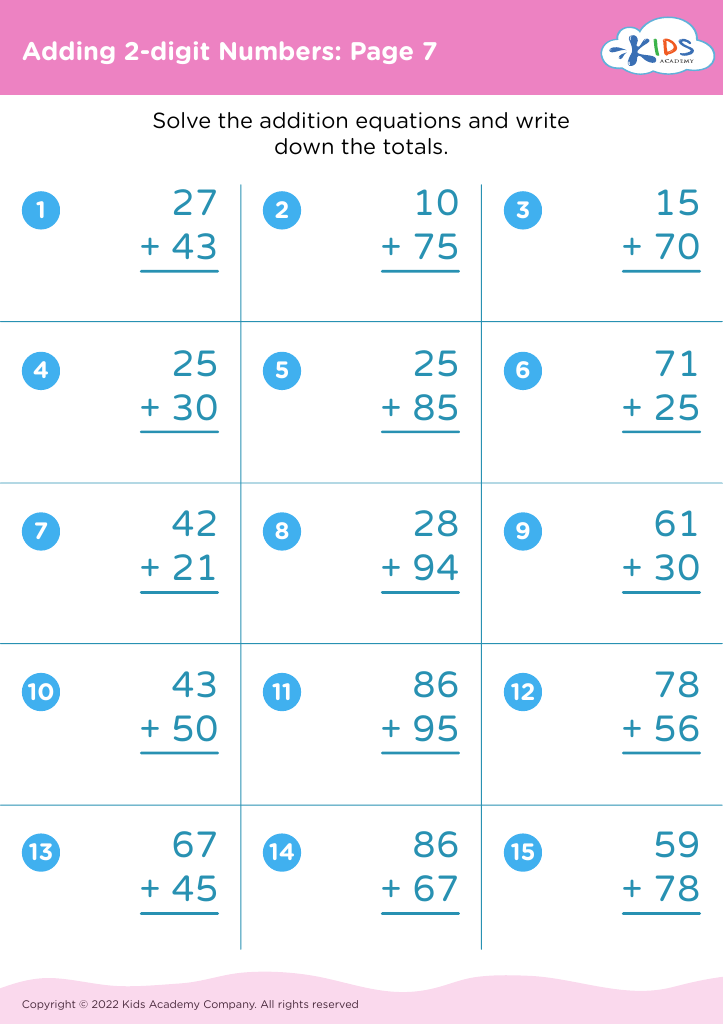
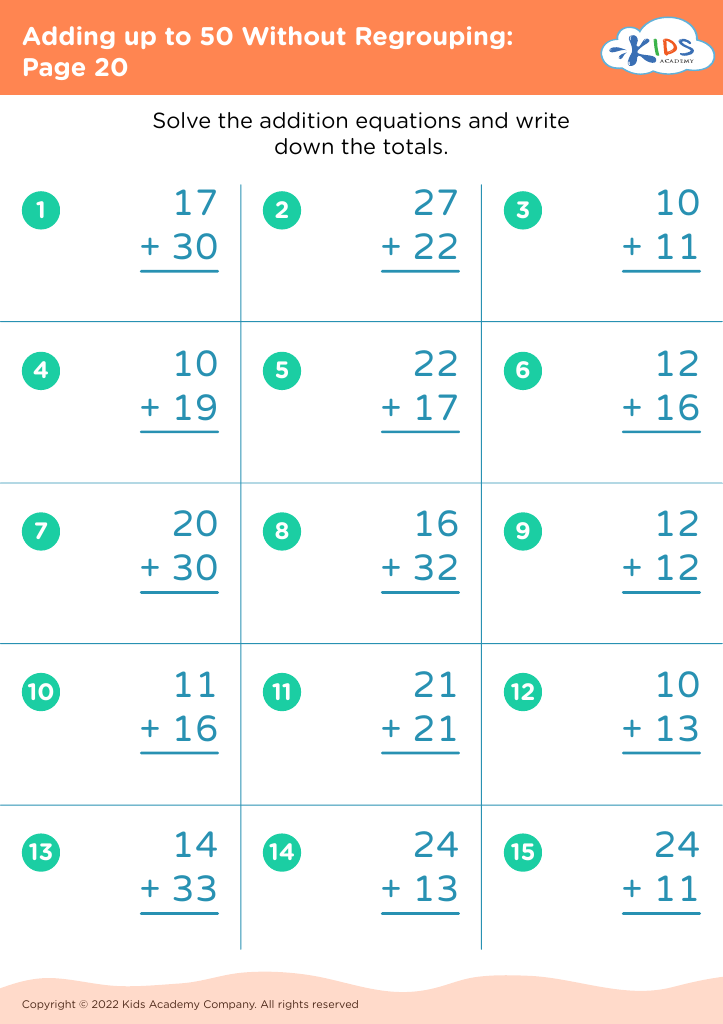
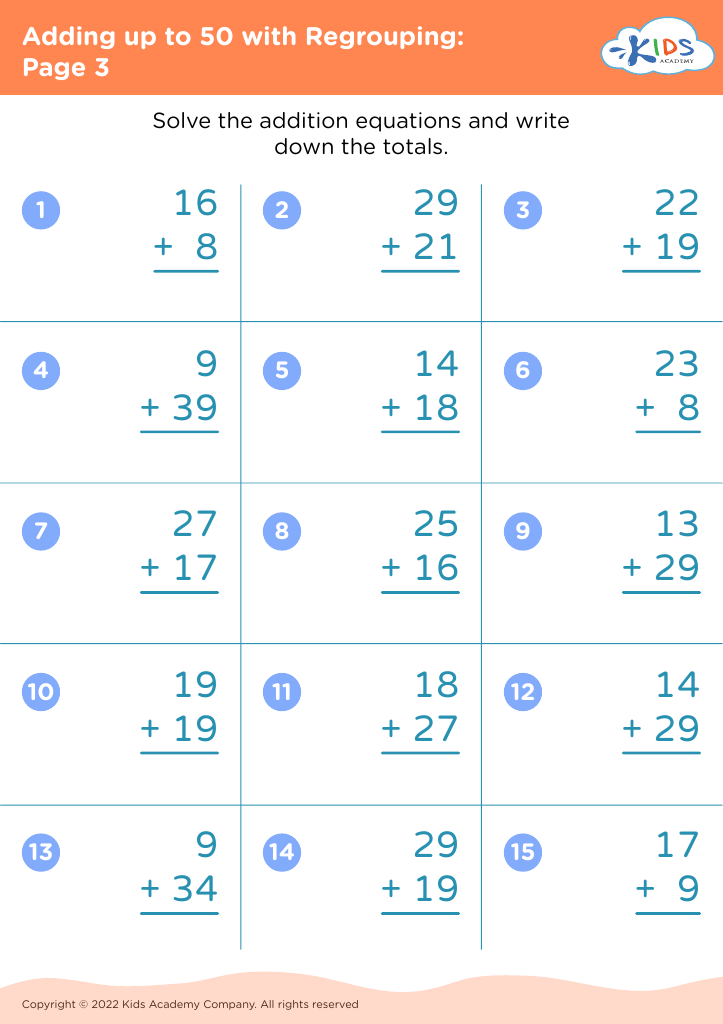
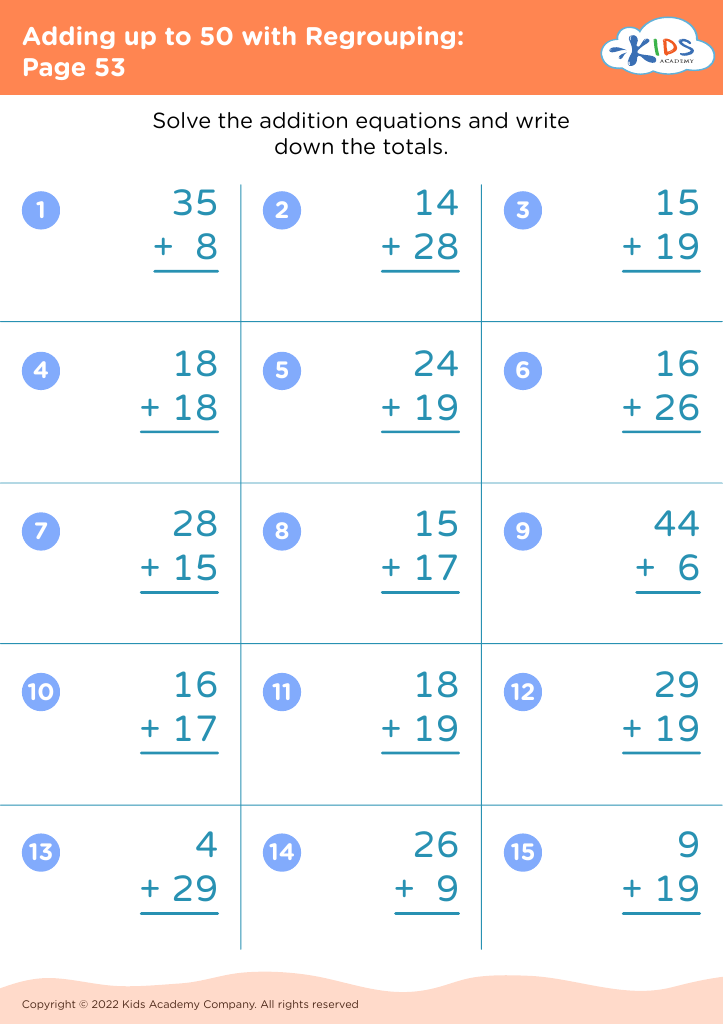








Parents and teachers should prioritize practice counting, addition, and subtraction for children aged 6-8 as these foundational skills are crucial for academic success. At this stage, children are developing their mathematical understanding, and solidifying their counting and basic operation skills lays the groundwork for more complex problem-solving in the future.
Counting skills help children understand number sequences, which is fundamental for grasping place value and eventually learning multiplication and division. Engaging in addition and subtraction enables them to manipulate numbers confidently, fosters a love for math, and encourages analytical thinking. These skills are not only essential in classroom learning but are also applicable in everyday life, such as shopping, cooking, and managing finances.
Additionally, practice in counting and basic operations enhances cognitive development, improves memory, and boosts concentration. Regular practice can also build a child’s confidence and reduce math anxiety, making them more willing to engage with new challenges. Involving parents in this practice can enhance the learning experience and strengthen family bonds through collaborative activities and games. Overall, attention to these fundamental skills can shape a child’s positive relationship with mathematics as they grow, supporting their educational journey.








