Color matching Addition Worksheets for Ages 6-8
3 filtered results
-
From - To
Discover the joy of learning with our Color Matching Addition Worksheets, perfect for ages 6-8! Designed by educational experts, these engaging worksheets blend basic addition practice with exciting color matching activities. Children will enhance their arithmetic skills while having fun matching colors and solving problems. Each worksheet promotes critical thinking, number recognition, and cognitive development. Ideal for both classroom and at-home practice, these resources make math an exciting adventure. Foster a love for learning and boost your child's confidence in math with our vibrant and interactive addition worksheets. Start their math journey today!
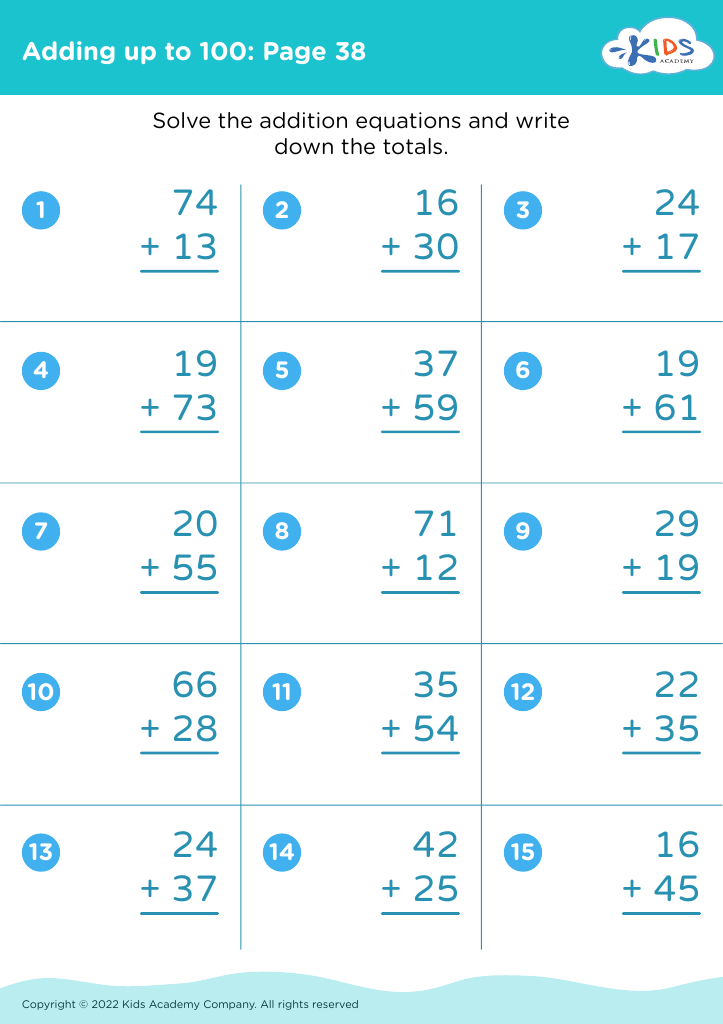
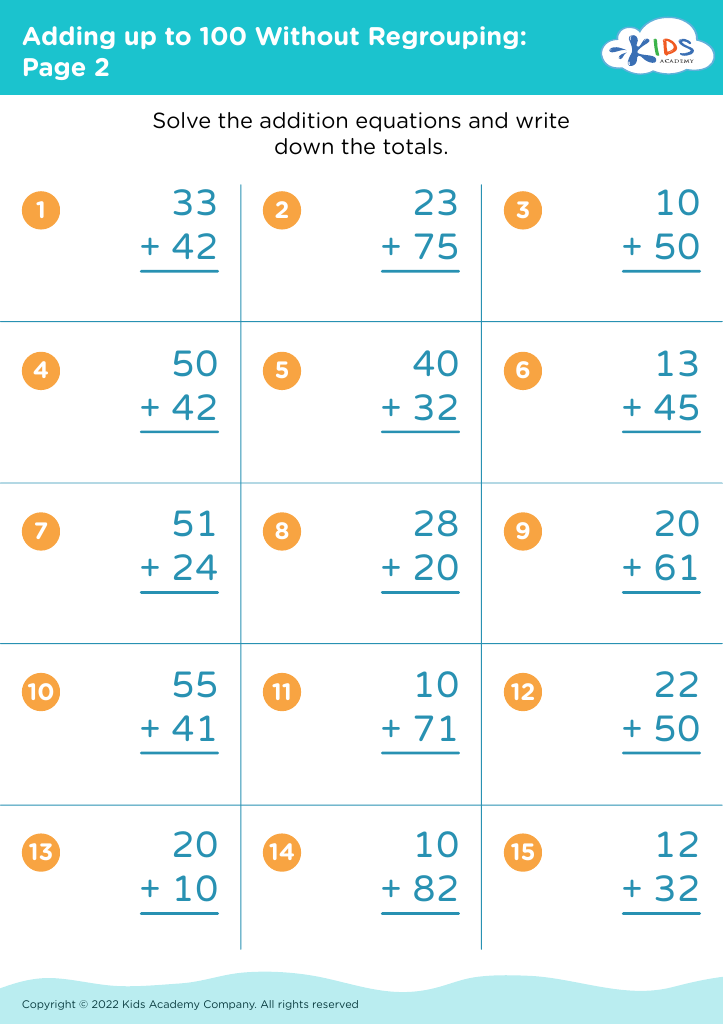
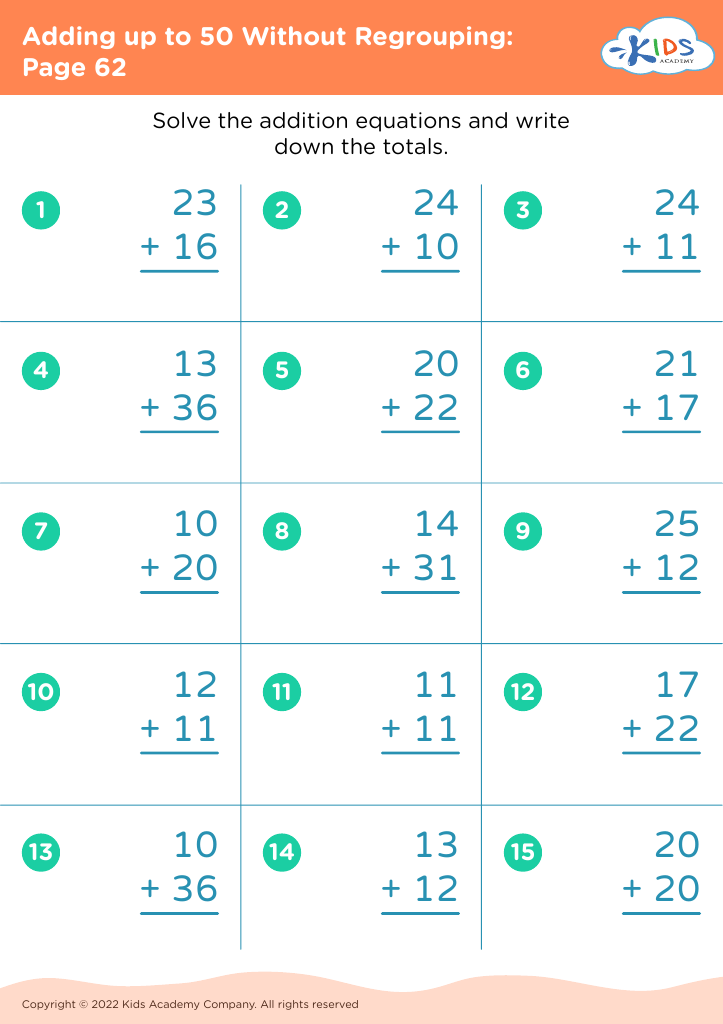








Color matching addition is an engaging and educational activity that parents and teachers should definitely care about for children ages 6-8. During these formative years, kids are developing foundational math skills crucial for their future academic success. By incorporating colors into math exercises, we make the learning process more engaging and accessible for young learners.
Firstly, using different colors helps to keep children visually stimulated and interested in the task. Associating mathematical concepts with visual aids can enhance their understanding and retention of addition principles. Bright, appealing colors can capture a child's attention in ways that traditional black-and-white worksheets might not.
Secondly, color matching addition reinforces multiple cognitive skills simultaneously. Kids refine their numerical comprehension while also improving their color recognition abilities. This dual engagement can enhance their problem-solving skills, encourage logical thinking, and foster a deeper, multi-sensory understanding of addition.
Moreover, these activities often incorporate elements of play, which is essential at this age. Playing interactive games or engaging in colorful exercises makes learning seem like an exciting adventure rather than a mundane task. This positive association with math can form the foundation for a lifelong interest and confidence in the subject.
In summary, color matching addition is not just about making learning fun; it strategically boosts cognitive and visual development and fosters a positive attitude toward learning foundational math concepts.








