Fraction Addition Addition Worksheets for Ages 6-8
14 filtered results
-
From - To
Explore our engaging Fraction Addition Worksheets designed specifically for children aged 6-8! These resources provide a fun and interactive way for young learners to master the concept of adding fractions. With colorful illustrations and age-appropriate problems, students will build essential math skills while boosting their confidence. Our worksheets feature step-by-step instructions to guide children through each challenge, ensuring a solid understanding of fraction addition. Perfect for classroom use or at-home practice, these activities cater to different learning styles and help nurture a love for math. Download our worksheets today and watch your child become a fraction addition pro!
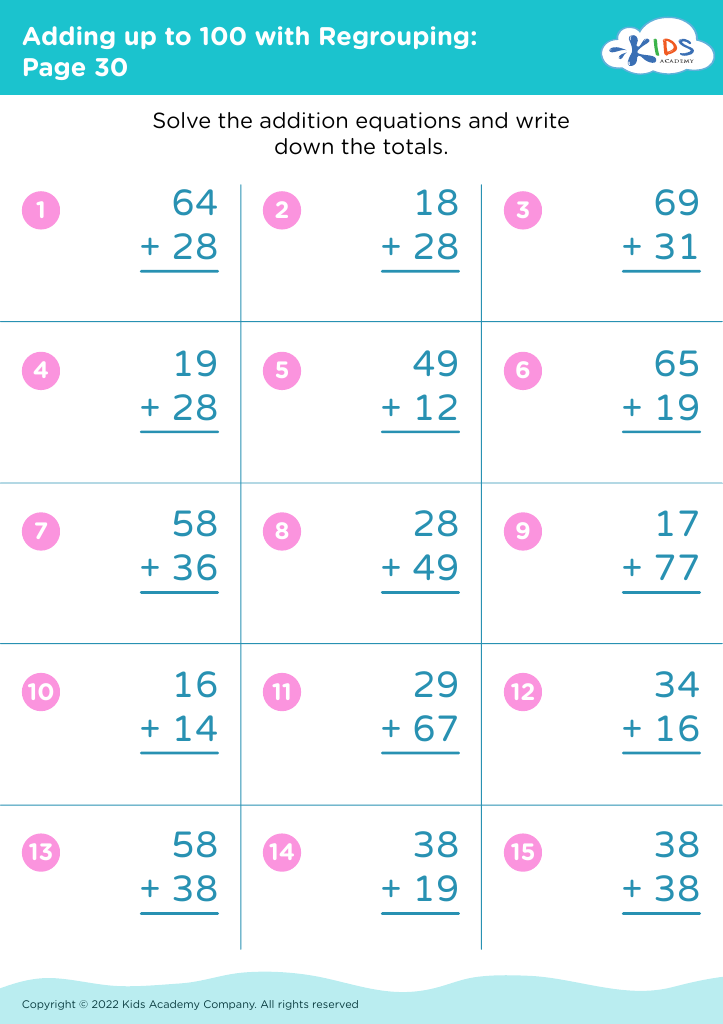
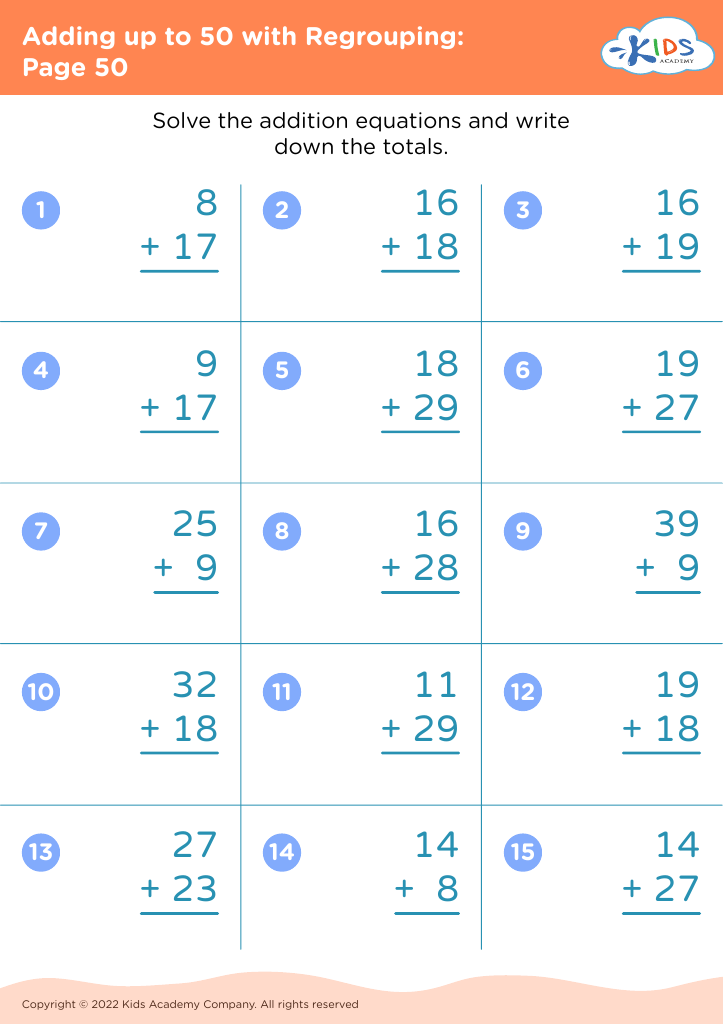
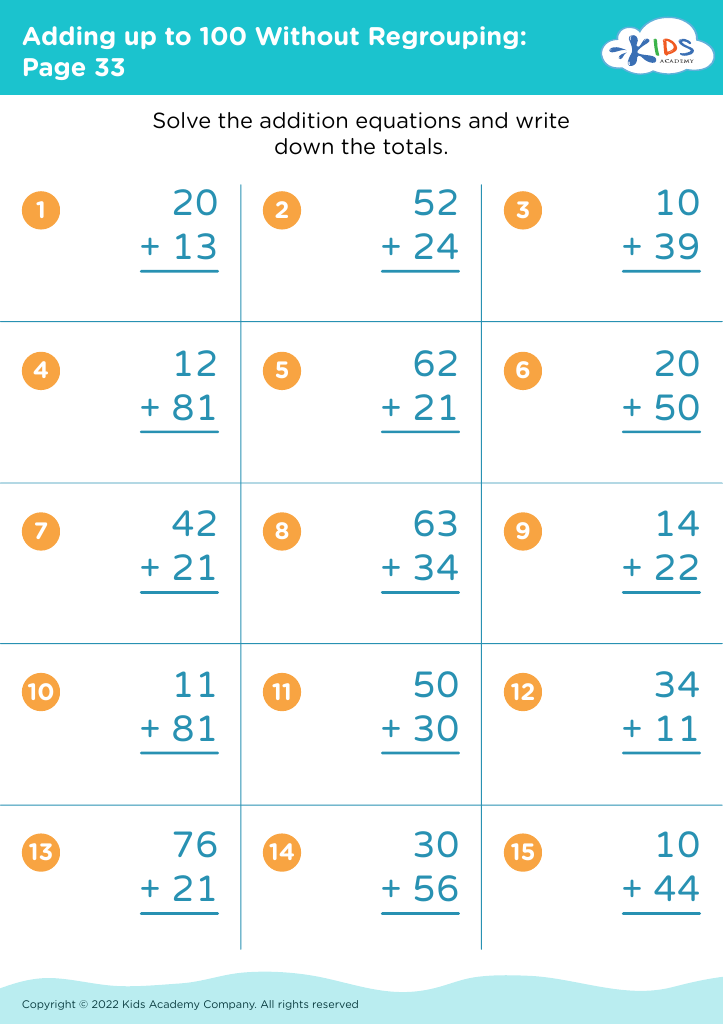
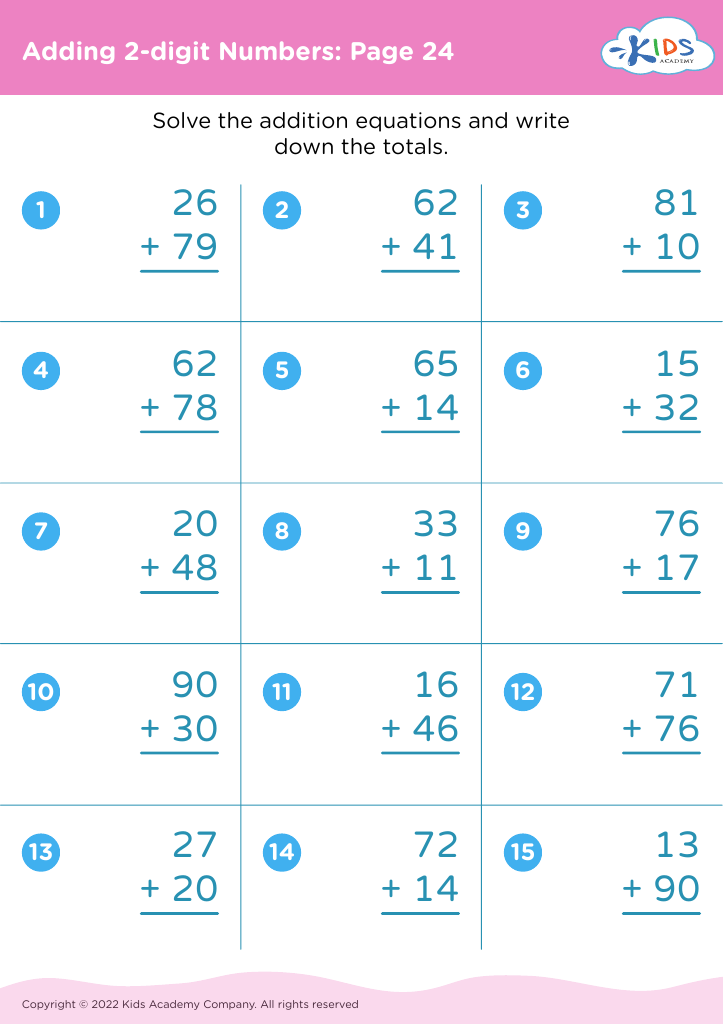








Fraction addition is a vital mathematical concept for children aged 6-8, laying the groundwork for their future understanding of math. At this age, kids are developing critical thinking and problem-solving skills, and concepts like fractions enhance those abilities. Parents and teachers should care about teaching fraction addition because it introduces children to the idea of parts of a whole, which is essential in everyday scenarios—like cooking or sharing.
Mastering fraction addition at a young age helps children build confidence in math, making it easier for them to tackle more complex topics in the future, such as mixed numbers and decimals. Moreover, it fosters logical reasoning and numerical fluency early on, both of which are critical for their overall academic success.
Additionally, engaging with fraction addition encourages collaborative learning experiences, enabling children to work in groups, share ideas, and solve problems collectively, which boosts their social skills. Ultimately, fostering a strong foundation in fraction addition can contribute to a lifelong appreciation of math, making parents and teachers fundamental allies in nurturing these essential skills. The ability to understand fractions is not only academically beneficial but also essential for real-life applications, making it a priority in early education.








