Filters

42 filtered results

Clear all filters
Favorites
With answer key
Interactive

42 filtered results

Difficulty Level

Grade


Check out this FREE Trial Lesson on Addition for age 6-8!

My Family

Favorites
With answer key
Interactive
  • 6-8
  • Improve counting skills
  • Addition
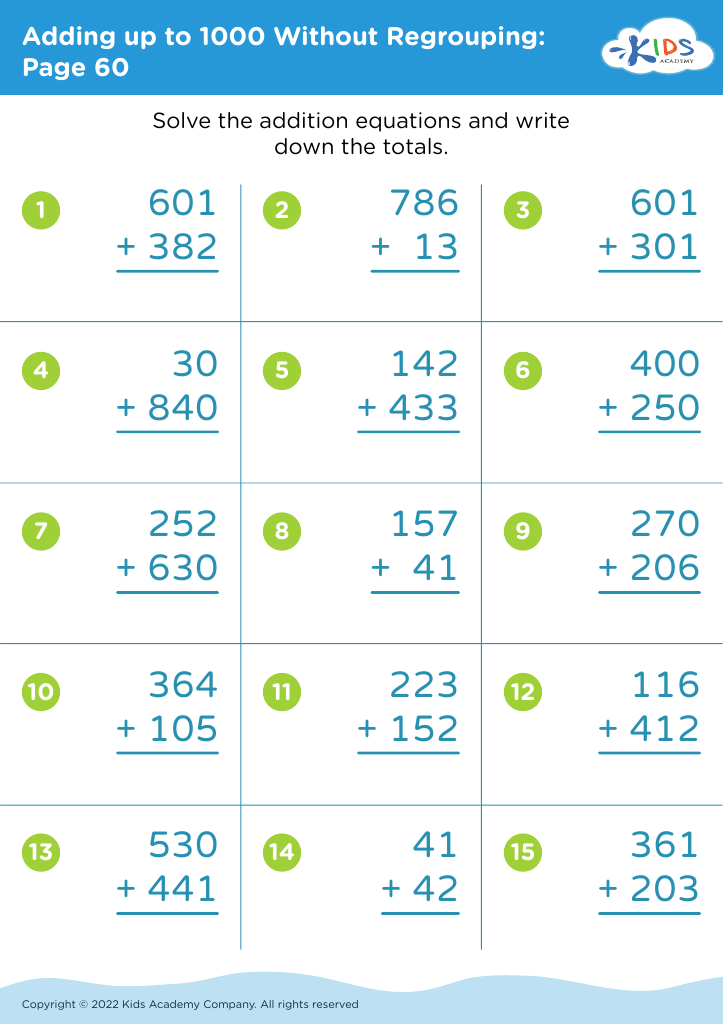
Adding up to 1000 Without Regrouping: Page 60
Worksheet
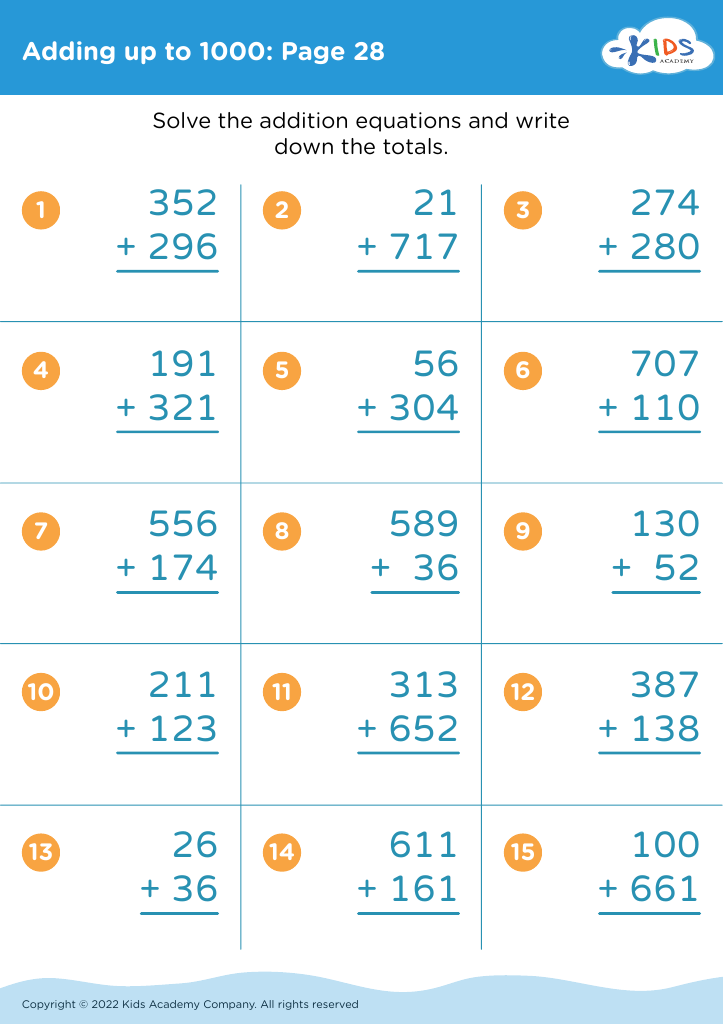
Adding up to 1000: Page 28

Adding up to 1000: Page 28

Adding up to 1000: Page 28
Worksheet
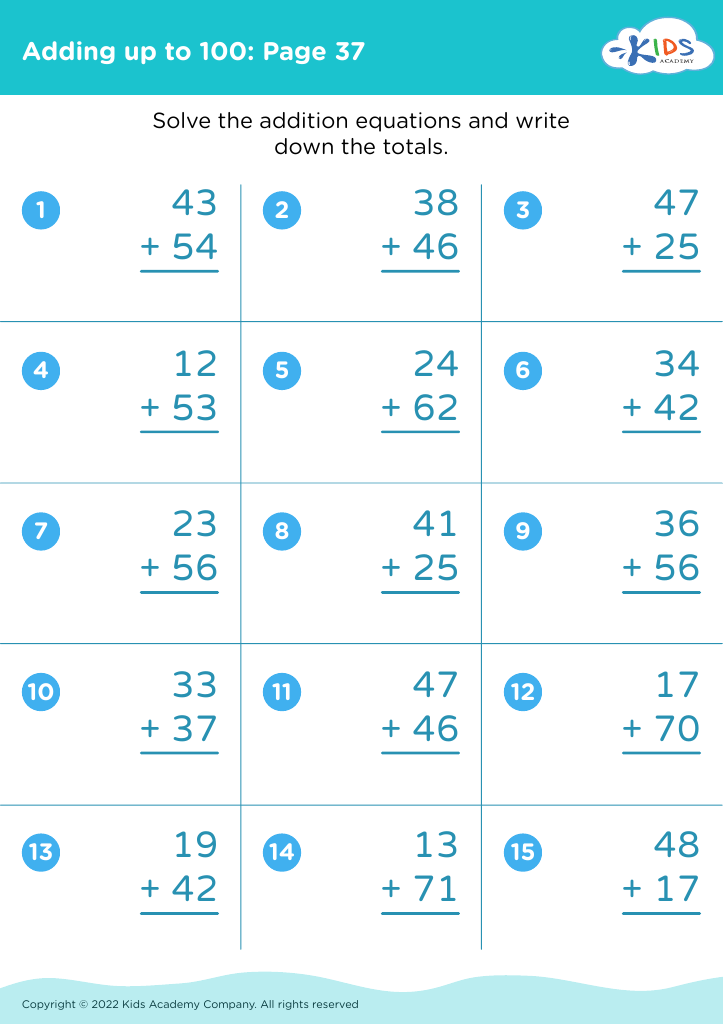
Adding up to 100: Page 37

Adding up to 100: Page 37

Adding up to 100: Page 37
Worksheet
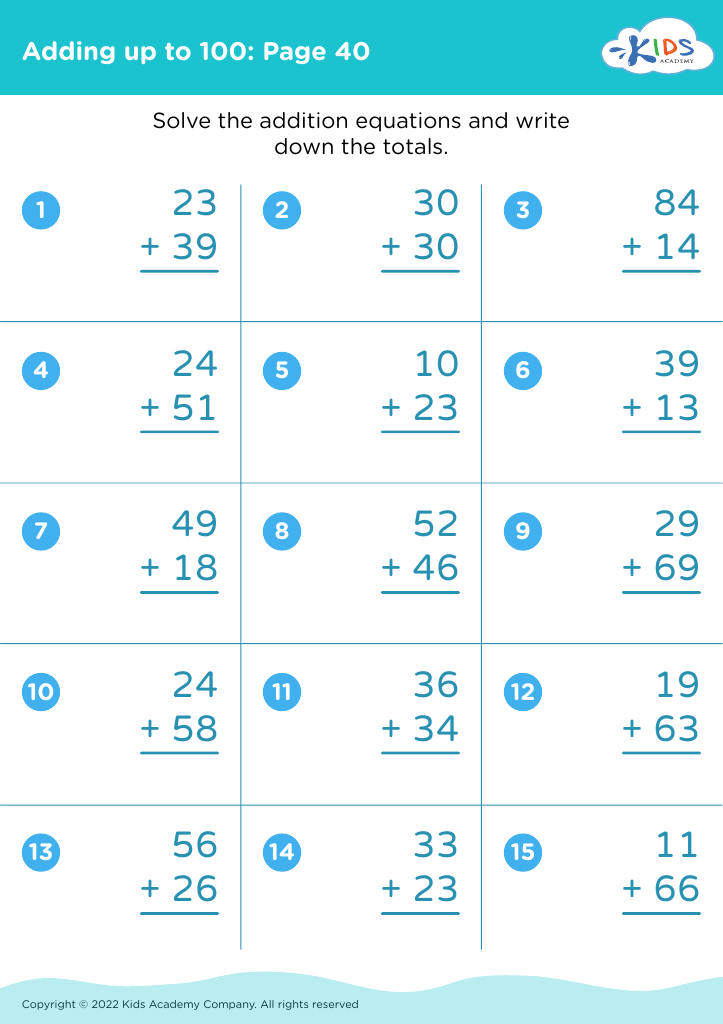
Adding up to 100: Page 40

Adding up to 100: Page 40

Adding up to 100: Page 40
Worksheet
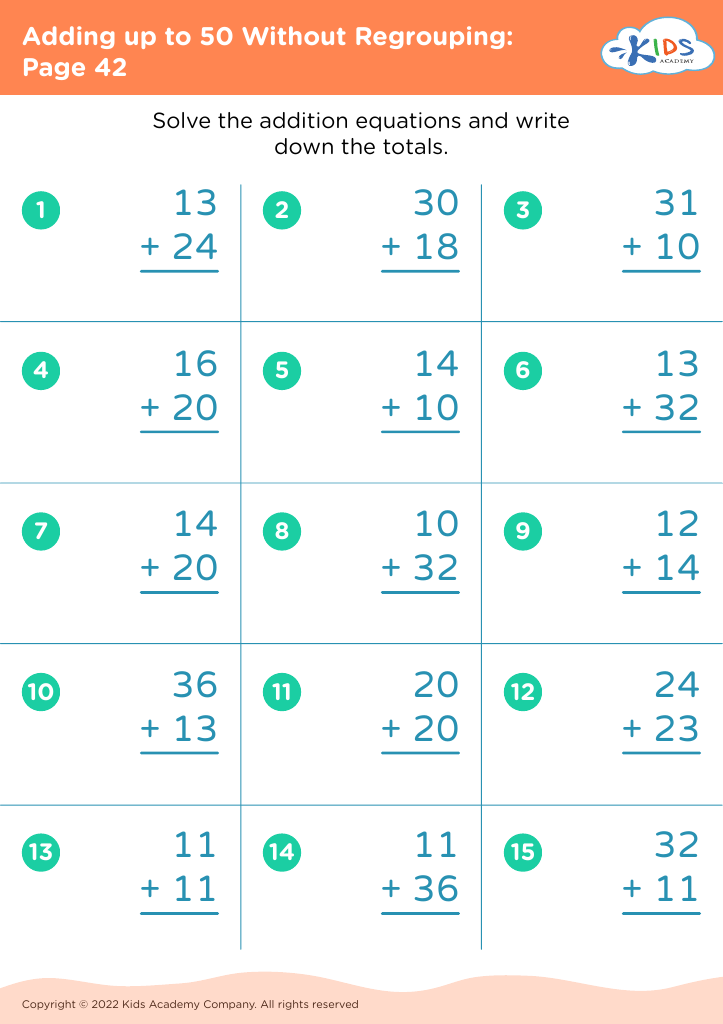
Adding up to 50 Without Regrouping: Page 42
Worksheet
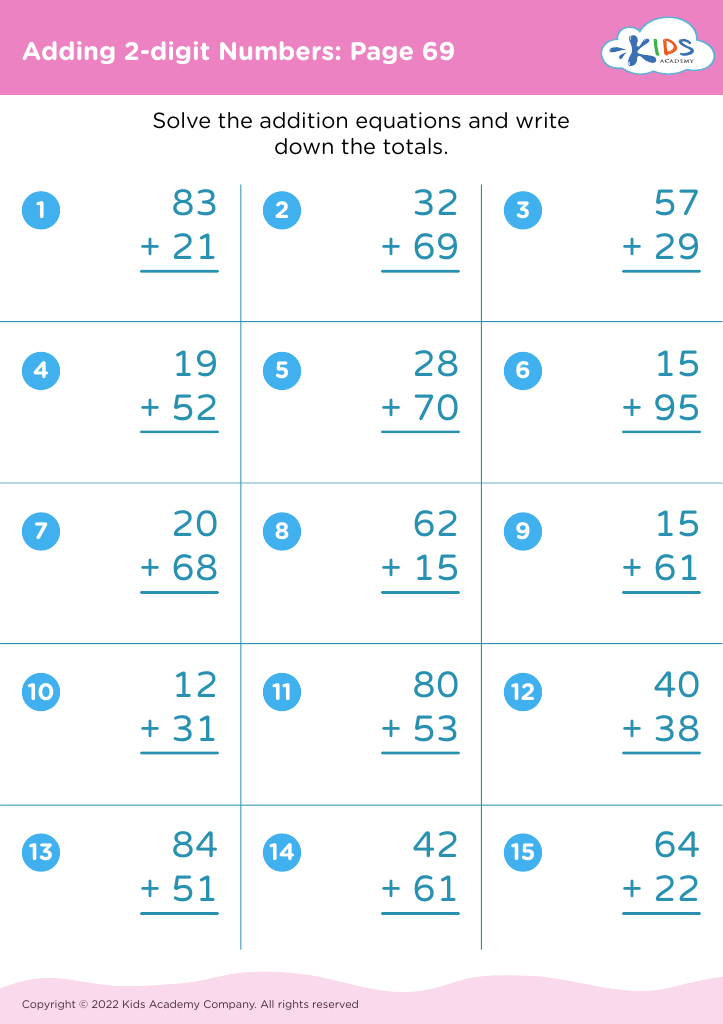
Adding 2-digit Numbers: Page 69

Adding 2-digit Numbers: Page 69

Adding 2-digit Numbers: Page 69
Worksheet
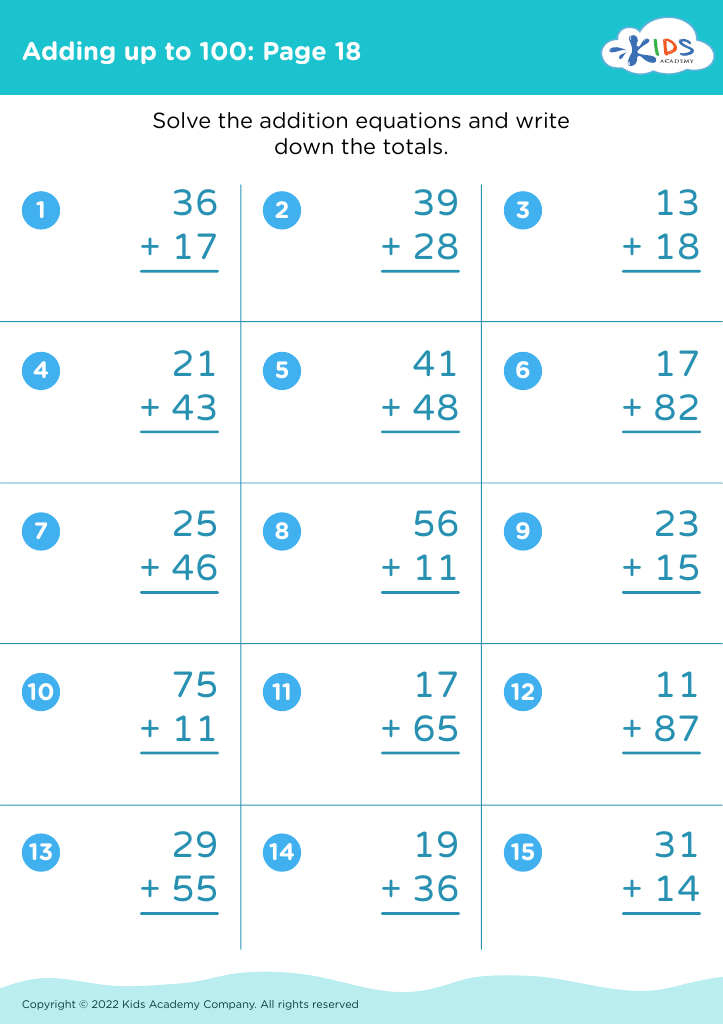
Adding up to 100: Page 18

Adding up to 100: Page 18

Adding up to 100: Page 18
Worksheet
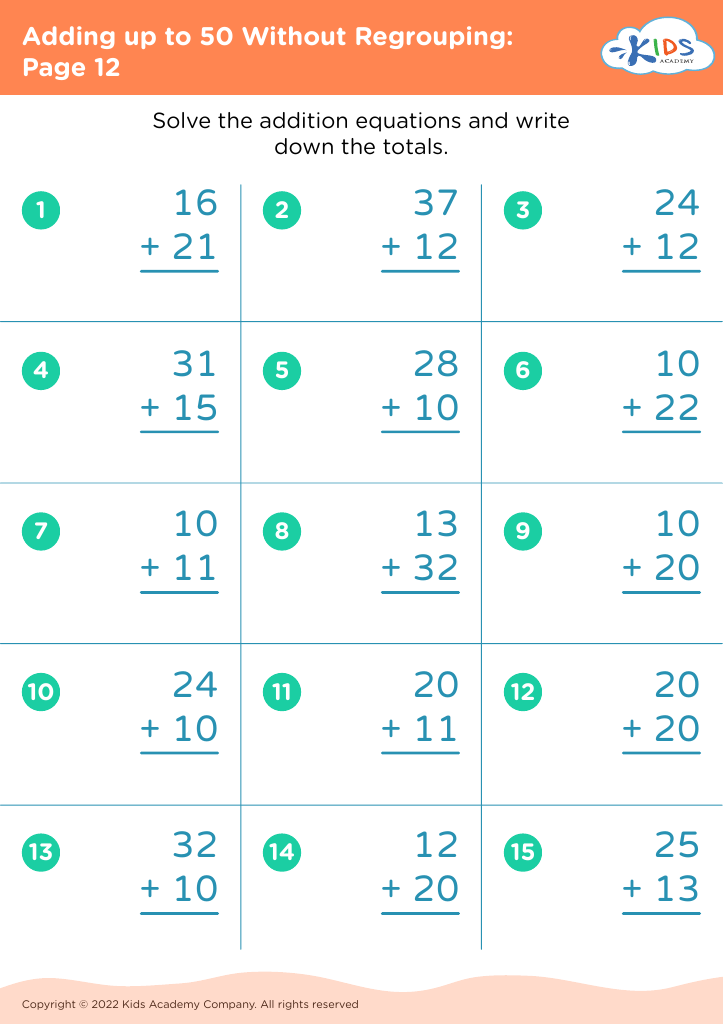
Adding up to 50 Without Regrouping: Page 12
Worksheet
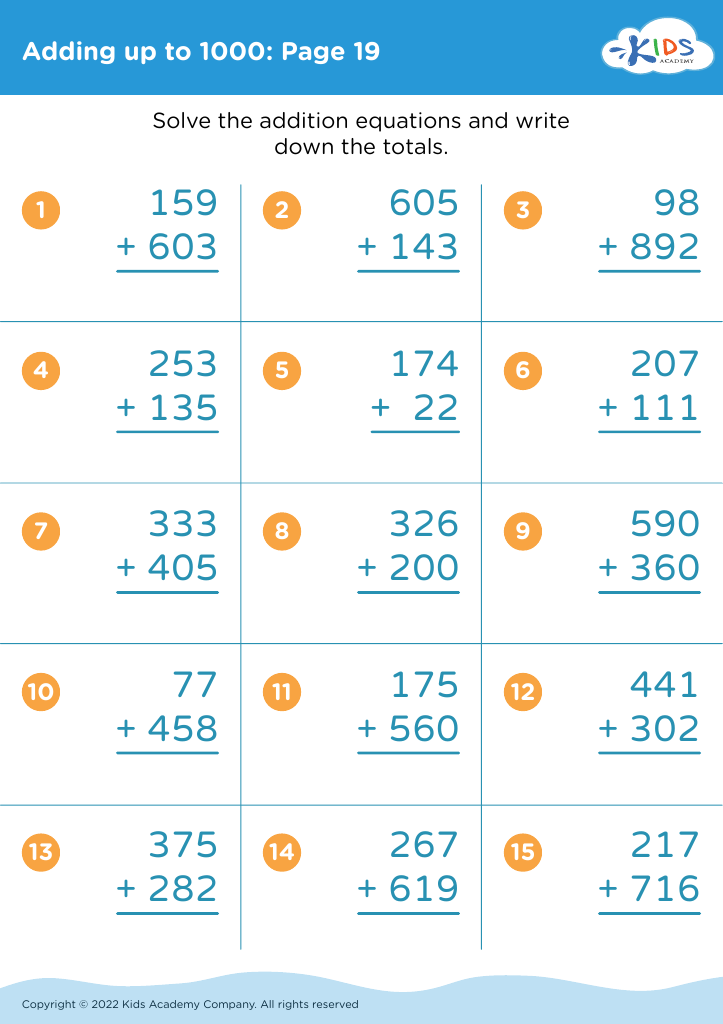
Adding up to 1000: Page 19

Adding up to 1000: Page 19

Adding up to 1000: Page 19
Worksheet
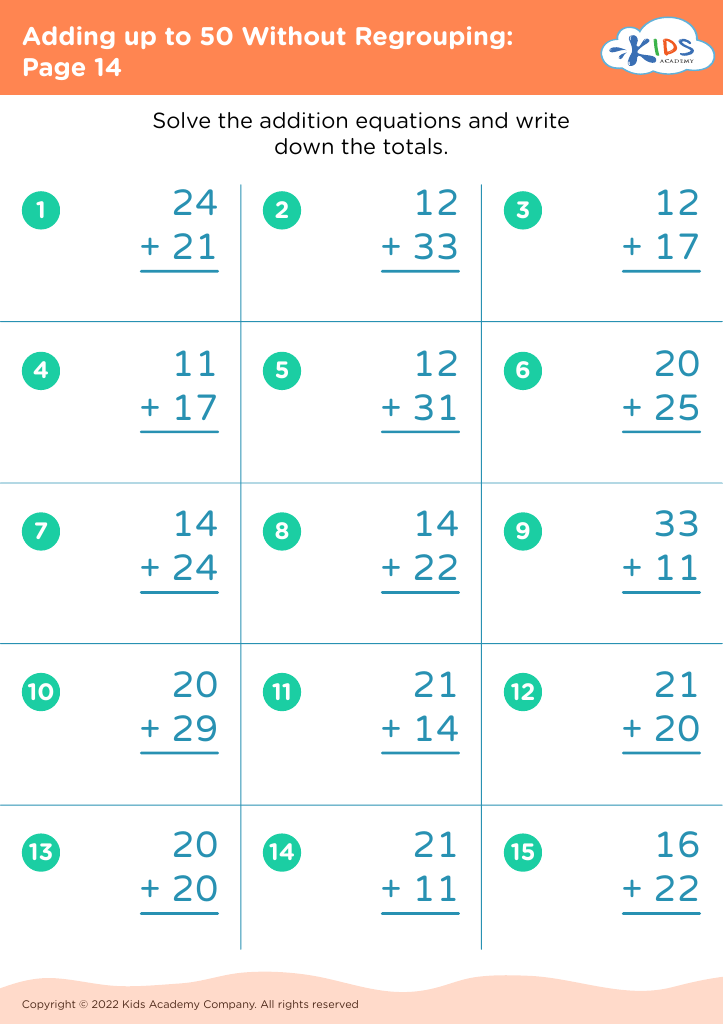
Adding up to 50 Without Regrouping: Page 14
Worksheet
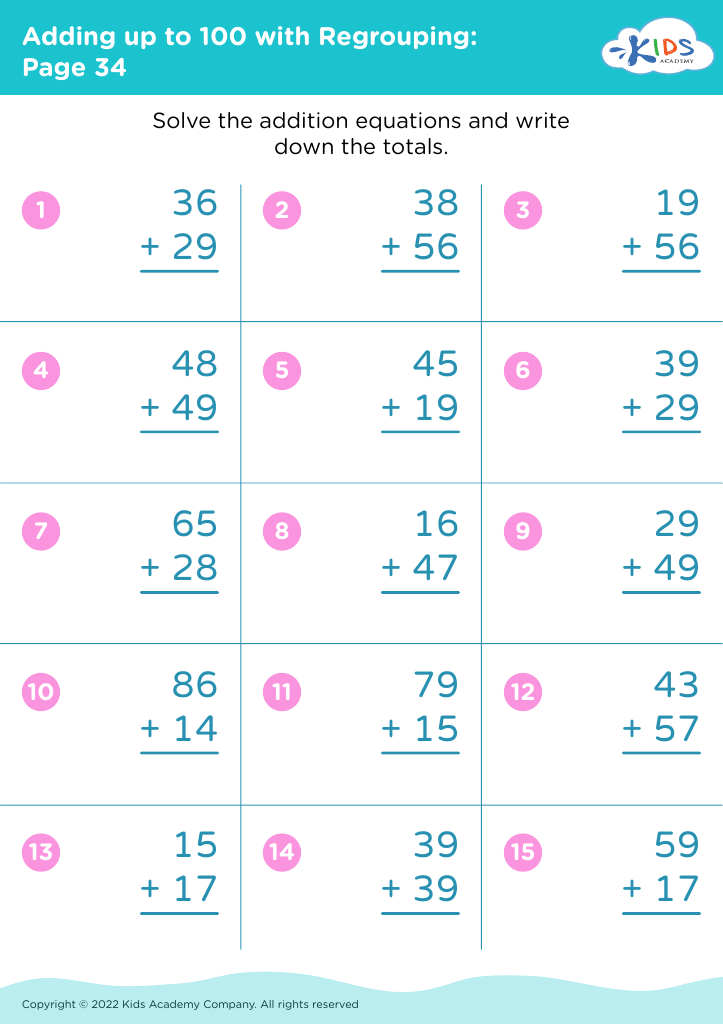
Adding up to 100 with Regrouping: Page 34
Worksheet
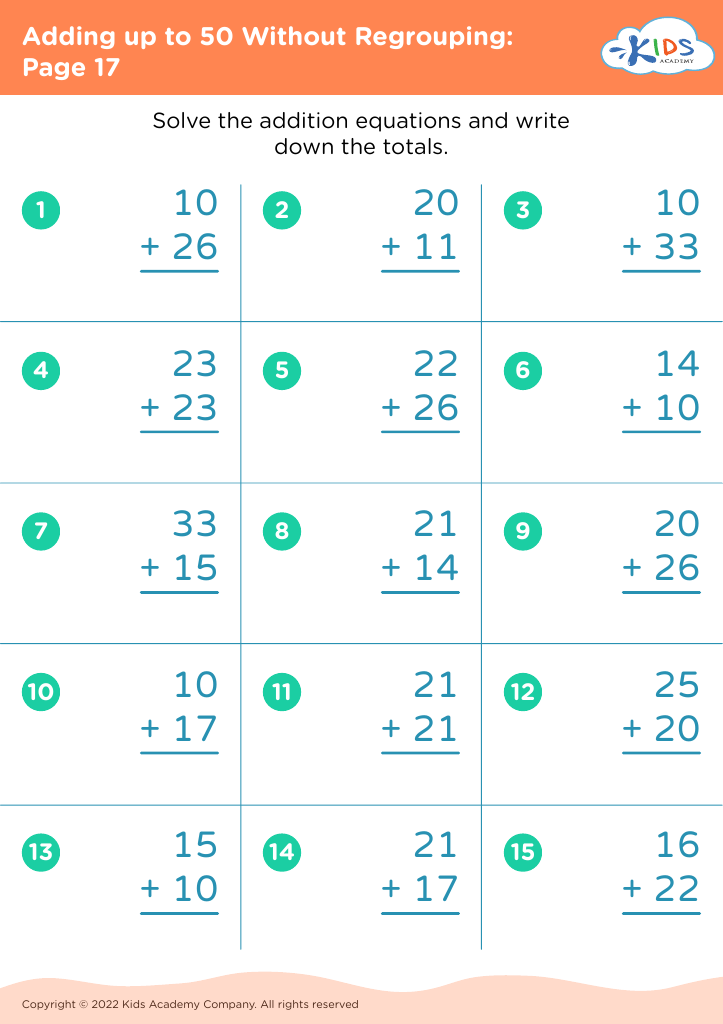
Adding up to 50 Without Regrouping: Page 17
Worksheet
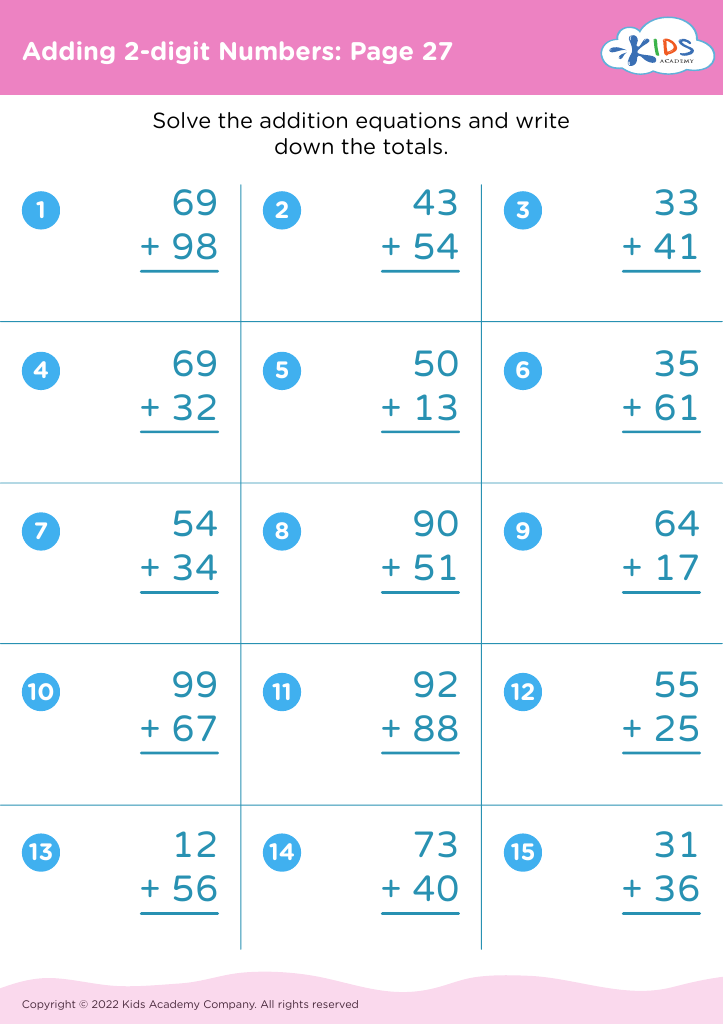
Adding 2-digit Numbers: Page 27

Adding 2-digit Numbers: Page 27

Adding 2-digit Numbers: Page 27
Worksheet
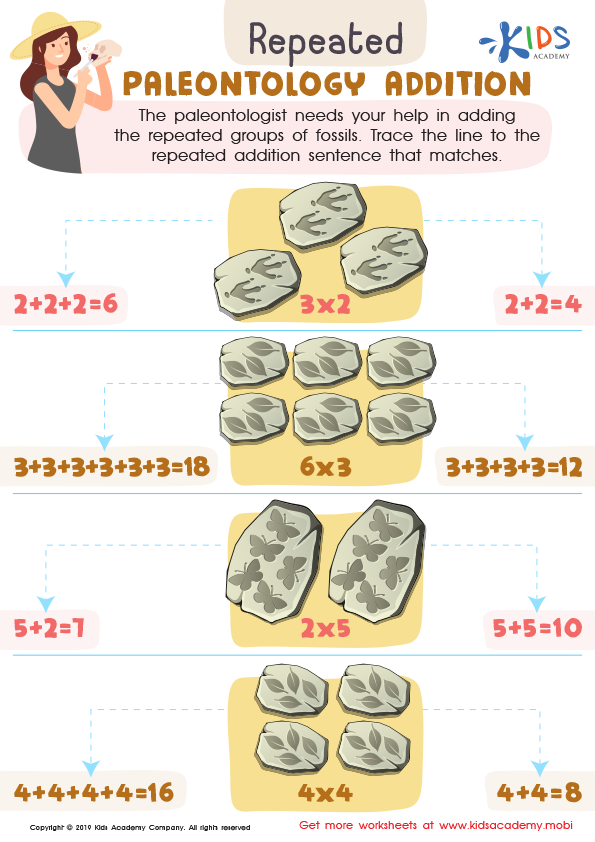
Repeated Archaeology Addition Worksheet

Repeated Archaeology Addition Worksheet

Does your child have dreams for the future? Help them explore the different professions available to them and what each entails. This traceable sheet, featuring an archaeologist completing their work, will show your kid how to find the repeated addition sentence that matches the line. Hold their hand as they complete the activity, inspiring them to pursue their big dreams!
Repeated Archaeology Addition Worksheet
Worksheet
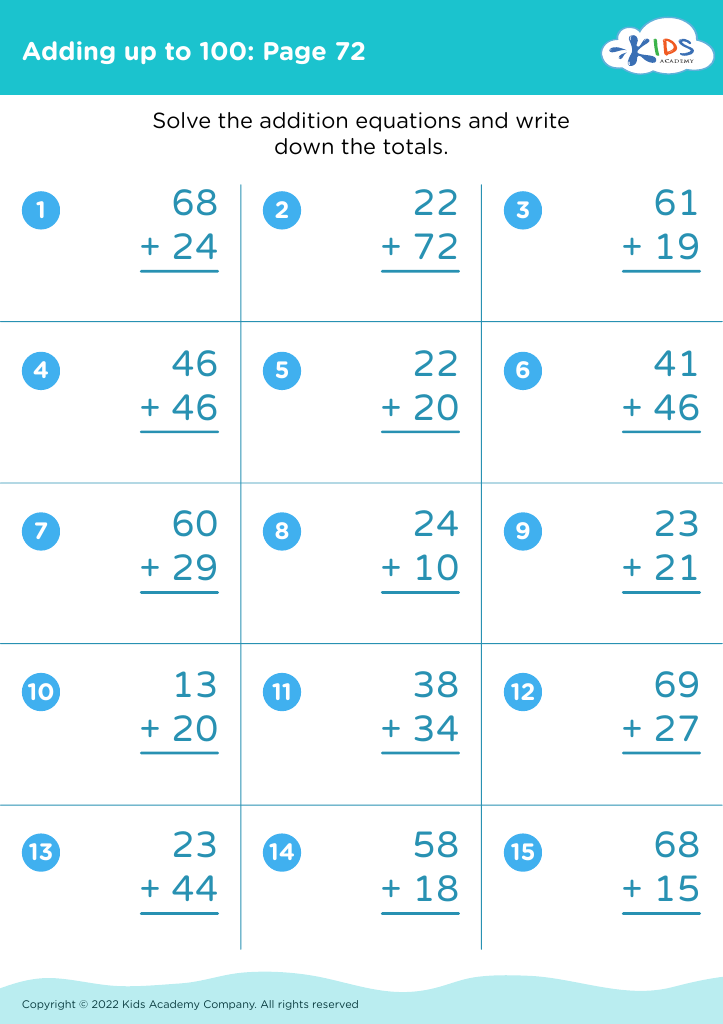
Adding up to 100: Page 72

Adding up to 100: Page 72

Adding up to 100: Page 72
Worksheet
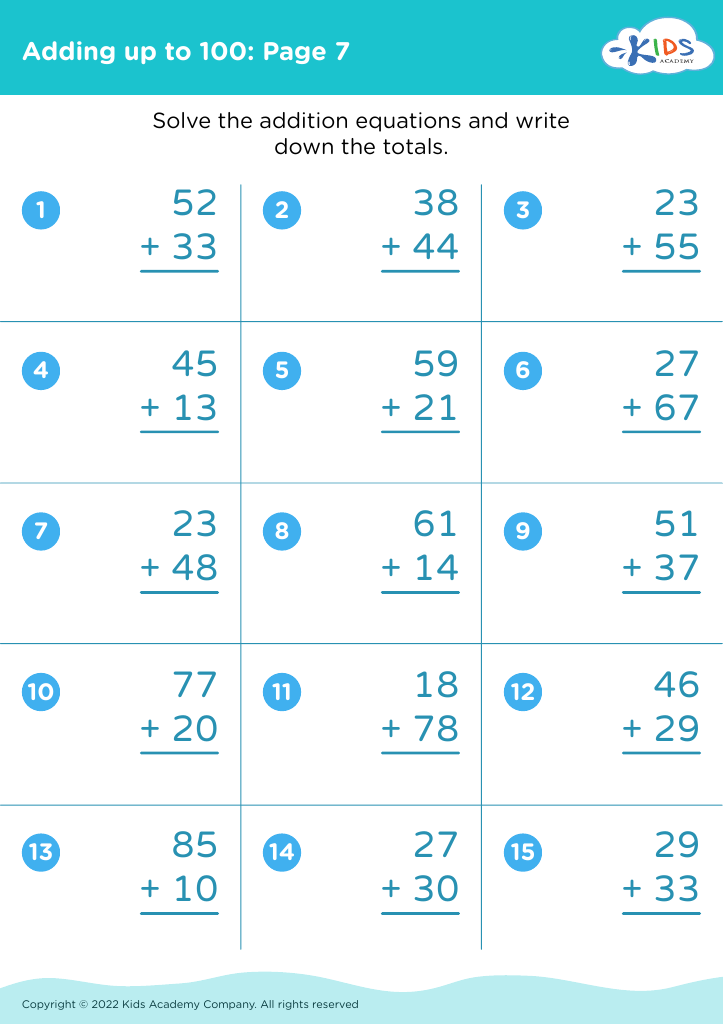
Adding up to 100: Page 7

Adding up to 100: Page 7

Adding up to 100: Page 7
Worksheet
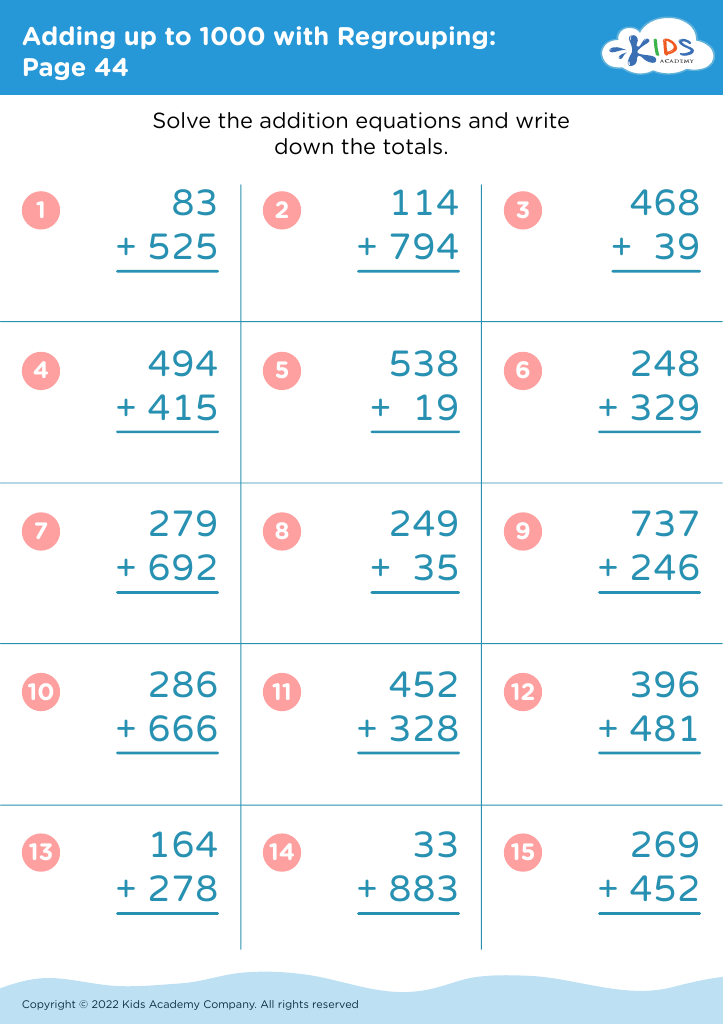
Adding up to 1000 with Regrouping: Page 44
Worksheet
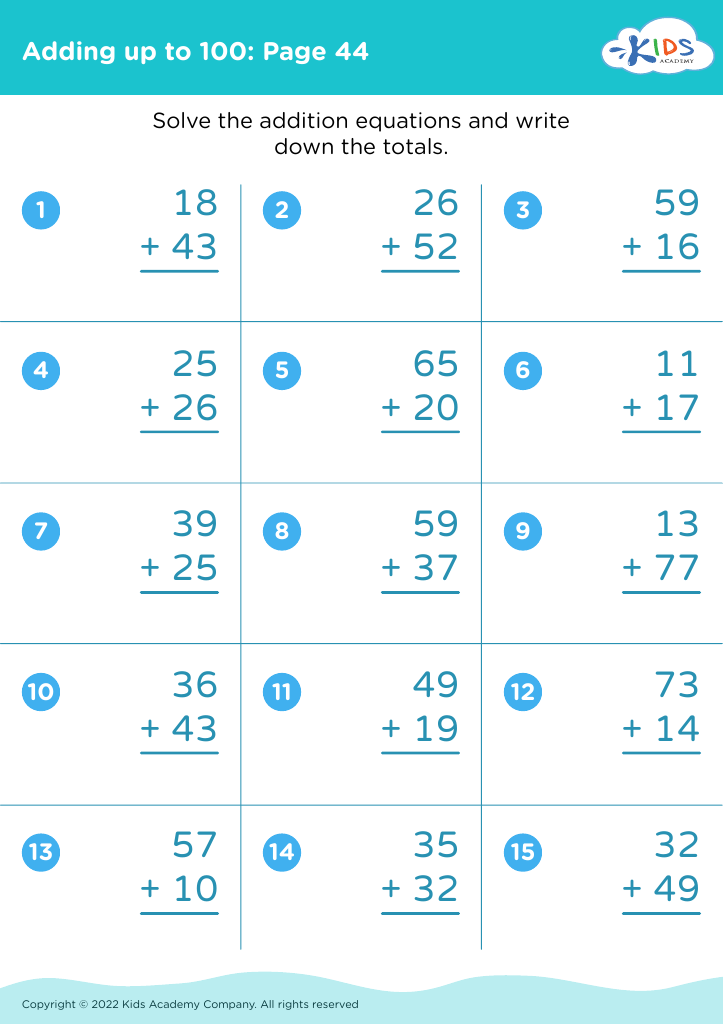
Adding up to 100: Page 44

Adding up to 100: Page 44

Adding up to 100: Page 44
Worksheet


Parents and teachers should prioritize improving counting skills and addition for children aged 6-8 because these foundational math concepts are crucial for academic success and daily life. Mastery of counting lays the groundwork for understanding number sense, which is fundamental in all areas of mathematics. As children in this age group transition from basic counting to more complex addition, a strong grasp of these skills enables them to tackle larger numbers and develop problem-solving abilities.

Improving counting and addition skills in early learners also fosters cognitive development, encouraging logical thinking, pattern recognition, and spatial awareness. Moreover, knowing that children build confidence and self-efficacy when they successfully understand these concepts can have a lasting positive impact on their attitudes towards math.

Additionally, as math is integral to various fields and careers, instilling strong counting and addition skills prepares children for future learning opportunities. Engaged parents and teachers can create enriching environments, integrating playful learning and real-life contexts, making math enjoyable and relatable. When young children achieve proficiency in counting and addition, they are more likely to excel in later grades, ultimately impacting their academic trajectory and lifelong attitudes towards learning.