
Improve math skills Addition Worksheets for Ages 6-8
17 filtered results
Difficulty Level
Grade
Age
-
From - To
Subject
Activity
Standards
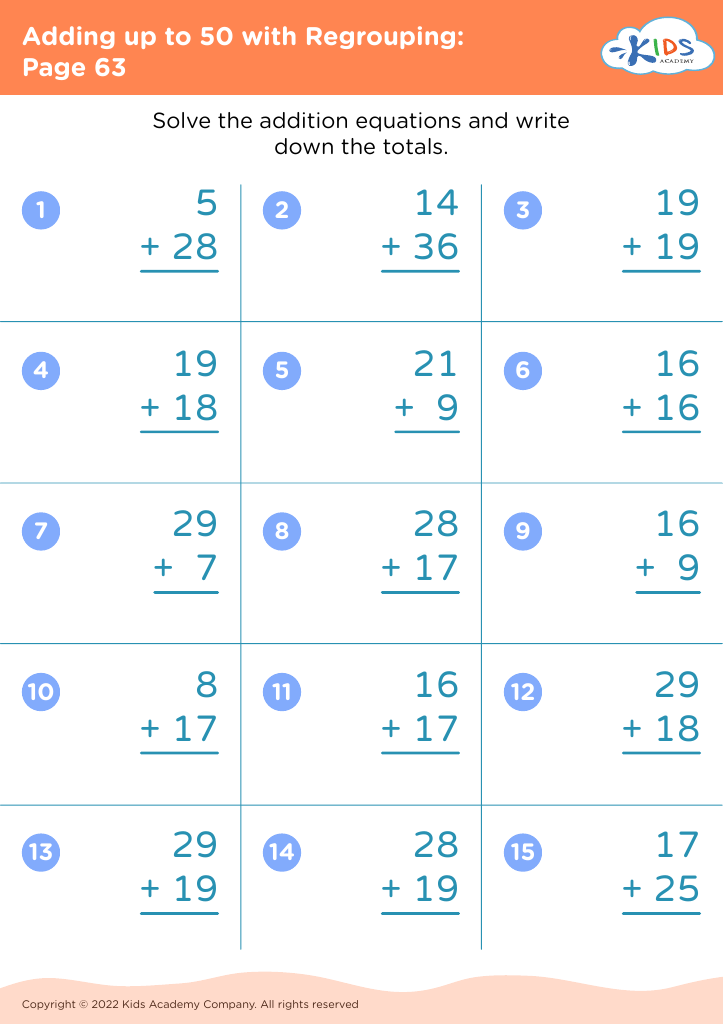
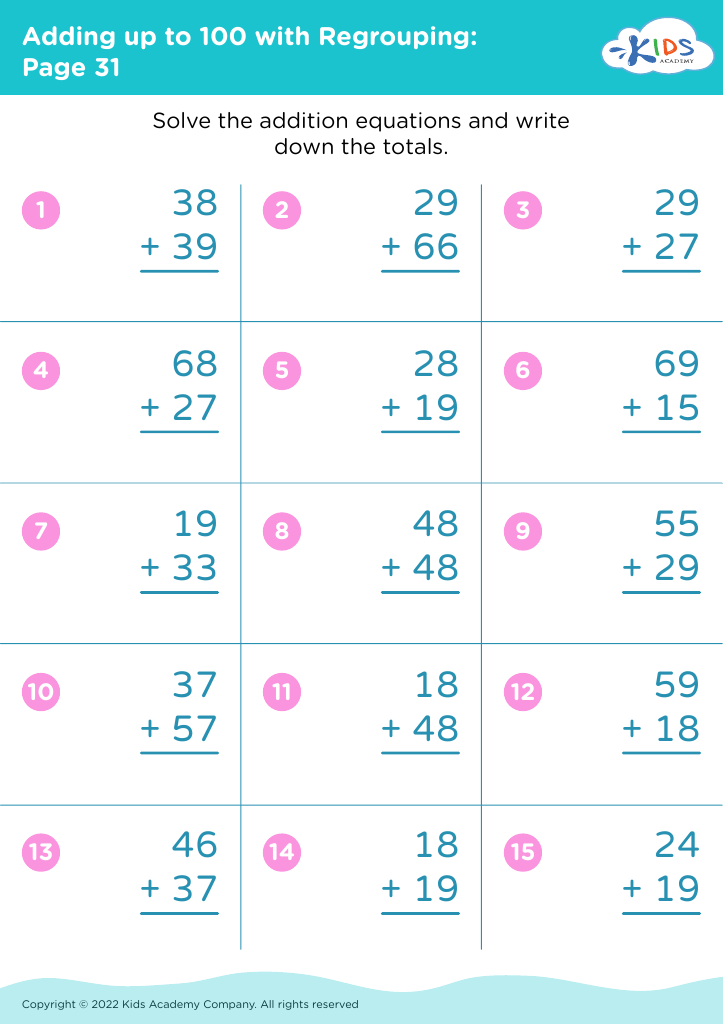
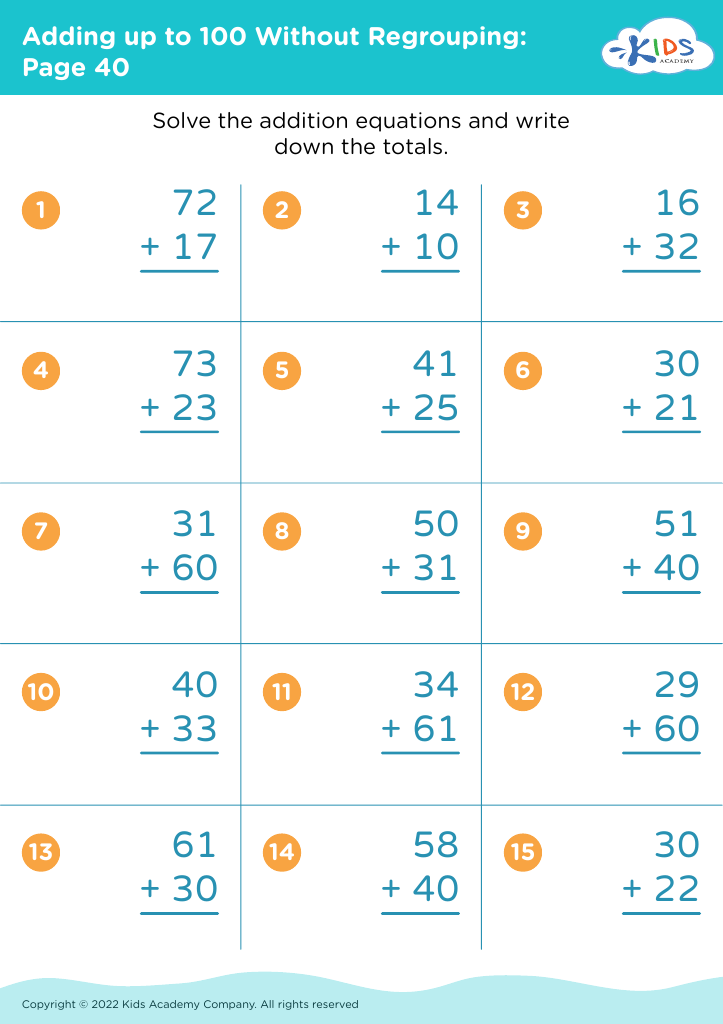
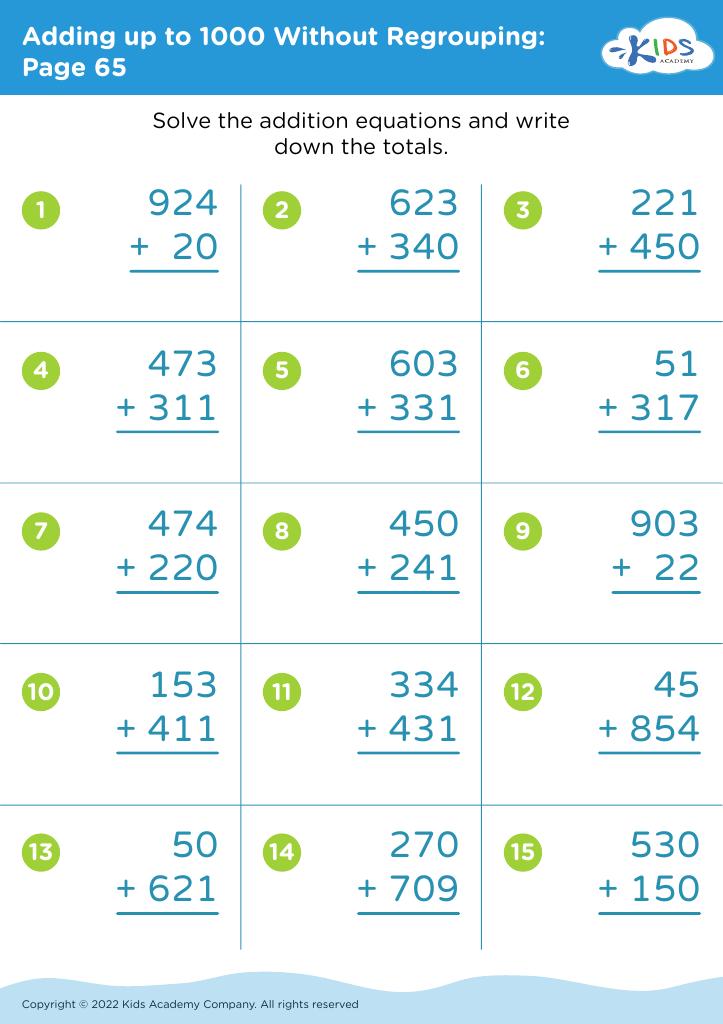
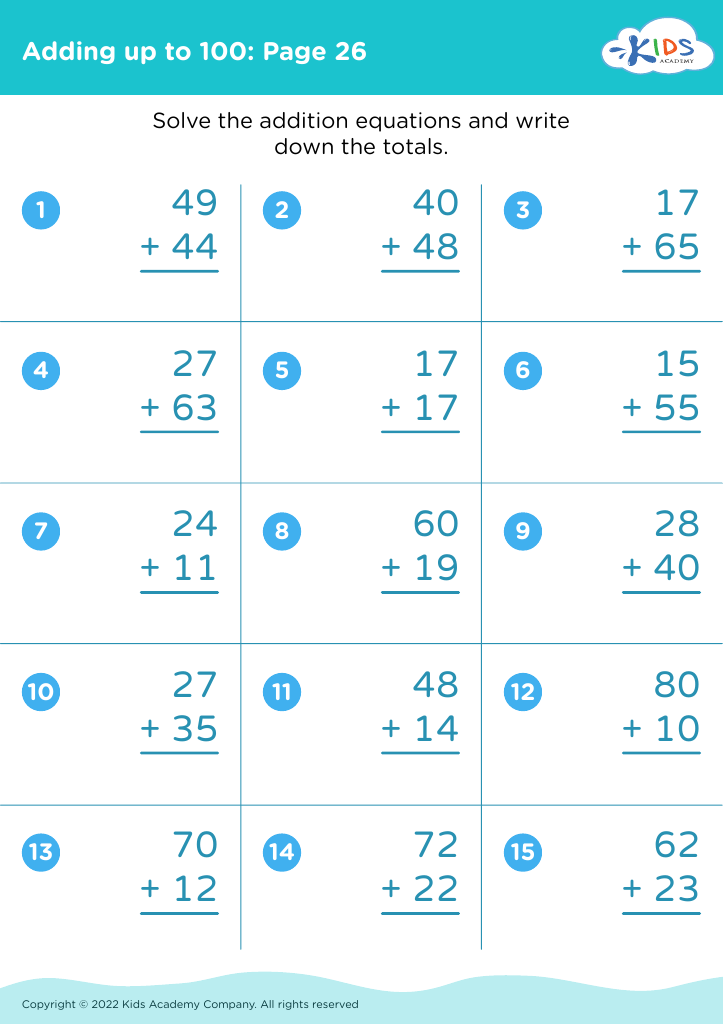
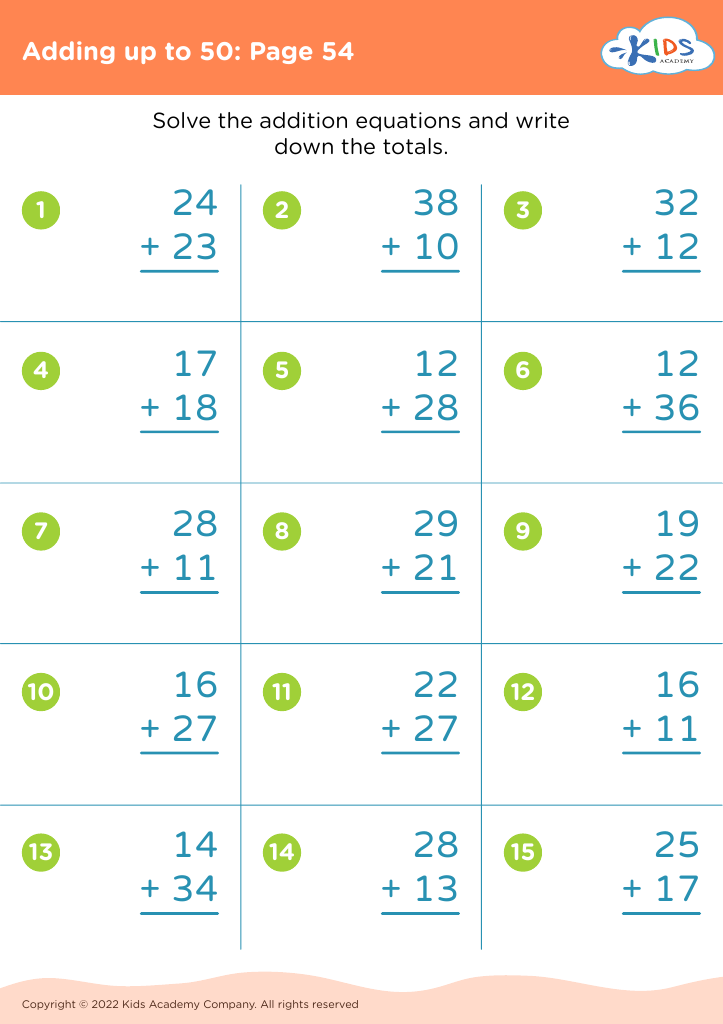
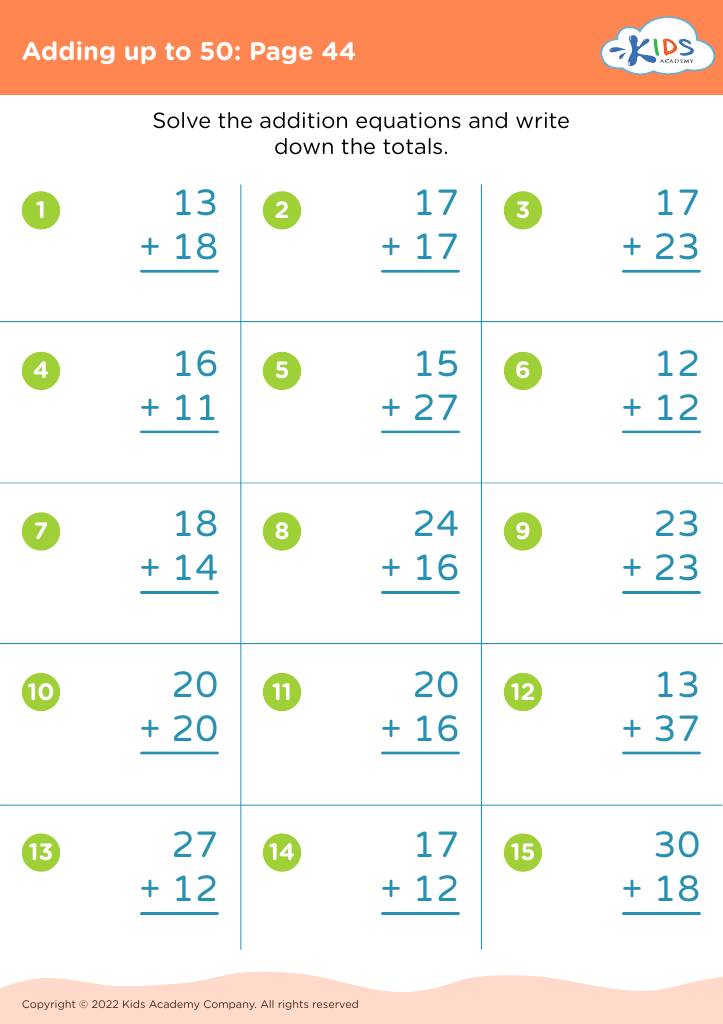
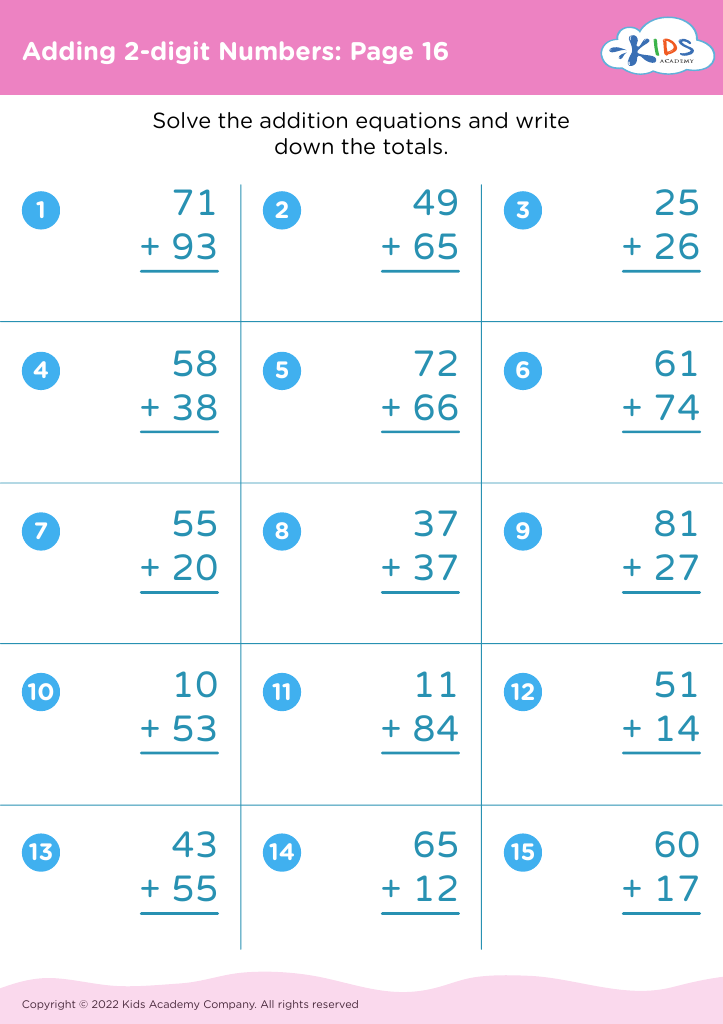
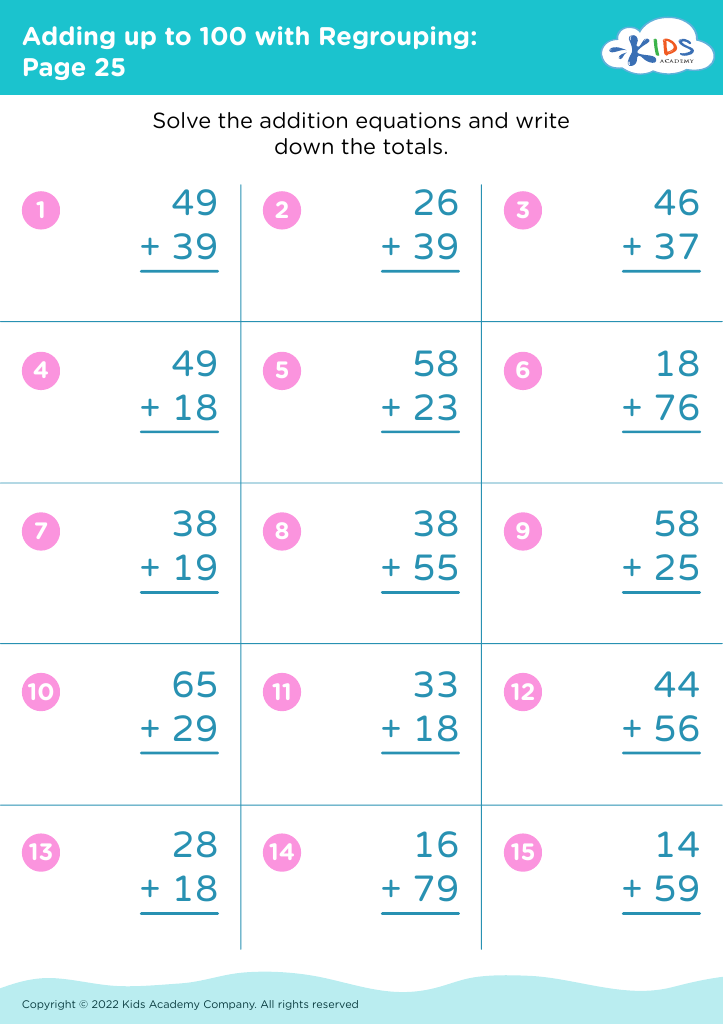
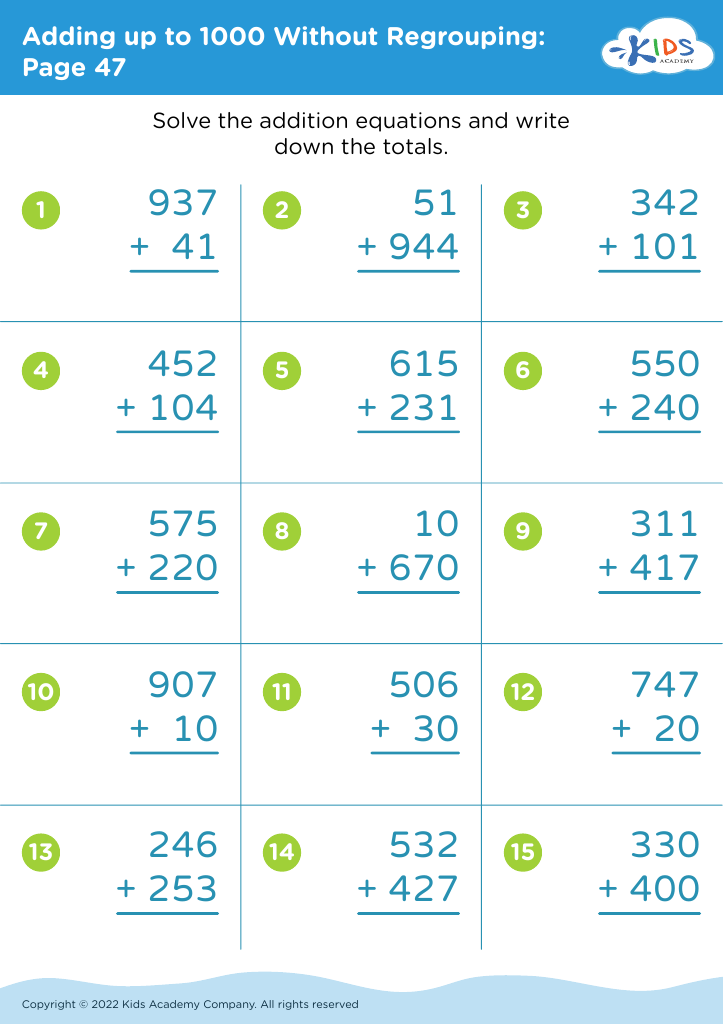
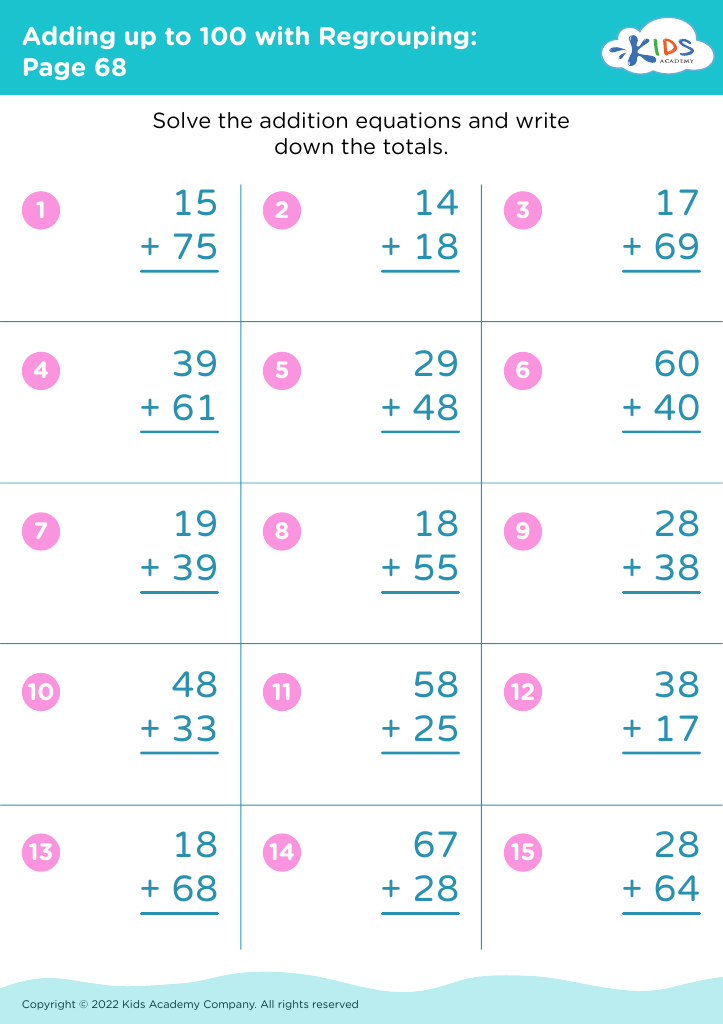
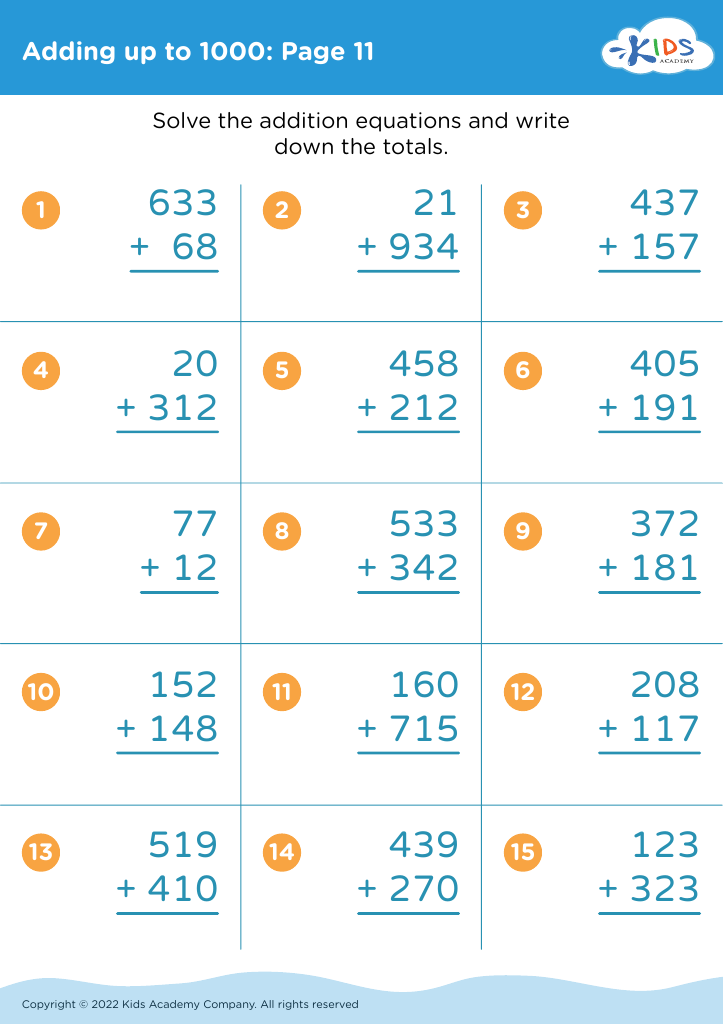
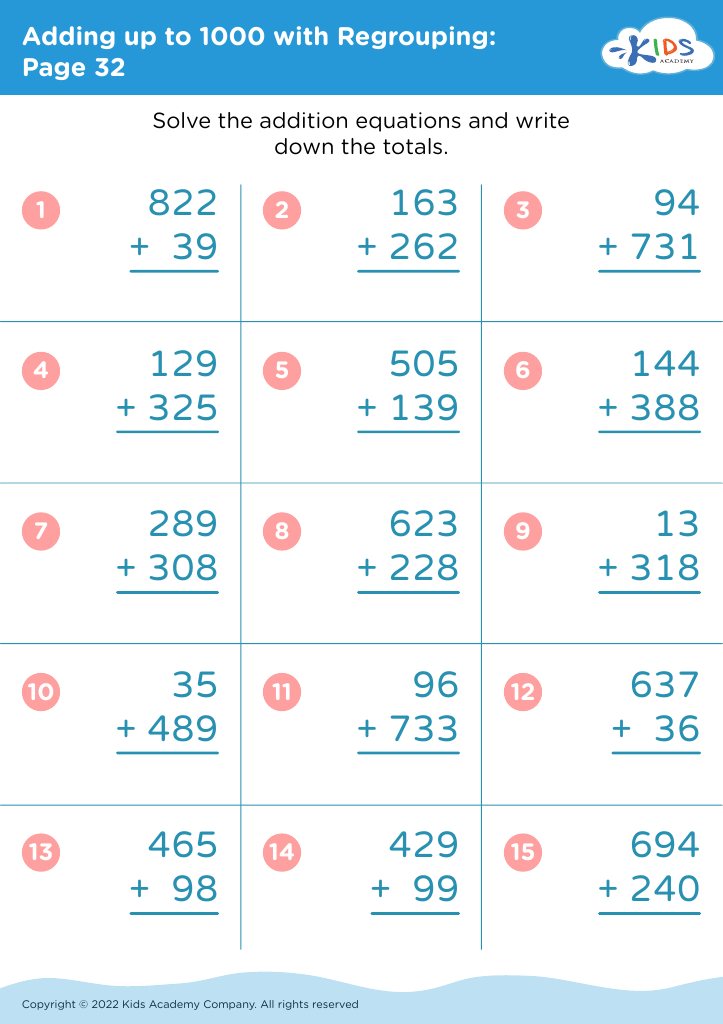
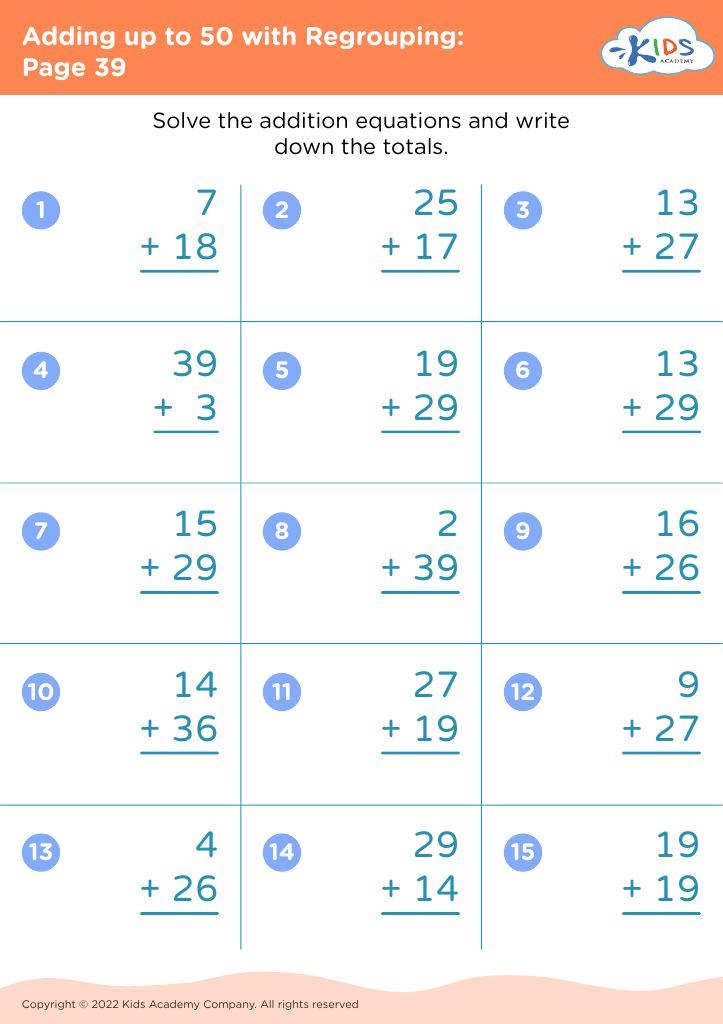
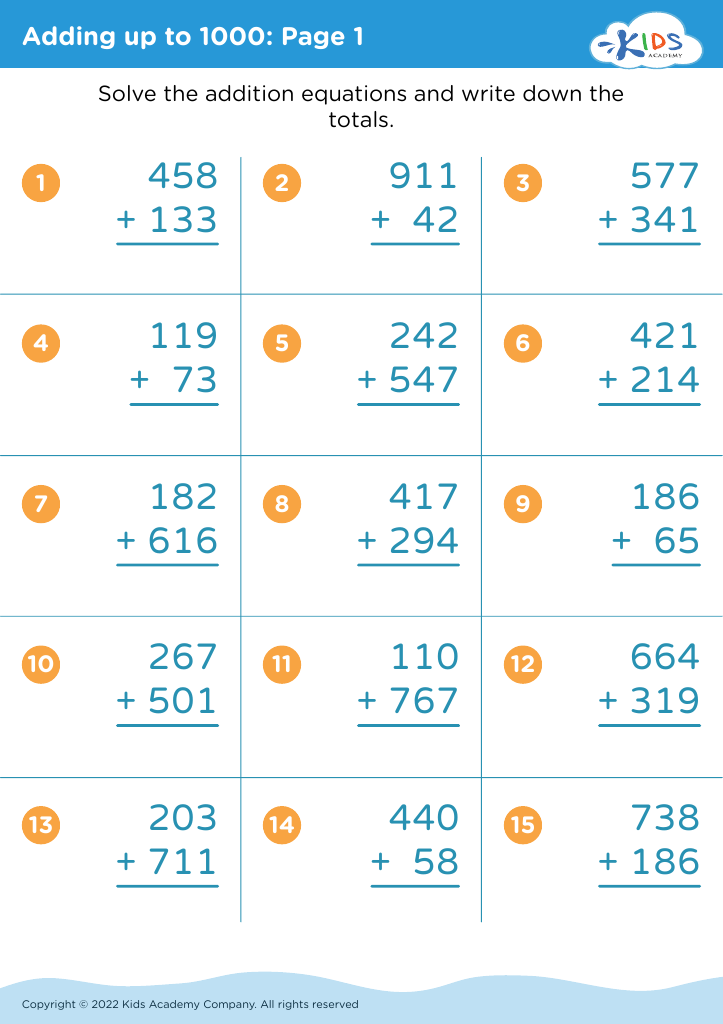
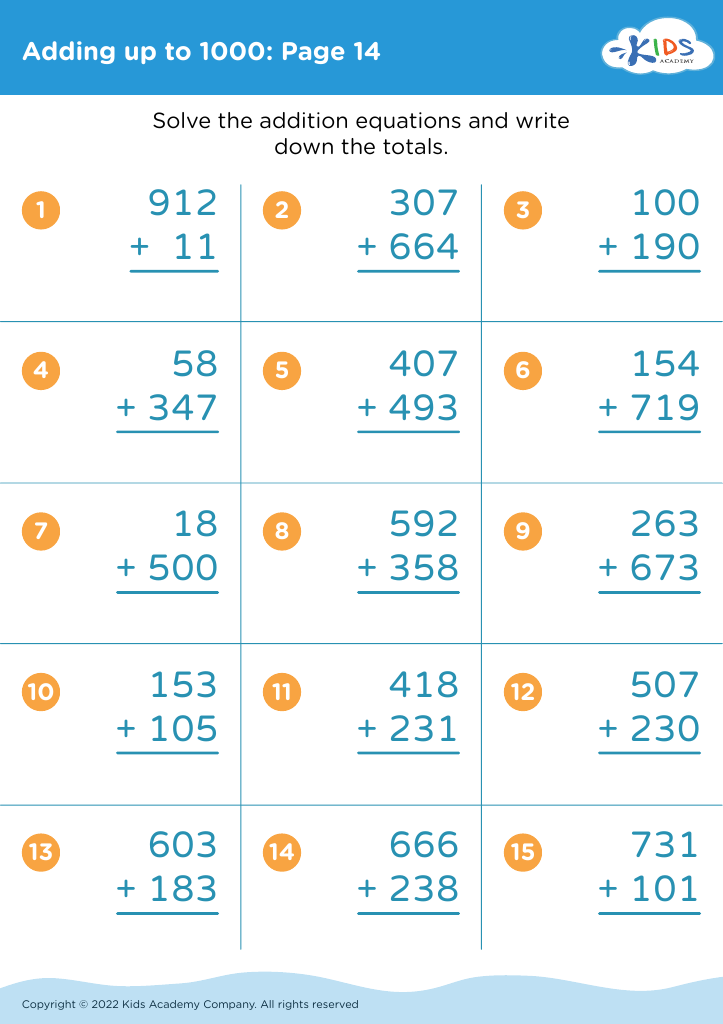
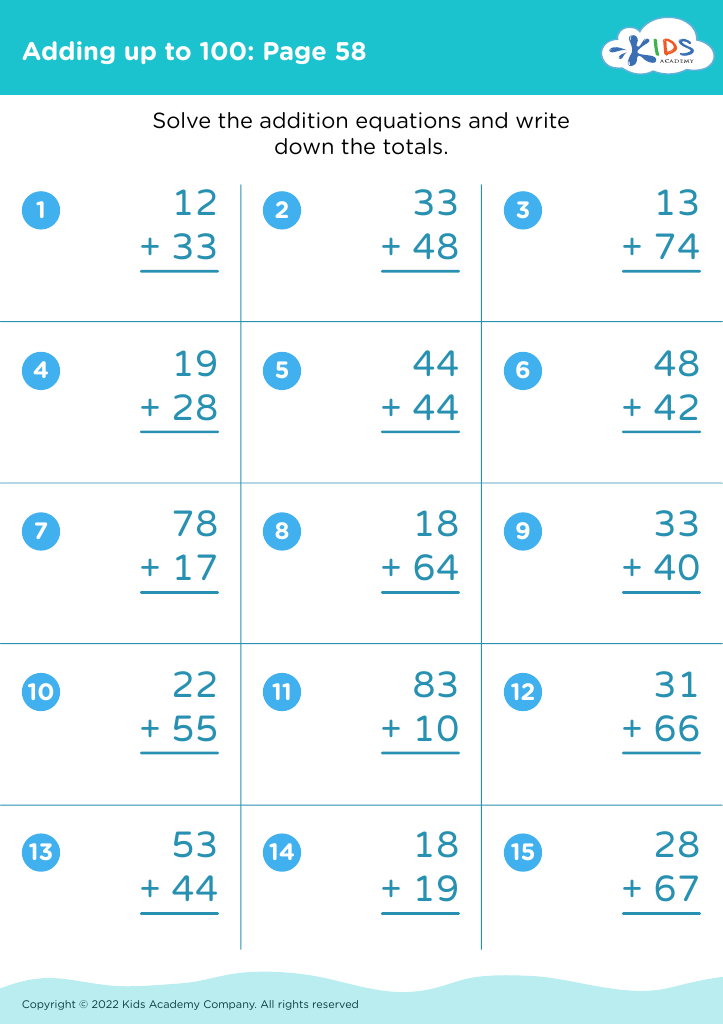
Enhance your child's mathematical abilities with our Addition Worksheets designed for ages 6-8. These engaging and educational printables are perfect for helping young learners master basic arithmetic. Featuring a variety of fun and challenging problems, our worksheets provide a solid foundation in addition, bolstering your child's confidence and improving their problem-solving skills. With interactive exercises and colorful activities, your child will find learning addition to be a joyful and rewarding experience. Help your child succeed in math by accessing our expertly crafted worksheets today and watch their numeracy skills thrive!
Favorites
With answer key
Interactive
Join Kids Academy for Free
Who is primarily going to use this learning content?








Improving math skills in children ages 6-8, particularly in addition, is crucial for several reasons. At this developmental stage, foundational math abilities are essential for future success in more complex math topics. It’s not just about avoiding difficulties in subjects like multiplication, fractions, and algebra; solid addition skills also contribute to overall cognitive development, including improved problem-solving abilities and logical thinking.
For young children, addition is one of the first areas where they learn to apply numeracy in daily life, such as counting toys or splitting snacks. Early confidence in math can establish a positive attitude toward the subject, reducing math anxiety later. Moreover, math education at this stage primes young minds for an understanding of the value of numbers, sequences, and patterns, which are critical in scientific and technical subjects.
Involving parents and teachers in improving these math skills creates a supportive learning environment that reinforces concepts taught in the classroom. Activities like counting games, simple puzzles, and interactive math apps can make learning enjoyable outside of classroom hours. Additionally, these interactions can strengthen the parent-child or teacher-student bond, promoting a collaborative approach to education. Investing time in building these skills sets the stage for academic achievement and future career opportunities requiring quantitative literacy.








