Motor skills development Addition Worksheets for Ages 6-8
4 filtered results
-
From - To
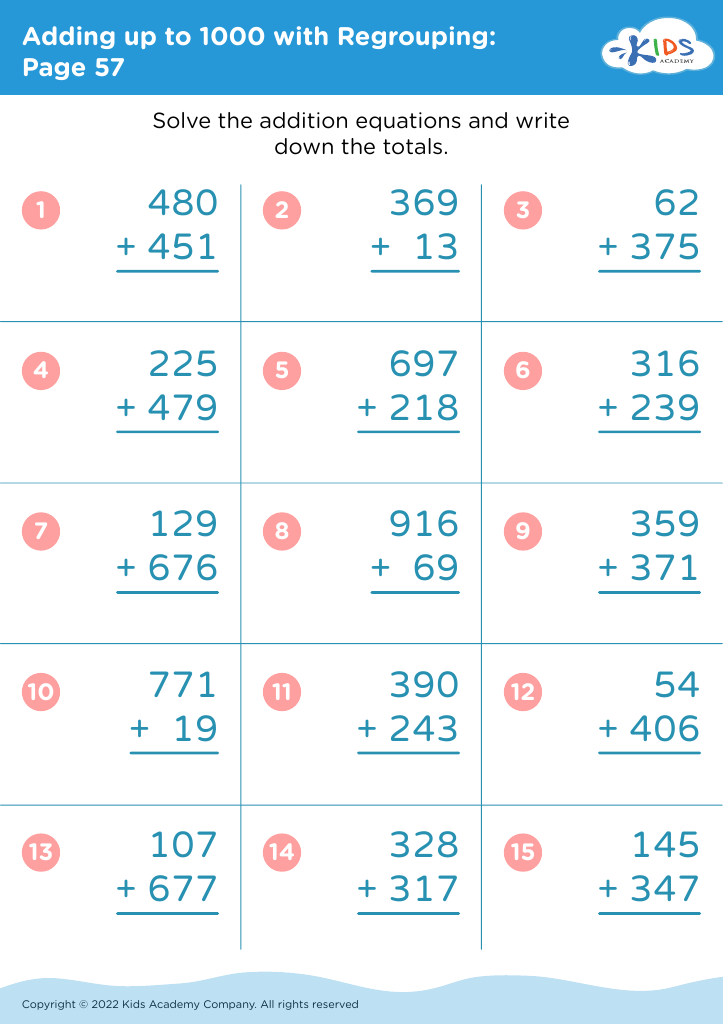
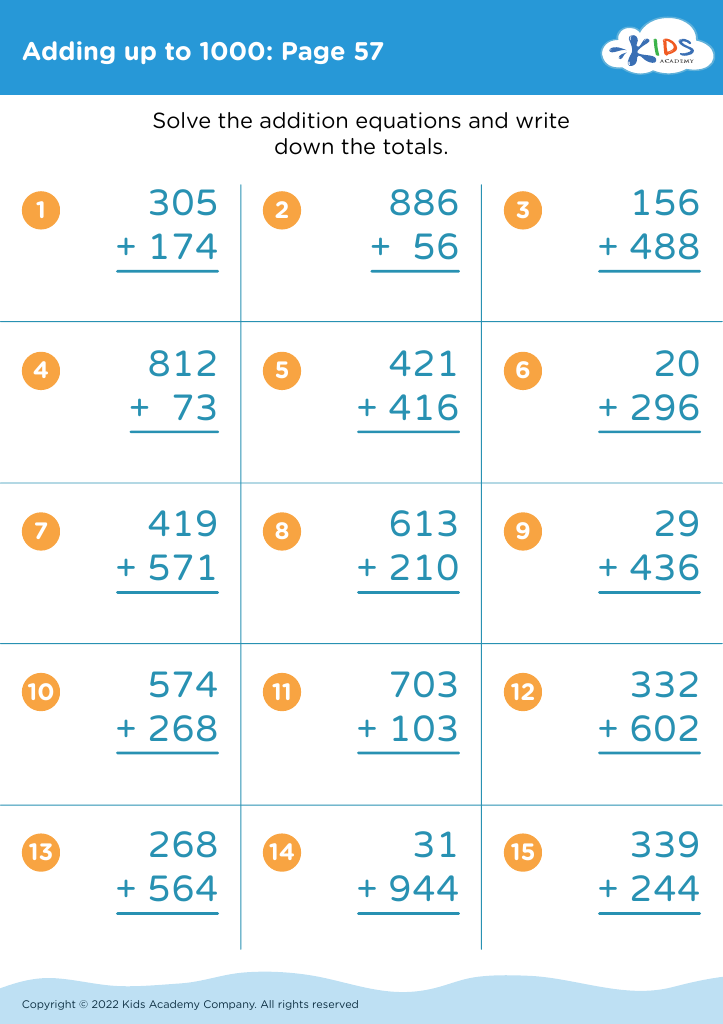
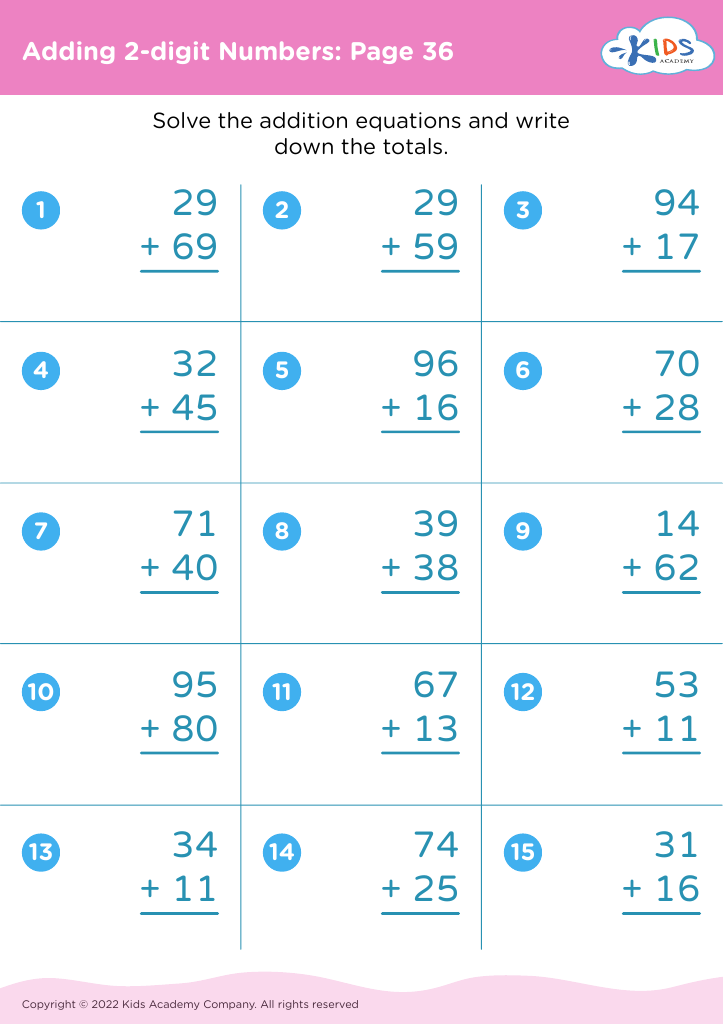
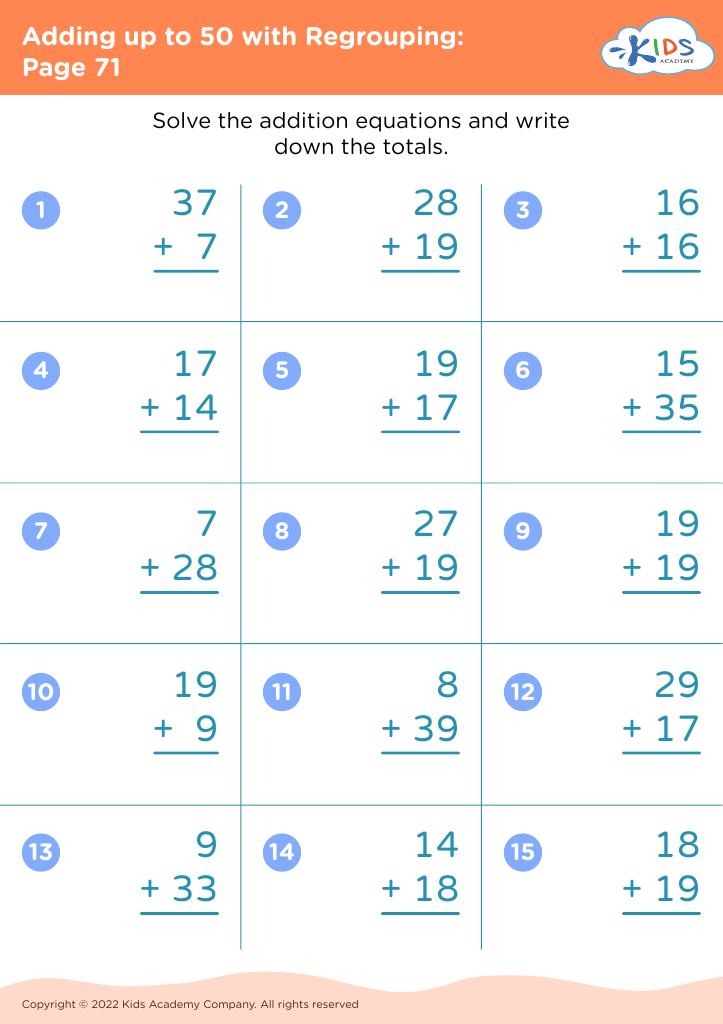
Enhance your child’s learning with our Motor Skills Development Addition Worksheets specifically designed for ages 6-8. These engaging worksheets combine essential math addition exercises with fun activities that encourage fine motor skills, promoting hand-eye coordination and dexterity. As your child tackles colorful and interactive tasks, they will not only boost their math abilities but also refine their writing and drawing skills. Perfect for home or classroom use, our worksheets provide an enjoyable experience that nurtures a love for learning. Discover a delightful way to support your child's educational journey while enhancing their motor skills today!





.jpg)


Motor skills development is crucial for children aged 6-8 as it lays the foundation for their physical, social, and cognitive growth. At this stage, kids are refining both gross motor skills (like running, jumping, and climbing) and fine motor skills (such as writing, drawing, and manipulating small objects). These skills are essential for everyday activities and impact a child’s self-esteem and confidence.
Parents and teachers play a pivotal role in fostering motor skills. Engaging children in physical activities helps improve coordination and balance, vital for overall health and well-being. Additionally, fine motor development is critical for academic success; proficient writing skills and the ability to use tools like scissors hinge on these abilities.
Moreover, effective motor skills contribute to social interactions—children learn to navigate playground games and team sports, which enhances their social skills. Children who struggle with motor skills may face challenges in school, leading to frustration, decreased motivation, and potential learning difficulties.
By focusing on motor skills development, adults can ensure that children not only enjoy a more fulfilling learning experience but also develop the necessary skills to thrive both in and out of the classroom. Encouragement and opportunities for practice will pave the way for a healthier, happier future.








