Practice writing numbers Addition Worksheets for Ages 6-8
6 filtered results
-
From - To
Welcome to our "Practice Writing Numbers Addition Worksheets" for ages 6-8! Designed to enhance both writing and math skills, these engaging worksheets help children master number formation and addition. Each worksheet offers a variety of exercises, combining the practice of writing numbers with fun addition problems. This dual focus not only reinforces math concepts but also promotes fine motor skills and handwriting clarity. Perfect for home or classroom use, our resources cater to young learners, making math enjoyable and interactive. Explore our printable worksheets today and help your child build a strong foundation in mathematics and writing!
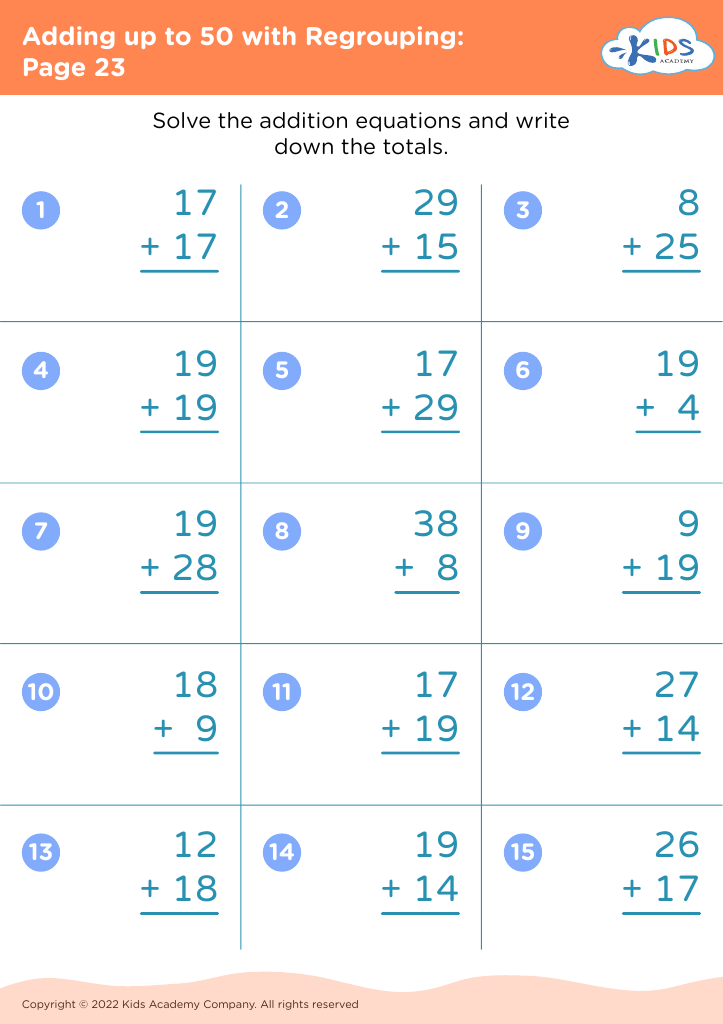
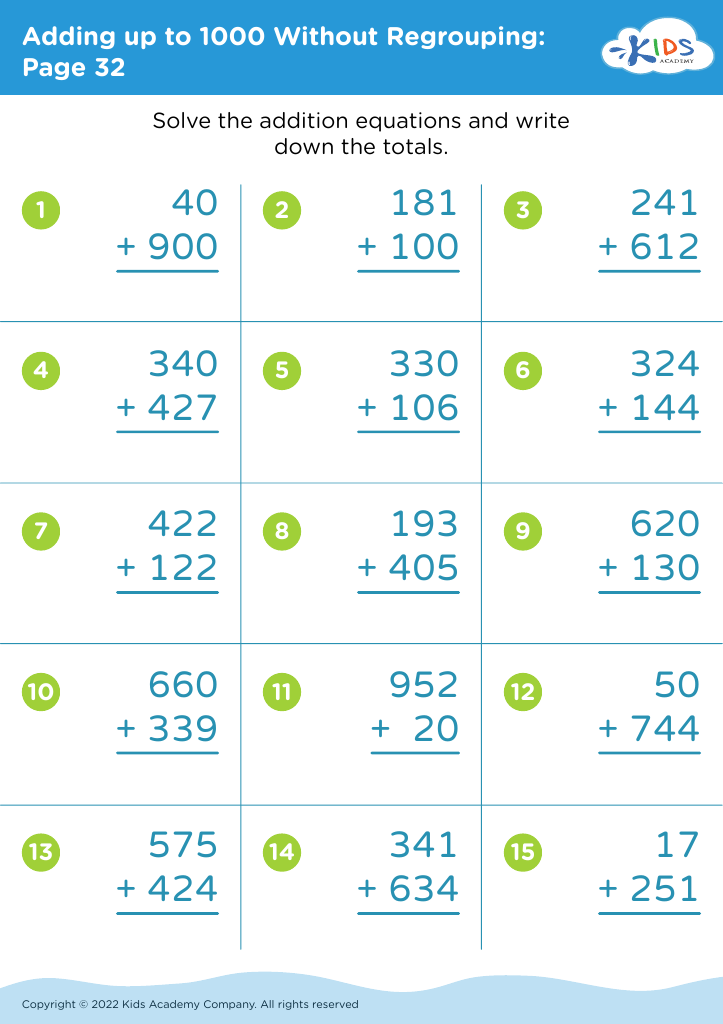
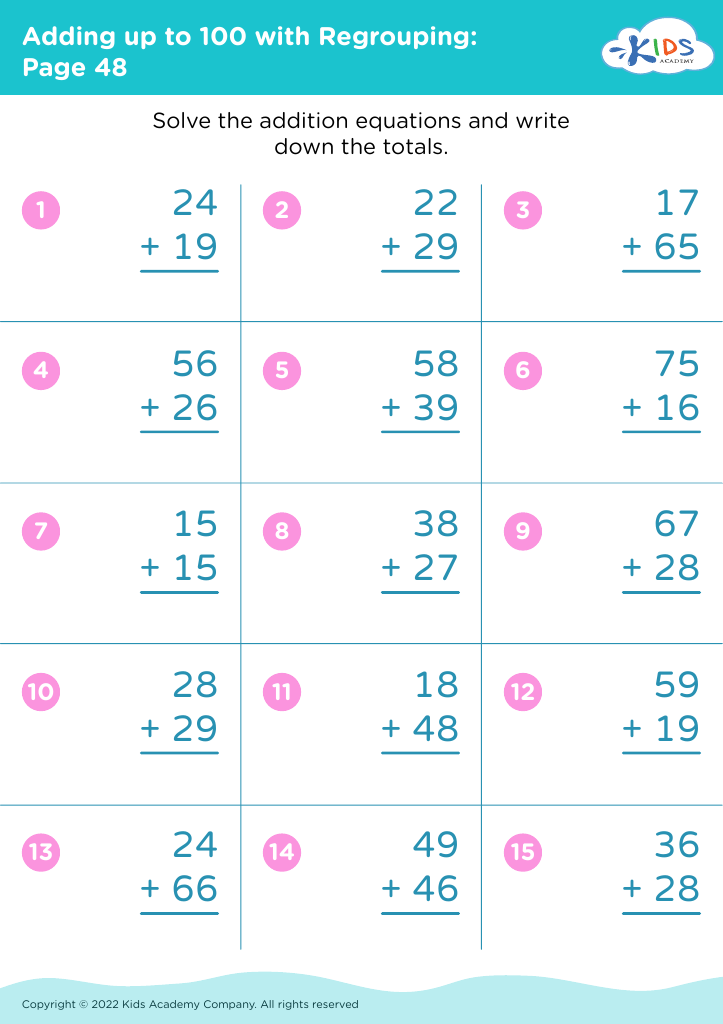
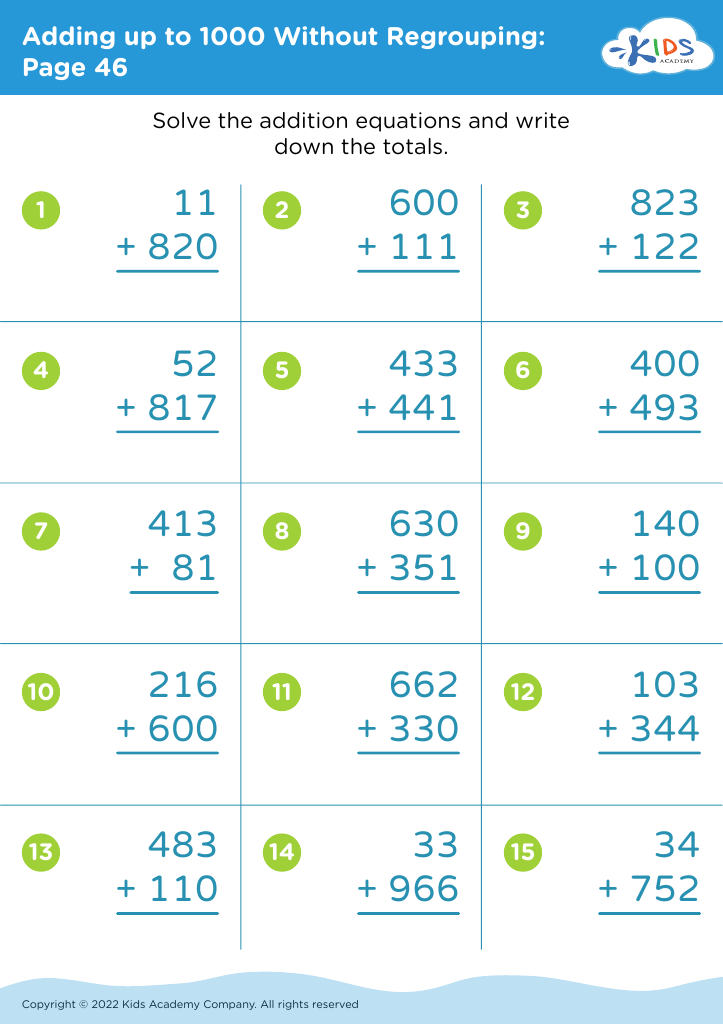
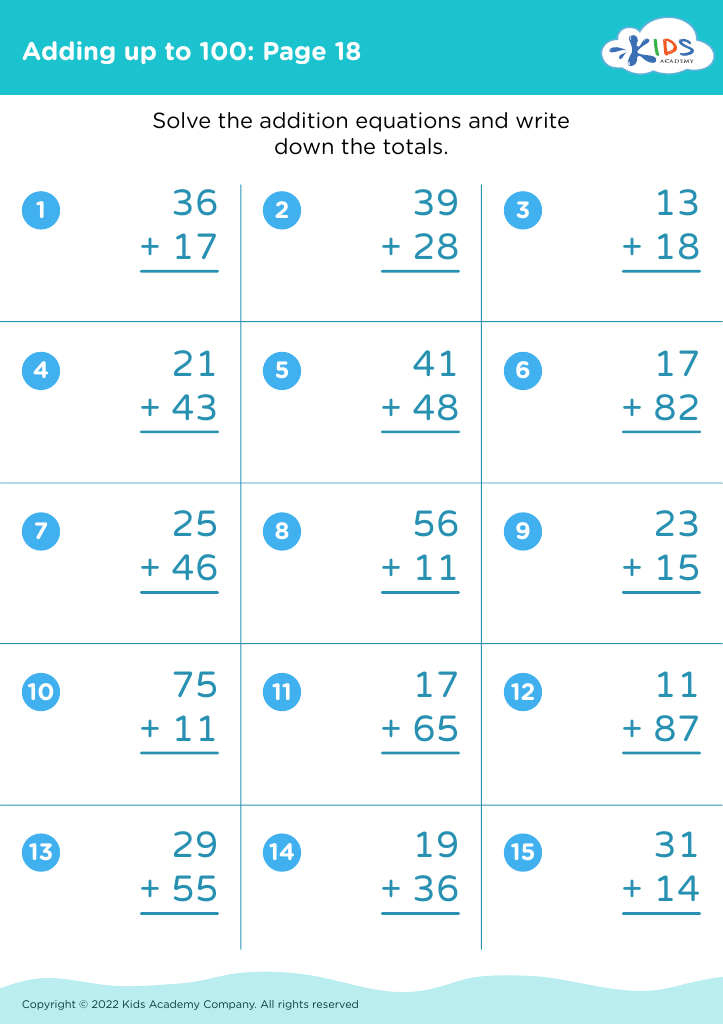
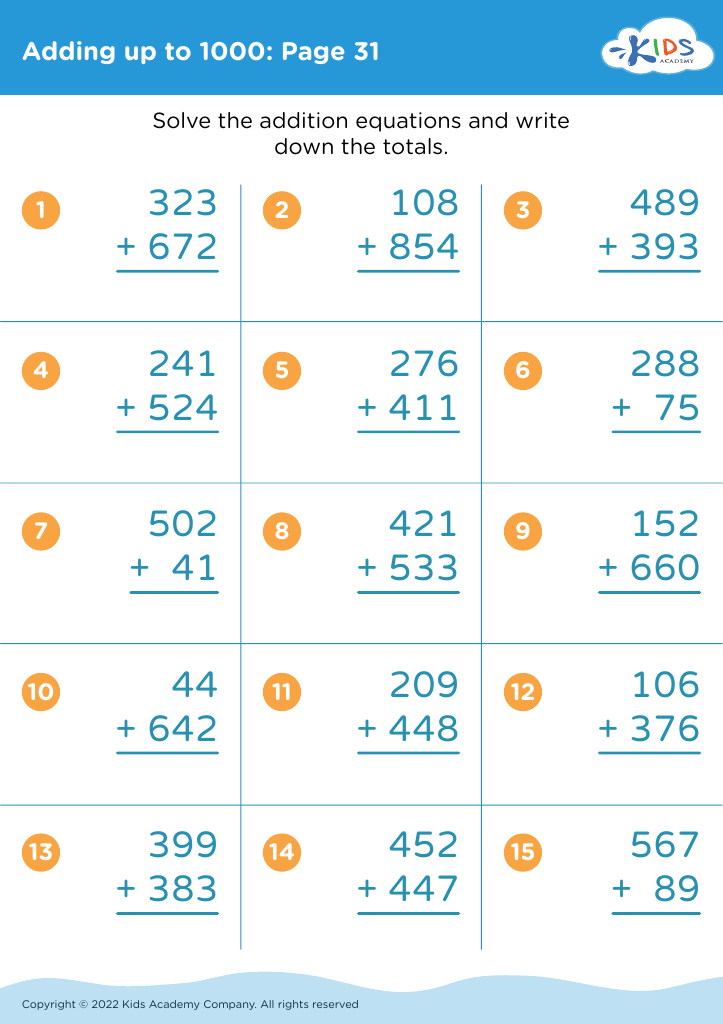








Practicing writing numbers and addition for children aged 6-8 is critical for their cognitive development and foundational math skills. At this age, children begin to grasp the concept of numbers and are introduced to basic arithmetic operations. Writing numbers reinforces their understanding and helps solidify their learning.
Additionally, mastering addition lays the groundwork for more complex mathematical concepts they will encounter later. It cultivates problem-solving skills and logical thinking, essential for academic success across subjects.
Parents and teachers should care about this practice because it not only enhances numerical literacy but also boosts confidence. Struggling with numbers can lead to frustration and a negative attitude towards math, which can persist into later years. Encouraging consistent practice helps develop a positive relationship with mathematics.
Moreover, practicing writing numbers and addition can be integrated into daily routines, making learning fun and engaging. It promotes fine motor skills through writing and can involve games or real-life scenarios that excite children about learning. As they make progress, their improved skills contribute to overall academic achievement and preparedness for future educational challenges. In essence, prioritizing this practice equips children with vital skills essential for lifelong learning.








