Understanding equations Addition Worksheets for Ages 6-8
4 filtered results
-
From - To
Unlock the world of math with our "Understanding Equations Addition Worksheets" designed specifically for ages 6-8! These engaging worksheets help young learners grasp the concept of addition through equations, building essential skills for future math success. By using visual aids and interactive problems, children will gain confidence in solving equations and understanding numerical relationships. Each worksheet is crafted to support different learning styles, ensuring that every child can thrive. Perfect for classroom use or at-home practice, these resources aim to make learning math fun and enjoyable. Explore the joy of mastering addition equations with our comprehensive and colorful worksheets today!
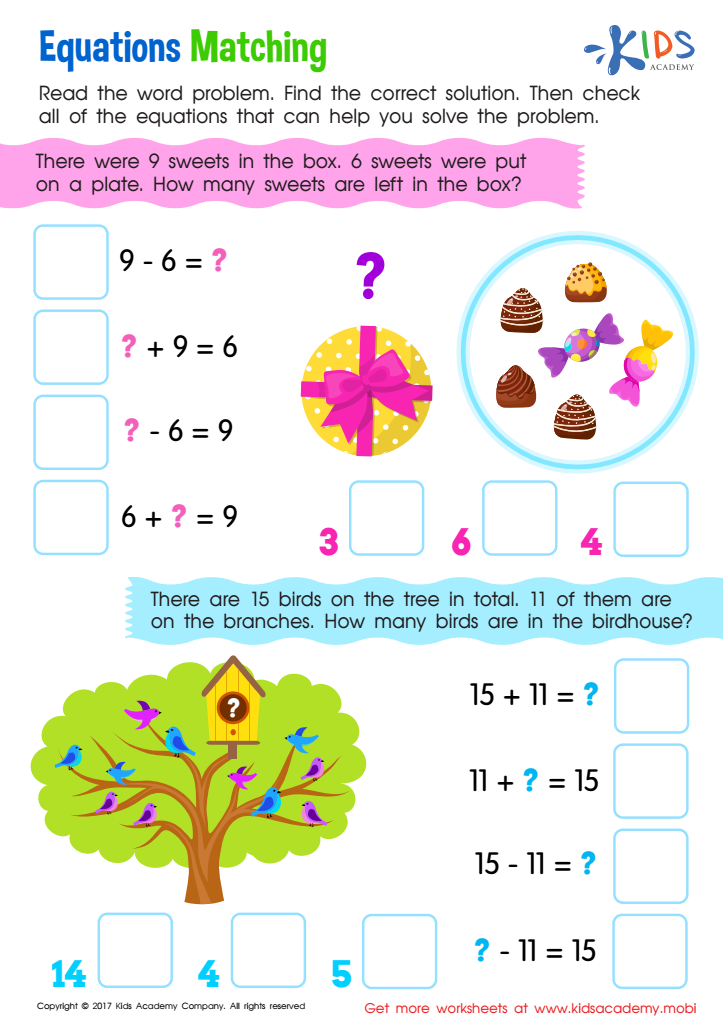
Equations Matching Word Problems Worksheet
 Assign to My Students
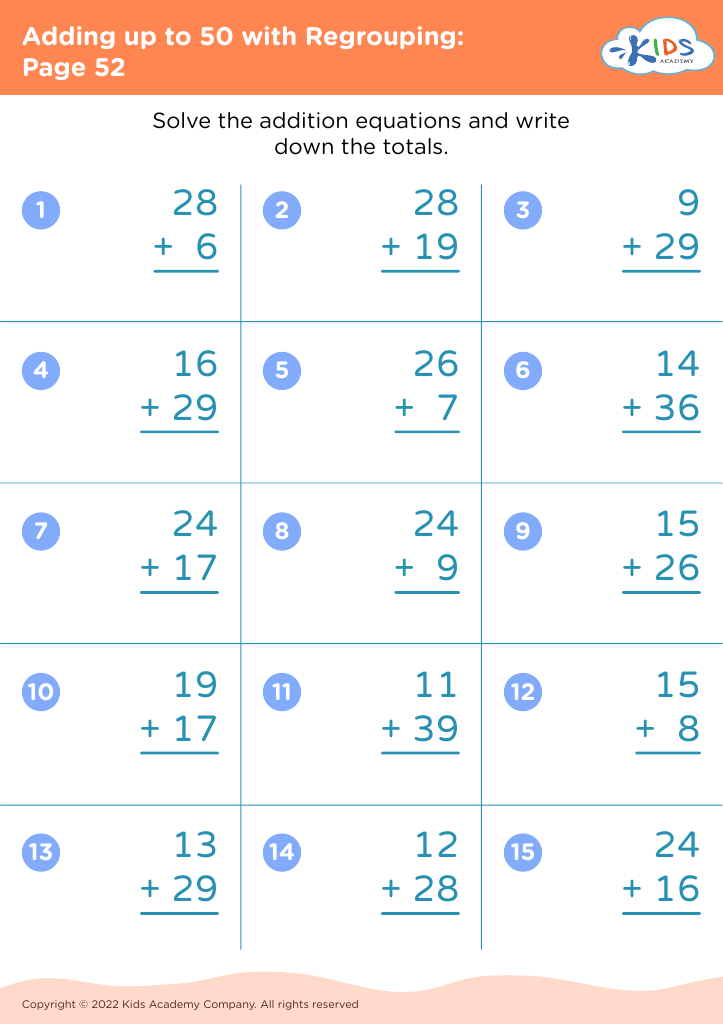
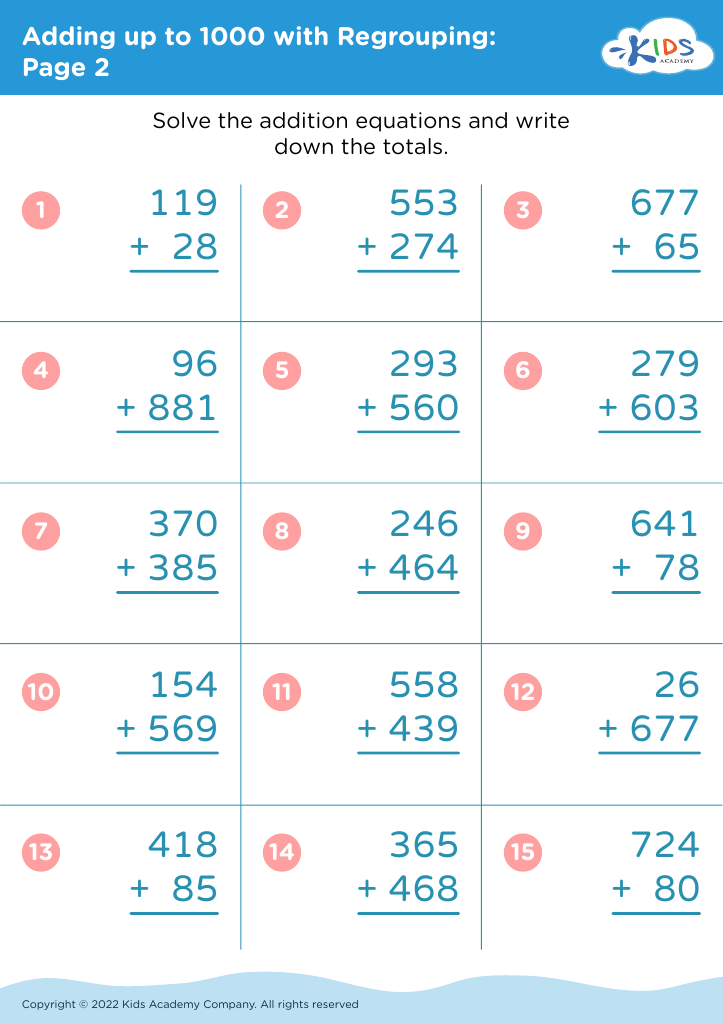
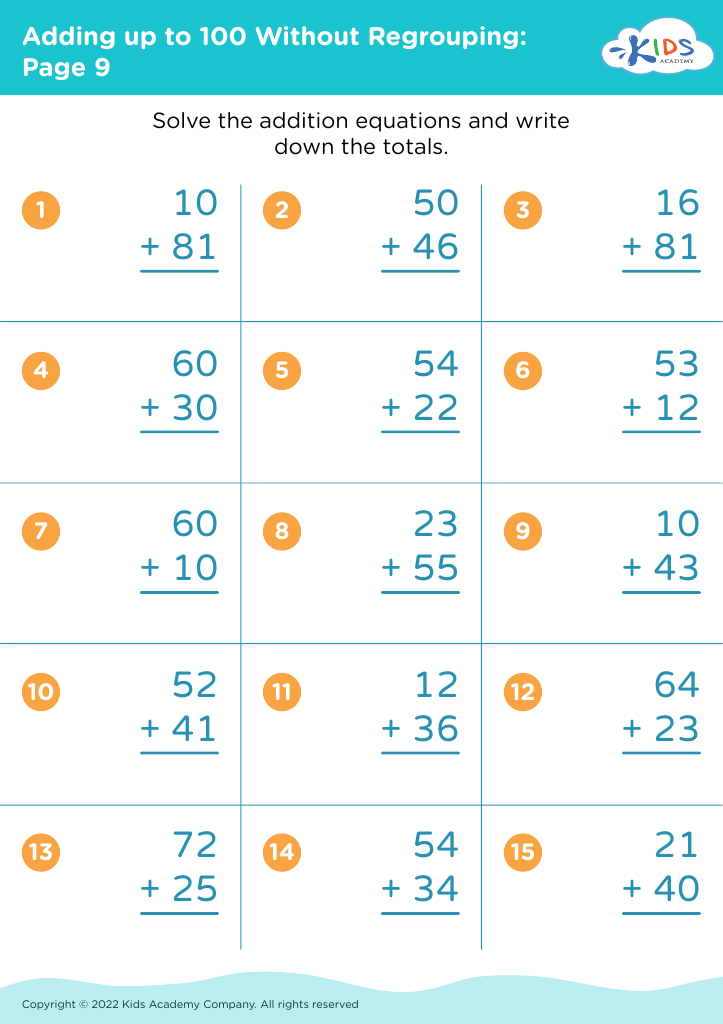








Understanding addition equations is a foundational skill for children aged 6-8 and plays a critical role in their overall mathematical development. Parents and teachers should prioritize this topic for several reasons.
First, addition equations help children learn to represent numerical relationships and understand the concept of equivalent values, laying the groundwork for more complex mathematical operations. Grasping how to formulate and solve addition equations enhances logical thinking and problem-solving skills.
Second, this knowledge fosters a sense of confidence in young learners. Mastering basic equations allows students to tackle more challenging problems as they progress, thus preventing fear and anxiety towards mathematics down the line.
Moreover, addition equations are not isolated; they connect seamlessly with key mathematical concepts like subtraction, multiplication, and even division as children advance. Building a solid foundation in addition prepares them for these future challenges.
Lastly, reinforcing these skills at home or in the classroom through engaging activities can strengthen the parent-child and teacher-student bond, making mathematics a shared adventure. Emphasizing the importance of understanding addition equations cultivates a love for learning that extends beyond the classroom, nurturing curious and capable lifelong learners.








